Showing posts with label Underwater Warfare. Show all posts

Monday, August 9, 2024

Iran Thoughts

The news that Iran has 4 new mini-submarines is noteworthy, but what I quoted in bold from this article is what was most interesting to me. Noteworthy the Defense News article didn't mention that detail though.
Iran showed off four new domestically made small submarines Sunday that Tehran said would bolster its defence capability as it vows to confront any military threat from countries opposed to its nuclear program.

State-run Press TV showed the submarines sailing from an Iranian port. Iran's fleet of the 120-tonne Ghadir-class vessels, first produced in 2007, now numbered 11, it said.
Eleven huh? It sure would be nice if ONI would discuss that number for us all in next years Iran report. Mini-submarine production never really mattered until the Cheonan incident.

There is a lot of speculation that Israel will attack Iran. Who really knows for sure? What concerns me though is that North Korea has proven that once you have nuclear weapons, you can do things like attack a neighbor with submarines and torpedoes and avoid repercussions.

The reality of that situation doesn't help the argument that suggests Iran would act more responsible if they had nuclear weapons. I understand these are distinct and uniquely complicated issues, but the relationship between the Korea's is no more or less complicated than the relationship between Iran - and say Hezbollah or Hamas.

Which is entirely the point.

I will say one thing though - the terrorist attack on the Japanese super tanker seems to me to be a unique opportunity to expand the discussion with Iran regarding security of the Straits of Hormuz. I think it is a good litmus test for a discussion, because I find it hard to believe that Iran wouldn't have at least some useful information on the incident. The thing about black markets is that usually - not always but often - they are usually working in circles with the same peoples. If they say they don't have any intelligence on the subject then we know their intentions towards security of the straits - which is also a problem for OPEC. If they really don't have any intelligence on the subject - that speaks more towards their capabilities.

The Obama administration's approach to Iran is interesting, but confusing. I think there are still many questions whether it will be productive. Having a topic like this terror attack that would appear to be a mutual interest topic seems appropriate as a broader litmus test.

Thursday, June 24, 2024

Quote of the Month

The most interesting operational quote of the month comes courtesy of Rear Adm. Frank Caldwell, Commander, Submarine Group 9.
The Submarine Force has achieved another first with all four guided missile submarines (SSGN) deployed for the first time simultaneously.

Although the West Coast SSGNs, USS Ohio (SSGN 726) and USS Michigan (SSGN 727), and East Coast SSGNs, USS Florida (SSGN 728) and USS Georgia (SSGN 729), have previously been underway at the same time, this milestone marks the first time all four SSGNs have been forward deployed away from their homeports.

“I think it is remarkable they are all deployed at once because back in the mid 90’s this was just a power point presentation,” said Rear Adm. Frank Caldwell, Commander, Submarine Group 9. “We have transitioned from an idea on paper to an actual capability to the nation. Their capabilities are revolutionary in what a typical submarine can do because they can carry multiple Tomahawk missiles, special operating forces, improved sonar processers, and a battle management center. It is truly one of the most capable platforms in the Navy today.”
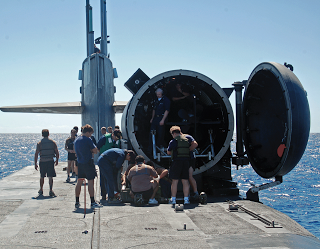
Before the USS Ohio (SSGN 726) made her first deployment, word was that the SSGN fleet would be operationally testing new technologies in the reconfigurable silos every deployment in order to advance the science and technology of underwater warfare.

It is my hope that was a standing order, and that practice continues to this day.

USS Ohio (SSGN 726), USS Michigan (SSGN 727), USS Florida (SSGN 728), and USS Georgia (SSGN 729) represent the most powerful conventional military capability in the world at penetrating enemy defense networks. They represent the true meaning of stealth strike power, and after a conversion of four submarines that carried a combined price tag less than the cost of a single B-2 bomber - the fleet of four submarines is probably the single greatest investment in conventional military equipment in all of our lifetimes.

Monday, December 21, 2024

Underwater Deterrence

I thought this was the most interesting development last week in the Pacific. From the AP.
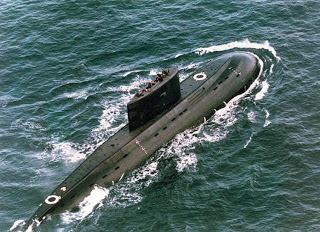
Russia's Interfax news agency quoted an unnamed Defense Ministry official as saying Russia will sell Vietnam six diesel-electric "Project 636" Varshavyanka submarines for a total of $2 billion. The submarines are also known by their NATO nickname, "Kilos."
A quick check around the region.

Vietnam orders 6 Kilo class submarines.
Indonesia purchased 2 submarines from Russia earlier this year.
Malaysia received the first of 2 submarines from France earlier this year.
South Korea ordered 6 more U-214s earlier this year.

Then you have Japan in their always impressive submarine program and Australia already looking into Collins class replacements. At the same time, India is going nuclear with their submarine force.

In other words, the platform at sea of choice to deter China is the submarine. Not surprising, but 2009 was the year one could point to that made it official.

Wednesday, September 23, 2024

Greek Submarine News

Greece has decided not to pay Howaldtswerke-Deutsche Werft GmbH and Hellenic Shipyards SA dockyards 524 million euros ($775 million), so ThyssenKrupp AG, the German shipbuilder and steelmaker, canceled contracts with Greece yesterday for the construction and maintenance of all submarines.
ThyssenKrupp is reducing its workforce and seeking to sell or spin off units after the global economic slump slashed demand for products from raw steel to yachts. Greece’s dispute with the company prompted the opposition socialist Pasok party to accuse the New Democracy government of “indifference and inability” as the nation gears up for elections next month.

The Greek state “can’t pay, won’t pay, or has other priorities,” said Dirk Nettling, a Commerzbank AG analyst who recommends investors buy ThyssenKrupp stock. “It’s not a pretty event, that’s clear.”

Hellenic Shipyards, the largest in the eastern Mediterranean, was awarded the contract to build four class U214 submarines in February 2000, according to the company’s Web site. It got an additional contract to upgrade three class 209 submarines in 2002. ThyssenKrupp said the Greek Defense Ministry now “is in default of its contractual obligations.”
Hard to tell what is happening here. Greece had recently come up with a plan for the Hellenic Navy that appeared to include payments to ThyssenKrupp for all but the first U-214 built, which reportedly has problems. By canceling the contract it is unclear if ThyssenKrupp is attempting to renegotiate, or is simply telling the Greeks to 'work with someone else.'

Thursday, August 13, 2024

Another Navy Unmanned System Pet Project...

Some very good - and very interesting - reporting by Dan Taylor for Inside the Navy (subscription only) regarding the development of UUVs. Some comments quoted from Capt. Paul Siegrist, program manager for unmanned maritime vehicles.
“The decision had been made early on to pursue 21-inch-diameter vehicles primarily based on the fact that the interface for the submarine force was the 21-inch-diameter tube,” he said. “With the advent of the Block III Virginia class large bow tubes, that provided an opportunity for us to reexamine large-diameter UUVs.”

The large-diameter UUV would do similar missions meant for the MRUUV, primarily mine countermeasures and intelligence, surveillance and reconnaissance missions. A larger size would allow for a more capable vehicle, as bigger is better when it comes to UUVs, Siegrist said.

“In UUVs, the diameter is critical,” he said. “The larger the diameter, the more internal volume you have and therefore you have more room for energy and payload.

“So the decision was reexamined with regard to what types of vehicle to pursue,” he continued. “Based upon the changed circumstances and the advent of a platform group that will be able to accept a larger diameter vehicle, [it] gave us the opportunity to take those lessons [ from the MRUUV], place it in a larger vehicle envelope to provide better capability to the fleet, and so we’re pursuing the large-diameter solution at this point.”

However, such a UUV is not yet a program of record, the captain noted.

“We’ve taken a step back -- I’ll call it a strategic pause -- to look at how best to take those lessons learned and incorporate them into a large-diameter vehicle,” he said. “Do I have a program of record on the street right now for a large-diameter UUV acquisition program? No. Are we interested in pursuing that and going down that path? Yes, and we are in the early stages of examining how best to do that.”
Funny thing about all this unmanned systems talk by various uniformed Navy folks lately, either the product being discussed is not a program of record, or the product being fielded is being fielded absent its own command organization. When talking about UCAS the other day, I thought NavHist made a great point.
What is needed now is the creation of an unmanned aviation community that is invested in a successful future. Right now the BAMS platform is nested in the P-3 community, and Firescout is lodged within the SH-60 community, neither of which wants to see these platform's mission expand and compete with the manned aircraft's missions or flight dollars. The only unmanned platform that has seen real budget growth over the past few years is STUAS (small tactical unmanned aerial system) which is actually owned and resourced by SurFor, who actually wants to see small UAS's providing eyes for his ships.
It is a great point, because SurFor is who is pushing the ScanEagle (the STUAS with the most funding) into the field, not the aviation community. For all the happy talk on unmanned systems, it always comes back to the various systems being discussed not actually being a program of record, or if it is, the system has no community to call its own.

Something else catches my attention. The Virginia class Block III is being discussed in the context of a modular system, as the SSGN often is. Why are these modular systems being treated different than the LCS, who have dedicated crews for its modular system? Will future Virginia's also have dedicated module crews? It may be efficiency demands are different for the platforms, certainly a likely possibility, but the lack of priority for mission modules for the LCS has already been evident in the budget the last few years. Will the same be true for the Virginia class in the future? If modular crews had their own communities, would the new systems they are developing be better represented in the budget cycle? Is this a big topic, or a non topic? I haven't decided, the similarity between modular surface and submarine crew functions in the future may be there, and I do wonder how this will all shake out over time.

I think large-diameter UUVs are very important to the future Navy, but I admit I am skeptical right now as to how seriously the Navy is taking unmanned systems in general. Until I see programs of record and the development of communities that can institutionalize unmanned systems as part of the larger unified naval force, I don't believe any momentum towards the promise of unmanned systems is actually being made. It is going to be very interesting to see how BAMS comes out in the QDR.

If the NECC, a 40,000 strong community, is used as an example; established as a command just over three years ago we see how far NECC still has to go before it gets institutionalized into the Navy. The NECCs momentum is slow today despite various capabilities in NECC being in very high demand by every Combatant Commanders, and despite some of those capabilities being unable to meet the Combatant Commanders demands due to lack of priority. Assuming the NECC doesn't get pushed to SOCOM (not making that up, it is being discussed), it will be years before the NECC is able to break into the budget competition the rest of the fleet dominates leadership of right now.

It is hard to believe that unmanned systems will fair better in budgets anytime soon relative to the NECC, having no unified community yet and competing against traditional systems from within the same communities the traditional systems have leadership dominance of.

Bottom line, I think there are some organizational issues that need to be worked out before the Navy evolves towards a 21st century force, and unmanned systems represents a very visible example of these organizational challenges yet ahead.

Friday, August 7, 2024

Three Global Trends

I see three global trends in the maritime domain, and they can be highlighted through recent media reports discussing the activities of the Russians.

Expeditionary Power
Russia is discussing the purchase of a French Mistral-class amphibious assault ship worth between 300 and 400 million euros ($430-580 mln), a high-ranking source close to the talks said Tuesday.

"Such talks are being held at the level of experts; the Russian side is represented by the Navy, the United Shipbuilding Corporation, and plants' representatives. In September we will provide a final conclusion for the Russian Defense Ministry," the source told RIA Novosti.

Earlier a French business daily, La Tribune, said Russia is planning to purchase a Mistral class assault ship from France. The purchase, if successful, would be the first large-scale arms import deal concluded by Russia since the collapse of the Soviet Union.
It isn't just the Russians though. In the 21st century we have seen a number of nations either expanding or looking to expand expeditionary capabilities. It is noteworthy that most of the top global economies are looking to develop expeditionary capabilities for military forces, while in the US we are discussing how much we can draw down our own expeditionary forces. Are we on the right side of this trend?

Underwater Capabilities
Russian defense industry sources report that Iran, fearful of an Israeli attack, is thinking of buying advanced Russian submarines to add to its flotilla of three Kilo-class diesel-electric boats it acquired a decade ago from Moscow.

The focus is on Project 636- and Amur 1650-class submarines being developed by Russia. State-owned arms export agency Rosoboronexport said the fourth-generation diesel-electric boats, considered to be among the stealthiest in the world, could be exported by 2015.

Iran and Algeria appeared to be among the leading prospects. According to sources in Moscow, Algeria agreed in 2006 to buy Project 636 submarines, advanced versions of the Kilo-class Type 877EKM currently in service with Algeria and Iran.

Jane's Navy International reported July 8 that Algeria will take delivery of the first of two Project 636 subs in December from Admiralty Shipyards of St. Petersburg.
This article doesn't even mention Saudi Arabia, which is very odd. Add the activity of Pakistan, India, Taiwan, Australia, and Turkey in regards to movement on submarines, not to mention the fact that Indonesia is simply delaying their purchase, not canceling it, and the number of submarines globally is on a drastic upswing. Meanwhile, we can't build them for less than $2 billion a piece. Are we on the right side of the submarine trend?

Auxiliary Ships
The Rescue tug “Altay” from Russia’s Northern Fleet will visit the Cuban capital Havana in the first week of August.

The official visit takes place August 3-6, the Russian Embassy in Cuba told RIA Novosti.

This is the second time a Russian naval vessel visits Cuba since the collapse of the Soviet Union. The first visit took place in December 2008, when a unit from the Northern Fleet led by the Destroyer Admiral Chabanenko made a successful trip to Havana.
It isn't just in Cuba, Russia has been deploying Auxiliary ships with everyone of their task forces, and while they don't get the same publicity as the main warships in Russia, they are making significant impacts. The rumors of Russian auxiliary ships doing work in Yemen ports is there, although what they are doing is unclear. It isn't just the Russians though, there is a remarkable, yet silent, logistics effort supporting a rather large international naval force off the coast of Somalia. China is building hospital ships, not to mention several high tech surveillance ships. The German Berlin class is a remarkable modular vessel, and the Bay class is one of the most active class of ships in the Royal Navy supporting operations in the Middle East. Meanwhile, the US can't figure out what a Sea Base looks like and has decided on a 30 ship combat logistics force. Are we investing in Auxiliary ships sufficiently to the strategic demand?

We bitch and moan surface combatants, while the average age of the surface combatant force is younger than the average age of the Navy's tactical aviation platforms. The Auxiliary and Combat Logistics force is old. Despite the broad flexibility of amphibious ships for both very low and very high end work, we are looking to reduce the total number of amphibious ships. Next year, will we see people on the Hill moaning the spending of $4+ billion annually to build 2 SSNs a year?

The strategic trends point to expeditionary, underwater, and auxiliary capabilities being the most useful for maritime influence in times absent major state power war. It is interesting how decisively the Asian economic powers, the European economic powers, the Russians, and the Chinese all appear focused on developing their naval force structures around these capabilities.

Everyone that is, except the US Navy. The US Navy calls its own maritime strategy an expeditionary strategy, and yet is looking to downsize the expeditionary force. The Navy emphasizes the value of nuclear attack submarines instead of even entertaining the conversation in favor of conventional alternatives, even as we live in a political climate favorable alternative energy solutions. The Combat Logistics force is woefully inadequate to supporting major war operations.

Wednesday, August 5, 2024

The Bear Comes Calling Off the East Coast

Reuters is reporting that a pair of Russian nuclear attack submarines have been monitored operating off the east coast. I personally find this development very interesting for a number of reasons, beginning with the fact that someone considered this newsworthy. While the operation of the submarines off the East Coast is the catchy headline, this is the part that has me thinking about the news report.
The U.S. Navy was able to track the submarines as they made their way through international waters off the American coastline, the official told the newspaper.

"We've known where they were, and we're not concerned about our ability to track the subs," the official added. "We're concerned just because they are there."

One of the Russian submarines remained in international waters on Tuesday about 200 miles off the coast of the United States and the second sub made a port call in Cuba in recent days, the newspaper said, citing Defense Department officials who spoke on condition of anonymity.
Very interesting. "200 miles off the coast of the United States" suggests the Russians decided to remain outside the Economic Exclusion Zone, a conscious decision.

Why are we revealing that we can track the Russian submarines, do we do ourselves any favors by revealing our capabilities?

But here is the key. As other nations continue to develop naval capabilities we need to recognize that the operation of submarines off the US coast is going to become more common, not less. Indeed, what is the first thing China will do when tensions at sea rise over Taiwan or some other matter? Most likely, the deployment of submarines off the coast of Guam, Sasebo, Pearl Harbor, and if the PLA Navy has any strategic thinking at all, San Diego.

But this is what the US Navy needs to think about... the submarines off Guam, Sasebo, and Pearl Harbor can be Yuan class, because Yuan's appear to have much better endurance for submerged operations than Song class submarines do, but for west coast operations it will be nuclear submarines. For Russia, it will always be nuclear submarines off the East Coast, because the conventional submarines make more sense for operations off Europe.

Just a few things to think about. In general, I do not see this news report alarming except that someone thought it was a good idea to brag about detection. That really makes us look stupid if by chance Russia has a third nuke boat out there. Saying nothing is smarter than saying something, particularly because the only good reason anyone can ever make for a conventional submarine for the US Navy is to suggest we need to increase coastal defense submarine capacity off our own shores... something this news report does not suggest as a real need right now.

Anyone want to guess what class of Russian submarines are operating off the East coast? My guess would be both are Akula class.

Wednesday, July 29, 2024

India, Pakistan, INS Arihant and the Security Dilemma

As probably most readers of this blog know, the Security Dilemma is a concept much discussed in the field of international relations. Brought to wide attention (although not first described) by Robert Jervis in 1978 with his article "Cooperation under the Security Dilemma," it describes a mechanic by which interstate conflict can arise or worsen. At its base, the proposition is that actions taken by states to increase their own security can, at the same time, result in a decrease (real or perceived) in the security of their rivals. Arms races can be a result of the security dilemma, as can wider security spirals.

Although India has been quick to declare that the INS Arihant is a deterrent weapon system, a second-strike capability, this may not be the case against all its potential targets. An important part of the 'utility' of a strategic weapon system is the target set it is applied to. While against a distant, heavily armed opponent such as China the Arihant's 12 K-15 missiles may be useful only as a countervalue deterrent, against an opponent with a smaller critical target set this may not be the case.

Pakistan's reaction to the sub has been mixed, with official statements decrying the launch as an arms racing move but editorials within Pakistan stating that the submarine poses no significant threat to Pakistan. Another series of articles has the Pakistani navy head stating that the submarine poses 'no security threat' - although that statement appears most often in Indian news reports such as this one, with a Beijing byline. Heh.

Let's take a quick look at capabilities and targets. Against Pakistan, a nation with a small and slow-reacting nuclear capability, the 12 SLBMs carried aboard the Arihant pose quite a different level of threat. The current range for the K-15 seems to be around 700 km with a 1,000kg payload, rising to 1,200 km with a 150kg payload. While a 700 km range isn't enough to reach the northern half of Pakistan from the ocean, a 1,200 km range certainly can hit nearly all of the country other than a small region north and west of Islamabad (and, of course, Jammu and Kashmir, although it seems highly unlikely that Pakistan would stage nuclear weapons out of these disputed territories). Most importantly, however, it can certainly reach Sargodha and the "Weapons Storage Complex" there.

The FAS estimated that Pakistan had enough fissile material for a force of approximately 60 warheads in 2007. If we assume that these are stored in groups of 5 or more weapons, we have a target set that the Arihant has a very good chance of eliminating. Probably not totally; 100% functionality on an SLBM loadout isn't likely, and 100% Pk for those weapons is even more unlikely - but as the number of storage locations drops, the feasibility of this targeting option goes up.

Unlike the U.S., Russia and most other nuclear nations, Pakistan is balancing a set of problems. On the one hand, nuclear weapons offer it a security 'hedge' against external intervention. India has visibly exercised restraint during prior crises due to the presence of credible nuclear response by Pakistan. However, Pakistan also suffers from internal security threats, most especially in the more desolate northern areas which would offer the greatest concealment and operational security for its small arsenal. In addition, many observers agree that for additional security, Pakistan stores its weapons disassembled, with cores separate from the remainder of the systems. Given the expertise and tools required to properly mate the components of these weapons as well as the requirements for securing them against sabotage and theft, there is pressure on Pakistani commanders to keep the number of such sites low to mitigate risk.

It's a delicate balance. Moreoever, it's one whose likely outcome, at present, would present Indian strategic planners with a small number of extremely high-value targets, at least so long as Pakistan maintains its forces in a low state of alert. And here lies the core of the security dilemma facing Pakistan. The Arihant's missiles, assuming India can engineer a 150kg warhead or boost their range slightly, offer Indian planners an opportunity for a 'splendid first strike' if they can acquire intelligence on the current location of the Pakistani nuclear arsenal. While this may not (and probably wouldn't) be a tempting option during times of low tension, as tension begins to ratchet upwards for whatever reason, Indian planners may - no, I'll say will - begin to consider that a strategic first strike might be able to minimize their danger. It's their job. Whether or not policymakers act on this option is a completely different question - but at the very least, it gives India a potential option at an early phase of a crisis which Pakistan's only real defense against is to actively deploy and/or disperse its arsenal. That action, in turn, reduces Pakistan's nuclear force security against internal threat, and depending on the state of Pakistani Command and Control, may force Pakistan to delegate release authority to remote actors - with all the risk that that entails (those who are curious about that risk are encouraged to read Bruce Blair's classic "Strategic Command and Control" for operational risk, or Scott D. Sagan's "The LImits of Safety: Organizations, Accidents and Nuclear Weapons" for organizational risk).

This post has minimal numbers in it. I don't claim to have satisfied even myself that the Arihant provides an actual qualitative change in the strategic balance in the Indian Ocean. However, it certainly seems like a question worthy of further research. Perhaps one good starting point would be to examine the state of Pakistan's early warning systems, and their capability versus a near-offshore SLBM launch.

Monday, July 27, 2024

Nukes Go To Sea

There are a few noteworthy submarine stories over the past week, but none are bigger than the launch of India's Advanced Technology Vessel INS Arihant.
The 6,000 tonne Arihant was launched by India's Prime Minister Manmohan Singh at a ceremony on the south-east coast.

It was built entirely in India with Russian assistance and a second one is due to be constructed shortly.

It will undergo trials over the next few years before being deployed and will be able to launch missiles at targets 700km (437 miles) away.

Until now, only the US, Russia, France, Britain and China had the capability to build nuclear submarines.
This beings India closer to becoming the first nation in decades to develop a nuclear triad, and the first nation to do so in the Indian Ocean area. While this development does not shift any balance of power in the region, it certainly gives both Pakistan and China something to think about. There is something else though, it will also give India a case for becoming a permanent member of the UN Security Council, a discussion the current permanent five members are not looking forward to.

In other nuclear submarine news, Russia has launched their second Project 885 Yasen (NATO code name Graney) submarine, the latest Russian attack submarine.
The 119-meter-long, 13.5-meter-wide sub will carry a crew of 90, dive to 600 meters, displace 13,800 tons, and run at up to 31 knots. Designed by the St. Petersburg-based Malakhit Design Bureau, the submarine will have eight torpedo tubes and carry 24 long-range cruise missiles of several types, anti-ship missiles, and mines. Malakhit's general director and chief designer, Vladimir Pyalov, said the sub's weapons will have longer ranges and the ability to destroy land targets as well as naval ones.

Pyalov said at the launching ceremony that Severodvinsk will undergo sea tests in summer 2010 and then will be commissioned by the Northern Fleet, the RIA Novosti official news agency reported. All of the submarine's weapons, including cruise missiles, have been tested successfully.
Severodvinsk was the first Project 885 Yasen (NATO code name Graney) submarine launched back in 1993, but has been held up due to lack of funding. As has been pointed out on the blog several times, the Russian Navy continues to get the lions share of defense funding in Russia, and of the defense budget a full 25% of the budget is being spent on shipbuilding both new vessels and restoring older vessels. 85% of that shipbuilding funding is then being spent on nuclear submarines, with most of that money being spent on the Borei (project 955) strategic nuclear submarines and its troubled ballistic missile, the Bulava.

Still, Russia is coming out with a new class of ballistic missile submarine (Project 955), a new class of nuclear attack submarines (Project 885), and a new class of diesel submarines (Project 677). Additionally, the Akula II class nuclear attack submarine K-152 Nerpa appears back on schedule for delivery to India later this year.

Tuesday, June 30, 2024

Polmar on Submarine Numbers

Norman Polmar is asking questions whether two submarines per year is worth it. The key word is "worth" as his point drives to the question whether the Virginia class represents value for the enormous costs involved.

While I support an all nuclear submarine force, I think the Navy would be on a stronger footing with the submarine issue if they traded something like 4 Virginia's for ten conventional submarines. I don't think anyone believes conventional submarines can replace our nuclear force, but to suggest there is no role at all for conventional submarines doesn't really pass the smell test.

I understand why the Navy is scared to build competing systems though, or why they see a conventional submarine as a competing system to a nuclear submarine. The Navy doesn't communicate to the American people the value of their fleet, much less specific types of systems in the fleet. That lack of communication is why Norman Polmar is raising this issue to begin with.

I want to raise a suggestion though, if the US ever looks into building conventionally powered submarines, the biggest mistake the US Navy could make is to look at what the rest of the world is doing and attempt to mimic their ideas. A US Navy conventional submarine need not be large, or manned, or necessarily deployable from a forward base. In fact, I would suggest starting a conventional program with the premise that the conventional submarine will only be around 300 tons, will be unmanned, and will deploy from ships or other submarines.

Now you can take the 4x$2.5B (or 10B) and make ten very useful conventional submarines, and with that kind of money probably the supporting network necessary to put them to effective use. If I was looking for a place to begin for the supporting network, I would start with a LSD-41 and go from there.

Friday, June 19, 2024

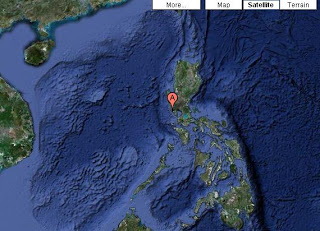
More Details of Submarine Incident off the Philippines

Andrew Scutro has a story on Navy Times offering up more details on the incident with the USS John S McCain (DDG 56) and the Chinese submarine off Subic Bay earlier this week. We usually do not get so many specific details of a Navy incident, and certainly never got this level of detail regarding the 2006 Song class submarine incident near the USS Kitty Hawk.
Two defense officials have confirmed that the crew aboard the destroyer John S. McCain was tracking the submarine that struck its towed sonar array June 10 in the South China Sea off the Philippines.

The McCain crew was able to retrieve the sonar array, which was damaged, although it’s not clear whether it was retrieved intact, the defense officials said. A mishap investigation is ongoing.

The officials would not specify whether the submarine was an attack boat or a ballistic-missile sub, and they were unsure of the time of the incident, which occurred in “international waters” south of Subic Bay.

The Associated Press reported that the collision took place 144 miles from Subic Bay, potentially placing it in the Mindoro Strait.

The collision has been described as “inadvertent” by defense officials.
These details tend to confirm what many of us previously speculated regarding the incident. It is kind of obvious that when a submarine accidentally rams a towed sonar array, the submarine is being tracked by the ship, although it also suggests the submarine was tracking the ship as well.

The report that the Navy was able to recover the towed array is also a good thing. The report goes on to quote Jon Von Tol from CSBA for an opinion on the incident.
“No sub skipper in his right mind would use his sub to damage a towed array,” said Jan van Tol, a former destroyer captain who hunted subs in the South China Sea. “It’s extremely unlikely to be deliberate. You don’t want an array caught in your screw.”

He said those waters are very noisy, making antisubmarine warfare particularly dicey.

“It’s possible it was a blind/blind situation and both sides were surprised,” he said.
Professor John Arquilla of the Naval Postgraduate School is quoted with a slightly different take.
More likely, the sub’s intent was to stalk the McCain, test its detection abilities, get proof of its proximity and slink away unseen and unheard, said John Arquilla, author and professor of defense analysis at the Naval Postgraduate School.

To have pulled that off would have been a “perfect success,” he said.

Instead, they got caught.

“We should hear alarm bells go off every time we have incidents of this sort,” Arquilla said. “What I see in this pattern of incidents is a growing capability of the Chinese to use stealthy navy assets to get close to our larger and more visible ships.”
It is difficult to speculate the intentions of each vessel at the specific act time the submarine hit the towed array, but I think both of these opinions are insightful as speculation. Clearly China is testing submarine capabilities over recent months, one only has to listen to ADM Roughead in testimony before Congress to get a sense that the activity at sea between Chinese submarines and US Pacific naval forces is much higher this year than in previous years.

However, in noisy waters, just because a ship can track a submarine doesn't mean the ship can hold that track of the submarine indefinitely, indeed by its nature the submarine cat and mouse game is better described as repetitive lost and found. Sometimes you find it, sometimes you lose it, and it takes both skill and art to play the ASW lost and found game well.

Monday, June 15, 2024

Chinese Media Discusses Submarine Collision

The AP is reporting on how the Chinese newspapers are discussing Friday's submarine encounter.
Chinese state-run newspapers on Monday labeled last week's collision as an accident, with the official China Daily citing Chinese military experts as saying that it probably occurred due to a misjudgment of distance.

No injuries were reported either aboard the sub or on the destroyer USS John S. McCain, and the extent of the damage to the towed radar was unknown.

Yin Zhuo, a senior researcher with the People's Liberation Army's Navy Equipment Research Center, said the American destroyer appeared to have failed to detect the submarine, while the Chinese vessel set its distance from the McCain assuming it was not towing sonar arrays, according to the paper.
Meanwhile the news out of the Philippines is that the incident took place 125 miles off Subic bay, outside the 120 EEZ of the Philippines. The official government position in the Philippines is that the 'collision need not concern the Philippines.' I don't think we would react the same way in the US if our government fed us that line.

One thing is clear, these incidents of engagement between the US and China are becoming more and more frequent, and there is no reason why we won't hear about more of these types of incidents in the future.

You can read Li Xiaokun's China Daily report on the incident here.

You can read Li Xiaokun's China Daily report on the incident here.

Sunday, June 14, 2024

Cat and Mouse in the South China Sea

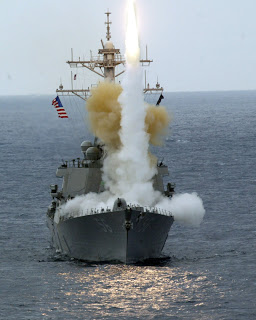
Since August of last year, I have consistently voiced my disappointment that the US Navy is looking to build more Arleigh Burke destroyers. Let me say a few things about this real quick.

First, I think ADM Roughead deserves a ton of credit for truncating the DDG-1000, building more is fiscally impossible towards reaching a larger fleet, and even though I think building a 4th one might be necessary to sustain the industry if we weren't moving towards build more DDG-51s, Roughead's decision is still the right one in my opinion. What he did to stop that program was truly brilliant.

With that said, I opposed more DDG-51s for two reasons. First, I think the money needs to be shifted towards a CG(X), perhaps a nuclear ship, that can carry a more sophisticated radar than what the DDG-51 can supposedly carry. I think the radar, not the weapon payload, is the primary objective of a CG(X) because we will need a more advanced radar to evolve ballistic missile defense from the existing limited system, and I think by not building more Burkes, the Navy puts some pressure on Lockheed Martin or Raytheon to come up with the best product for the best price. The current decision doesn't promote a competition in my opinion, and as the Navy knows full well (and you can read in Ronald O'Rourkes Destroyer report yourselves), the Burke simply doesn't have the power to evolve towards a better radar. When the discussion towards adding a generator involves replacing a helicopter and adding the generator to the hanger, that pretty much tells you what the DDG-51 platform is lacking in terms of growth.

For those who don't know, we have time to do this. AEGIS requires a massive (and expensive) upgrade to deal with the more modern ballistic missiles, particularly the ASBMs that have been discussed lately.

But the second reason is important too. I don't have much confidence in surface ASW right now, and quite honestly even if the DDG-51 might be very capable ASW platform, it is not the future of ASW and even the Navy will admit that. The Navy needs, more than anything other new program, an evolution in surface ship ASW programs and needs it sooner rather than later.

The news story from CNN that broke late on Friday is quite telling, indeed what is remarkable about it is how much we learn from a story where everything went silent almost immediately after it was reported. I decided I would wait at least 24 hours before discussing to see if there was any follow up. Nothing. Lets examine CNNs report.
In what a U.S. military official calls an "inadvertent encounter," a Chinese submarine hit an underwater sonar array being towed by the destroyer USS John McCain on Thursday.
The USS John S. McCain, left, anchored at the port of Incheon 40 km west of Seoul, Korea in March 2004.

The array was damaged, but the sub and the ship did not collide, the official said. A sonar array is a device towed behind a ship that listens and locates underwater sounds.

The incident occurred near Subic Bay off the coast of the Philippines.

The official, who declined to be named because the incident had not been made public, would not say whether the U.S. ship knew the submarine was that close to it.
There has been only one follow up report regarding the incident, and it comes not from the US Navy, but from the Philippines.
The Philippine Navy said on Saturday that the US military had not made any request to allow the entry of its warship in Philippine waters in light of reports that a sonar array carried by the US warship, USS John McCain, collided with a Chinese submarine off the Subic coast.

"We have no (military) exercise that would justify its presence here. And besides, if there will be vessel like that, we should have information about it," said Navy spokesman Lt. Col. Edgard Arevalo.

"The protocol that we are following is that any vessel, not necessarily US vessels, but all vessels from any country, would have to request passage from us if they want to enter our area of responsibility, especially if you are a warship. That’s a convention, a matter of courtesy," said Arevalo.
That article concludes by noting the incident could have occurred in international waters. If we assume for a moment the details as reported are accurate, then we actually learn a lot in this report.

Rewind to June 4th to the Senate Armed Services Committee hearing. If you didn't see the hearing, you can watch the video here. Between 60:00 and 62:30 Senator McCain and Roughead have a small exchange about China, and Roughead notes an increase in naval activity. He goes on to respond to another question later in the hearing about Chinese submarine patrols, and ADM Roughead suggests the number of submarine patrols is up a lot in 2009.

Now we have a story about a PLAN submarine hitting the towed sonar of the USS John S. McCain (DDG-56) in Subic Bay, or near it. What does it mean.

First, if the USS John S. McCain (DDG-56) had its towed sonar deployed off the coast of the Philippines, then she was actively searching for a submarine. It is not normal behavior for the US Navy to tow around an expensive towed sonar in the littorals off a country with no submarines like the Philippines. That suggests the USS John S. McCain (DDG-56) knew there was a Chinese submarine in the area, then deployed the towed sonar, and it was at that time a PLAN submarine hit the sonar.

Second, if the PLAN submarine hit the towed array, it means the submarine was positioning itself behind the USS John S. McCain (DDG-56), meaning just like the USS John S. McCain (DDG-56) was hunting the submarine, the submarine was hunting the destroyer.

We don't know how good the initial detection of the submarine was by the destroyer. We don't know if this had been a wartime condition, whether the destroyer would have been able to pinpoint the submarine well enough to effectively fire first. What we do know is that had the destroyer not been in that position, the PLAN submarine was in a good position to fire on the destroyer, apparently positioning behind it away from its hull mounted sonar.

I am not even going to begin to speculate the activities of a PLA Navy submarine in Subic Bay, or around Subic Bay, although I don't think it is necessary to speculate either for one to surmise several reasons. In the end, I get the impression the Philippine Navy cares less about the USS John S. McCain (DDG-56) and probably a bit more about the presence of a PLAN submarine.

I think it is very noteworthy that the reporting on this incident went silent after the initial report. This story is missing a lot of information, and it is very possible that even as I write this post more activity is taking place in that area. Given the comments by ADM Roughead back on June 4th, the repeated incidents that have occurred with the observation ships like USNS Impeccable (T-AGOS 23), and now this incident it is pretty clear a game of cat and mouse is quietly, silently, taking place in the Pacific beneath the sea.

Time to read up on PLA Navy Submarine activity if you aren't already familiar, it will likely shape several decisions in the QDR. Hopefully it shapes smart decisions towards the future, because in the future the South China Sea could get very crowded underwater.

Wednesday, June 3, 2024

Vietnam People's Navy + Kilo subs

Recently, the Vietnamese put in a huge order for 6 kilo submarines for $1.8 billion. After this, I read some articles like this one that claims Vietnam is sending China a message with this purchase. This blog will attempt to look at the recent competition between China and Vietnam over South China Sea.

I will try to give you guys an overview of the conflict between Vietnam and China. However, I'm far from an expert in this area, so please do excuse me if I'm wrong in certain areas. After Vietnam War, China's relationship with Vietnam deteriorated dramatically declined and Vietnam joined in Soviet Union's encirclement of China. In order to teach Vietnam a lesson, China invaded Vietnam in 1979 and suffered huge casualty, but did teach Vietnam a lesson. Then in 1988, they had a minor naval battle over the disputed islands in Spratly. Basically to this day, the two countries still have disputes over ownership of the islands and control of South China Sea. In spite of their growing economic relationship in the recent years, the tension shown through nationalism in the two countries have never really subsided.

Unfortunately for Vietnam, the military balance has tilted significantly toward China since 1988. Back then, PLA only had several Ludas and Jianghu as its main surface combatants in the South Sea Fleet and the air force couldn't support any of its operations in 1988. In fact, they developed a refueling version of H-6 after 1988 specifically to support future operations over there. 20 years later, SSF is the crown jewel of PLAN's modernization effort and also could be supported by the air force with the new fleet of refuelers. So, what has Vietnam done to improve itself in the recent years.

It has pretty much went with Russian weapons over the past decade. The problem that Vietnam has is that its area of dispute is close enough to China that it will have to deal with both China's air force and navy in any confrontation. Countries further south like Singapore, Malaysia and Australia both far larger threat to PLAN, because PLAAF simply can't fly that far. With a military budget of $3.6 billion and troubles in economy, Vietnam obviously realizes that it can't compete with PLA. So, it's actually adopting the same strategy that PLAN is supposedly adopting against USN. Basically, Vietnam is trying to buy a lot small, fast ships equipped with long range missiles (and nothing else much to offer) + quiet submarines. Of course with it's limited resource, the scale that Vietnam can implement this is much smaller than what China can. In the recent years, they've ordered a number of Project 12418 Molniya missile patrol boat, fitted with the Uran AShM, from the Russians. This gives them a fast attacking missile boat that can launch many missiles, so I guess it serves the role of 022 in PLAN. Although in comparison, it is larger, slower, less stealthy and not as network centralized. They also ordered 2 Project 1166.1 "Gepard" corvettes (and possibly more in the future), which have some level of self defense and also carrying more AshM. I believe Vietnam also bought some Yakhont missiles from Russia, but I'm not sure which platform will be deployed with this extremely potent missile. Vietnam also recently ordered for 12 Su-30MK2s from Russia which will be able to carry a range of advanced AAMs and AShMs. I think this is on top of the 12 Su-27s and 4 Su-30MK2s it already purchased from Russia. Although, I haven't found any article indicating how much weapons it purchased along with the fighter jets. And finally, Vietnam made the huge purchase of 6 kilo submarines, which also would theoretically provide a huge threat for PLAN surface combatants.

The Su-30 and Kilo deals were struck very close to each other, so it created a lot of speculation that Vietnam was challenging China in the South China Sea. I would agree that Vietnam is making a serious attempt to stick up for itself, but that its efforts really are more for display than anything else. I'm extremely critical of their deal for the 6 kilo submarines. For a navy that basically has no training with submarine up to this point, it will take a lot of resources to train the crew needed for the submarines. On top of this, I find it puzzling that Vietnam would go for Kilo, when a smaller number of more advanced submarines like U-214, Scorpene and Amur would be far better choices (I'm not sure if there is a EU embargo on Vietnam or not). China has been operating, doing maintenance/upgrade and conducting ASW exercises against Kilo submarines for years, so it would probably have an easier time hunting down Kilo than a submarine of the same generation. In PLAN service, Kilo submarines also are seen much less frequently on patrols and much more frequently in shipyards undergoing maintenance/overhaul work than Song Submarines. Even the much talked about Club missile was not test launched until a year and half after most of the kilos were delivered to China. Clearly, PLAN found it much easier to operate Song submarines than Kilos. I'm not sure if that's just PLAN's preference or a general availability problem with Kilo submarines. I think purchasing something like SU-30MK2 makes a lot of sense for Vietnam, because of Su-30's range and long range strike capability. Although, I do think su-30 is over-hyped and not as potent as some people may think.

Overall, Vietnam certainly made a lot of improvements recently with all of its purchases from Russia. The systems they purchased are heavily geared toward ASuW. Their strategy is similar to what PLAN is adopting against USN. Unfortunately, their most advanced weapons like Su-30 and Kilo are also in service with PLA, which would reduce the effectiveness against their intended foe. Basically, China has operated these weapons long enough to know how best to counter them. If possible, I think Vietnam should diversify its purchases away from just Russia.

Sunday, May 31, 2024

Tuesday, May 19, 2024

Is This For Real?

I can neither confirm nor deny this report, but it is quite interesting nonetheless. As you may be able to tell, I have been somewhat distracted and am still catching up on the news. From our brothers to the north.
Dave Shirlaw of Seawaves publication emailed me with further information on the post I had a couple of days ago about Russian aircraft and submarines purchased by Vietnam.

He pointed out that the KILOs (the subs) destined for Vietnam were originally to be purchased by Venezuela but that deal collapsed after a fistfight on board the Russian cruiser “Peter the Great” when it and other warships were visiting Venezuela.

Venezuela’s leader Chavez was in the process of visiting the Russian flotilla but his bodyguards were prevented from boarding. A fistfight then broke out between the Russian sailors and the bodyguards. The nose of one Russian was broken.

That ended the sub purchase.
No wonder Chavez jumped the cameras, he definitely needs President Obama to sell his book when billion dollar submarine deals go down to emotional tirades.

H/T: Eric Moore

Wednesday, May 13, 2024

Building Submarines, Faster and on Cost

The Virginia class submarine program continues to get better and better, and the news continues to trend from good to very good. This is the result of a committed Congress, a healthy design industry, and an experienced, healthy industrial base.
Electric Boat's recent completion of the pressure-hull construction phase for the Missouri, the seventh Virginia-class submarine, in record time "is a clear indication that we are on track to hit 60 months and maybe even less," said Hilarides, the Navy's program executive officer for submarines.

EB announced last week that it had completed the Missouri's pressure hull, which is the watertight portion of the submarine, in 64 weeks - 19 weeks faster than the USS New Hampshire, which EB delivered to the Navy last year, and 81 weeks faster than the USS Virginia, the first of the class.
But this is the money quote from Rear Adm. William H. Hilarides.
”The Navy gets the ships earlier and can put more boats out to sea, doing the things the nation needs them to do,” Hilarides said. “And if the shipbuilders do it in less time, they usually do it in less money and they do better in terms of the contract price for the vessel. It's a win for them and a win for us.”
It took a plan supported despite early difficulties over a period of nearly a decade to get to this point. If this is the model for stabilizing shipbuilding programs, and it should be, the Navy needs a realistic long term surface combatant plan that everyone supports and can be properly funded and supported for at least a decade. Consistency, with extra funding to improve designs, and an evolutionary process with blocks.

Tuesday, May 12, 2024

Fighting the War on Drugs With.... Submarines

You don't see this everyday. In fact, this is only the second time a submarine has won the award.
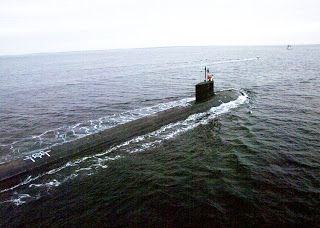
The Virginia-class attack submarine, which is expected to arrive at its new home port at Pearl Harbor for the first time in late July, received the award in Groton, Conn., on Thursday for its part in counter-drug operations off Central or South America.

The operations took place in the Eastern Pacific in support of Joint Interagency Task Force South from Feb. 20 to April 17, 2008, the Navy said.

"I had no imaginable idea that this is what we'd be doing," said Sonar Tech Master Chief Petty Officer Bob Crossno, the chief of the boat for Hawai'i. "We're not doing the stuff we did in the Cold War or World War II. With our advanced technologies, we can interact with other fleets and other services to support maritime security operations."

Much of the submarine's support during the operations is classified, the Navy said
Virginia class submarines conducting anti-drug operations isn't exactly the stuff that justifies 2+ billion dollar expense. While I get it, and I won't talk about it, I have no problem with critics of the submarine force for things like this. For industrial base purposes alone, particularly as we are seeing construction costs rise to levels that make competition on the export market difficult, I seriously wonder if it is time to take a look at a few aggressor squadrons of conventionally powered submarines.

Given the award was given for intelligence purposes, it is entirely possible that nuclear power is what enables the submarine to be effective in this role.

If submarines become valuable tools in the low intensity fight for drug smuggling, building 8 conventionally powered submarines may be worth looking at. I'm not a big fan of conventional powered submarines for the US Navy, but I am not against looking into it either.

At the end of the day, the submarine community needs to find a better balance discussing capabilities without giving away classified data. Submarines are expensive, and the submarine fleet is unlikely to grow until they are able to explain their value to the taxpayer. I believe it can be done without giving away classified information, but I don't make those decisions.

Tuesday, April 28, 2024

More Submarine Orders in the Pacific

With Russian exports to China drying up, a new market for submarines is a good thing during tough economic times. This is unlikely to be well received in China.
Admiralty Shipyards in St. Petersburg will build six Kilo class diesel-electric submarines for delivery to Vietnam, the Russian business daily Kommersant said on Monday.

The paper quoted company general director Vladimir Aleksandrov as saying that Russia's state arms exporter Rosoboronexport would soon sign a contract with a foreign state, and that Admiralty Shipyards had been chosen to fulfill this contract.

Sources in Rosoboronexport later confirmed that Russia and Vietnam had been negotiating a $1.8 billion deal on the delivery of six Kilo-class submarines to the Vietnamese navy for about a year.

Admiralty Shipyards is currently building two Kilo class submarines for Algeria to be delivered in 2009 and 2010.
When you begin to think about all of the nations operating submarines in the Pacific, it becomes quite clear why moving the Virginia class program to 2 boats a year is an important priority for the Navy. Nations currently ordering, building, fielding, or preparing to build modern submarines in the Pacific include Russia, South Korea, Japan, Taiwan, China, Singapore, Vietnam, Malaysia, and Australia.

If we include the rest of Asia, the list would include India, Pakistan, Iran, Israel, and potentially Saudi Arabia and the UAE in the near future.

More than any other 21st century technology, the US Navy needs something akin to an underwater superiority system; which I think would be a networked technology that is not only effective in detecting and neutralizing very quiet submarines, but also doesn't kill sea life which will get the environmental lobby off the Navy's back.

Friday, March 20, 2024

The Other Submarine Incident in the News

Our northern neighbor has a submarine issue of their own making news today. Very interesting.
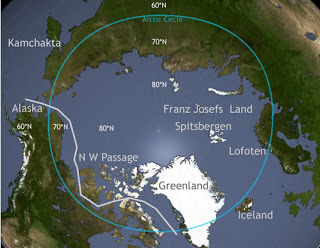
The Canadian Forces quietly scrambled an investigative team to the High Arctic last August to probe what it considered a "reliable" report of a foreign submarine sighting near the eastern entrance of the Northwest Passage - all the while trying to keep a public-relations lid on the matter, documents show.

The sub sighting occurred kilometres away from the location of a mysterious explosion that had been reported to authorities 10 days earlier and made news across Canada.

Today, the military refuses to discuss what it found last summer after probing the sub incident, citing operational security. Its silence on the possible underwater incursion - of a sort Canada is relatively powerless to detect or stop - stands in stark contrast to the clamour Ottawa makes when NORAD detects and intercepts approaching Russian bombers.
It is a good read in full.

Noteworthy it comes around the same time the Russians are talking up details about their submarine force, and their patrol rates.

The Canadian government is ignoring very serious sovereignty issues regarding their northern seas. Seems to me that with the trends creating more sea for a Northwest Passage trade routes between Asia and Europe in the summertime, the Canadian people are being shortchanged by their government who doesn't seem to have political interest in the thousands of foreign sailors soon to be cruising off their north coast.

In the US, our political leaders would be trying to figure out how to make money, and secure it, from this emerging change to economic pattern as a result of global climate change.