Thursday, January 31, 2024

Keep Some Boomers

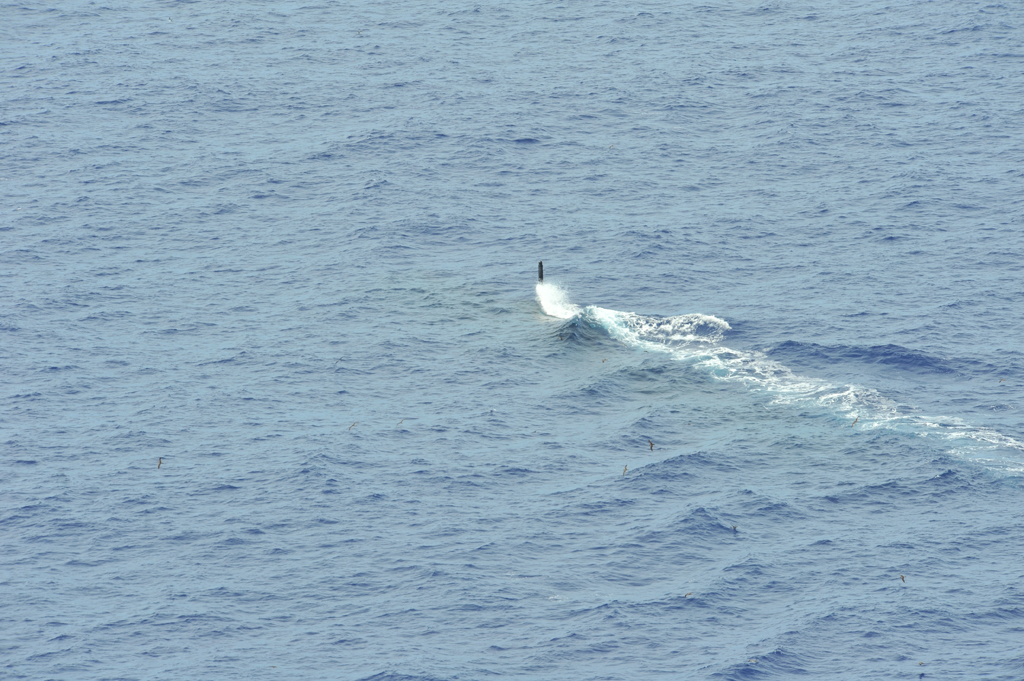
In the Diplomat last week I engaged with Bryan's argument about SSBNs, coming out in favor of retaining a (reduced) boomer fleet:
My own view is that the United States can accept a lower threshold for at sea nuclear deterrence, but this leg should still retain a rump deterrence capability.  Survivability concerns may not be what they were, but they are still relevant, and SSBNs have both survivability and flexibility advantages over ICBMs. It isn’t accidental that China, India, and Russia are all choosing to develop or upgrade their SSBN capabilities at the same time. Concerns about shipbuilding costs should be remedied by resource transfers between services; if the Air Force no longer operates an ICBM force, then funding can (at least theoretically) shift towards the Navy. Replacement of the Ohio boats will still be expensive, but circumstances may allow life extension beyond current expectations. The long term answer may not be an entirely new SSBN design, but rather a modified Virginia class boat that could carry ballistic missiles. The Navy has argued that this design would become more expensive than an Ohio replacement, but issues of number and vulnerability may prove more manageable if the option is no boomers at all.  No other state in the world can match such a capability, and yet the U.S. presumably feels deterred from launching pre-emptive nuclear attacks on China or Russia.  A reduced SSBN force is still the best option for providing a foundational level of nuclear security.
To expand a touch, I don't think that the force-stretching problem that typically occurs when the fleet is downsized applies to the SSBN force. You don't need to ask 8 SSBNs to do the work that 12 used to accomplish, because you can achieve deterrence against any plausible adversary or coalition of adversaries with 8 boats.  Moreover, it's unlikely that any foe that can't be deterred by 8 subs can be deterred by 12.

I'm also willing to grant that the chances that significant resources might shift from other services to make up for the cost of the SSBN replacement is slim, but it's still worth making the argument; if the Air Force gets out of the ballistic missile business, the USAF's share of the pie should drop. Here's some more on the aging ICBM force.

Wednesday, January 30, 2024

Talking Littoral Combat Ships With the Under

The following contribution is by Robert 'O Work, Undersecretary of the Navy. He has requested I post this response to my LCS blog post from last night. The response was directed at me, and he originally was going to publish these remarks in the comment thread of the other post, but my sense from Bob's request is that he is looking to talk LCS with everyone - not just me, so have fun but be respectful in the comments.

Galrahn: thanks for your candid assessment. As someone who has generally been supportive of the LCS, I was looking forward to your reaction, and to what promises to be a lively give and take over the next couple of posts.  Here are simply a few rejoinders for now:

I know we disagree on this point, but I think your first point is you are asking for the second of two reports, which is yet to be written.  The one that tells the potential future histories of the ship.  I think that report is premature. This ship is unlike any ship the Navy has ever built; it is a truly disruptive system, requiring different thinking.  I wouldn't write the second report until the ships have been in the fleet for some time so Sailors can really determine the absolute best way to operate and fight the ship

Second, you complain that the report is simply a rehash of history. But, like Ralph Peters, I like to take a GPS approach to things....first thing you have to know is where you are.  And it is a good thing to know how you got there.  And despite all the talking and blogging about LCS over the past three years, I have always been dissatisfied about complaints of this or that without putting into context what the ship was designed to do.  So, this report was written first to answer the question: why isn't the LCS a corvette? Why isn't it a frigate?  Why does it look the way it does? What it is designed to do? How did we get to this point?  After talking to literally hundreds of people, despite all the LCS's well documented programmatic history, there was little written on why leaders made the decisions they made. As a result, it seemed clear to me that few people really appreciated the thought process and decisions that went into the ship, the difficult tradeoffs made, and why the ship is the designed the way it is.  The purpose of this report is to catalog the history in as objective way as possible, in a different way than I've seen to this point.

I read your blog--and I know this is not what you meant (at least I think this to be true)--and it almost sounds as if you expect the development of a ship to be a simple engineering problem, with predictable, well-defined decision points. That the ship concept of ops needs to be stable, like the design drawings. If there is anything I've learned as Undersecretary, nothing could be further from the truth. Ships are conceived as part of a fleet design, with good ideas on how they will fit into it. But things change, especially for a system like LCS that doesn't fit into any neat box. And subsequent decisions are made for any number of reasons over the course of years--to account for programmatic, budget, threat, and program execution changes. The development is never a straight path.  After analyzing the LCS's developmental history, I conclude: okay, the Navy could have done three things much better: early program execution; staying on narrative; and prepping the surface warfare enterprise for the ship.  But in terms of concept, design tradeoffs, and capability and capacities, I think this program remained remarkably stable and true to the original intent.  I therefore conclude the Navy got the ship it wanted, with pretty much the capabilities it wanted, for pretty much the price it wanted. In my view, this hardly the management execution fiasco you describe.

Now it is certainly true than any honest and objective narrative about a ship's development history is going to be a hair-raising story of expectations, balancing requirements versus program costs, and making hard tradeoffs.  As I prepared the history, even as one more familiar with the LCS than most, I was surprised how the ship evolved through its development process.  But, like I said,  we pretty much got to where the people who conceived of the ship intended to go; now it's time to take it out and let Sailors really wring it out.  As I say in the report, I trust our Sailors to help us make the LCS even better.  In the meantime, however, it's looking to be a pretty capable small combatant--albeit different in kind than most.

I couldn't agree more with a segment of your closing paragraph:" the  Littoral Combat Ship - warts and all - is one of the great things the Navy is doing today and legitimately - besides ballistic missile defense - the only sign of innovation in surface warfare taking place on the entire planet..." But it is definitely a disruptive system.  It will evolve in fleet service, as we exploit its strengths and better understand its weaknesses.  What's wrong with that?

Finally, this report was not intended to be an analytical defense of 55 LCSs.  That comes with our Force Structure Assessments.  Our new one comes out soon.  We can talk about numbers when it does.

Looking forward to more give and take.

Best, Bob

LCS - A History Lesson in Failed Execution

(Lt. Jan Shultis / U.S. Navy)
The Naval War College has released a working paper titled The Littoral Combat Ship: How We Got Here, and Why, by Robert O. Work. I think it is a very interesting read and perhaps one of the most candid and insightful collections of history related to a Navy program that many of us have watched unfold in real time over the last decade. I have many thoughts, and have no intention of trying to capture all of them in a single post, so for the foreseeable future I intend to discuss this topic through several posts.

First, I note that John Lehman was the last political appointee to ever put anything this comprehensive together on paper as a professional contribution to the Navy community. Given the current political environment, this might also be the last time we see a political appointee make this kind of professional contribution for the next few decades.

I was originally given this paper in October to read for feedback when Bob Work submitted it to the NWC for publication. My opinion has not changed. I appreciate the effort and the detailed research poured into this article, and I understand what the Undersecretary is trying to do, but in my opinion I think the article does what everyone always does when discussing the Littoral Combat Ship - it focuses on the mistakes of the past. Because the history of the Littoral Combat Ship is a lesson in what not to do, I personally no longer find anything in the history of the Littoral Combat Ship of any value because I look towards the future of the program, not the past. In my opinion the history of the program, as laid out in detail by Bob Work's latest paper, offers no justification for the stated future of the LCS program at 55 ships.

If the Navy had any credibility left on the Littoral Combat Ship, and for the record I am not sure they do right now, it is my impression this paper erodes all remaining credibility of the Littoral Combat Ship into oblivion. While I know that is not what Bob Work was trying to do, I do believe the paper ultimately delivers the impression that the Navy has been lost at sea trying to execute the concept of this program from the beginning.

At the end of the paper on pages 45-46 (PDF pages 49-50) recent activities that have happened under the leadership of CNO Greenert are discussed. Those activities include the sustainment war game conducted in January of 2012 to assess the logistics, maintenance, and support plans to support the early deployment of USS Freedom (LCS 1) to Singapore, the "OPNAV Report" assembled and delivered by Rear Admiral Samuel Perez last spring, the review of LCS material condition by Rear Admiral Robert Wray, President of the Navy's Board of Inspection and Survey, in preparation for the upcoming deployment, and the second wargame early summer 2012 directed by Admiral John Harvey on LCS concepts of deployment and operations.

Those four activities were the major Littoral Combat Ship activities of 2012, and with the ship set to deploy in only a few weeks, perhaps it is time to review where the Navy is today as a result of all that history in the Work paper.

The first wargame on logistics, maintenance, and support plans was held in January 2012. Chris Cavas has an article about it here written in July of last year. The wargame was expected to help the Navy plan for the upcoming USS Freedom (LCS 1) deployment, and I am sure it will be very helpful in that regard, but the results of the wargame suggest the Littoral Combat Ship program is going to have serious problems as a forward operating vessel in ports where US Navy presence is limited, ports like the one USS Freedom (LCS 1) will be stationed at in Singapore.

The OPNAV Report put together by Rear Admiral Samuel Perez was completed early last year and is so brutally honest about the Littoral Combat Ship the Navy can't even release a declassified version for public consumption because it would, legitimately, be too embarrassing and likely damage the non-existent credibility of the LCS program. The OPNAV Report was exactly what the Navy asked for, an honest assessment of what is needed to fix the Littoral Combat Ship, and it turned out that honesty was also brutally ugly. God bless Rear Admiral Perez for doing a wonderful job that legitimately may actually save the Littoral Combat Ship program. Noteworthy, Rear Admiral Perez got promoted for his good work before he was sent off to the State Department where his career will likely end and no one will ever hear from him for the rest of his career. I'd love to be wrong on that last point, but historically when a Flag Officer gets sent to the State Department, it is like the Russians sending a General to command a remote barracks in Siberia.

Chris Cavas discusses the OPNAV Report here and here.

Rear Admiral Robert Wray is a really smart guy. USS Freedom (LCS 1) is something of a one-off version with lots of problems. None of the rest of Freedom class will be anything like LCS-1, in fact in that respect, the Navy really did get what they paid for when they purchased the ship with R&D money - although because the execution of the program was so bad the Navy paid too much for what amounts to the R&D lemon. I am inclined to believe that Rear Admiral Wray will have LCS-1 as ready as the ship could be for the deployment.

Finally, Fleet Forces command held the second wargame focused on LCS concepts of employment and operations in the early summer of last year. Bob Work mentions this on page 46 of his report, but what he doesn't mention is that the wargame ultimately found the LCS as is today to be a complete dumpster fire. It would be inaccurate to describe the second wargame as a waste of time, because the wargame revealed a great number of things the Littoral Combat Ship can't do. USS Freedom (LCS-1) is only a few weeks away from deployment, and yet in the January 2013 issue of Proceedings Rear Admiral Rowden discusses the LCS by noting:
We are also codifying the framework under which the LCS will be employed, known as the Concept of Employment (CONEMP). This document will evolve based on experience and will be a foundational reference, dictating how we will operate, man, train, maintain, modernize, and sustain these ships. The CONEMP will frame the critical program tenets and planning factors to build and refine the various mission-specific CONOPs and other implementation documents issued to support LCS Fleet introduction.
It goes on to say:
The Fleet’s forthcoming mission-specific CONOPs and refinements to the ship’s current warfighting and platform wholeness CONOPs will follow. LCS is a component of a balanced force, structured to defeat adversaries seeking to deny our access. The LCS CONEMP and various CONOPs will likely be very different documents from what we’re accustomed to, given the unique concepts of LCS and its emerging role in the Fleet.
In other words, the Navy is about to deploy the ship to the south Pacific for naval operations and they still don't have their concept for employment or concept of operations finalized because it will be informed through experience. Folks like Rear Admiral Rowden are basically running around saying something akin to 'the sailors will figure out this LCS thing for us!'

As a bit of snark, I'll just note the sailors have no choice but to figure it out now that Admirals have spent nearly a dozen years - as laid out in full detail by Bob Work no less - really screwing it up. In the context of the history of the Littoral Combat Ship, all signs both in word and deed suggest that Navy leaders are still improvising and making it up as they go with LCS, doing so with the hope the deployment is the completion of a Hail Mary pass. If it was as easy as a choice, I would bet on the sailors before I would bet on the Admirals, or Undersecretary - but we all know there is nothing simple about the task the crews of FREEDOM are facing.

The Navy has spent less than $12 billion on the LCS to date, which really isn't much when compared to the $50 billion the Navy has already spent on the vaporware of the Joint Strike Fighter. For perspective, building the 24th Littoral Combat Ship to completion will ultimately mean the Navy has invested just over 2% of their total budget over that time - from top to bottom - on training, maintenance, manpower, construction, everything LCS. All the criticism and anger and passion over LCS is really only about 2% of the budget. By comparison aircraft carriers are at least 13% that I can quickly account for in the budget, and just owning them has serious influence over a much greater percentage like type and number of escorts that are necessary.

At 24 ships I still believe the Navy can get the return on investment in lessons learned needed to develop a true battle network at sea mothership capability that advances US Navy seapower generations ahead of all competition. Yes, believe it or not, if the LCS worked as conceptualized it absolutely would advance US seapower generations ahead of the competition. To date, concept and execution have been far from equal, not even close actually.

At 55 ships, LCS can never return on the investment, indeed after the Bob Work paper anyone who suggests the Navy needs 55 Littoral Combat Ships needs to produce strong supporting data and make that case, because in my opinion the Naval War College just published strong supporting data that the data used to get to 55 ships never existed intellectually. Indeed 55 Littoral Combat Ships was, perhaps not even figuratively, just a dream.

More than anything else right now, what the Littoral Combat Ship needs is a public plan and vision of the future that inspires and is exciting with potential, because right now the future of LCS is a dark uncertain place that has sailors wondering if it is worth getting involved in. Bob Work's paper is the most informative paper on LCS published publicly in many years, and yet all it really does is reflect the past - just like virtually everyone else who talks about the LCS on the internet.


It shouldn't be this hard to execute a good concept. I still strongly believe the Littoral Combat Ship - warts and all - is one of the great things the Navy is doing today and legitimately - besides ballistic missile defense - the only sign of innovation in surface warfare taking place on the entire planet, but if the future is as poorly managed as the past has clearly been, the LCS will be noted in history as an expensive, wasted opportunity.

Was the Mistral a Bad Deal for Russia?

The short answer to the title for this post is apparently, yes. I spit coffee on my monitor today when I was sent this story and read it, because at first I misunderstood it and thought he was worried about an invasion of Siberia, then I couldn't believe it if the translation is accurate. Russia's Deputy Prime Minister Dmitry Rogozin really doesn't like the Mistral class vessel.
Two amphibious assault ships bought for the Russian Navy from France in a 1.2 billion euro deal will not be able to operate in temperatures below seven degrees centigrade, Russia's Deputy Prime Minister Dmitry Rogozin admitted on Saturday, in critical comments about the contract.

"It's very odd that ships for offloading a landing force, floating in our latitudes won't work in temperatures below seven degrees," said Rogozin, who has special responsibilities for the defense industry, in a meeting of the Academy of Military Science on Saturday.

"Maybe they thought we’re going to undertake special operations in Africa but I doubt that’s going to happen," he added. He did not elaborate on why the ships would not work in cool temperatures. It was also unclear whether he meant plus seven degrees or minus seven, as Russian-speakers often leave out the word for minus when they assume it is clear which side of freezing they are talking about.
Can anyone confirm whether he meant 7 degrees or -7 degrees? The difference is pretty important, because 7 degrees centigrade would be about 44.6 degrees Fahrenheit. Is that for real?

That would have to be what he meant, because surely he is not suggesting the Mistral is a failure because China might invade Siberia in the middle of a harsh January winter sometime in the future. The first article I read about this implied he was talking about -7 degrees, but after reading the RIA Novosti article linked above, I think he means below 7 degrees centigrade, or below 44.6 degrees Fahrenheit.

Military-Industrial Commission Deputy Head Ivan Kharchenko complained about the Mistral deal earlier this week claiming it was a bad deal for Russia and the Russian shipbuilding industry. He also said the cost of cancelling the ships at this point was too high, and Russia would complete the contract for both Mistral's under construction. With both Military-Industrial Commission Deputy Head Ivan Kharchenko and Deputy Prime Minister Dmitry Rogozin being very critical over the past week of the Mistral's being purchased for the Russian Navy, it does not look like the Russians are very happy about the final outcome of this deal.

There was a lot of criticism by politicians in the United States of the Mistral deal between France and Russia when it was first announced. In hindsight it makes me wonder if that criticism and initial political opposition resulted in a sabotage the deal with details like this one.

Ironically, it was 45 degrees Fahrenheit in Damascus, Syria on Wednesday, which if we are to believe these news reports, is just barely above the operational threshold temperature of the soon to be fielded Russian Mistral class. Hmm.

Tuesday, January 29, 2024

Operation Guardian

As you can see in the picture, the USS Guardian (MCM 5) has taken a pounding as she has been hard aground on the Tabbahata Reef. On the day this photograph was taken Rear Admiral Tom Carney told the media during a press conference the ship is approximately 20-30 meters from the edge with several hull penetrations, as you can see clearly in this photograph. Over the past several days I have been accumulating as much information as possible related to the USS Guardian (MCM 5) grounding, and unfortunately, there really isn't any good news to share except that no one has been hurt by the incident.

First, I think the Rear Admiral Tom Carney has done a great job. We often discuss the diplomatic role that naval power serves for the nation, and as the fleet disperses across the world naval officers often find themselves serving in the role of a diplomat. Given the overreaction by some in the Philippines it is clear that Rear Admiral Carney has executed his role as an American diplomat with nothing but class in the face of what is obviously a challenging situation. I also very much appreciate the assistance of several PAOs in helping me track down information related to the USS Guardian (MCM 5) situation - in particular LT Anthony Falvo and LCDR Christopher Servello.

As you might imagine when a wooden ship crashes into a coral reef at about 13 knots, the ship immediately got lodged into the coral and became unable to pull out. All indications are that the little wooden minesweeper simply didn't have the engine power to pull itself off the reef, but even if she would have had enough power, backing off the reef could have caused even more damage to the wooden hull and potentially ripped the ship apart further thus sinking her right there on the reef. From what i understand, the ship took on water almost immediately upon grounding. In many ways, this is a worse case scenario where a wooden ship meets coral and loses, where as a steel hulled vessel with more engine power likely would have suffered much less damage and would potentially have been able to dislodge itself.

USS Guardian (MCM 5) is flooded internally to the tide line, with the Auxiliary Machine Room and Pump Room completely flooded. There is coral underneath the hull in both the Auxiliary Machine Room and the Engine Room. The internal bulkhead between the Auxiliary Machine Room and the Engine Room is no longer water tight, and the several internal bulkheads are slowly losing integrity. There are also several cracks in the superstructure, and as you can see in the photo there are several holes in the hull along the length of the ship.

Because even US Navy ships made of wood are well built and engineered for survivability, and despite all the damage the ship has taken being stranded on the reef for over 10 days, no fuel apparently leaked from the fuel tanks, and the tug Vos Apollo has removed all of the fuel and replaced the fuel with seawater to keep the ship stable on the reef. All indications are that all hazardous materials have been removed from USS Guardian (MCM 5), and as of Saturday the ship was not in immediate danger of a catastrophic failure. The latest news today is that the Navy continues to remove everything possible from the ship that can be removed safely.

In a press conference on January 24, 2024 Rear Admiral Tom Carney told media the ship could not be towed off the reef or to port, indeed he specifically said the ship would likely sink if they tried. The ship must be lifted off the reef and carried via ship back to port. SMIT owns the NAVSEA 00C salvage contract for the Pacific region, and SMIT Borneo and SMIT Cyclone are reportedly en-route to USS Guardian (MCM 5) to salvage and recover the vessel. While the Navy is yet to publicly say so, the ship is almost certainly lost, and this will almost certainly be a salvage and recovery operation primarily designed to protect the Tabbahata Reefs National Park, and not recover the ship for future use.

On location is the guided missile destroyer USS Mustin (DDG 89) with embarked helo det; the oceanographic survey ship USNS Bowditch (T-AGS 62); the rescue and salvage ship USNS Salvor (T-ARS 52); M/V Trabajador; and the Malaysian tug VOS Apollo in supporting operations. P-3s from Commander Task Force 72 are also supporting with daily overflights. SMIT Cyclone (1,000-ton crane), the SMIT Borneo (500-ton crane), and the SMIT Andaman (barge) are en route from Singapore and should arrive on Friday. As of last week the Navy was also investigating the availability of Jasper 25 (PDF) for salvage and recovery operations, but I have not heard a status on that. Regardless, none of these crane vessels will be capable of lifting Guardian intact, which again informs us where this is likely going.

For those interested in the digital map issue, several in this community have been contributing to this discussion over at Panbo. Not only is the post interesting, but the comments are very informative.

Arguing for Submarines, The Advanced Course

The Periscope of HMAS Farncomb, on the Pacific Missile Range Facility (PMRF) off Hawaii, moments after a successful Sink Exercise (SINKEX) at RIMPAC 2012. HMAS Farncomb fired a Mark 48 Torpedo into the hull of former US Navy Ship Kilauea striking the ship below the bridge. The hulk broke in two and sank. Mid caption: Australia is one of 22 nations attending RIMPAC that includes six submarines, 40 surface ships and an aircraft carrier participating in a realistic maritime warfare scenario. Australian soldiers from 1 RAR are also participating in the amphibious aspect of the exercise, alongside US Marines. RAAF AP-3C Orions and a Wedgetail are also providing air support. Link
Submarines and Maritime Strategy - part 1. When was the last time you read an argument for submarines like that from a US Navy officer of any rank in the context of maritime strategy?

No seriously, that wasn't a rhetorical question, I'm curious when the last time was and what the article was, so I can go read it.

That's a pretty impressive post Justin. I actually sympathize with Nic Stuart, because I have made some arguments on this blog more than a few times that resulted in a Navy Captain response that made me feel really foolish. If Nic didn't feel that way after your post, he may need to read it again.

Monday, January 28, 2024

Budget Thoughts

I don't really want to get too deep into the budget discussion yet because a memo (PDF) and a PowerPoint (PDF) isn't exactly a plan. I have only a few initial thoughts.

The memo and the PowerPoint were both written with the expectation they would leak to the media. This sets the expectation moving forward that everything will unfold in public.

The CNOs PowerPoint that breaks out State by State impact is written like one would write a highly political document. All indications are the Navy put the document together, but it very much looks like the White House is coordinating everything. Whether this is a good or bad thing is subject to interpretation.

The evil here is not sequestration, it is the Continuing Resolution. Even if OSD canceled the Joint Strike Fighter tomorrow, the Navy could not move money around from that program to any other budget to make up for any specific budget shortfalls, because the Continuing Resolution that is the current budget the Navy is operating under prevents exactly that type of big decision making or movement of money around the budget. The CR is probably written that way so that no politicians pet project gets canceled. The Continuing Resolution is the posterchild of bad governance.

Both political parties own sequestration, but in my opinion Democrats own more of it than Republicans since Democrats have not yet produced a single alternative to sequestration. Sequestration has not happened yet though, so right now Democrats simply own something that may or may not happen.

Both political parties own the Continuing Resolution, but in my opinion Republicans own more of it than Democrats and as of right now it is the current law. While it is true the Senate has not passed a budget in the lifetime of every child that will enter kindergarten this fall, the details of the Continuing Resolution have not been an important issue for Republicans who have been dead set in protecting industry interests over DoD interests. There are opinions out there that the Continuing Resolution is another example of how weak the leadership of Buck McKeon is as Chairman of the House Armed Services Committee and he has basically thrown the DoD off the boat in support of the House leaders priorities. It was noteworthy Defense News didn't name Buck McKeon to the top 100 individuals in Defense.

Either way, the Continuing Resolution prevents the services from preparing for sequestration because it prevents any significant movement of money inside the budget. The worst case scenario is a year long Continuing Resolution, and if combined with sequestration the damage will be much more significant than just sequestration.

All we can really say with certainty is that the Republican Party has changed over the last four years, and the CR and sequestration have revealed for anyone paying attention that the Republican Party is no longer the political party that represents the DoD as has traditionally been the case in American politics, although with the Continuing Resolution written as is today, the Republicans party is still very much the political party of the defense industry.

Regardless of the partisan politics, it is going to be a very difficult year for defense. A smaller budget for defense is not a bad thing by itself, indeed I believe the DoD budget is too high and taxpayer money is wasted today in defense spending absent strategy. It is my opinion the clear and present danger to the defense of the United States is not less money for defense, but poor governance by elected officials in the management of less money for defense.

As of right now, poor governance by elected officials in the management of less money for defense is exactly what is going on with the Continuing Resolution, and regardless of who folks believe is to blame politically, both political parties own some responsibility and deserve criticism for the way the DoD budget is being managed. It will be interesting to see how things unfold over the next several weeks, because with the White House apparently involved in the response process by the DoD, it could get pretty ugly.... indeed very politically ugly particularly when it becomes time for new political appointments and the administration likely has fewer extremely smart and well respected non-partisan experts carrying their water.

I have a theory that because Bob Work has been Undersecretary of the Navy that both the Obama Administration and the Navy has avoided a lot of public criticism from the greater naval community, which unlike the public think tank communities of the other services (particularly Army) who think tactically and primarily in terms of money/programs, naval thinkers tend to think about big picture strategy and foreign policy and historically have written criticisms that can come off the press with politically damaging blows to the confidence in political leaders (indeed George Bush took several hits from 2005-2008 from the naval centric community that were so devastating they land on John McCain as a second order of effect). Everything I am seeing from Obama's second term appears to be right out of the Jimmy Carter playbook for DoD management, starting with a politico heavy appointment list absent any truly respected defense expertise. History says that kind of poor governance will catch up with the Democratic Party in 2016.

I tend to believe that when Bob Work leaves in May(ish) (and I believe the absence of Hillary Clinton at Department of State will result in a similar effect), not too long after it is going to get ugly as the really smart people start to unload on the Foreign Policy and Defense establishment after holding fire for four years, and I won't be surprised at all if it is through those broadsides that a Republican Party foreign policy is reborn over the next 4 years. It really surprises me the Obama administration doesn't intend to appoint Bob Work to be SECNAV, because usually those guys are pretty smart about keeping the their opponents off guard. It is my opinion the Navy has been living in 4 years of the Bob Work Effect, which has basically provided a buffer effect from the really sharp criticisms from nearly every serious defense person in DC regardless of political affiliation. My sense is the Ray Mabus Effect is simply not going to get it done for the Administration, and in all likelihood neither will the Chuck Hagel Effect or the John Kerry Effect.

Now think about the future of defense - a bunch of politico type appointments with very few highly respected experts or elder statesmen, a year long continuing resolution, sequestration or budget cuts of similar size, and the current partisan political environment. I'm thinking the next four years are going to look and sound like a train wreck in slow motion for the DoD.

And yet I am still glass half full...

Navy is Thinking Outside the Box on LX(R)

Found this from January 16, 2013. Very interesting.
The Navy is interested in concepts for improving future amphibious ship affordability while still retaining warship capabilities. One approach towards this goal might be to use commercial design and build practice for as much of the ship as possible, and apply military standards only where necessary to achieve specific performance requirements. The Navy would like Industry perspectives on potential benefits and challenges to implementing such a concept. Specifically, the Navy requests information on:

o The feasibility and cost of building a Navy ship to commercial standards (as opposed to military standards), classed by ABS to Steel Vessel Rules (www.eagle.org), with the following capacities:

o 20,000 ft2 (1,860 m2) vehicle stowage space, with access to both well and weather decks, and with at least 13.5 ft (4.1 m) clear overhead

o Well deck capable of embarking either two Landing Craft, Air Cushion (LCAC) or one Landing Craft Utility (LCU)

o Troop berthing for 400

o 20,000 ft3 (570m3) magazine capable of stowing all types of USMC ammunition

o NAVAIR certified flight deck with two land/launch spots for MH-53E or MV-22 aircraft

o The feasibility and cost of imposing the following additional design requirements on the above concept:

o US Navy crew (approximately 350), with Navy standard damage control lockers & equipment

o US Navy combatant damaged stability standards

o Longitudinal bending moment dictated by Navy rather than being derived from seaway loads or ABS rules

o Grade A shock qualified emergency take-home auxiliary propulsion system

o Grade A shock qualified command and control spaces for government furnished electronic systems

o Segregated Grade A shock qualified Navy standard electrical, cooling water, and other distributive systems to service take-home auxiliary propulsion and other vital systems.

For the purpose of this RFI, assume that half of distributive system loads are to vital systems.

o US Navy firefighting systems

o The practicality of implementing a mixed commercial and military standards ship by designating certain compartments as reserved for military standard equipment, with the shipbuilder free to outfit all other compartments in the most cost effective manner that satisfies ABS Steel Vessel Rules.

o Labor and material breakdowns for any ship costs estimates.

o Explanations for how specific potential future amphibious ship requirements would affect costs.

o Contractual, specification, or other issues that might impact a mixed commercial and military standards ship program.

o Other ideas or suggestions for future amphibious ship affordability such as acquisition strategies, innovative total ship solutions, technology advancements, or design and construction concepts/methodologies.

It is desirable that data be received with unlimited rights to the Government.

Nevertheless, we recognize that proprietary data may be included with the information provided. If so, clearly mark such proprietary information and clearly separate it from the unrestricted information as an addendum.
I've highlighted the pieces I think are highly relevant here. The money for LX(R) is not going to change. It is $1.3 billion. If your budget is finite, as it is for this program, how can the Navy maneuver within a fixed budget?

Well, if I am reading this solicitation for information correctly, one way would be to trade some of the survivability of the ship for more survivability on shore. By that I mean it looks like someone is looking into what it might mean if some areas of the ship were built to a commercial (I read as below NVR) specification as a way of saving money and using those savings to add more options to the capability of the vessel in support of LX(R) features that help meet more aspects of the requirements stated by all parties.

This is a clever solicitation designed to encourage clever ideas.

Friday, January 25, 2024

Crowd-sourcing Future Fleet Designs

The Navy is rapidly headed for fiscal shoal waters where tough decisions will need to be made, with perhaps the design of tomorrow's fleet being the most important. The combination of unsustainable O&M expenditures and deployment tempo, a broken acquisition bureaucracy, indeterminate strategic futures, declining manning levels, and a ground swell of deferred maintenance creates an extremely complex environment in which to plan a future fleet. In an effort to expand the dialogue of this important issue beyond the inner circles of OPNAV, the Beltway Bandits, and think tanks, here's another experiment in crowd-sourcing. Below, American taxpayers, our international colleagues (including likely a few adversaries), and other random readers can have a chance to vote on some alternative U.S. Navy fleet compositions. Please choose one of the above options* and feel free to discuss your rationale in the comments below. I've purposely kept the options a bit vague and open for interpretation to promote discussion. Unfortunately, limitations in polling (and my tech skills) prohibit more than one vote, but feel free to log in and cast a second vote in this completely unscientific poll if you think there is some combination of the above that is preferred. As I've done in the past here, at a future date, I'll provide a summary of the best responses in the comments.

For full disclosure, my votes will be cast for smaller, more distributed and affordable ships, and a move towards more naval unmanned systems. But don't let that sway you... Spread the word here.

*Tech notes: If your browser is having trouble with the voting widget, hit the refresh button.  Hit the red x to close the little ad banner.

The opinions and views expressed in this post are those of the author alone and are presented in his personal capacity. They do not necessarily represent the views of U.S. Department of Defense, the US Navy, or any other agency.

Wednesday, January 23, 2024

USS Monsoon Griffin Test

The Navy just released an interesting video of Raytheon's Griffin missile testing from USS Monsoon (PC-4) off VACAPES last month.   Although relatively short-range (about 5km), Griffin brings some much-needed offensive firepower to the PCs.  The $45k a pop Griffin has proliferated in the U.S. military in the past few years, with roll-on installations on Marine Corps C-130s and other aircraft.  Monsoon's testing also represented a successful demonstration of laser designation and targeting at sea (albeit on a clear day). The dual quad-pack Griffin set up onboard Monsoon is very compact and lends itself to installation onboard even smaller vessels such as the MK VI.
 
The Patrol Coastal Griffin Missile System, the addition of remotely-operated MK 38 MOD 2 25mm chain guns onboard other combatants, and a few other programs are part of the Navy's rapid deployment efforts to counter the fast inshore attack craft/fast attack craft swarm threat.

USS Guardian Grounding

Jan. 20, 2013 released by the Armed Forces of the Philippines Western Command (AFP-WESCOM) taken on Jan. 19.
We are kind of late to the discussion, but it is slowly trending towards the nightmare scenario. The latest report is still valid, as today the Navy said the situation has not changed. From the Navy Times.
“Multiple spaces” are flooded aboard the minesweeper Guardian, still stranded on a reef in the Philippines since Jan. 17.

While the ship’s condition remains stable, a U.S. destroyer has arrived on the scene in the Sulu Sea and a salvage team headed by a rear admiral is being established as more ships and assets head to the area.

Weather conditions remain rough, and the ship, once pointed straight into the reef with her bow hard aground, has swung broadside on, where most of the starboard hull is in contact with the coral.

As of Saturday night Eastern Standard Time, the ship experienced a “slight increase to a port list,” according to the Navy. But as of Sunday night Philippine time, there was no evidence the ship was taking on more water. Concerns persist, however, that the ship will sustain further damage.

No injuries have been reported, and the entire crew of 79 sailors was taken off the ship Jan. 17. No one has been back on board the Guardian, the Navy confirmed.
The destroyer is USS Mustin (DDG 89) where Rear Admiral Thomas Carney has taken over as the on-site commander.

I'm not going to speculate cause and will wait for the investigation to run its course.

I hear nothing but great things about the CO. I do not know if it is still true, but it used to be that the navigator of the Minesweepers was the XO, but that was several years ago and the minesweeper I visited was using paper, not digital maps. This was also back when the mine ships were still homeported in Texas - much has changed with our nations mine ships since then, starting with the fact that nearly all of our Avenger class ships are now homeported overseas and the coastal minesweepers are long retired.

Speaking of digital maps, I look forward to the investigation explaining how the National Geospatial-Intelligence Agency (NGA) misplaced the Tabbataha Reef? This is just a mistake right, and not some very clever cyber sabotage? In cyber, the threat is not that someone will delete your data or steal your data - that kind of sabotage and espionage can be repaired and is in fact the kind of cyber capabilities the system is set up to protect itself against. No, the real cyber threat that keeps people up at night is when someone changes data in a way no one notices until it is too late. Stuxnet, often described as the first nasty cyber payload, didn't delete or steal information - Stuxnet changed the information in a covert way. That's the key distinction between the vast majority of cyber graffiti payloads and a legit cyber smart bomb. Hopefully the map issue at NGA is simply a mistake.

Another place for good pictures of USS Guardian (MCM 5) stuck on the reef can be found here.

The Philippines has fined the US Navy for destroying natural resources, which is clearly a political overreaction since we have no idea how much damage has actually been done, and it is hard to believe the fine is going to actually pay for any damages. For the record, the fine amounts to around $7,300 US for violation of at least five laws including unauthorized entry, non-payment of conservation fees, obstruction of law enforcement (we haven't allowed their park ranger on the ship), damage to the reef and destruction of resources. The fine is little more than a domestic political circus, and if it makes them feel better then I think they can go ahead and have their circus, because it certainly could be and still might get much worse....

because the ship isn't leaking oil or fuel, yet.

The good news is that no one was hurt. The bad news is the ship is in a very tough spot and may not survive this incident, and given the weather conditions any attempt to save the ship is almost certainly going to be dangerous. Keep everyone in your prayers as this plays out because mother ocean can be a bitch on a good day, and these aren't the good days in the history of USS Guardian (MCM 5).

Oh Yeah Baby

Guess what just moved into Beta Testing...

This is what people who remember Harpoon (both the table top version and the Harpoon 2 PC versions) have been waiting for their whole lives...

And by people, I'm talking about me!

Tuesday, January 22, 2024

Gray Matter for Gray Hulls: The Intellectual Software Powering the U.S. Navy’s Asia-Pacific Rebalance

East Asia
The following guest post is by Gabe Collins. Gabe Collins is the co-founder of China SignPost and a former commodity investment analyst and research fellow in the US Naval War College's China Maritime Studies Institute.

The Naval War College is poised to play a pivotal role in America’s Asia-Pacific refocusing. Here are the programs and professionals that the Navy will draw on.

U.S. Chief of Naval Operations Admiral Jonathan W. Greenert recently penned “Sea Change,” a landmark article for Foreign Policy that explains America’s rebalancing toward Asia. Building the Admiral’s Sailing Directions (PDF), Posture Statement (PDF), Navigation Plan (PDF), and Position Report (PDF), it represents his definitive public statement on what the U.S. Navy is doing to support the Asia-Pacific Rebalance.

Admiral Greenert’s assessment highlights the centrality of the Asia-Pacific region to American interests, but even more importantly, notes the need for the U.S. Navy to “establish greater intellectual focus on Asia-Pacific security challenges” and to help create the intellectual software that will enable Washington to employ its military hardware to maximum effect in the region. Having Navy institutions play a leading role in formulating Asia-Pacific strategy makes sense given the region’s maritime geography and manifold commercial and military maritime security challenges.

As a part of rebalancing, the Admiral notes  that “[the U.S. is] refocusing attention on the Asia-Pacific in developing and deploying our intellectual talent.” He cites The Naval War College as “the nation’s premier academic center on the region,” with strong and growing programs on Asian security. Illustrating the comprehensiveness of the Navy’s commitment to Asia-focused strategic thought, Greenert adds that the Naval Postgraduate School has also “expanded its programs devoted to developing political and technical expertise relevant to the Asia-Pacific.” The Admiral highlights a core strength of the Navy’s thought centers—their focus on continually developing human capital and actionable operational concepts that can be sent right back out to the fleet, pointing out that “we [the Navy] continue to carefully screen and send our most talented people to operate and command ships and squadrons in the Asia-Pacific.” 

This top-level recognition of the need to focus on intellectual software is refreshing given that the subject typically receives far less attention than the hardware end of naval activities (i.e. ships, planes, missiles). It is also important because as the U.S. and China move forward with their “frenemies” relationship that mixes cooperative and competitive aspects, it will be vital for Washington to base its actions in the Asia-Pacific area on a firm, comprehensive, and forward-looking intellectual foundation.

Among bastions of naval strategic thought in the U.S, the Naval War College is singularly well-positioned to play a leading role in formulating the foundations of American naval power in the Asia-Pacific. Having furnished critical inputs (PDF) to support the formulation of the latest U.S. maritime strategy (PDF) —the first endorsed by the chiefs of the Navy, Marine Corps and Coast Guard—the College is already making substantial contributions to U.S. strategy regarding how to grapple with China’s rising maritime power, as well as the evolving roles of India and U.S. allies such as Japan in a dynamic and strategically-vital part of the world. To understand and how Newport will continue shaping policy in coming years, it is necessary to consider its three major Asia-Pacific programs and the individuals that lead them.

First is the China Maritime Studies Institute (CMSI). Founded in 2006 by Dr. Lyle Goldstein and led by current director Prof. Peter Dutton, a retired naval flight officer and judge advocate who enjoys considerable policy influence (PDF) through his research on Chinese maritime strategic and legal perspectives, CMSI aims to enhance the U.S. Navy’s understanding of the maritime implications of China’s rise. CMSI draws on the work of both dedicated researcher professors and affiliated teaching faculty who are able to read and analyze Chinese-language original source materials from the Institute’s library, which offers the most specialized collection of China-related military maritime publications outside of Greater China. In 2008, CMSI was praised by then-Secretary of Defense Robert Gates as a model for conducting open source research on China’s military.

CMSI draws on these unique resources to offer multidimensional research capabilities covering a range of issues including China’s naval policy and development, civil-military relations, civil maritime organizations, territorial and maritime claims disputes and associated legal positions, defense science, technology, and industry, aerospace dimensions of naval operations, seaborne energy security, and maritime relations with the U.S. and other nations. In addition to developing and curating its library, CMSI holds an annual conference, publishes the China Maritime Studies monograph series, and hosts regular guest speakers.

Second is the Asia-Pacific Studies Group (APSG). Established by Dr. Jonathan Pollack, now a senior fellow in Foreign Policy and acting director of the John L. Thornton China Center at the Brookings Institution in Washington, DC, and led by current chairman Dr. Terence Roehrig—like Pollack, a recognized expert on Korean peninsula affairs —the APSG focuses on policy and strategy issues concerning the entire Asia-Pacific region, including Australia and Russia. APSG’s research serves the needs of the Navy, U.S. Pacific Command, and other elements of the U.S. Government responsible for formulating policy, strategy, and planning related to Asia and the Pacific. In addition, at the Naval War College, APSG performs vital outreach and academic functions by hosting guest speakers and seminars and offering course for students.

Third is the John A. van Buren Chair for Asia-Pacific Studies, endowed in 2010 with a generous grant through the Naval War College Foundation. Dr. Toshi Yoshihara, the inaugural recipient of the chairmanship, is a leading analyst of Chinese maritime power and has authored multiple books and numerous scholarly articles on the subject.

Supported by the Naval War College leadership and the chairs of their respective departments, the heads of these programs work closely with a wide range of faculty members whose teaching, research, and scenario evaluation covers a full range of regional issues, as well as relevant strategic and cross-cutting functional specialties. A critical mass of faculty, for instance, conduct research using original Chinese-language sources; at no other institution outside of Greater China is such a substantial group of Chinese language-capable professors devoted to military maritime matters. Students participate directly in these activities, contributing important operational and technical insights and applying their knowledge in the fleet and its various support organizations following their time in Newport.

The U.S. Navy has a long and storied history of constructive engagement in the Asia-Pacific region. The rapid settlement and growth of the Western U.S. in the post-Civil War period, coupled with the subsequent statehood of Alaska and Hawaii as well as the affiliation of Guam and other U.S. Pacific territories—which together confer on the U.S. the largest territorial waters and claimable Exclusive Economic Zone of any nation, has bound the U.S. national interest inextricably to economic and security events in the Asia-Pacific.

This bond continues to animate Washington’s foreign policy to this day. Indeed, as Admiral Greenert points out, “The importance of the Asia-Pacific, and the Navy’s attention to it, is not new. Five of our seven treaty allies are in the region, as well as six of the world’s top 20 economies. We have maintained an active and robust presence in the Asia-Pacific for more than 70 years and built deep and enduring relationships with allies and partners there.”

Continuing to build on that powerful legacy will require new approaches as the world becomes increasingly Asia-centric and the need for naval presence and engagement becomes more acute. Research and analysis from the Navy’s bases of Asian studies excellence in Newport, as well as Monterrey and Annapolis, will help lay the intellectual foundation of these approaches and the strategies and policies that result. As the U.S. prepares to continue its indispensable role in the world’s most dynamic region, watch for contributions from its critical centers of naval thought.

Sunday, January 20, 2024

China's recent expansion of the maritime agencies

One of the things that I've been really focusing on in the past few months is the recent dramatic expansion of China's civilian maritime force. Much of this is caused by the border disputes with Japan, Vietnam and Phillipines. I think another part of this is the Chinese government supporting its domestic shipbuilding industry during the recent downturn in the global shipbuilding market. Before we start, here is a refresher course on what each of the agencies are about.

First, let us focusing on the expansion of CMS (Chinese Maritime Surveillance), which is beneficiary of the majority of the new cutters. From 2008 to 2011, CMS received 11 new large cutters with one of 3000+ ton class (Haijian-50), two of 1500+ ton class (84, 15) and 4 of 1000+ ton class (75、23、66、26). After that, we received the news 36 new cutters of 600 to 1500 ton for provincial CMS. Table below shows which provinces are getting them and where the cutters are built at and for how much.


Looking at this list, you can see that HP and WC are building the large cutters of 1000+ and 1500+ class, whereas the smaller cutters of 600 ton class are being built by less known shipyards like Guijiang, Huanghai, Tianjin, Xijiang, Chongqing, Nanhuang and Fuman. It's interesting that so many of the not well known smaller shipyards are involved in the process. Out of these, only Guijiang and possible Xijiang+Tianjin have really built cutters or auxiliary ships for PLAN. The cost of the cutters range from 53 million RMB ($8.5 million) for a 600 ton cutter at a smaller shipyard to 126 million RMB ($20 million) for a 1500 ton cutter at HP shipyard. Cost also varied based on the number of cutters that province has on order with the particular shipyard. Looks like each provincial CMS held some kind of RFP by itself.

On top of these new ships to be built in the period up to 2015, we have seen 11 PLAN ships converted and transferring to CMS in the past year. They include decommissioned 051 ships (131, 162), 814 Minelayer, North Sea Tug 710, Ice breaker 723, 852 ELINT ship and several auxiliary ships. So there is a variety of ships that are entering CMS for different roles.

On top of this, the bidding for a fresh wave of CMS ships have been decided or still ongoing. They include 2 12000 ton cutters to be built by JN shipyard, 4 5500 ton + 5 4000 ton cutters by WC shipyard and 4 5000 ton + 5 4000 ton cutters by HP shipyard. WC agreed to those 9 cutters for a total of 2.5 billion RMB ($400 million USD). There are 6 3500 ton cutters that have yet to be decided. The table below shows an estimate of 1000+ ton for different agencies by ocean districts. About 2/3 of those ships will be serving in CMS.


Looking at this list, the next largest bloc belongs to FLEC. Similar to CMS, it has also been getting many converted ships from PLAN. The largest of which is YuZheng-88, which was converted from the 888 replenishment ship. Currently, only one major cutter and a bunch of smaller 300-ton cutters are on order for FLEC. However, plans have been drawn up for 11 3500-ton class and 3 1500-ton class ships. Outside of CMS, we've also seen FLEC most often in disputed areas around Diaoyu/Senkaku islands.

Next on the list is Haiguan (General administration of customs), which has historically been the weakest of the 5 branches. It is also getting major upgrades. From the most recent news, it is getting 3 new 1500 ton class and 9 new 600 ton class cutters for a total of 1.8 billion RMB ($300 million). Interestingly enough, the speed and design requirements for these cutters are higher than the other cutters. The 600-ton cutter is suppose to reach over 30 knots with aluminum superstructure. The 1500-ton cutter is suppose to reach over 25 knots with two pumpjet driven propulsion. Most of the CMS ships only have speed requirements of 18 to 20 knots.

The last one on the list is Haijing (Maritime Police). Traditionally, these cutters have been the most armored ones. The charts below actually show the production of the most common type of Haijing ship the Type 618 and 618B cutters (in 600 ton class). They are mostly built by Guijiang shipyard. Going forward, it seems like they have a small number of larger cutters in 2000 and 3000-ton class planned, but are definitely not as ambitious as the other ones.


The one I did not talk about here is MSA, which in the past have had the most personnel, but really don't seem to be receiving many ships recently. Overall, the expansion of CMS and FLEC has really been impressive. Huangpu shipyard has been so busy with cutters that 056 production has been slowed down. WuChang shipyard is also extremely busy with them. With a lot of competition, the prices for the ships have been knocked down to under $10 million for the smaller ships and $20 million for 1500-ton class ships and $40-$50 for the 4000 to 5500 ton ships. The maritime surveillance ministries have certainly benefited from China's strong shipbuilding sectors. The only question is whether they can actually find enough qualified people to operate these ships and get enough aircraft to help patrol the disputed areas.

That's my major update for the 5 maritime agencies. I do apologize for having only Chinese characters in all the charts. I will be in China for two and half weeks, so will be out of commission for a while. Hoping to not miss out on any big news while I'm gone.

Saturday, January 19, 2024

China's maritime disputes

In light of the recent entry by Galrahn on the issue of China's expanded map, I want to just put my thoughts on this.  I was originally thinking of writing a separate entry on the dramatic expansion of China's maritime surveillance agencies of CMS and FLEC, but I want to spend a little time just looking at the non-military part of this.

The main point I want to make here is that China's border dispute with entirely different than its border dispute with India and the countries around South China Sea.  We often read about China's recent actions have made neighbouring countries feel uneasy and have pushed them toward America.  While I do agree the other countries reactions have been similar, it's important to note that these are different issues for Chinese people.

And this has everything to do with the historical relationship of the two countries.  It starts from 1895 when China was badly defeated by Japan, who it had always looked upon as a vassal nation.  The unfair treaty which resulted in war reparation in addition to annexation of Taiwan was followed up by the brutal Russo-Japanese war of 1905 which was fought over Chinese soil and resulted in the Japanese control of Lushun (Port Arthur).  Of course, all of this was small compared to the occupation of Manchuria in 1931 and second Sino-Japanese War between 1937 and 1945.  The Chinese side has claimed that around 20 million civilians were killed during this conflict.  If that's true, it would in effect be the equivalent of 3 holocausts.  I do not know how accurate these numbers are, but I did hear a story (growing up) where my friend's ancestor was tortured to death by Japanese soldiers.  And my opinion is that most people born in my generation or prior in China probably have heard of such stories from their family or friends.  When I visited Nanjing in 2006, I was told by locals that the only place not pillaged during the Nanking massacre was the Sun Yat-Sen memorial.  Even by then, Japanese business was not allowed on the city's premise.  There has been a lot of anger within China toward Japan in the past 10 years due to the visits by Koizumi/Abe of the Yasukuni Shrine and the denials of wartime atrocities by some Japanese Nationalists.  While I do not think that the Japanese government is denying th war atrocities, I do think a lot of people in China would feel better toward Japanese if the Japanese government adopt the same attitude toward this subject as Germany has adopted toward the Holocaust.  When something like the recent Diaoyu/Senkaku dispute came up, it came across as another reminder of Japanese aggression for Chinese people.  Back when the two countries normalized relations in 1978, Deng Xiaoping made a strategic decision to not overly press Japan over this issue in exchange of money and technology to help with the Chinese economy.  And I think while China was still economically weak and needing Japan, this was something it was willing to do (not overly voicing past grievances).  However with China's growing power in the past 10 years, this is no longer the case, so the current generation of Chinese population and officials do not see the need to hold pacifying attitude toward Japan.  With the Koizumi/Abe visits, all of these anger/grievances from the past 60 years flared up and it is tough for me to see how relations between China/Japan will get better.

The difference between the Diaoyu/Senkaku dispute and the South China Sea dispute is that the entire Chinese population is invested in this issue.  It's not just the PLA or a group of nationalist cranks on the internet forums that are passionate about this, it's the ordinary people.  You've seen that with the wide spread boycotting of Japanese business in the past few months due to the outrage in China over the entire Diaoyu/Senkaku issues.  This is not just a couple of islands.  This is 70 years of grievances.  It's also seen in the expansion of civilian maritime patrol fleet.  In the past few months, 11 ships from PLAN have been sent to the shipyards to be retrofitted and removed of weaponry so that they can join the CMS fleet and patrol the disputed regions with Japan.  And I think that until the Japanese government adopts an attitude toward its World War II crimes toward China (and South Korea) as Germany has toward Israel, there will always be that underlying tension that makes all border disputes even worse.  I think that the relationship between the two countries have gotten so bad that it may be more likely a conflict will break out between China and Japan rather than China and Taiwan in the next 10 years.  That's really unfortunate, because the two countries have so much to gain in this economically unstable period if they can somehow move past this issue and resolve past grievances.

As a last point, it really bugs me that Japan is often put in the same category as Vietnam/Philippines with regards to needing American help to defend itself against the big bad Chinese.  Even with the rise of PLAN, JMSDF is still clearly the stronger force at this time.  The Japanese civilian patrol fleet is also a very powerful fleet, so it is not going to be scared away by the presence of a few 1500 ton CMS cutters.  In fact, CMS has this huge build up just so that it can get somewhat close to the size of its Japanese counterpart.

Friday, January 18, 2024

Why I Advocate Scrapping SSBN's

Several times in the past year, I have dropped mentions into my blog posts here at ID advocating that the US Navy be relieved of its strategic nuclear weapons watch, the latest of which was in my recent post about a GOP based national security strategy.  One of the pillars of such a strategy was to make real choices, choices that are strategically based, which challenge dogma, and which have real results.  Invariably, my suggestion that we move away from the nuclear triad solicits comments from those who believe my approach unwise.  They raise time-tested arguments and generally wish to engage me in a comment section debate.  I have avoided such a debate until now for two reasons: 1) my thinking was less mature than it is now  and 2) I generally don't like comment section serve and volleys.  Most of the time, I say what I say, you say what you say, and third parties then think for themselves.  I enjoy a good give and take in person, but do not derive much pleasure from its poor relation blog cousin.

It was clear however, that I needed to address this issue in some more coherent form.  Serious people disagree with me, people who I respect greatly, including the estimable Dr. Bridge Colby. Additionally, a piece on the Daily Caller earlier this month by Rebeccah Heinrichs of the Heritage Foundation brought my attention to the Global Zero U.S. Nuclear Policy Report co-authored by Secretary of Defense nominee Chuck Hagel. This report advocates a dramatic drop in the number and type of our nuclear weapons, in addition to removing the land-based ICBM portion of the nuclear triad from the inventory.  They do so for a number of reasons, most of which resonate with me.  Where we differ ultimately is on which leg of the triad to remove.

That Chuck Hagel would argue for the Global Zero position is not surprising; what might be surprising to some is the degree to which I agree with him and his co-authors, at least on the logic.

What is most gratifying to read in the Global Zero report is the readiness of its authors to take on what my friend Frank Hoffman calls the "Nuclear Priesthood" and the theology under which they have operated for decades.  By questioning long held dogma, the authors of the report give us the intellectual space necessary to consider the kind of strategic change that offers the prospect of real defense re-alignment appropriate to the 21st century security environment.  Just as Eisenhower saw the promise of nuclear weapons in the potential they provided to reduce conventional force levels, decision-makers now can and should evaluate the environment and realize that it has shifted.  Conventional deterrence simply means more today than it did in the 1950's, and the contribution of nuclear weapons to U.S. national security has significantly decreased.  I will not rehash the Global Zero logic here, I will only urge you to read it. Please don't ask me in the comments to state the logic--again, I am borrowing theirs.  My task here is to justify my position to scrap the SSBN force.

1.  Return on Investment.  In order to replace the Ohio Class SSBN's, the U.S. will spend approximately $350B over the course of 30 years in total ownership costs, over half of which would logically come out of Navy shipbuilding and operations accounts.  For the life of the acquisition program, roughly half of the Navy's shipbuilding budget would be dedicated to building SSBN's, at a time when a shrinking fleet hazards the very basis upon which this entire approach hangs--conventional deterrence--which I take to be a far more valuable capability and naval contribution to U.S. national security.  Keep in mind....this $350B investment represents one of THREE methods at our disposal of accomplishing the increasingly dubious aims of strategic deterrence.  

2.  "Survivability" Hype.  When locked into a global nuclear superpower struggle with the Soviets, "survivability" had relevance as a discriminator in the psychology of nuclear exchange, though even then, it would be questionable whether anyone would wish to survive in a world in which the "second strike" was relevant.  Survivability simply isn't as important a discriminator today.  We have had decades of experience with nuclear weapons, and the prospect of a modern nation state with the capacity to launch a crippling first strike is so remote as to render preparing for such a strike financially irresponsible.  Those agents more likely to attack the U.S. with nuclear weapons are far less likely 1) to buy into the psychology of survivability that justifies the our investment 2) to be deterred by the threat of nuclear weapons in the first place. 

3.  Conventional Flexibility.  One of the draw-backs to fielding an SSBN force is that we have built up a strategic arms control regime over the past few decades that severely restricts conventional capabilities, specifically, serious modern discussions about global conventional strike often immediately dismiss submarine launched conventional ballistic missiles because of the possibility that they might be mistaken for a nuclear launch.  Putting aside for a moment the fact that our current primary military planning focus (China) is in no way hamstrung by such concerns (nor is Iran, for that matter), we are under-utilizing what is perhaps our most notable competitive advantage over the Chinese, our SSN force.  While submarine launched TLAM's would likely be very important in a conflict with China, their dependence on GPS could jeopardize their effectiveness.  The development of a submarine launched conventional ballistic missile of sufficient range (likely to be in the current INF Treaty no-go zone)--one not dependent on satellites for targeting--ensures the ability to hold Chinese interests at risk in a satellite denied environment.  Treaty limitations (with the Soviets, now Russia) limit our ability to do this.  Many observers find themselves baffled (me included) as to why the Chinese--comparatively speaking--spend so little on ASW.  I have come to conclude that they simply don't fear our SSN advantage as much as we think they do...or should.  Giving them an important additional reason to fear it could alter the current "wrong side of cost curve" we find ourselves on by inducing them to spend more on both ASW and on Ballistic Missile Defense--which is also something they spend comparatively little on. We would also acquire a very useful capability for a war-time environment we would likely face.

4.  Reinforces the Emerging Role of American Seapower.  Were the Navy to be relieved of its "strategic global thermonuclear war" responsibilities, it would reinforce within the U.S. defense establishment the place of modern American Seapower as the primary method of U.S. military engagement, assurance and deterrence in the world--with the U.S. Air Force and Army assuming largely (but not solely) critical strategic war-fighting roles including nuclear deterrence, conventional major power war and the conduct of nuclear war. 

5.  Reversibility.  (Updated).  This one just occurred to me.  In the Defense Strategic Guidance issued by the Obama Administration a year ago, the concept of reversibility was raised there as one of the principles of their strategy.  I think it is a good one.  Applied here, it means that if for some reason, a new nuclear arms race broke out, we could change course and once again raise the triad.  We would not be--as we were in the '50's--building the SSBN capability from scratch.

I hope this is sufficient rationale to advance the conversation.  If I felt like a U.S. Defense establishment were capable of funding the conventional Navy sufficiently AND recapitalizing the SSBN force, I would withdraw this argument.  But the plain truth is that in order to do that (within this Administration's priorities), the Army and likely the Air Force would lose budget share in a manner that I believe is unlikely to occur as long as Jointness continues to euthanize true strategic thinking. 

Bryan McGrath

Recent Stuff

Apologies for lack of engagement recently, although looks as if this place is hopping again. I have some thoughts on the diffusion of anti-access military technology over at The Diplomat
During the Cold War, the Soviet Union had a strong political incentive to maximize diffusion of its military capabilities.  Proxies with Soviet technology could fight the United States and its proxies on their own. Consequently, states from North Korea to Vietnam to Cuba to Syria, Iraq, and Egypt gained access to the many of the most advanced Soviet fighter, submarine, and missile systems. Often, these systems overwhelmed the capacity of recipients, with buyers lacking the ability to put pilots in planes, sailors in subs, and mechanics in either. Nevertheless, these systems still forced the United States to act cautiously; the combination of a couple Nanuchka class missile boats, some Foxtrot subs, a few MiG-23s and a reasonably sophisticated air defense system could give the US Navy or Air Force a bad day. 
Russia doesn’t see much of an upside in this kind of diffusion today.  States get the equipment they can pay for, without political subsidy . China has displayed little interest in developing proxy relationships of the type seen in the Cold War. Moreover, few states have an interest in devoting resources and attention to making life difficult for a superpower.  Still, given the rapidly advancing capabilities of China’s anti-access forces, questions of diffusion and proliferation bear consideration.
Also, on this week's episode of Foreign Entanglements, Justin Logan of Cato and I talked retrenchment:

风向转变时,有人筑墙,有人造风车

A few links worth reading and thinking about. We'll start here.
A new map to be released later this month by China’s National Administration of Surveying, Mapping and Geoinformation increases from 29 to 130 the number of disputed areas marked as officially part of the People’s Republic of China (PRC), including the Diaoyutai Islands (釣魚台) claimed by Taiwan and Japan.

Previous editions of the “Wall Map Series of National Territory,” which presented China’s claimed territory in horizontal format, only included the larger contested islands in the South China Sea in a separate box at the bottom right of the map, Xinhua news agency said at the weekend. The territories included in the box were half scale and not clearly detailed.

The new map is vertical and is to be distributed by Sinomaps Press on behalf of the Chinese authorities starting next month. It will for the first time display the entirety of the PRC’s claimed territory on the same scale as continental China.

“The new map will be very significant in enhancing Chinese people’s awareness of national territory, safeguarding China’s marine rights and interests and manifesting China’s political diplomatic stance,” Xu Gencai (徐根才), editor-in-chief at Sinomaps Press, told Xinhua.

That is an article you want to read in full.

Now that you have read that article, read this blog entry at the Defense News blog Intercepts, and oh yeah you really should read all the links they provide there too. I note that Christopher Ford is noting the behavior of the PLA, not the Chinese people as a whole, although anyone who has done any business with China is familiar with the cultural differences one finds between a Chinese business person educated primarily in China and a Chinese business person educated primarily outside of China, and with that in mind you can shape your own conclusions regarding what Christopher Ford is noting from his recent visit. The comments are interesting as well.

Bottom line, we aren't going to effectively convince the Chinese there is a problem with this map, so get ready for that map being their new normal position. I used to be glass half full regarding US relations with China heading into the 21st century, but I will admit I have had my fill of experiences over the last 6 months that is changing my view of China.

Meanwhile, This article at gCaptain is discussing the state of the Chinese shipbuilding sector and aircraft engines.
Chinese ministries are drawing up plans to stimulate the two sectors following studies led by high-level government officials late last year, including State Councilor Ma Kai, Miao Wei, head of the Ministry of Industry and Information Technology and Wang Yong, director of the State-owned Assets Supervision and Administration Commission, the report said.

Chinese ship builders have been grappling with weak demand and overcapacity, hurt by Europe’s debt woes in recent years, with orders and prices dropping sharply.

While the global economy is likely to bottom out this year, excess capacity will continue to weigh on ship builders, the report said. “It’s likely that 50% of Chinese ship builders will go bankrupt within two to three years,” the report cited an unnamed official as saying.
This is important. The Chinese shipbuilding sector became the largest in the world in 2010, but the sector has taken a major hit as the global economy has fallen off. The Chinese shipbuilding sector has been discussed as a strategic industrial infrastructure capacity that represents an important pillar of Chinese economic growth, and the government has prioritized the shipbuilding sector by staying engaged in their effort to grow shipbuilding as a key manufacturing sector.

But the shipbuilding sector in China has hit a crossroads, and we are about to learn a lot. Commercial orders are down and only able to fill so much capacity, and there are shipyards that have gone inactive over the last 12 months. The 12th Five-Year Plan period (2011-2015) speaks specifically regarding shipbuilding by stating China will "rationalize the sector's structure, to innovate and improve overall quality over the next three years."

That suggests we will start to see a consolidation and modernization of the Chinese shipbuilding sector. The key question is how much consolidation will there be, and to what degree will the government step up to fill orders when the sector is primarily under-performing on the commercial side due to the global economy down turn?

The United States has 6 major shipyards and 20 second tier smaller yards. China had at least 270 active large shipyards as of 2010 capable of building large ships, although like I mentioned several of those shipyards are struggling to find new orders and some have gone inactive. As best I can tell, the Chinese have been building their naval and government operated maritime vessels with only around 10% of their large shipyards, and for the last decade the shipbuilding sector in China has been growing primarily due to commercial orders for new ships, not government orders for government ships.

What does the PLA Navy look like if the Chinese decide to retain their shipbuilding sector through this downward economic period by keeping only 30 (~15%) of their major shipyards open via governemnt orders? I don't know what that would look like, but I will note that 30 major shipyards building navy ships is the same shipbuilding capacity the United States leveraged to build all warships in World War II. While no one would expect China to field ships at the same pace the US did in WWII, even if China adds orders of a single large PLAN vessel or multiple smaller vessels for 30 shipyards over 5 years while sustaining current construction pace for PLA Navy and government maritime agencies, the size of the PLAN and associated government maritime agencies could potentially triple by 2020.

Now tell me what it looks like if the Chinese government sustains 30%, or even 50% of their shipbuilding sector with government orders for PLA Navy and government maritime agency vessel orders. In theory, the Chinese government could decide to build their own 1000 ship Navy over the next 5 years by simply buying 2 ships at only 100 of their large shipyards for the sole political and economic purpose of saving the 50% of shipbuilders who are expected to go out of business over the next 2-3 years, with the very real alternative being that all those manufacturing workers become unemployed.

And given the kind of vessels China is starting to build, not to mention their renewed focus on airlift capacity, that brand new 1000 ship Navy may not be designed to be a regional defensive force, rather the largest global force in the world. This may sound far fetched, but the story of China's brand of communism is that the government steps in when the Chinese brand of capitalism starts to slack, and if you apply that model to a purpose of sustaining the shipbuilding sector during an economic down turn of a few years it would be an entirely rational political and economic move by the Chinese government to build Navy ships in low quantities at multiple shipyards, and while 100 shipyards sounds like a lot, that is actually only between 35-40% of their total shipbuilding capacity. Even if all 200 ships average 5000 DWTs, that would only be 1 million DWTs worth of ships, which would only make up about 10% of total DWTs the shipbuilding sector was down in 2012 from 2011. Still think it is far fetched? The Chinese could build 200 ships a year that averaged 5000 DWTs spread out across 100 shipyards and the Chinese shipbuilding sector is so large from it's 2010 high that the sector would still contract and consolidate.

I don't know about you, but I am very interested in what State Councilor Ma Kai, Miao Wei of the Ministry of Industry and Information Technology (MIIT) is going to recommend, because it could be a geopolitical game changer if the recommendation is for government to subsidize the Chinese shipbuilding industry with government orders - which would be the historical way nations deal with challenges facing key manufacturing sectors.

If this is a topic of interest, read the links. All of them. For the record,  the title is a Chinese proverb that when translated literally means 'when the wind of change blows, some build walls, while others build windmills.' It is another way of saying it is better to adapt than to be stubborn. When I think about the variety of topics discussed, I thought the proverb fit, not just the Chinese but us as well.