
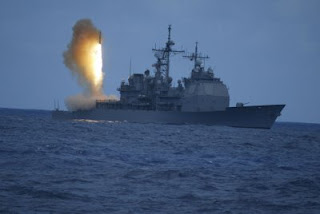
 As the fleet constitution discussion in the QDR ramps up, it is important that we state first the priority pressures that have injected themselves into the naval force development process. Over the last few years, several priorities have emerged for the Navy, changing the discussion and elevating traditional roles for naval forces into primarily strategic national obligations for insuring the long term defense of the United States. We must first account for these national level requirements before looking at fleet requirements for the maritime services.
Manpower is the #1 cost priority.
Nuclear power requirements for new large hulls
BMD is now a Navy strategic role per Gates
SSBN(X) is coming, just as the triad alignment gets a shakeup.
We must understand these national priorities in order to properly plan and size the fleet constitution of the future US Navy. Understanding all 4 of these obligations are strategic in nature, national in priority, and are elevated to a core requirement of the Navy means we must elevate these issues to the top of the Navy’s list of priorities.
Manpower is the primary budget pressure facing the DoD, therefore must be factored as the most important priority for any US military service in terms of planning. The optimization of manpower not only determines what you can do, but how much you can do. Understanding where manpower requirements exist, why those requirements exist, and how they must be optimized is critical to planning fleet constitution within the means of the nation.
The discussion of energy in the 21st century is here, and the first step is the law passed by Congress requiring nuclear power in new naval ships. I know many are not happy about this, as laws become specific selections as opposed to competitive options. This changes the CG(X) discussion, but also provides opportunity. Nuclear power may or may not reduce operating costs of the operational life of the CGN(X), but it does add one important capability... The radar system necessary for 21st century ballistic missile defense requires so much power, that without nuclear power, even an all electric drive ship would be limited in speed when operating its radar. Energy, specifically fuel conservation, is now a strategic priority and must be calculated in decisions for designing new ships.
The recent changes to the ballistic missile defense of the United States made by Secretary Gates has all but handed the Navy the role as lead for BMD. This comes with significant costs, specifically requirements for massive radar systems that are going to require massive power systems, all of which drains on the Navy budget. The Gates decision to hand the Navy BMD has all but certified what the CGN(X) will be, or more specifically generated a new requirement for a Navy that carries a heavy cost.
The nuclear triad is probably going to get a shakeup this QDR, with one of the legs going away. The underwater deterrent leg of the existing nuclear deterrence triad will not go away, so the Navy has already begun funding advanced R&D for the Ohio class SSBN replacement. Th SSBN(X) is not an optional platform, the national nuclear strategic deterrence requirement will stress the Navy budget between FY2020-FY2033 as the Ohio class retires and replacements are funded.
Both of these systems; strategic nuclear strike and strategic ballistic missile defense represent national level strategic requirements placed on the Navy budget that must be fully funded in the period under review by the QDR. This Strategic Shield of the Republic will be very high tech, but also needs to have optimized manpower requirements to keep down the operating costs of deployments. Both platforms will be nuclear powered.
The Navy is going to need around 8 CGN(X) platforms with incredibly high powered (thus expensive) radar systems, and 12 large SSBN(X) replacements. These 20 vessels, 8 battleships and 12 massive submarines, will represent an investment that could run well north of $100 billion. In order for the Navy to provide the strategic role of Shielding the Republic, Congress will have to act to cap the cost to SCN on a per platform basis, specifically no more than $5 billion per SSBN(X) and $4.5 billion per CGN(X), which would still influences the SCN budget at a cost of $96 billion over the next 30 years.
What do we gain with this massive investment? We gain incentive to reduce nuclear stockpiles and stand down one arm of the nuclear triad. We gain a sea shield, a strategic deterrent against the proliferation of ballistic missiles as an offensive weapon. This shield becomes portable, meaning we give ourselves the ability to provide assurance to our international partners, thus giving them incentive to reduce their nuclear stockpiles. The combined strategic deterrence capability the US Navy provides with BMD and strategic nuclear strike becomes an enabler for dissuasion and deterrence against belligerent states developing nuclear weapons and ballistic missiles. This can also serve as a capability to reduce the inventive of would be buyers of ballistic missiles as an offensive option, after all, no one wants to spend money on a system that is ineffective for its military objectives.
The Shield of the Republic role for the US Navy is not a large capability, but it is the budget breaker in the QDR process for the Navy SCN budget. Without the CGN(X), the Navy will be unable to effectively track modern ballistic missiles, thus will be unable to guide shooters onto the target. The submarine leg of the strategic nuclear deterrence is the most secure, and most difficult to eliminate, thus making it one of the most effective buffers from nuclear attack. The role of Shield to the Republic by naval forces is as old as John Adams, but carries a significant new purpose leading into the 2010 QDR discussion. As the SCN budget breaker, the Shield to the Republic will require special Congressional attention, oversight, and potentially extra funding to avoid breaking the back of the rest of the fleet.

No comments:
Post a Comment