
 The executive summary.
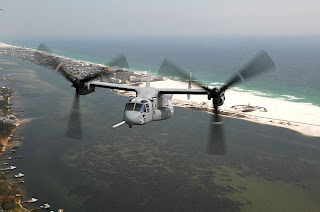
As of January 2009, the 12MV-22sin Iraq successfully completed all missions assigned in a low-threat theater of operations--using their enhanced speed and range to deliver personnel and internal cargo faster and farther than the legacy helicopters being replaced. However, challenges to operational effectiveness were noted that raise questions about whether the MV-22 is best suited to accomplish the full repertoire of missions of the helicopters it is intended to replace. Additionally, suitability challenges, such as unreliable component parts and supply chain weaknesses, led to low aircraft availability rates. Additional challenges have been identified with the MV-22's ability to operate in high-threat environments, carry the required number of combat troops and transport external cargo, operate from Navy ships, and conduct missions in more extreme environments throughout the world. While efforts are underway to address these challenges, it is uncertain how successful they will be as some of them arise from the inherent design of the V-22. The V-22's original program cost estimates have changed significantly. From 1986 through 2007, the program's Research, Development, Test, and Evaluation cost increased over 200 percent--from $4.2 to 12.7 billion--while the cost of procurement increased 24 percent from $34.4 to $42.6 billion. This increase coincided with significant reductions in the number of aircraft being procured--from nearly 1,000 to less than 500--resulting in a 148 percent increase in cost for each V-22. Operations and support costs are expected to rise. An indication is the current cost per flying hour, which is over $11,000--more than double the target estimate for the MV-22. After more than 20 years in development, the MV-22 experience in Iraq demonstrated that the Osprey can complete missions assigned in low-threat environments. Its speed and range were enhancements. However, challenges may limit its ability to accomplish the full repertoire of missions of the legacy helicopters it is replacing. If so, those tasks will need to be fulfilled by some other alternative. Additionally, the suitability challenges that lower aircraft availability and affect operations and support costs need to be addressed. The V-22 program has already received or requested over $29 billion in development and procurement funds. The estimated funding required to complete development and procure additional V-22s is almost $25 billion (then-year dollars). In addition, the program continues to face a future of high operations and support cost funding needs, currently estimated at $75.4 billion for the life cycle of the program. Before committing to the full costs of completing production and supporting the V-22, the uses, cost, and performance of the V-22 need to be clarified and alternatives should be re-considered.I am going to have to read the whole report before I comment about it, but my first impression is this looks like a real kick in the nuts to the Marines. I am interested in what are described as inherent design flaws. I've been wondering for awhile now if in an attempt to build a platform that is both airplane and helicopter, the Marines are willing to accept that the MV-22 has properties of both, but can never meet the requirements of either, and should be treated as something altogether different instead of attempting to pile on major vertical lift roles on the platform.
That theory would suggest a need for a medium-lift capability currently not on the drawing board.
I will say this though. The Wright brothers first flight was in 1903, and by 1923 airplanes were not exactly a beacon of reliability. If one considers the first real flight of a helicopter to be in 1924, the one must remember that by 1974, 50 years later, over 8000 helicopters were shot down in just the Vietnam War. The MV-22 is a complicated system, and I am curious if the GAO puts any sort of historical context into its analysis of conclusions.
The reason I say this is because by 1923, despite reliability issues, airplanes were recognized as an important military capability that military forces were investing in, including in the Navy. At no time since 1974 has any military service considered the helicopter too dangerous, despite its Vietnam record, to field as a necessary capability. I guess what I'm trying to say is that the expectations of the MV-22 could be too high, and the GAO response represents a warning that the Marines should take caution in their expectations for the MV-22 capability while it is still, at least historically, relatively young in its development as a reliable military capability.

No comments:
Post a Comment