
When the United States looks to the future, it is natural for us to focus in on Asia, primarily due to the rise of both China and India, both of whom have become major trading partners of the United States. From a strategic perspective, the war in Afghanistan dominates the headlines, and the news today of a 14.9% single year increase in defense spending in China certainly grabs attention. Our focus on Asia, central to the political desire to develop a working relationship with China driven primarily by economic interests, will undoubtedly shape our strategic decisions in the development of a 21st century military. While in my mind I continue to believe the Indian Ocean and Asia specifically is the primary strategic consideration the United States must stay focused on for the first part of the 21st century, I believe that must include all of Asia, not just south and eastern Asia. When I say all of Asia, the intent is to emphasize keeping an eye on Russia.
The Russian economic experts have weighed in regarding the economic problems Russia is facing in a down global economy, and the news is noteworthy. It appears Russia is comfortable with many of their economic sectors being tied to the global community, primarily in Europe. When Russia looks to the future, they see at least one and possibly three years of hard economic times and believe that with an economic rebound in the United States and Europe, Russia too will experience a rebound across their economy. The malls, which prior to the conflict with Georgia were filled with European goods, will once again be filled with European goods and as Europe experiences growth again, many Russian economist suggest so too will the economic sectors of Russia. This link through globalization that exists in many countries is viewed as beyond the control of government economic stimulus in Russia, so there will be no broad stimulus package for those economic sectors similar to how other nations like the US are approaching the global economic problems.
Instead, Russia has decided to invest in a way to reposition themselves strategically for the economic rebound, and I have to admit I think it is a very interesting move.
On January 16th, Luca Bonsignore of the German website Defense Professionals reported on a news conference by Prime Minister Vladimir Putin regarding military spending through 2011. Putin said at that news conference that defense modernization would move forward despite the global financial crisis, and military spending would continue to increase. In this press conference Putin made several comments:
"more than 70 strategic missiles will be bought and delivered to troops in the next three years, more than 30 short-range Iskander missiles and a large number of booster rockets and aircraft"
“Russia needs to optimize federal programs and assign more funds to the defense sector,” he said. He added that it is necessary to increase the efficiency of large defense holdings and make them competitive on the world market. “Competitive products will meet the needs of the Russian army and build up export potential,” Putin said.
He stated that support for the defense industrial complex is crucial. “There we have about 1,400 enterprises employing about 1.5 million people. Their stable operation is crucial to the social condition of tens of cities and communities.” Putin concludes.
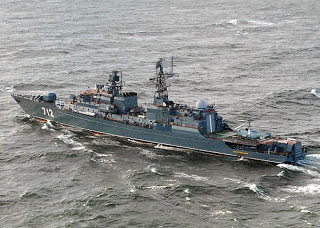 Over the next three years, 2009, 2010, and 2011 the military expansion is intended to focus on Steregushy class frigates, Admiral Sergei Gorshkov class frigates, Borey-class submarines, Graney (Yasen)-class attack submarines, SU-35BM fighters, Mi-28 helicopters, and Ka-52 "Alligator" helicopters. The defense budget has been suggested to be $32.5 billion (1.06 trillion rubles) in 2009, $58.8 billion (1.92 billion rubles) in 2010, with yet to be determined figures for 2011 and 2012. What is interesting is that this is the three year period Russia expects to experience difficult economic times.
What is interesting comparing the defense plans with much of the economic discussions in Russia is that Russia looks at a global economic rebound in the 2011 time frame meaning big things for the 2012 budget. The thinking is that if Russia can stabilize and invest in the 1400 enterprises supporting 1.5 million workers in their defense industry, build up the infrastructure supporting the defense industry including Russia's state-controlled United Shipbuilding Corporation (USBC), and expand the collection capacity of GAZPROM while also expanding the capacity to deliver energy to more markets, Russia will be perfectly positioned for the next global economic growth.
The key here is the infrastructure reconstitution for the defense industry combined with preparing the energy sector for the global economic rebound, because Russia expects global energy demand to skyrocket with the next global economic growth period. Because energy plays such an important part of the Russian economy, the expectation is both oil and natural gas demand will be much higher globally, prices will also rise to all time highs creating booming revenues for Russia. By 2012 Russia could potentially double their defense spending, indeed the challenge Russia is more likely to face in expanding their defense budget is finding enough skilled workers, which is why watching for the rise of training programs for defense sector jobs during the next three years will be important.
The last few years of Russia defense spending has had a serious maritime focus, and it appears the next few years will as well. Russian defense spending has been centric to the development of new nuclear submarine classes, primarily the Borey-class (it has been ugly), but also the Yasen class. Add in the Lada and a number of submarine export contracts, and all economic indicators suggest Russia's submarine shipbuilding sector is very healthy throughout the tough economic times. The surface fleet development on the other hand has not been well funded, and that is unlikely to change much. While there are potential export contracts for keeping some shipyards busy, the money has mostly gone into the construction of very inexpensive small vessels, new designs for frigates, and designs for other vessels including new nuclear powered ice breakers and a joint Thales-Russia 59,000 metric ton standard displacement nuclear powered aircraft carrier. If all goes as planned, and the economic rebound comes in 2-3 years as expected, and energy demand shoots to the sky as expected, Russia will have not only the funding, but the infrastructure modernization, blueprints, and expertise to build three of these nuclear powered aircraft carriers through around 2020.
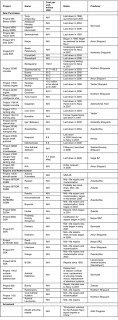 While diving deep into the subjects are outside the scope of this analysis, Russia has essentially transitioned their strategic view towards Space Power with satellite replacements, Sea Power with a looming naval expansion, soft power with global fleet deployments for global security and visibility operations, and cyber power which has been put to the test, most recently in Georgia. This is essentially the same strategic approach China is taking in the 21st century as well. It is noteworthy that Russia is reducing the size of their land forces, and also seeking to save costs with their nuclear inventory, as ways to keep investment in place for their strategy during economic hardship. It is also interesting that during a time when the United States is expanding the Army, both Russia and China are reducing the size of theirs.
When one considers that the debate for FY 2010 begins in about a month on Capitol Hill, consider how much the world is likely to change during the Obama administration. The Obama administration has already stated an intent to flat line defense budgets, essentially fixing a consistent cost to inflation for 10 years. During the 10 year period spanning from 2010 - 2019, Great Britain is likely to build 2 fixed wing aircraft carriers, India is likely to be deploying 3 fixed wing aircraft carriers, China has suggested they may build 2 fixed wing aircraft carriers, and Russia is now suggesting and positioning themselves to potentially build 3 fixed wing aircraft carriers. By my count, that would mean 10 aircraft carriers currently either under construction or potentially under planning that would be already or preparing to sail the seas by 2020, producing a much different view of the world than what we see when we look around today.
Major shifts in naval power can and do take place in 10 year periods. The United States Navy fielded 526 ships in 1990 and ended 1999 with only 317, a net loss of 209 ships. Today the Navy is down to 283 ships, but over the last 16 years has built an abysmal average of 5.3 ships a year. With an average life of around 30 years, without a substantial increase in the number of ships built per year, the Navy is on pace to drop below 200 by 2016, which would be the end of a possible Obama second term. It is even more troubling when you consider how to date the Navy has avoided telling anyone about that problem, sure to make the next decade of aircraft carrier construction a miserable, expensive experience.
It is always hard to predict what the future looks like, but based on the investments and priorities of Russia, China, and India it would appear that future will be at sea.
The emerging shipbuilding plan that includes aircraft carriers beginning after 2012 is in line with previous plans. See this one in 2007 and another covered last year. As the US Navy continuously adjusts for fewer ships in the 21st century, it is noteworthy every other rising great power continuously adjusts for more.

No comments:
Post a Comment