Showing posts with label Data and Dissemination. Show all posts

Saturday, May 19, 2024

Experimenting with Distributed Maritime Operations

Observing the lethality and effectiveness of modern distributed special operations in Afghanistan and elsewhere gives one an appreciation for the potential benefits these types of ISR-leveraged, economy of force operations may someday bring to the maritime realm. Over a series of posts, I’ve attempted to articulate this operational concept. Here are some thoughts on decentralized warfare in the littorals.  Next, a discussion on one of the ways these operations could be employed in an irregular warfare setting. And here, some ideas on how distributed firepower could enable small ships to become a force multiplier in big wars. Finally, a post arguing that adequate bandwidth at sea is critical to tie all of these concepts together.


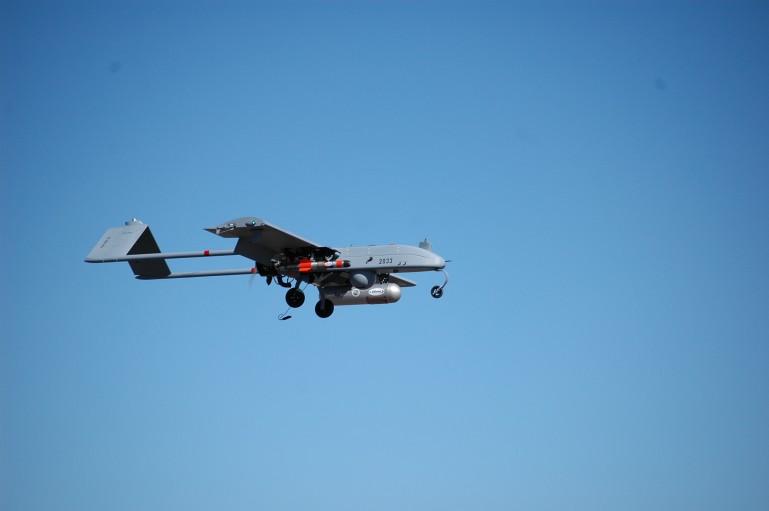
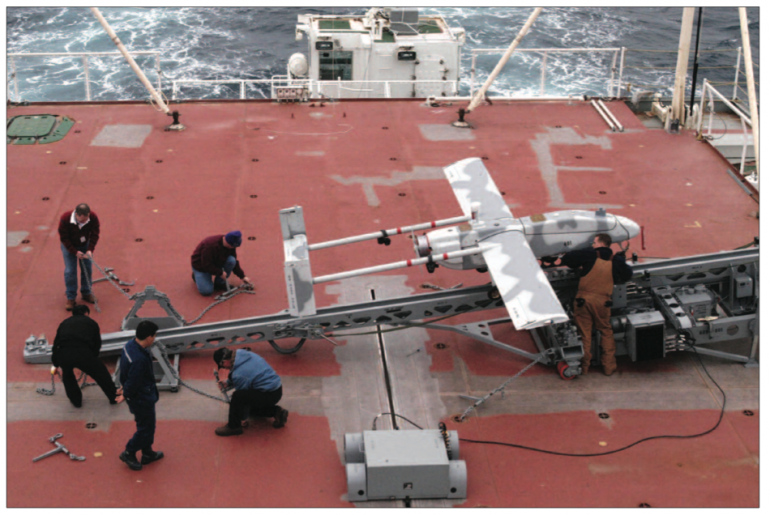
Sea-launched RQ-7 Shadow
 The proliferation of small remotely provided vehicles is going to provide unique opportunities to test some of these operational concepts. For example, the Marine Corps and Army will soon have more than 400 RQ-7 Shadows in their inventories.  This interesting article discusses the utility of these 100lb payload class platforms to drop Shadow Hawk precision guided munitions. Yes, these platforms are small, and their lethal payloads are even smaller. Though there is significant tactical value in being able to provide very precise yet low yield munitions from a small persistent drone, that isn't the point. This platform is ideal for relatively low cost experimentation on concepts of distributed operations at sea. Following pending draw-downs of Army and Marine Corps forces in Afghanistan, these assets will be available for other tasking, and conducting a series of naval experiments on distributed operations would maximize the post-war utility of these platforms. Some of the goals of these battle exercises would be to:
  • Test the ability to embark, support, and employ dozens (if not 100+) of small UAVs from large deck amphibious ships. Determine maximum sortie rates/ISR lines achievable, C2 and bandwidth requirements, manning and maintenance needs, and the best ratios of manned rotary wing to unmanned ISR/strike aircraft.  An LHA/LHD would be an ideal platform for this testing, not only due to deck and hangar space, but because of available bandwidth, staff planning/C2 spaces, and the ability to reserve some deck space for manned aircraft used to move the various ground forces involved.
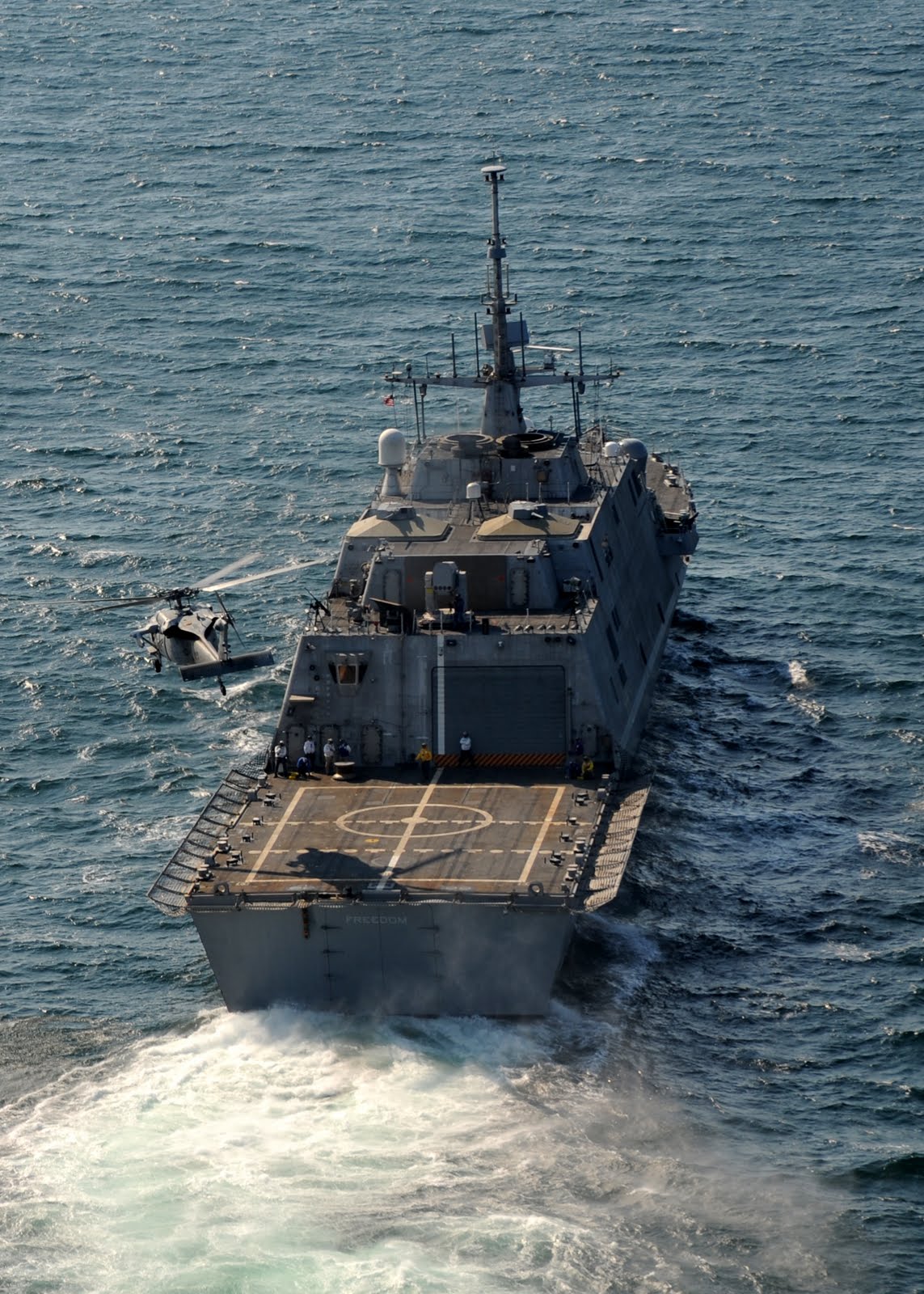
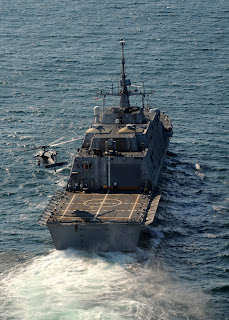
  • Develop concepts to support persistent armed overwatch to more lightly armed small ground units and ships and combatant craft at hundreds of miles away from the mother ship. This concept has been proven time and again on the battlefields of Iraq and Afghanistan, reducing the risks to small remotely operating troop elements and giving these elements the ability to see and sometimes engage the threat over the next ridgeline. Lightly armed vessels operating independently such as mine countermeasures, logistics ships, and yes, LCS, would benefit from having a 24x7 eye in the sky extending the ship's organic sensors, and dealing with low end threats, while allowing embarked manned helicopters to conduct higher value missions.
  • Test over-the-horizon cooperative targeting and engagement between these same formations against surface and ground threats.
  • Explore new lightweight payloads that would exploit the capabilities of large numbers of small persistent drones. These might include jammers, improvised expeditionary communication networks as an alternative to satellite communications, ASW sensors, and the ability to deploy remote unattended ground and ocean sensors. 
  • Develop ways to employ smaller ships as forward arming, refueling, and communications relays for these aircraft. 
  • Assess the ability to bring large formations of these aircraft together into cohesive swarms to defeat boat swarms in the littorals or complex insurgent attacks in an urban environment. Model the use of these massed formations of low cost UAS to penetrate air defenses and attack larger ground and surface targets. A few dozen 11 pound munitions would not sink a large naval combatant, but employed creatively they might achieve a mission kill rendering that vessel's sensors and weapons systems inoperable. Use the results of these tests to develop artificial intelligence algorithms that will reduce the manning necessary to control such a large fleet of remotely piloted aircraft. 
  • Employ the above concepts with various deployed nodes of special operations forces, Marine, and NECC elements, in an effort to understand the capabilities and limitations each of these units brings to the distributed littoral fight. 
  • Test all of the above concepts in electronically-challenged environments. Naysayers of network-centric warfare are quick to point out the difficulties of fighting in an environment where jamming is present. The thing about distributed operations from the sea is that since the platforms are always moving, fixing them and relocating jammers to be effective is more challenging than it would be in a static environment. Many critics have rightfully pointed out the liability that LCS speed requirements have produced to payload, range, and overall platform cost, but in an EW environment, her speed becomes an asset. Jammers have limited ranges and small more numerous platforms able to relocate faster than the enemy's jammers will be able to mitigate some of those issues.
RQ-7B with Shadow Hawk munition
Though distributed operations with small units are certainly not new in our Navy's history (Vietnam small boat ops come to mind), the proliferation of persistent armed and networked remotely piloted vehicles adds a whole new dynamic.  The concept has applicability across the spectrum of conflict, but especially in the irregular wars in which we increasingly find ourselves engaged. The upcoming few years will provide an excellent time for experimentation on operational concepts such as distributed maritime operations and the higher end AirSea Battle. The mistakes made and lessons learned will pay dividends the next time our Navy/Marine Corps is called to war.

The opinions and views expressed in this post are those of the author alone and are presented in his personal capacity. They do not necessarily represent the views of U.S. Department of Defense, the US Navy, or any other agency.

Wednesday, October 26, 2024

Observing Why Flight 0 LCS Will Do Just Fine

As has been known to happen, an interesting back and forth took place in the comments this evening in a previous discussion topic that caught my attention, and I feel it necessary to comment in a new post. It began with this comment by phrank47:
My problem with LCS has always been we are building a ship before we have the weapons that will go on it. Not just a little but years before. We are building ship that seems so pointed toward one goal that I wonder what we give up. I look at the navy what they are building and the numbers and I see a navy that 1/3 of there surface combat ships will soon be LCS I fear.
Where ID contributor CDR Chris Rawley responded:
The Spruance class destroyer entered the fleet with not much more than two 5"/54 guns, ASROC, and BPDMS. By the time the class was decomm'd, they had 61 cell VLS with TLAM and VLA, 2 x CIWS, 25mm, 8 x harpoons, and RAM, plus a number of C4I upgrades. Obviously, adding capabilities to LCS would be a bit different in there are weight (and volume) constraints tied to her speed requirements. The point is that it isn't unprecedented to commission ships with minimal weapons systems and grow them.
Which Scott Brim, USAF Partisan replied:
On the other hand, the Spruance design was up to the task of handling the upgraded capabilities, once they were mature enough for deployment. Given all the criticisms that have been hurled at the LCS, is it clear today the LCS will be a suitable platform once the mission modules arrive?
What a great topic. Lots of good points all around.

First, it is too early to tell what the Navy will do with LCS after FY15. Until more ships start getting fielded, it is very unclear whether there will in fact be more than the 24 already funded. Yes, the Navy has stuck to the official line of 55 hulls, but I know for fact that LCS-3 is different than LCS-1, and LCS-5 will be different than LCS-3. What will LCS-21 and LCS-23 look like? Evolutions throughout the first block could make the second block look very different, and the second block will likely come after we see foreign military sales injected into the equation suggesting design investment and options can potentially influence the LCS in many ways. What happens if, for example, beginning with LCS-25 or LCS-26 the Navy drops the speed requirement for one or both versions? The combat system question still lingers as unanswered, among many unanswered questions.

Second, what does growth for a small ship like LCS look like, and what needs to grow? Some would immediately suggest the LCS lacks firepower, of which I believe every SWO in the US Navy would agree wholeheartedly. Both LCS can trade the speed requirement for VLS from a design perspective, so it isn't as if options don't exist. But when I look out over the next 10-15 years, adding more weapons to LCS isn't my top priority in the context of growth.

Which leads to the last question asked by Scott Brim, "is it clear today the LCS will be a suitable platform once mission modules arrive?" The answer to this question is - YES - ABSOLUTELY, as long as Navy leaders remain focused on continuing to develop capabilities the LCS is designed and intended to do.

The biggest challenge facing LCS has nothing to do with details of individual module systems, nor the lack of firepower included in the Flight 0+ LCS design - the biggest challenge facing LCS is the development of the LCS information system that is in the future intended to feed significant multi-sensor data into a larger battle force network information system.

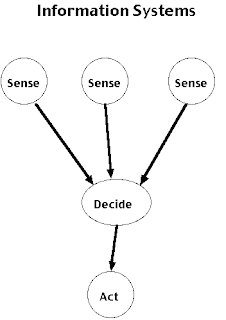
Sense. Decide. Act. And do it all in a combat functional communication system.
That is the biggest challenge facing LCS, and it entails a series of lessons yet to be learned and processes yet to be developed that will likely take a long time to work out the kinks; very likely the entire life-cycle of the first Flight 0 ships.

Today sense, decide, and act functions of the information system are relatively contained in form and function to an organization no larger than a strike group, but more specifically often limited to a few sensor platforms, a few strike platforms, and either a Hawkeye or CIC. With additional capabilities like the Littoral Combat Ship and associated modules, P-8, BAMS, etc, and continued evolution of combat and communication systems - the US Navy hopes to extend interoperability in both scale and scope throughout the entire Navy battle force network.

But it is actually much more than a cross-system interoperability challenge or even a bandwidth challenge (both being significant challenges on their own), rather the Navy must solve the very real challenge of collecting vast amounts of data from a vast number of offboard systems concurrently and convert that data into useful information that can then be aggregated throughout the network quickly - not just on LCS but eventually throughout the battle force network. Basically, we are talking about the bridge between Sense and Decide, taking data from multiple sensors and making that data useful information, and doing so at a speed that supports the decision process necessary to be relevant during combat operations where actions and reactions measured in seconds can mean life and death.

There are a large number of human and engineering challenges just to get Sense and Decide nodes designed into the LCS network model to function properly. The LCS is moving the Navy into an entirely new level of autonomous and remote controlled sensor capacity that is intended to accumulate enormous amounts of data under, on, and over the sea spread over vast geographical areas in a largely autonomous information system that today is done by the US Navy at sea almost entirely with manned aircraft - each of which is trained to function as part of a small manned network that took many years to develop, or as it's own Sense-Decide-Act information system if necessary.

Can you conceptualize what many of the challenges facing the Navy are as they introduced vast numbers of unmanned systems into their existing organizational structures? Can you conceptualize what the product will be once we see numerous Littoral Combat Ships distributed throughout a region like the South China Sea, each deploying half a dozen or more individual systems? For some, the complexity of the challenges are ignored because very little respect is given the immense difficulty facing the Navy to operate a battle capable network potentially 50x larger and vastly more distributed than the existing Navy network today.

In the future Naval Battle Force Network saturated with unmanned systems - which is the network the Littoral Combat Ship is opening the barn door towards; the US Navy wants to be able to take data from an autonomous sensor deployed from a LCS, rapidly convert that data from that node into usable information like the track of a ballistic missile submarine, move that tracking data of the ballistic missile submarine immediately to a another platform like a P-8, and convert sensor data into track information for a torpedo strike without the P-8 ever needing to reveal itself with it's own sensors to the SSBN before the torpedo hits the water and is on top of the SSBN.

What sounds like a simple process will place the US Navy generations ahead of where the rest of the world is today, or even tomorrow, because no one else is even remotely close to being able to execute that type of networked combat capability. The US Navy is fielding Littoral Combat Ships today that leads towards that capability down the road, and yet, critics say cancel the LCS because the ship can't shoot the torpedo itself - even though the LCS will likely be hundreds of nautical miles from the autonomous sensor that detected the SSBN, too far away to shoot ASROCs even if it had them.

Today's US Navy flies no more than a handful of UAVs at a time over vast areas of ocean. Believe it or not, on a good day the US Navy has one UAV able to function in an anti-piracy role off Somalia. That is one UAV - on a good day - for that vast region of seas pirates operate in. If you assume the US Navy is flying one or more than one UAV on an average day over the Indian Ocean, you have assumed wrong. That is where we are today, but for some reason people have a completely different expectation.

Why do you think deploying 3 Fire Scouts on USS Halyburton (FFG-40) was a big deal? The disconnect between the expectation of today's US Navy UAV networks and the reality of those networks is enormous. When the Navy operates UAVs today (which they do), the Navy operates those UAVs over land. Why? Because almost all of the infrastructure that supports UAVs are used for supporting operations over populated land areas, not the vast unpopulated areas of sea.

Just developing towards coordinating the data of a dozen offboard unmanned autonomous and remote controlled systems deployed simultaneously from a pair of Littoral Combat Ships is a giant early hurdle facing the US Navy in the very near future. So when Scott Brim asks whether the LCS is a suitable platform to handle the challenges it faces when the mission modules arrive, which is basically the development of a functional battle capable information system that supports large numbers of unmanned systems at sea, my answer is ABSOLUTELY - YES.

The challenge facing LCS is not the "act" (weapons delivery) module of the information system even if the "act" module of the information system is the single most cited complaint of the LCS; the challenge facing LCS is the development of the "sense" and "decide" functions and processes and lessons towards the future networked information system intends to field over this decade, and the LCS hull is designed to support the engineering upgrades necessary to address those sense and decide challenges.

Tuesday, July 12, 2024

The Navy’s Information Dissemination Crisis

No, I’m not talking about strategic communications. I’m referring to the exponentially growing requirements for rapidly processing, disseminating and analyzing vast quantities of networked information and intelligence. National Defense has an enlightening article on the coming Navy ship-wreck in bandwidth, linked sensors, and networks.

VADM Cebrowski may have been the conceptual father of network-centric warfare, but MG Flynn and GEN Stan McChrystal operationalized the theory on the battlefield. Maximizing the leverage of interagency capabilities and authorities, counter-terrorism has recently evolved into a highly refined art form. Frankly, very few naval folks working outside the special operations community understand the impact of this new war-fighting paradigm. The limitations of the current naval environment are quite evident when one considers that a couple of SOF guys can carry around more bandwidth in a suitcase in the middle of a desert than 200-something Sailors share on the newest DDG. Broadly speaking, the decentralized, adaptive, and highly-networked style of warfare pioneered by counter-terrorism forces in Iraq and Afghanistan will become the American military’s competitive edge over future adversaries. As networking technology and precision-guided weapons proliferate to both state and non-state actors, only the integration of these capabilities into coherent fighting architectures combined with US logistics, creativity, and freedom of thought will enable us maintain a combat advantage.

Viewed in a naval context, network-centric warfare is the difference between a singular combatant such as an LCS (or even much smaller vessels) being able to find, fix, and engage targets within a few miles of the ship and the same platform being a node in a widely-distributed strike force able to destroy targets identified by non-organic sensors and national intelligence systems while calling in fires from over the horizon on locally-identified targets.

As the NDIA article notes, the proliferation of sensors and bandwidth-hogging data such as full motion video (from both manned and unmanned platforms) is an unstoppable trend. The vulnerability of these networks to jamming and disruption is an issue, but redundancy and robust designs can overcome those challenges. Contrary to some of the opinions expressed in the article, multiple networks add resiliency and any consolidation should be approached thoughtfully. (If you’ve used NMCI the past several years, you know exactly what I mean). Processing and analyzing data is as critical moving this data over the network. Off-board analysis, reach-back support, and automation are good ways to handle this issue, but embarked analysts closer to the fight can increase the speed and quality of decisions. Despite advances in automation, onboard intelligence analysis and operational C2 afloat is manpower intensive. Consequently, trends in minimal manning and designing ships with inadequate surge berthing must stop.

The Navy prides itself among the services on the independence of commanders at sea, but the reality is that much of this independence disappeared with the advent of radio. Rather than fighting the trend, we need to embrace networked warfare and exploit it to our advantage. This doesn’t mean micromanaging commanders in the field, the air, or afloat; quite the opposite is true. Flattened C2 allows individual units to contribute to the fight at the operational level while increasing the speed and quality of decisions across organizations and from the tactical to the strategic level. Furthermore, agility and speed of decision making are two of the most important principles to fighting irregular enemies who are not handicapped by a large bureaucracies and cumbersome chains of command.

Getting this networking and bandwidth problem right over the next few years is just as important for the Navy as formulating and executing an achievable shipbuilding plan. Moreover, properly networking naval forces will enable lower end (read more numerous and affordable) ships and aircraft to realize operational synergies and combat power way beyond what individual units are capable of achieving.

The opinions and views expressed in this post are those of the author alone and are presented in his personal capacity. They do not necessarily represent the views of U.S. Department of Defense, the US Navy, or any other agency.

Thursday, December 17, 2024

Unmanned Systems: Security by Obscurity

This is almost incredible news, until you realize it has been part of the risk assessment of the system all along. Still, a very troubling reminder that our information infrastructure is also our major weakness, not only one of our major strengths.
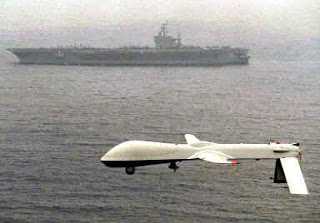
Militants in Iraq have used $26 off-the-shelf software to intercept live video feeds from U.S. Predator drones, potentially providing them with information they need to evade or monitor U.S. military operations.

Senior defense and intelligence officials said Iranian-backed insurgents intercepted the video feeds by taking advantage of an unprotected communications link in some of the remotely flown planes' systems. Shiite fighters in Iraq used software programs such as SkyGrabber -- available for as little as $25.95 on the Internet -- to regularly capture drone video feeds, according to a person familiar with reports on the matter.
Skygrabber is software often used in the United States to steal satellite TV signals, among other things. It is relatively easy to use, and the commercial sector has dealt with this type of problem in many ways in the past. It is never inexpensive though. The article goes on.
In the summer 2009 incident, the military found "days and days and hours and hours of proof" that the feeds were being intercepted and shared with multiple extremist groups, the person said. "It is part of their kit now."

A senior defense official said that James Clapper, the Pentagon's intelligence chief, assessed the Iraq intercepts at the direction of Defense Secretary Robert Gates and concluded they represented a shortcoming to the security of the drone network.

"There did appear to be a vulnerability," the defense official said. "There's been no harm done to troops or missions compromised as a result of it, but there's an issue that we can take care of and we're doing so."
But here is the key part:
The potential drone vulnerability lies in an unencrypted downlink between the unmanned craft and ground control. The U.S. government has known about the flaw since the U.S. campaign in Bosnia in the 1990s, current and former officials said. But the Pentagon assumed local adversaries wouldn't know how to exploit it, the officials said.
Ahh, the heart of the problem... the Pentagon assumed Security through Obscurity. I have been pounding sand on the blog about the DoDs information infrastructure being a significant problem (particularly for the Navy's plans of the future), and I have a feeling I will no longer be one of the few voices. How many network systems are based on a such a false sense of security? As the Navy in particular relies almost exclusively on satellite based communications, this could be a bigger problem than people know.

The thing is, a bit more advanced bit of software like this would allow one to do a lot more than watch video feeds when tied into a network, for example, allowing one to track back to the source of the feed, otherwise known as location identification of the unmanned platform. Encryption won't solve that problem, and neither will radar coatings and stealth design.

Anyone else see why manned systems aren't going away anytime soon? We are decades from autonomous systems, and unless we can significantly increase the amount of bandwidth in our orbital communication networks (or learn how to integrate advanced routing into our DoD networks so we can develop more advanced information transport protocols), our potential in military technology capabilities will continue hitting the barriers of our information infrastructure.

The fix to this problem is going to be expensive. The DoD needs to rethink their information network infrastructure before throwing good money after bad. It would be a mistake to treat this problem like a patch solution when it should be a siren its time to upgrade.

Monday, July 20, 2024

Introduction: Data and Decisions - The Rising Cost of Useful Information

This morning after a late breakfast, I was strolling down Cannery Row in Monterey, California browsing the shops, and I happened into a modern art gallery. I am not a fan of modern art, I prefer classical styles if art must be visual, and I prefer dance and music to other types of art. In an effort to hit every shop I stopped in anyway. As I entered I found myself struck by a painting on the wall. There was something familiar about this painting, although I had never seen it before.

I kept browsing the gallery and came across another painting, similar and familiar, but I had never seen it before. This time I looked at the tag, and the artists name was Eyvind Earle. I walked back to other painting and sure enough, Eyvind Earle was the artist of that painting as well. After admiring both pieces of art, I continued through the gallery until I came across yet another painting that I really liked. Again, Eyvind Earle was the artist. These were all original paintings, and well outside my price range, but there was something very familiar about the art, a feeling of comfort and familiarity. I began to think, who is Evyind Earle?

I asked the gallery shop keeper who Evyind Earle is and it turned out, Evyind Earle is an artist who worked for Walt Disney, and he drew the background for several movies, including my youngest daughters favorite movie that I have seen 1,000 times (it seems) lately Sleeping Beauty. Was this the reason that of the hundreds of paintings and dozen or so gallery's I walked though this morning, I kept getting pulled back to paintings by Eyvind Earle? Is my unfortunate attachment, as a father of a 4-year-old princess lover, to the never-ending Sleeping Beauty DVD the subconscious reason why Eyvind Earle was 'familiar' to me?

The question I kept asking myself, as I attempted to drown out my thoughts at the Scheid Vineyards wine tasting store a few doors down was whether my subconscious knew the painting before I did, after all, in one of the early scenes of the Sleeping Beauty DVD we own, there is a short story about the background and making of the movie. I have seen that introduction before, and without seeing it again I'd place a $1000 right now Eyvind Earle's name is mentioned.

As I do before all long plane flights, I loaded several books onto my iPod for this trip just in case the stereotypical Manhattan mom is taking her kids on a trip. You know the type, the parents whose reliance on the nanny becomes obvious, because they have no connection or authority over their own young children, and forgot to pack the "essential tools of the traveling trade" that regular parents and grandparents get gold stars for having readily available.

(Tip for parents and grandparents, always bring Ring Suckers to help with the ear popping and lack of entertainment after 3 hours of flight, and you too can be a gold star parent or grandparent of kids 2-5 years old on a plane. I happily gave out 8 ring suckers yesterday to one such parental couple behind me on the plane, and between becoming the most popular person in my section of the flight and the iPod books, I enjoyed my proverbial 'nanny' gold star in peace on the 4+ hour flight from Chicago to San Jose.)

One of the books I added this time was Blink: The Power of Thinking Without Thinking by Malcolm Gladwell. Blink is a great book, and includes a very interesting analysis regarding Millennium Challenge 2002 btw, but covers two topics that I have been thinking about lately. The first is the subconscious reaction to information, and the other is rapid "thin-slicing" of data into useful information. Both subjects are beginning to get a lot of attention in the military lately, but should get more.

There is a steady drumbeat in military circles of the opinion that data is becoming more and more costly, and by that as we accumulate more, it is becoming less valuable because it is so expensive for the military to turn massive amounts of data into the useful chunks of information needed for an efficient decision process at all levels. I don't know if the problem indeed exists, but given the immaturity of the tools for data dissemination in the private sector, and known interoperability problems across military services with data, I imagine there is probably some truth to the issue. For 9/11 the data was there to prevent the attack, but dissemination of the data into useful information didn't exist.

But I have a feeling, and I note theory, that this is a generational problem and would resolve itself over time even if nothing was done proactively. My problem has been, I can't explain why I have this theory, what makes mass data dissemination generational and why do I believe future generations will have a better grasp on managing the problems? In Blink, I think I found part of the justification for my theory.

In describing the process of 'thin slicing' data in Blink, Malcolm Gladwell notes that thin slicing is skill, not art, and can be trained. Web 2.0 has created an internet data flow too massive for many to keep up, even organizing data via RSS and making information search capable doesn't resolve the issues with data dissemination, because dissemination of data requires a decision process that turns data into useful information. I believe that because Generation Y has grown up, evolved and trained in massive data flows they have developed natural skills for thin slicing data with available tools, be it cell phones, computer software, or simply how they how they follow streaming data. I liken it as similar to how code breakers in WWII were able to naturally, and with a high degree of success, follow specific units around Europe based on the communication habits of coders in the German Army.

I don't want to give the impression that thin slicing could ever replace research, we are talking about two very different types of information dissemination of large amounts of data, but I believe it will be the natural thin slicing skill of Generation Y that will demand, thus force the evolution of data dissemination tools to resolve some of the costing issues of data today.

This is just an primer on the topic, if I get a chance this week I want to open the discussion up and apply what I am trying to say to a specific example, which is the topic of Maritime Domain Awareness. For those who want to get ahead of the discussion, consider this July 2009 article in Proceedings by LT Mark Munson. There are a lot of great points made in this article I very much agree with. There are also some gaps in the argument, small but critical in my opinion. I think Lt Munson is both right and wrong at the same time, and I hope to tie in where thin slicing applies to my thoughts on that Maritime Domain Awareness article later this week, time permitting.