
_in_Weymouth_Bay_ca._1906.jpg) |
| HMS Exmouth, nucleus crew battleship |
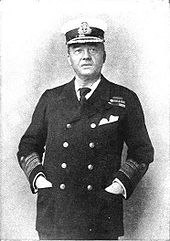 |
| Admiral Sir John Fisher, RN |
The
U.S. Navy continues to grapple with the effects of sequestration and budget
cuts. Its workload, however, appears to be increasing with demands that it
“pivot to the Pacific”, maintain a robust presence in deterrence of Iran, and
prepare for the prospect of sea-based cruise missile strikes against Syria. The
Navy’s surface fleet force structure that is vital to all three missions is
aging, its maintenance budget is underfunded, and each successive class of ship
is inevitably less cost-effective than the last. One obvious solution is to
reduce the size of the U.S. Navy surface fleet to a more
economically-manageable cohort. That action however carries the risk of
creating a hollow Navy that is unable to meet neither its current mission nor
surge additional ships forward to meet an emergent crisis. In May of this year,
Chief of Naval Operations (CNO) ADM Jonathan Greenert stated the Navy had
already lost two thirds of its ability to surge carrier and amphibious strike
groups forward to meet emergency situations. This is not the first time a
global superpower has faced a crisis in naval numbers. A century ago, Royal
Navy firebrand Admiral Sir John Fisher created a novel solution in response to
a similar demand for budget cuts with no reduction in capability. His “Nucleus
Crew” system is one way the U.S. Navy can maintain a robust force structure
without further increasing costs for new construction or for additional
personnel.
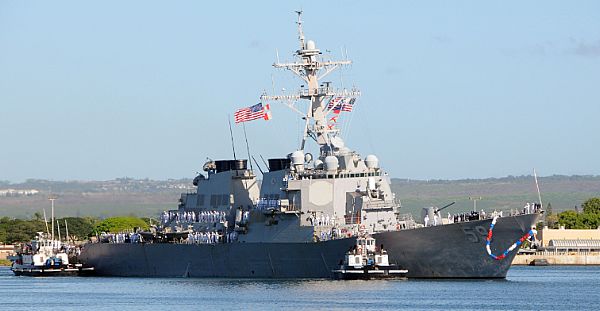 |
| USS Russell, an example of a Flight 1 Burke DDG that would be a good candidate for nucleus crew designation |
British governments
in the early 20th century were determined to increase spending for
domestic entitlement programs as more Britons became aware of the appalling
poverty statistics in their country. British officials desired reductions in
defense expenditures in the wake of the costly 2nd Boer War in South
Africa (1899-1902) in order to pay for those domestic programs. The Royal Navy,
although the principal fighting arm of British Empire was not exempt from these
measures. Fisher was brought in as First Sea Lord (roughly equivalent to the
U.S. CNO) in 1904 to not only re-examine British strategic naval deployment as
ordered by the First Lord of the Admiralty Lord Selborne, but also to cut costs
as much as possible without reducing British naval supremacy. His innovative
solution involved retiring over 150 outdated and ineffectual warships from the
active rolls in order to reduce personnel costs and free sailors for new
construction. Fisher’s scheme (as he called it) also introduced a system of
reduced crew components for those ships worth preserving for combat operations,
but too costly to maintain with full crews in peacetime. First introduced in
January 1905, the ships selected were not new dreadnought battleships and
battlecruisers. Instead, middle-aged battleships, cruisers and destroyers
that might be needed for secondary missions such as patrol, blockade and convoy
escort were chosen. These ships were maintained at 3/5 of their full complement. Officers,
engineering and weapons technical ratings were well manned, but the bulk of the
unskilled labor (seaman, gunners, and stokers) would be minimally staffed. The
ship could go to sea and operate some of its weapon systems, but it could not
join the operational fleet. The system assumed some risks in that an activated
nucleus crew ship with a large number of new and untrained crewmen would not be
the equal of an active duty vessel at the outbreak of war. British naval
officials and politicians were aware of and accepted these risks as the price
of maintaining enough warships to both fight the British Empire’s battles at
sea and secure its maritime lines of communication. Fisher was successful in
that British naval estimates did not see a net increase in the period from
1905-1911.
The system responded
well when put to the test of war in August 1914. It successfully fielded dozens
of warships for secondary missions. It was not without cost. The crews of some
of the ships were very green. Some infamous nucleus crew alumni included the
cruisers Good
Hope and Monmouth who were sunk with all
hands by the crack gunnery experts of German Admiral von Spee’s Pacific
squadron and the three cruisers Aboukir, Houge, and Cressy sunk in the space of
three hours by a single German submarine. The march of naval technology further
outmoded members of the nucleus fleet. Most of the battleships from Winston
Churchill’s attempt to force the Dardanelles were nucleus crew veterans. Five
were sunk and three others seriously damaged. Overall however, the nucleus crew system
delivered the additional warships needed for the Royal Navy to conduct World
War 1 at sea.
The U.S. Navy would benefit
from adopting a similar system. Fisher was interested in preserving second-class
warships for secondary duties. The U.S. Navy would use the system to preserve
the strength of its overseas forces from budget cuts. Ships forward deployed to
Combatant Commander control and those training to deploy would be fully manned.
Those ships operating in and around the continental United States would be
manned to 3/5 strength with perhaps a small number fully manned for surge
operations. Fisher’s manning work was easy in that he could fill the deck and
engineering departments of his ships with untrained ratings to make them ready
for deployment. It would be more difficult to man a 21st century
warship at 3/5 its full complement, but U.S. Navy reserve frigates like the one this
author served on in 1991 were crewed at a base level of 60% that of an active
duty counterpart. Ships entering extended periods in the yards could be manned
at even lower levels with the bulk of the maintenance and security work aboard
performed by a specialized Military Sealift Command (MSC) team. MSC teams
already operate active logistics ships with much lower crew sizes then
equivalent naval vessels. The number of MSC teams would be limited and rotate
amongst the ships in the yards. The United States Congress would need to be
fully briefed on this change as the British Parliament of a century ago in
order to understand and accept the risks involved.
Adoption of a modified nucleus crew system is not an ideal situation for the U.S. Navy's current budgetary woes. A ship of war ought to be fully manned at all times and ready for instant deployment as required by national command authority. The U.S. ability to surge forward large numbers of ships during the Cold War and in the last twenty years has been the key to success in numerous war and peacetime operations. The loss of the capacity to quickly mobilize such formations due to the current budget impasse is a significant risk to national security. Naval leadership must take action to preserve the surface fleet from the inevitable force structure cuts that will follow in the wake of a budget agreement. A nucleus crew system would preserve useful force structure within the ranks of the more modern surface combatants. Numbers matter when a nation has global commitments. A nucleus crew system is one way to preserve enough U.S. Navy ships to meet those requirements.

No comments:
Post a Comment