
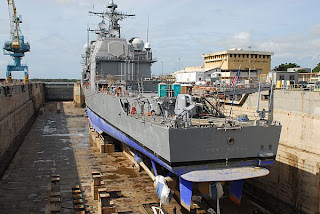
 The USS Port Royal (CG 73) grounding is going to be expensive, at least I expect it to be. There are a lot of things that can get damaged when a ship goes aground, and tries to pull itself off the coral reef several days in row. A lot of the damage being reported by Navy Times in this article makes sense, but some of the damage bothers me a bit.
The hatches of the forward and aft vertical launch cells, which hold Port Royal’s arsenal of missiles, were damaged as the ship’s hull rolled and flexed with the waves.The VLS damage has me wondering if we are seeing an unfortunate side effect of VLS as opposed to rail launcher system, and I would appreciate some expert opinions on this. VLS is very economical for space, and allows the Navy to increase the weapon payload of our ships. Will this make opening all the VLS hatches a standard procedure for future groundings? Would we have seen a similar problem with a rail system? Shock and buckling from a ship being flexed isn't unique to being grounding, the effect of many weapon systems hitting a ship would produce the same effect.
The antennae and other equipment on the ship’s mast endured “severe shock” as the ship rolled on its reef. The shocks also affected the alignment of Port Royal’s Aegis radar arrays and other sensitive gear, costing the ship the use of its Aegis sensors as well as its ballistic-missile defense capability.
The the article goes on to note something I had previously missed.
After the grounding, all surface ships were tasked with completing a series of internal reviews by Feb. 27, in a safety standdown ordered by Naval Surface Force commander Vice Adm. D.C. Curtis. The review was prompted by the cruiser mishap and the loss of a sailor during a boat-lowering operation in the Middle East earlier that week.With INSURV information being classified, it sure becomes easier for the Navy to conceal any side effects that come from deferring $450 million in maintenance spending for surface ships. I believe the current CG and DDG forces are the most important ships to the future Navy, particularly now that the Navy intends for them to serve 40 years. The material condition of those ships matters a great deal, and preventing the public from knowing the material condition of our ships with INSURV information insures that we do not get valid information that results from policy changes related to maintenance funding.
The crews of other ships have watched with trepidation to see how much money it would take to repair the Port Royal, said a second retired cruiser captain. The unexpected repair bill could get so high that it could draw money from other ships, forcing them to scale back or postpone scheduled maintenance.
A further complication was a Feb. 2 order — which came three days before the Port Royal grounding — that froze all maintenance spending for surface ships. The Navy had deferred about $450 million in payments, but Navy spokesmen would not say why.
The bigger problem is Congress doesn't get good information either. Lets face it, unless they ask for it specifically, they will be unfortunate victims of the 'failed to mention that' syndrome that always trumps full disclosure.

No comments:
Post a Comment