The Economist has a really important article on the state of the military in
Great Britain, Britain's Armed Forces, Losing Their Way describes a military at the crossroads of history, with choices over the near term determining the long term standing of Great Britain regarding where they intend to be in the world.
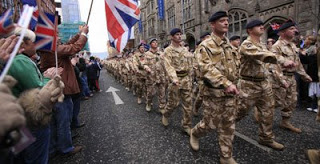
British forces have been at war for the past seven years. But it is only recently that, following the example of American parades, the public has been encouraged to honour them. Such displays are a surprise to many soldiers who, for decades, were largely hidden from view in Britain, coming out of their barracks in civvies in order to avoid attack by the Irish Republican Army (IRA). Television documentaries and a quick-fire burst of books with titles such as “3 Para: Afghanistan, Summer 2006. This is War” have also publicised the deeds of Britain’s fighting men and women. Despite the qualms about Iraq and Afghanistan, and instances of soldiers being abused, support for the troops is high. According to an Ipsos MORI poll published in November, 81% of Britons regard them favourably; most agree with their prime minister, Gordon Brown, that Britain’s armed forces are “the best in the world”.
But are they? For all the public recognition, the armed services are going through unusually difficult times. This is challenging Britain’s belief in itself as a fighting nation with an important role in the world. The severe strain of waging two wars in faraway countries has been aggravated by undermanning and equipment shortages. More serious still is a new mood of self-doubt. The invasion of Iraq was controversial and its occupation inglorious; the campaign in Afghanistan is going badly. British commanders have belatedly realised that they have much to learn, or rather relearn, about fighting small wars in distant lands. “We have lost our way,” says one general.
Read
the whole thing.


No comments:
Post a Comment