
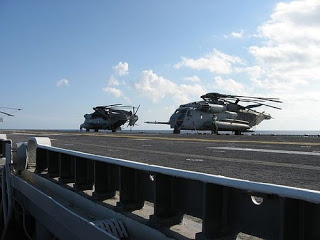
 David Axe and Chris Albon continue their reporting from the USS Kearsarge (LHD 3) and have put out some outstanding stories. The depth and quality of the reporting that blogging is allowing the Navy cannot be understated, because not only are the tough questions being asked, but the right questions are being asked.
We think this is exactly the kind of public discussion the Navy wants to have, and needs to have regarding its soft power strategy.
I wanted to know whether the mission is even a good fit for the military. Sure, Damstra’s people, representing a dozen different military forces, are undoubtedly highly skilled. But they’re soldiers, sailors and airmen, for the most part trained to look after other sick and injured soldiers, sailors and airmen. These doctors wear uniforms. Some of them are even trained to carry weapons. But where we’re going, there are just sick civilians, whose only previous exposure to a military might have been in less, ahem, friendly circumstances. In light of this, can military personnel really make good humanitarians?Read the whole thing, that is a brilliant blog piece analyzing important questions.
All over the world, many agencies have answered this question with a resounding NO. In Central Africa, civilian aid workers are often reluctant to work alongside military peacekeeping forces because they don’t want their charity associated with weapons, uniforms and potentially oppressive governments. The U.N. doesn’t allow the E.U. army in Chad to enter the very refugee camps that the troops are supposed to protect. They all fear the creeping “militarization” of what should be strictly peaceful functions. Even U.S. Secretary of Defense Robert Gates last month warned against a similar militarization of U.S. foreign policy, which he said should remain squarely in the hands of the (unarmed) State Department.
So can military personnel make good humanitarians? [Commander David] Damstra thought about it for a moment then said, yes...
You can also find pictures at War and Health, while Tom Crowe (another blogger traveling with the Kearsarge) has a ton of pictures up with clever captions.

No comments:
Post a Comment