
 First, I want to apologize for the relatively slow posting here lately. I've been on my long domestic business trip and have been in research mode (aka beer drinking and wine tasting during excellent discussions), but the trip is over and hopefully during the next few days I can get back in the groove.
Frequent contributor Mike Burleson put out an editorial last Tuesday. Let me start by saying that those interested in Navy issues will find Mike's Friday Sea Links blog update one of the best roundups on the web of the previous week. Mike's editorial is a follow up to a blog entry he made on September 25th, except the editorial has more to it. Mike and I don't always see eye to eye, but where we disagree is on the solutions; where we agree is on the issues at hand. It is good to see CDR Salamander gave Mike a shout, my turn.
Mike is on the money:
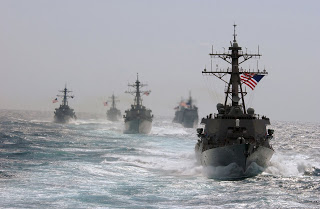
I would dearly love to see a Navy admiral with the courage to stand up to the status quo, as America’s new commander in Iraq General David Petraeus has done for the Army, to answer the challenges of modern war at sea. These news roles include intercepting pirate terrorists and WMDs at sea, the threat from diesel/electric submarines in the hands of rogue states like Iran and North Korea, and supporting operations in coastal and inland waterways. Instead, we continue to receive vessels little changed save in size and cost from their World War 2 forebears, forced to fight a 21st Century antagonist. If the Admirals were serious about controlling the sea, they would have spent the last 62 years since World War 2 finding a way to make the submarine obsolete.
Our current hi-tech fleet is too expensive for the kind of gunboat diplomacy against Third World countries we frequently find ourselves conducting. It is also far too small for a worldwide anti-submarine campaign the likes of which we fought in the World Wars of the last century. A defensive mindset has given us a Navy mainly expected to defend themselves, rather than taking the fight to the enemy. Proof of this was seen during the Tanker War of the 1980’s, when US warships sent to protect neutral tankers during the Iran/Iraq Conflict had to be escorted by the huge oil carriers through the mine infested waters of the Gulf.
...
Though some navies are still obsessed with building massive US style aircraft carrier fleets, and we expect the Chinese to produce theirs any day now, the most likely style of fighting our enemies would choose would be one we faced numerous times before, a submarine campaign against our merchant and surface fleets. I contend that the submarine is the Insurgent at Sea, and for such an attrition type warfare in the last 2 World Wars massive spending on aircraft and escort ships was required. The irony of it all is the Navy continues to purchase ships, in the words of Mr. Winter with "increases in capability at low rates of production". In other words, a massive construction capability is increasingly out of their plans, and likely soon out of their capability.
Bottom line: we are not ready for a war of attrition at sea, the kind the Army had forced on them in Iraq and is just barely now turning around. Our enemies can’t match us carrier for carrier, destroyer for destroyer, but have no qualms in hitting us where we are weakest. General Petraeus understands this, after many hard-won lessons in Iraq. We can only hope our naval leadership will soon realize it as well, before it is too late.
The meat of what Mike is saying though is the recognition that technology is moving the pendulum to the favor of potential adversaries in the maritime domain. This presents a problem, because while some advocate the Navy shift focus to embrace irregular warfare as a focus, I believe an expeditionary strategy should remain the priority.
 Western Navies emerged from the cold war with an expeditionary strategy for sea control, what Robert Work calls the transition from the Garrison Era (cold war era of strategic basing) to the Expeditionary Era (an era of strategic mobility from the sea). Maritime powers take the fight to the the shore of their enemies, the theory being to prevent the enemy from bringing the fight home. The realization of this has evolved into what some call liberal interventionism in small wars. The Gulf War, Somalia, Kosovo, Afghanistan, and Iraqi Freedom are all major examples of this strategy in motion, as these conflicts began and were enabled only by the single reality that the US Navy had complete control of the seas.
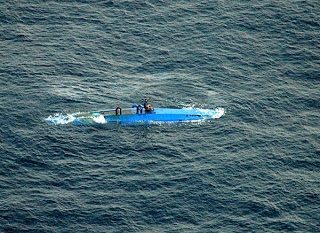
However, emerging technologies are enabling anti-access/area denial strategies from land and at sea that are not only more affordable, but more lethal. Mike calls the submarine the Insurgent at Sea, I think the title applies. Germany will soon be producing submarines that displace 1000 tons at a very affordable cost to small navies while these submarines are more than capable of sinking ships over 100x its displacement.
MIW warfare is cheap, but it is more than deadly and mines can be introduced a number of ways into critical choke points, and they are difficult to detect and remove quickly. Last year Hezbollah fired two very inexpensive anti-ship missiles, resulting in two hits, one of which was a kill. The result backed the Israeli Navy off the shore during daylight hours. Iran is reported to have over 1500 small boats that would be deployed in swarming operations in the Persian Gulf to neutralize the naval capabilities of adversaries there, and potentially sabotage commerce originating from the Gulf globally. Pirates are operating from motherships deploying marine forces in commerce raiding and hijacking.
The question is becoming, how does the Navy balance the high cost of dealing with these low cost threats while focusing on the larger Naval concerns of traditional competitors like China currently building up a large Navy, potentially with an expeditionary capability of its own?
 Mike says the Navy should find it's Petraeus. The discussion at CDRs place starts with comments asking for accountability to the current shipbuilding strategy, a strategy that not a single independent analysis endorses. As for me, a little of both would be nice, but I'd also like to see the industry looking for affordable solutions. The Navy moved into the 21st century with a healthy debate and strong opinions regarding Adm. Cebrowski's theories of streetfighter. Say what you want about the discussion, but at least someone tried to introduce thinking out of the box into the mainstream of the Navy.
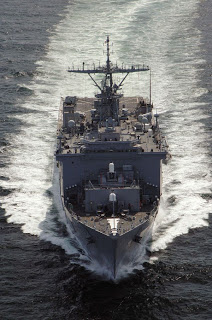
I'd argue it is past time for another healthy debate, and while streetfighter specifically has come and gone, where is the debate and analysis of mothership solutions? Without the LCS, the Navy has turned to motherships to fight the GWOT today, with regular deployments of LSDs, LPDs, and even HSVs in Navy operations to support the maritime small wars missions, including the piracy problem off East Africa. While some SWOs may not like this turn in events, I think there is something to this not being fully developed.
I tend to agree with Robert Work, we have already entered the Expeditionary Era, so where is the debate on the best ways to conduct expeditionary era warfare and meet the unique and diverse challenges? The conditions of this era are different, the political environment creates less support for forward bases, while demanding larger global coverage. Given those conditions, explain why is the number of logistics ships diminishing?
Mike stuck with front line ships on the attrition issue, but I'd argue the US is better prepared for attrition there. The real challenge facing the US is the lack of a realistic reserve in logistics, where attrition would severely impact operations. The DoD is attempting to adopt business practices in efficiency for both procurement and logistics. Am I the only person who thinks this might not be a good thing? Just in time logistics may sound good to a bean counter concerned with cost, but it is a contradiction to the concept of strategic reserve, something the nation is currently struggling with on several fronts.
Mike is exactly right to call on leadership, the Navy needs leadership to get out front. Proceedings is full of articles calling on the US Navy to get out front and make its case to both Congress and the American people regarding the role of the Navy in the 21st century. Several have called for an education process that targets the American people, and educates them why being a maritime power is important to every citizen, regardless of politics. Upon further review, where exactly is that education campaign taking place? Furthermore, does the Navy possess the leadership required to educate the American people on naval affairs without sounding like a rubber stamp for the defense industry? If Sea Power 21 is the guide, the answer is no.

No comments:
Post a Comment