Tuesday, March 3, 2024

Contract of the Day: Freedom Class

From the DoD contract announcements for Monday, March 2nd.
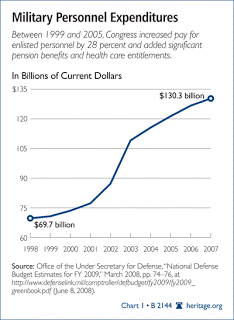
Lockheed Martin Corp. - Maritime Systems & Sensors, Baltimore, Md. is being awarded a modification to previously awarded contract (N00024-03-C-2311) for LCS program continuation efforts necessary to preserve production capability at its industry team shipyard facility. As this award represents efforts integrally related to Phase I of a competitive two-phased acquisition approach to procure FY09/FY10 LCS, with Phase II including potential award of up to three additional LCS Flight 0+ Class ships, the award amount is considered source selection information (see FAR 2.101 and 3.104) and will not be made public at this time. LCS Class ships are networked, agile, and high-speed surface combatants with versatile warfighting capabilities optimized for littoral missions. LCS is optimized for flexibility in the littorals as a system of systems that are both manned and unmanned, and mission reconfigurable. LCS focuses on three primary mission areas: Littoral Surface Warfare operations emphasizing prosecution of small boats, Littoral Anti-Submarine Warfare and Littoral Mine Countermeasures. LCS also possesses inherent capabilities to execute other missions such as: Joint Littoral Mobility; Intelligence, Surveillance, and Reconnaissance; Joint Special Operations Force support; Maritime Interdiction Operations; Homeland Defense; and Anti-Terrorism/Force Protection. Work will be performed in Marinette, Wis. (56 percent); Moorestown, N.J. (13 percent); Clearwater, Fla. (11 percent); Brunswick, Ga. (10 percent); Washington, D.C. (8 percent) and Baltimore, Md. (2 percent), and is expected to be completed by April 2009. Contract funds will not expire at the end of the current fiscal year. The Naval Sea Systems Command, Washington, D.C. is the contracting activity (N00024-03-C-2311).
First it should be noted that previous news reports had suggested that Marinette Marine, which had already laid off 170 workers last year, was going to lay off an additional 100 this year.

The details of this contract are somewhat confusing, but essentially the Navy is trying to contract out the 2 ships from FY09 and what is expected to be 3 ships in FY10 as part of a competitive fixed price contract to both contractors for 5 total ships instead of different contracts for the ships purchased in each fiscal year. One bid will be for two ships, while the other would be for 3 ships. These are not supposed to be cost-plus contracts, but with the details hidden we don't really know do we. Essentially the Navy is getting money out to the yard as a placeholder and to allow the yard to go ahead and begin construction on the FY09 ship it is sure to win. The final contract price will depend on whether the yard wins the 3 ship deal or 2 ship deal once the FY10 budget passes. I'm thinking there is good reason right now to suspect Lockheed Martin wins the three ship deal.

It is accurate to call this creative contracting.

There is a question I think the Navy should hire Tim Colton to find the answer to. How much of the cost increase of both LCS platforms was due to these ships being built at a 2nd tier shipyard? I want to know how much more the US Navy is paying for the LCS to be built in these second tier yards as opposed to the top tier yards that usually handle military contracts. I understand that there is a conventional wisdom that second tier yards should decrease costs because they should be more efficient, but should is completely unproven and I think the details matter. I also think the results of an investigation by someone as capable as Tim Colton will find there were problems no one counted on, and perhaps the second tier yards were not up to the task. That isn't to say they can't be brought up to the task of building these ships, but it might explain the high costs of the first in class ships, and may give some insight into what the hell is going on at Austal.

The Navy appears to be seriously struggling with enough money to keep the primarily Navy shipyards working, so I think it would be a big mistake to build the LCS at 2nd tier yards if it is in fact costing more money to do so when they could be built at primary Navy shipyards that need the work. I'm not thinking of the Lockheed Martin version per se with these comments, rather the General Dynamics ship, but that doesn't mean Marinette shouldn't be looked into also.

This announcement only makes it all the more obvious that we are hearing absolutely nothing from Austal regarding the General Dynamics design, and history shows that in the LCS program, when we see prolonged periods of silence, that has historically meant cost increases. Anyone care to guess how much the cost of Independence has grown over the last many months since the last cost increase? If the cost of Independence grows too much, I think the Navy is going to find themselves under pressure from Congress to pick a single hull, and that is going to mean serious problems for Austal USA if costs have indeed risen like I suspect they have.

I think before Congress and the Navy opt for a single hull for the LCS, it should be determined if the cost problems is the ship or if the problem is these 2nd tier yards. If General Dynamics can build the ship at another Navy yard for cheaper, then lets go with that before consolidating to a single hull. After all, we know they can handle the extra work in both Mississippi and Maine, and a few small ships a year is better than no small ships a year.

Talking About Ice

There are two very interesting conversations worth taking a look at related to the 'global warming debate' worth a read. The first is an analysis of “Warming of the Antarctic ice-sheetsurface since the 1957 International Geophysical Year”, Steig, E.J., D.P. Schneider, S.D. Rutherford, M.E. Mann, J.C. Comiso, and D.T. Shindell. Nature, January 2009, pp 459-462 from Fabius Maximus. As is highlighted, once again we have questionable information where many scientific observers in the media are finding consensus online while the scientific community is up in arms wondering why these articles get so much attention when the raw data is not released as per normal publishing standards required in the scientific community for virtually every other research topic.

The second conversation worth a look is over at Watts Up With That where they are looking at ice flows of both the Arctic and Antarctic and attempting to make sense of the trends. The arctic ice is well within normal levels dating back to 1979 while the Antarctic ice continues expansion, when global warming models have long suggested this should be contracting.

Am I skeptic of global warming? Absolutely, if politicians weren't so blatantly exploiting climate change for a reason to raise taxes while allowing scientists to hide the raw data, maybe I'd be less skeptical. Global Warming is a consensus theory, not a fact, and as Fabius Maximus highlights there are serious agendas at play that somehow make Global Warming science immune to the scientific requirements and standards every other science is held to. That should concern people who are tired of politics tampering with science, and that includes the politics of religion and the politics of environmental agenda.

I also don't believe there is any doubt at all the planet is in the midst of a climate change cycle we have we do not understand very well. The big problem is that what is happening is both unique in that it is not normal but also does not match any of the models for global warming. That tends to suggest to me that something is actually happening with our climate, and I find it troubling governments don't seem to actually care that they don't know what it is.

That second part is key, because policy decisions are being discussed largely absent good information of knowing what exactly we should be planning for. In my opinion, Congress should substantially increase funding for the collection and review of climate data for the scientific community, and the data should be made public so we can move beyond consensus and into the realm of fact, where science should be.

And when Congress substantially increases research funding, I hope they also invest in icebreakers, because contrary to the global warming models, the amount of ice on the ocean surface is increasing globally off South America while the summer months in the Arctic are producing more drift ice that will create dangers should commercial maritime traffic expand use of the northwest passage.

Monday, March 2, 2024

US Navy Turns Over Pirates To.... Puntland?

What does this say about our relationship with the new provisional government in Somalia? The US Navy has released 9 of the 16 pirates being held to the authorities in... Puntland.
U.S. forces handed over to authorities in northern Somalia on Monday nine pirates they captured after capsizing their boats at sea, a local official said.

The handcuffed men, paraded before reporters in the enclave of Puntland, are expected to appear in court this week, said Mohamed Said, Puntland's deputy police commander.

"The U.S. Navy told us they captured nine pirates on Friday and they handed them over to us this afternoon as you can see," he told reporters in the port of Bosasso.

"These pirates were captured as they were trying to hijack ships in the Gulf of Aden ... the U.S. navy capsized the pirates' boats." U.S. officials were not immediately available to comment.
CNN notes the US Navy did not have enough evidence for the pirates to be prosecuted in a Kenyan court.

So what are the legal ramifications of negotiating prisoner transfers with simi-autonomous regions of a country instead of the provisional government of that country? Let me ask a more provocative question...

Why is this different than Russia working with separatists in South Ossetia and Abkhazia?

I'll let folks with more familiarity with policy answer that one. I don't have a problem with this, France is already working with Puntland regarding pirates they capture. I do however believe policy decisions like this need to be made with both eyes wide open, because there can be consequences that are not easily seen when treating regions of failed states or weak states like a legitimate government, which is what the United States and France are doing with Puntland.

The truth is, Puntland is more of a state than the rest of Somalia is right now, and with diplomatic relations opening up for that region, may be a recognized state with a diplomatic relationship with the United States before the rest of Somalia.

New Media Poised to Change the Future National Security Debate

Dave Dilegge of the Small Wars Journal sent out the following “RFI” to a number of bloggers:
Andrew Exum’s post / review of Tom Ricks’ The Gamble several weeks ago at Abu Muqawama got me thinking (once again) about the impact of the “new media” on issues concerning national security, military doctrine and concept development, as well as lessons learned. As one part of this new media I’m not sure I fully grasp our influence - though I am often told we are, quote - “making a difference”. Here is the excerpt from the AM post that got me thinking about this.

“The New Media: Ricks cited a discussion on Small Wars Journal once and also cited some things on PlatoonLeader.org but never considered the way in which the new media has revolutionized the lessons learned process in the U.S. military. (Forget Abu Muqawama, though, because this lowly blog started around the same time as the surge.) Instead of just feeding information to the Center for Army Lessons Learned and waiting for lessons to be disseminated, junior officers are now debating what works and what doesn't on closed internet fora -- such as PlatoonLeader and CompanyCommand -- and open fora, such as the discussion threads on Small Wars Journal. The effect of the new media on the junior officers fighting the wars in Iraq and Afghanistan was left curiously unexplored by Ricks, now a famous blogger himself.”

I’d like to get your thoughts on this - nothing elaborate - maybe a paragraph or two on the core issues concerning the new media and it impact on the military. I’d then like to post the responses I get as one post on SWJ.

Appreciate the consideration.
The "RFI" went out to Spencer Ackerman, Tom Barnett, Janine Davidson, Andrew Exum, Grim, Judah Grunstein, Dave Kilcullen, Raymond Pritchett, Mark Safranski, Herschel Smith, Starbuck, Michael Tanji, and Michael Yon. The responses suggest new media did have some sort of impact on the surge, but it is unclear what exactly the role of new media was. I particularly think the responses of Janine Davidson and Dr. David Kilcullen were very interesting.

I would encourage people to read the responses and leave comments regarding that discussion at the Small Wars Journal or Abu Muqawama rather than here, because that discussion is only partially what has grabbed my attention on this subject.

I'm fairly disconnected from the surge discussion. I began blogging only in June of 2007, and in large part I didn't understand the debate regarding the surge at the time the debate occurred. For my own part, I was largely against the idea of a surge, because I thought it was simply about more troops in Iraq. There were very few readers on this blog at the time, but some might recall that was when I started linking other blogs related to the discussion, in particular the Small Wars Journal and Abu Muqawama, primarily to educate myself on the additional strategic logic that was being applied in association with a simple troop increase. Without those two 'new media' resources in particular, I'd have probably never understood what the Army did in Iraq to bring about the condition set today. If my experience in that regard is similar to others, then there is the answer to the question regarding the influence of new media.

As a professional in the internet communications space, I believe metrics exist for understanding the value of new media content. However, unless I had access to the raw data I don't believe I can apply metrics for that conversation from the armchair observer position I reside in. What I can do though is reflect how those types of events have influenced the future, and the way I see it, there are few better public examples of a new media evolution in motion than this specific discussion.

Consider for a moment what we are observing. We have a member of new media, Andrew Exum, noting a missing topic in published content from another member of new media, Thomas Ricks, generating a discussion regarding lessons learned from the surge on another new media platform, The Small Wars Journal. The discussion itself brings in enormously popular blogs like FireDogLake, Abu Muqawama, and Foreign Policy. That means at least 50,000 people could potentially be aware and participate in this discussion if they choose just because the opinion of those bloggers were solicited for the debate. With influence that comes with the broad exposure of ideas, one might imagine someone in the information business will find serious value in this type of horizontal connectivity towards ideas.

Actually, when you take a closer look at the people involved, someone already has.

I am very impressed with the way the Center for New American Security has reloaded after becoming one of the major manpower resource centers of the Obama administration. Andrew Exum is a brilliant pickup, and will allow CNAS to become the first think tank to truly leverage new media as a network to influence the national security debate.

Look, I know others try it, but by definition that isn't a blog. Heritage's National Security Blog isn't an example of horizontal connectivity to move ideas, because it is most often utilized as a business promotion website that by design sits as a single node without a network, and the content is primarily in press release format.

By leveraging the powerful combination of strategic communications and the research that can be generated inside any think tank, ideas can and will be published with horizontal connectivity across the internet on a daily basis. CNAS is essentially reloading in a way to insure relevance in the future despite recent losses to the administration. The additions of Dr. David Kilcullen, Thomas E. Ricks, and now Andrew Exum gives CNAS unprecedented broad access to new media for a daily propagation of ideas regarding the land services, and the results will allow CNAS to simply drown out competitive ideas sourced from other think tanks when it comes to the debate that shapes the future of the Army.

Indeed what is going to be very interesting is when someone outside CNAS produces professional research with a conclusion that counters the analysis produced by CNAS. If by chance CNAS ends up engaging an online discussion in disagreement on a point by point basis, it is going to be more than mildly entertaining watching those ideas get beat up while the research producer struggles to even engage the discussion. Give me a break, an editorial rebuttal in the Washington Times the following week is not going to be a very effective response if the challenges by the CNAS bloggers get rapidly propagated across the internet for several days first. This is a concept I've actually produced a PPT on believe it or not.

The essential idea that CNAS is poised to exploit is that their national security research environment can saturate the public new media space with the authority of CNAS, which will have an added effect of being broadly propagated by others who engage in the discussion of these ideas. After all, that is how new media works. The combination of broad connectivity through new media and with the authority of being a think tank, CNAS positions themselves perfectly to be the first think tank to completely bypass the tradition information model that influences the services at the operational level, which btw, is the specific topic the Small Wars Journal is discussing when asking the question how new media had influence on the surge.

CNAS is poised to insure their ideas will become the consensus view of a broad American public audience outside the military while also injecting their ideas through informal networks directly to the military at the operational level. In general most think tanks produce well researched and articulated opinions, but very few think tanks create a public consensus with their ideas, nor do they have any capability to indirectly propagate their ideas to the operational level without going through the formal process or depending upon popular bloggers to discuss their content. No one but CNAS has anything close to the connectivity on a daily basis nor any mediums by which to lend their authority to generate a similar effect on the national security discussion. The ramifications of what CNAS is doing will not only seriously challenge their competitors in the national security research space from creating any public support to counter ideas, but with this model CNAS will also challenge the formal system the DoD has long enjoyed regarding the ability of think tank recommendations to propagate beyond Washington DC to the operational level.

Think it won't happen? PlatoonLeader and CompanyCommand of yesterday is Small Wars Journal and Abu Muqawama today. It is already happening.

Which think tank report produced during the transition of the Obama administration had the most impact on the national security debate? Well, a better question is, which reports can you even name off the top of your head? The likely answer to the second question is: any think tank report you saw noted or discussed on a blog, and if ideas from those reports were discussed in depth on a blog; that became a report that matters. There were dozens of reports produced by the various think tanks, do you think the services took the time to read and study every one of them?

I don't, indeed when I have asked important people which ones they read, they named one or two, if any! The reports that were broadly read were primarily read because they were recommended, and those recommendations come from new media. Apparently, most think tanks don't care that a dependency relationship for their work already exists today, because if they realized this, CNAS wouldn't be the first think tank gobbling up the popular bloggers in the future Army debate that match their stated position in the debate.

Think Tank 2.0 is evolving, and if think tank 1.0 doesn't see the ramifications of what CNAS is doing, those organizations probably have no business giving national security strategy advice anyway. Do these organizations really produce reports so a certain handful of people inside the Pentagon will read them, or are they looking to build a broad consensus that reinforces the value of their ideas?

While the military services may not understand the importance of what Samuel Huntington was talking about regarding the necessary to develop the support of the American people by promoting "a strategic concept which clearly formulates its relationship to national security," clearly Dr. John Nagl gets it. A few months ago, I would have suggested Dr. Andrew Krepinevich was the only entrepreneur in DC that would understand the simple bridge yet to be crossed by the think tanks. Clearly another entrepreneur has arrived in DC.

My PPT just became obsolete because the working model already exists. I think now the way to present it will be to demonstrate the next instance where CNAS completely sinks a competitor in debate through new media. Welcome to the future of new media and the national security debate. CNAS has decided they will lead the evolution, and it will be interesting to observe as it unfolds.

Sunday, March 1, 2024

New York Times Plays the Same Old Song

The New York Times steps into the world of defense spending to give recommendations regarding how the DoD should save money. This editorial changes a few words only to sound very similar to an editorial posted late last year.

I do however believe it should be highlighted that this is absolutely false, either because the folks at the New York Times are ignorant or because they are simply biased.
How much the expansion and pay increases will cost will not be known until the full budget is released in April. What is already clear is that to stay within the $534 billion ceiling, the Pentagon will have to finally face the real world and make cuts in expensive and outdated cold-war weapons systems. President Obama and his advisers have a few more weeks to figure out which weapons to cut. But we are ready now with suggestions.

We would start by killing off the Air Force’s F-22 fighter and the Navy’s DDG-1000 stealth destroyer. We would also scale down the Army’s Future Combat Systems and hold back the deployment of unproven missile defense systems. Those four steps could save well over $10 billion a year. Billions could be saved by halting construction of unnecessary attack submarines, and dropping the Marines’ troubled tilt-rotor Osprey aircraft.

Cutting weapons programs takes political courage — that is why so many have survived so long after their military rationales evaporated. President George W. Bush was not willing to face down industry lobbyists and their carefully cultivated Congressional allies. The F-22 program, backers claim, sustains more than 25,000 jobs in 44 states — jobs that will be fiercely defended in the current economic environment. But cutting unnecessary programs is essential to help pay for more critical defense needs and more cost-effective economic stimulus.
Cutting weapons programs does not take political courage; it a time tested tradition in politics as old as the military services. Isn't it prudent to wait and see how much the troop expansion costs are before recommending which programs need to stay and go?

If the Obama administration cuts the DDG-1000, they will simply be doing what the Navy already wants them to do, hardly an act of political courage. I don't actually disagree with any of the recommendations, although I'd like to see some analysis regarding what would be gained by cutting the F-22 compared to what would be lost. Unlike the other three programs, the F-22 program is a replacement for a critical capability of the United States that dates back a lot longer than the cold war. Air superiority is a complex military capability, and right now the F-22 is at the center of our nations capability in achieving contested air space. The argument the program represents some job force is industrial and perhaps economic, but with the aircraft having a life span leading out until 2035 and beyond, not to mention the enormous costs in developing state of the art intercept aircraft, there is a lot at stake in the F-22 program beyond a potential near term cost savings and a handful of aviation jobs.

The real challenge is the cost problems being created with the expansion of military forces, a decision that can only be described as fighting the last war. Cost growth for acquisition today is historically steady, not different than in any other period as it stays between 30% and 40% of normal budgeting. This is a historical pattern, despite all efforts to adjust with cuts or increases in the past. In other words, every single effort to reign in costs in some form or another has ended in failure, with cost growth simply occurring in new ways to meet the historical trend.

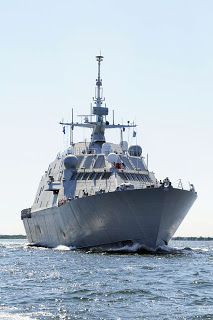
But what is new is the enormous cost growth coming from the manpower side of the DoD budget, a trend that is expected to increase as we add 92,000 additional military personnel this fiscal year. Manpower costs have increased 40% since 2000, a remarkable trend absent any analysis by observers like the New York Times. The New York Times can call out Congress regarding political courage all they want, but the New York Times doesn't even have the moral courage to be honest about what is actually stressing the DoD budget in Obama's first term.

Consider how rediculous it is for the New York Times editorial pages to discuss saving $10 billion a year with 4 simple procurement cuts when the additional of 92,000 new members to the defense services is expected to add about $100 billion to the cost of the DoD budget over the next six years.

There are serious choices to be made, and simply cutting procurement isn't going to do anything but put a dirty rag on a bleeding wound. Where is the clear strategic rationale for increasing the size of the ground forces? We are going to end up with an even larger military under Obama than we had under Bush, except this one will be underfunded with fewer ships and planes than anytime since before WWII. Why? The biggest irony of it all is that people run around claiming cutting the F-22 is done because the nation shouldn't be trying to fight the Soviets during the cold war, when in fact expanding the size of the ground forces is making an even bigger mistake by trying to fight the last war in Iraq.

Think about the trade of capabilities being discussed here... If the folks like the New York Times who simply think cutting procurement is the answer get their way, we potentially trade air superiority for the capability to occupy another weak country. The F-22 is so we don't have to fight Russia or China, a larger land force is so that we can occupy another country... like Mexico.