The comments in interviews of this story get harsh, this might be something worth observing how it plays out. Not the first time, nor will it be the last, but
this isn't a good sign.
Most of the missiles couldn’t be fired, and neither could any of the big guns. The Aegis radars key to the ships’ fighting abilities didn’t work right.
The flight decks were inoperable.
Most of the lifesaving gear failed inspection.
Corrosion was rampant, and lube oil leaked all over.
The verdict: “unfit for sustained combat operations.”
Those results turned up by an inspection by the Navy’s Board of Inspection and Survey — commonly known as an InSurv — would be bad enough if they came from one warship.
But they came from two. In different fleets, in different oceans. Within a week of each other. And each ship represents the Navy’s most sophisticated front-line surface combatants.
“This is worse than I remember seeing,” a recently retired surface flag officer said after reading the reports of InSurv inspections conducted in March aboard the Norfolk, Va.-based destroyer Stout and the Pearl Harbor, Hawaii-based cruiser Chosin. “I don’t remember seeing two that stood out like these.”
The Navy Times article is brutal regarding the condition of the ships, and doesn't hold back with opinions regarding the leadership that would have allowed this happen.
USS Stout (DDG 55) and
USS Chosin (CG 65). We note that these comments about leadership are probably directed towards the previous Captain of the USS Chosin (CG 65), as Captain Tim Smith has only served on the USS Chosin (CG65) for about 2 weeks now. It sounds to us like he inherited a mess.
Captain Smith replaced Captain Steven Lott who served as the USS Chosin (CG 65) CO from July 2006 to April 2008. We note in the
Feb. 08 ships newsletter the ship and Captain was preparing for INSURV, not sure how they could be aware of it and still rate so poorly. We also note Captain Lott had previous posts as CO of the USS Vincennes (CG 49) and XO of USS Donald Cook (DDG 75), which makes us curious how someone with as much experience as Captain Lott could have failed an INSURV so miserably.
There are some interesting side notes about the two ships. First, both were in the Middle East last August, with both listed
in our Order of Battle at that time.
We also note the article goes on to list a corrosion problem. While that can very easily be due to poor maintenance practices by the ships crew, the problem could also be caused by issues at construction. The article notes both ships are reaching their mid-life.
We note both ships were built at Ingalls within a few years of each other, and wonder if the problem is present among the other ships built at that time. USS Chosin (CG65) was laid down in July of 1988 and delivered in November of 1990. USS Stout (DDG 55) was laid down in September of 1991 and delivered in May of 1994. The other ships built between those two at Ingalls include Hue City (CG 66), ANzio (CG 68), Vicksburg (CG 69), Cape St. George (CG 71), Vella Gulf (CG 72), Port Royal (CG 73), and John Barry (DDG 52).
The absence of corrosion issues in similar locations on those ships would imply it isn't related to the yard, but a check might be warranted to determine if the problems are systematic to the ship classes.
It will be interesting to observe any reactions that come from this. Navy Times was able to dig up some stinging comments, bad PR that directly targets specific officers. Careers are effected here, fairly or not.
----
CDR is covering the Stout, so I'm going for the Chosin. Here is the INSURV report for teh USS Chosin, you tell me what you see, and later I'll tell you what i see. One big question, could or would some of these problems date to prior July 2006, the answer really, really matters.
R 021629Z APR 08
FM PRESINSURV NORFOLK VA(UC)
TO CNO WASHINGTON DC(UC)
COMUSFLTFORCOM NORFOLK VA
INFO ASST
SECNAV RDA WASHINGTON DC(UC)
COMPACFLT PEARL HARBOR HI
COMTHIRDFLT
COMNAVSURFOR SAN DIEGO CA(UC)
COMNAVSURFPAC SAN DIEGO CA(UC)
COMNAVSURFLANT NORFOLK VA
COMNAVSURFGRU MIDPAC
COMSURFWARDEVGRU LITTLE CREEK
USS CHOSIN PRESINSURV NORFOLK VA(UC)
BT
UNCLAS
SUBJ: INSURV REPORT FOR USS CHOSIN (CG 65) MATERIAL INSPECTION (MI) MSGID/GENADMIN,USMTF,2007/PRESINSURV NORFOLK VA// SUBJ/INSURV REPORT FOR USSCHOSIN (CG 65) MATERIAL INSPECTION (MI)//
GENTEXT/REMARKS/1. THE BOARD OF INSPECTION AND SURVEY CONDUCTED AN MI OF USS CHOSIN (CG 65) AT PEARL HARBOR, HI DURING THE PERIOD 24-28 MAR 08.
2. SENIOR MEMBER COMMENTS:
A. USS CHOSIN WAS FOUND UNFIT FOR SUSTAINED COMBAT OPERATIONS. THE FOLLOWING MATERIAL DEFICIENCIES CONTRIBUTE TO THIS FINDING: AN/SPS-49 AND AN/SPY-1B RADARS ARE SEVERELY DEGRADED, HATCH TIMING ON 26% OF THE VLS CELLS PRECLUDES THE USE OF THESE CELLS (SHIP REPORTED), AN/SQR 19 IS OOC (SHIP REPORTED), MT 51 AND 52 ARE OOC (SHIP REPORTED), SHIP'S COMMUNICATIONS ARE SEVERELY DEGRADED AS OUTLINED IN THIS REPORT, F/O LEAK (SHIP REPORTED) IN AFT CROSS FLOODING DUCT CREATED A FIRE HAZARD IN NR 3 GTG ROOM AND CAUSED A LOSS OF STRUCTURAL INTEGRITY ADVERSELY AFFECTING THE ABILITY OF THE SHIP TO WITHSTAND BATTLE DAMAGE. AVIATION FACILITY HAD NUMEROUS DISCREPANCIES WHICH PRECLUDE THE SAFE CONDUCT OF FLIGHT OPERATIONS.
B. ALTHOUGH THE SHIP CERTIFIED ITS READINESS FOR SEA, THE BOARD NOTED DISCREPANCIES THAT WOULD HAVE RESTRICTED UNDERWAY OPERATIONS OR DEMONSTRATIONS IN THE FOLLOWING AREAS DURING THE POST-UNDERWAY PORTION OF THE MI: HALON, WASTE HEAT BOILERS, GTMS, GTG INTAKES, FUEL OIL SERVICE TANK QUICK CLOSING VALVE REMOTE OPERATION, MRG SIGHT FLOW INDICATOR, HP AIR SYSTEM, ELECTRIC PLANT ALIGNMENT (ABT AND MBT), AN/SPS-49, AND READY LIFE BOAT.
C. SHIP'S OVERALL COMMUNICATIONS CAPABILITY, TO INCLUDE SWITCHING AND DISTRIBUTION SYSTEMS AND ASSOCIATED SUBSYSTEMS OF HF, SHF, VHF, UHF LOS, EHF, CDLMS AND LINKS, IS UNSAT. PASSWORDS FOR KEY SYSTEMS ARE NOT READILY AVAILABLE. ANTENNA MAINTENANCE TO COMBAT CORROSION, IF NOT CONDUCTED, WILL FURTHER DEGRADE COMMUNICATIONS. SEE COMMUNICATIONS SECTION OF THIS REPORT FOR DETAILS.
D. NR 3 GENERATOR ROOM PRIMARY HALON IN-SPACE CO2 ACTUATING BOTTLE DID NOT ACTIVATE THE HALON SYSTEM AND THE OUTSIDE CO2 ACTUATING BOTTLE LEAKED CO2 DURING RESERVE ACTUATION. MER 1 PRIMARY HALON DID NOT ACTIVATE BECAUSE OF A LEAK AT THE CO2 ACTUATING BOTTLE COUPLING HEAD.
E. THE AFT CROSS FLOODING DUCT FRAME 472 WAS HOLED AND LEAKED FUEL/COMPENSATING WATER (CASREP 07052 OF MAY 07). FUEL IS COMING FROM EITHER 6-426-1-F OR 6-426-2-F. AS STATED ABOVE, THIS IS A LOSS OF STRUCTURAL INTEGRITY AND A FIRE HAZARD. RECOMMEND RESTRICTED USE OF NR 3 GTG UNTIL REPAIRS ARE MADE.
F. 32 OF 122 VLS CELL HATCHES FAILED TIMING CHECKS AND WERE OPERATIONALLY UNUSABLE, THUS REDUCING MISSILE INVENTORY BY 26%.
G. DEGRADATION TO THE SPY-1B REDUCED RELIABLE DETECTION RANGE AND PRECLUDED 360 DEG COVERAGE. THREATS COULD ONLY BE DETECTED WITH THE FORWARD DECK HOUSE SPY AND MANEUVERING WAS REQUIRED TO ENGAGE WITH ALL WEAPON SYSTEMS. AFT DECK HOUSE PROVIDES NO RELIABLE INDICATION OF ACTUAL OPERATION. OTS TESTS FAIL TO RUN ON MANY OF THE AFT DECKHOUSE COMPONENTS AND ALIGNMENT OR TROUBLESHOOTING CANNOT BE ACCOMPLISHED.
H. RECOMMEND SELF SUSPENSION OF ALL FLIGHT OPERATIONS DUE TO NUMEROUS DISCREPANCIES WHICH ARE IN THE AVIATION SECTION OF THIS REPORT.
I. AN/SQS-53D SONAR DOME RUBBER WINDOW WAS CONDEMNED BECAUSE OF FAILING STEEL BELTS AND RUBBER DELAMINATION (CASREP 07139).
J. AN/SQR-19 WAS NOT DEPLOYABLE BECAUSE OF A 6-FT TEAR AROUND THE 570-FT MARK OF THE TOW CABLE. THE EXPOSED ARMORED BRAIDS SHOWED SIGNS OF CORROSION (CASREP 08031).
K. FCS DIRECTORS NR 1 AND NR 3 WERE 19 YEARS OLD AND BEYOND THEIR 15 YEAR DEPOT OVERHAUL REQUIREMENT.
L. VIDEO FROM AN/SPS-73 WAS DEGRADED BECAUSE OF INTERFERENCE FROM NON-PROGRAM OF RECORD FURUNO RADAR MOUNTED IVO SPS-73 RADAR ANTENNA.
M. VENTILATION SYSTEM IS DEGRADED AND DIRTY. A THOROUGH GROOM, INCLUDING SYSTEM BALANCING, IS NECESSARY TO RETURN EXHAUST AIR FLOWS TO DESIGN SPECS. N. SHIP COULD NOT CONDUCT SHORE POWER RIGGING AND UNRIGGING IAW EOSS SPRU (EOSS FEEDBACK REPORT REQUIRED).
O. PILOT'S LADDER WAS NOT RIGGED IAW NAVSEA DWG 804-5000900. IT WAS TOO SHORT FOR EMBARKATION AT DESIGNATED BOARDING STATIONS AND ITS OVERALL MATERIAL CONDITION MAKES IT UNSAFE FOR USE.
P. FLEXIBLE HOSE ASSEMBLIES WERE IDENTIFIED THROUGHOUT THE ENGINEERING PLANT THAT HAD IMPROPERLY INSTALLED OR MISSING BRACKETS. FAILURE TO ENSURE PROPER INSTALLATION OF FLEX HOSE SUPPORTS WILL SIGNIFICANTLY REDUCE THE LIFE SPAN OF THE AFFECTED HOSES.
Q. PORT AND STBD ICCP SHAFT GROUNDING ASSEMBLY BRUSHES WERE CORRODED AND SEIZED IN THE ASSEMBLY, SHAFT SLIP RING CONTACT SURFACES WERE SCORED, BRUSHES WERE BELOW 50% WORN, AND 4 OF 4 BRUSHES ON THE PORT SHAFT WERE NOT MAKING CONTACT WITH SHAFT SLIP RINGS. PMS WAS NOT BEING ACCOMPLISHED ON THIS SYSTEM. DAILY ICCP LOGS WERE NOT BEING KEPT AND SUBMITTED TO THE COMMANDING OFFICER FOR REVIEW/SIGNATURE AND SUBMISSION TO NAVSEA IAW NSTM 633-6.3. DUE TO A LACK OF FUNDING, NAVSEA DOES NOT HAVE A MECHANISM IN PLACE TO INFORM SHIPS OF ICCP DISCREPANCIES NOR TRACK SUBMISSION OF LOGS BY INDIVIDUAL SHIPS.
R. THE DEGAUSSING SYSTEM WAS OOC AND A SAT RANGING CHECK HAD NOT BEEN CONDUCTED WITHIN THE REQUIRED PERIODICITY (ANNUALLY) (CASREP 08015).
S. THE FOLLOWING MBTS WERE IMPROPERLY ALIGNED TO THE ALTERNATE SOURCE: AMR 2 VITAL MBT, NR 1 AND NR 2 AC MBT, MBT 1-52-1, AND MBT 01-220-1. NR 3 GTG MODULE COOLING FAN ABT WAS IN MANUAL.
T. TASK AND GENERAL LIGHTING ONBOARD WERE INADEQUATE. AN INCREASE IN BULB WATTAGE OR UPGRADE OF LIGHTING FIXTURES WOULD ENHANCE THE ABILITY OF PERSONNEL TO OPERATE AND MAINTAIN THE SHIP'S SYSTEMS.
U. SECONDARY RESCUE BOAT COULD NOT BE SECURED FOR SEA. KEEL RESTS AND BOAT CHOCKS HAD NO CONTACT WITH THE BOAT IN THE STOWED POSITION, BOAT GRIPES AND BELLY BANDS FORE AND AFT WERE LOOSE AND INEFFECTIVE. THE SHIPALT TO INSTALL THIS BOAT WAS NEVER COMPLETED.
V. 1 OF 2 SEA LADDER ALUMINUM HANDRAILS WAS BROKEN AT THE DECK ATTACHMENT, RENDERING THE LADDER UNSAFE FOR VBSS OPERATIONS.
W. 4 OF 6 ARAMID MOORING LINES ARE WORN AND DETERIORATED BEYOND SAFE USE (SHIP REPORTED).
X. UNAUTHORIZED ACCESS TO FWD VLS COULD BE GAINED VIA VLS FAN ROOM NR 2 WTD 2-126-2. THE WTD WAS NOT INSTALLED IAW NAVSEA DRAWING 6011974.
Y. CREW MEMBERS COMMITTED A SERIOUS VIOLATION OF THE WORKING ALOFT BILL DURING THE INSPECTION WHICH COULD HAVE RESULTED IN PERSONNEL BEING EXPOSED TO HIGH FREQUENCY RADIATION.
Z. NR 2 OWS SYSTEM WAS INOP BECAUSE OF AN INOPERABLE OIL CONTENT MONITOR (CASREP 08032).
AA. THE SHIP'S SELF-ASSESSMENT CAPABILITY WAS EVALUATED AS SAT WITH THE EXCEPTION OF DECK AND AVIATION WHICH WERE UNSAT.
AB. HELMSMAN COULD NOT STEER BY DFGMC BECAUSE INDICATOR DID NOT PROVIDE DIRECTION OF TURN INDICATION IAW NSTM 420 TO ALLOW THE HELMSMAN TO GAIN AND MAINTAIN THE SITUATIONAL AWARENESS NEEDED TO JUDGE THE EFFECT OF RUDDER POSITION ON THE SWING OF THE SHIP'S HEAD.
AC. 9 OF 99 WATERTIGHT CLOSURES INSPECTED WERE NOT WATERTIGHT.
AD. 1 OF 2 IPDS WAS OPERATIONAL.
AE. 13 OF 16 VENTILATION AIRFLOW ALARMS WERE EITHER INOP OR MISADJUSTED.
AF. 12 CRITICAL DEFICIENCIES PRECLUDED OILY WATER SEPARATORS CERTIFICATION.
AG. DOSSERT CONNECTORS WERE FOUND IN NR 1, NR 2 AND NR 3 SWITCHBOARDS. THERMAL INDICATIONS REVEALED NO SIGNS OF LOOSENING OR LOCAL HEATING. CONNECTORS NEED TO BE DOCUMENTED FOR FUTURE INSPECTION.
AH. THE SHIP DID NOT HAVE PMS INSTALLED FOR THE EPIRB. 3. THE FOLLOWING CASREPS WERE ACTIVE AT THE BEGINNING OF THE MI:
NUMBER NOMENCLATURE CATEGORY
07052 TANKS, STRUCTURAL 2
07114 PIPING AND VALVE GROUP 2
07115 TRIM & DRAINS SYSTEM 2
07116 TRIM & DRAINS SYSTEM 2
07139 DOME SONAR 2
07141 LAUNCHER, VERTICAL FWD 2
07142 LAUNCHER, VERTICAL AFT 2
07146 FUELING SERV, XFR & BL 2
08002 GTM INTAKE TRUNK 2
08005 LAUNCHER SYSTEM 2
08007 TRANSLATOR SIGNAL DATA 2
08008 RECORDER-R 2
08009 FILLING SYSTEM, FUEL OIL 2
08011 ELEVATOR, ELEC/MECH, CAR 2
08013 TANKS, STRUCTURAL 2
08015 DEGAUSSING SYSTEM 2
08016 5 IN GUN MT 51 3
08017 5 IN GUN MT 52 3
08018 DISTILLING PLANT, LOW PR 2
08019 SPG, TRANSMITTER 2
08020 SPY-1B, ANT 2
08021 TORPEDO TUBE, SURFACE 2
4. 33 DEPARTURES FROM SPECS (DFS) EXISTED AT THE BEGINNING OF THE MI.
A. THE FOLLOWING DFS WERE IN EXCESS OF 180 DAYS:
NUMBER NOMENCLATURE DATE ISSUED
CG65-0100 SHAFT PLASTIC COATING 4/24/2001
CG65-006-03 2A GTM ANTI-ICING PIPE 1/6/2024
CG65-005-07 NR 2 EVAP FEED WATER 3/16/2006
CG65-002-06 1A GTM ANTI-ICING 7/25/2006
CG65-007-06 FLEX HOSE EXTENSION 9/5/2024
CG65-1-507 FOST 6-382-3-F 9/19/2006
CG65-1-509 FEED TANK 5-300-2-W 2/16/2007
CG65-510 NR 1 WHB EXHAUST BELLOWS 4/19/2007
CG65-510 NR 1 WHB EXHAUST DOUBLER 4/19/2007
5. 8 ACTIVE TEMPORARY STANDING ORDERS (TSO) EXISTED AT THE BEGINNING OF THE MI.
A. THE FOLLOWING TSO WERE IN EXCESS OF 45 DAYS:
NUMBER NOMENCLATURE DATE ISSUED
11-06-03 NR 1/2 LODS 11/9/2024
07-07-01 F/O STORAGE TANKS 7/1/2024
09-07-01 NR 1 AND NR 2 MRG SUMP 9/26/2007
11-07-01 FAULTY IC ALARM 11/4/2024
6. DEMO RESULTS: SAT (0.80-1.00)/DEGRADED (0.60-0.79)/UNSAT (0.00-0.59):
* AAW DTE WAS SAT (SCORE: 0.94).
* SD DTE WAS SAT (SCORE: 0.80).
* GUNNERY LIVE FIRE DEMO WAS UNSAT (SCORE: 0.00) BECAUSE BOTH 5 INCH GUN MOUNTS WERE CONDEMNED. STAR GAGE TESTING REVEALED EXCESSIVE BORE EROSION AND CRACKS IN EACH BARREL (CASREPS 08016 AND 08017).
USW DTE WAS SAT (SCORE: 0.80).
* FULL POWER DEMO WAS DEGRADED (SCORE: 0.66). FULL POWER DEMO WAS CONDUCTED AT 87% FULL POWER AND WAS DEGRADED BECAUSE OF FAILURE TO MEET FULL POWER HORSEPOWER REQUIREMENTS.
* QUICK REVERSAL ASTERN WAS UNSAT (SCORE: 0.59). QUICK REVERSAL ASTERN WAS COMMENCED AT 87% FULL POWER, BUT WAS TERMINATED BECAUSE OF LOSS OF NR 1B GTM.
* QUICK REVERSAL AHEAD WAS UNSAT (SCORE: 0.57). QUICK REVERSAL AHEAD WAS COMMENCED AT 100% FULL POWER ASTERN, BUT WAS TERMINATED BECAUSE OF POWER TURBINE OVERSPEED ALARMS ON NR 2A AND NR 2B GTMS.
* STEERING DEMO WAS SAT (SCORE: 0.97). STEERING DEMO WAS CONDUCTED AT 87% FULL POWER AHEAD AND 100% ASTERN.
* ANCHORING DEMO WAS SAT (SCORE: 0.87).
7. SHIPBOARD PRESERVATION: DEGRADED (SCORE: 0.73):
* SHIP HAD SUPERSTRUCTURE CRACKING PROBLEMS WHICH WERE IDENTIFIED BY THE NAVSEA STRUCTURAL ASSESSMENT OF DEC 07.
* 70% OF THE MAIN DECK NON-SKID HAD INEFFECTIVE PROFILE (REPLACEMENT APPROVED FOR MAY-JUL 08 SRA). TOPSIDE FLEXIBLE CONDUIT SYSTEMS/FITTINGS AND KICK TUBES HAD SIGNIFICANT CORROSION DAMAGE; THE OCT 07 ASSESSMENT REFERS. STRUCTURAL HULL DAMAGE AND CRACKS REQUIRE IMMEDIATE MAINTENANCE ACTION.
* POTABLE WATER TANK (6-366-2-W) HAD A 2-FT BY 2-FT SHEET OF PAINT PEELING OFF THE INTERIOR SURFACE OF THE TANK AND GRADE 4-S RUST THROUGHOUT THE INTERIOR SURFACE OF THE TANK.
* DRY VOID 1-180-2-V HAD PINPOINT GRADE 7P RUSTING THROUGHOUT THE TANK SURFACE.
* DRY VOID 1-340-3-V HAD A 2-FT BY 1-FT BARE SPOT FROM WELDING A TRANSFORMER TO THE OUTBOARD BULKHEAD.
* NR 3 GENERATOR LONGITUDE PORTSIDE STRINGERS HAD PULLED AWAY FROM THE FRAME. TRANSFER PUMP FOUNDATION WAS 30% DETERIORATED.
* VERTICAL STIFFENER ATTACHMENTS IN JP-5 PUMP ROOM WERE GREATER THAN 50% DETERIORATED.
* ELEVATOR TRUNK (3.5-464-0-T) RAIL BRACKETS AND FASTENERS HAVE 50% DETERIORATION.
* A 3-SQ FT AREA OF DECK AND BULKHEAD IN NR 3 GTG ROOM WAS DETERIORATED ON THE PORTSIDE 1ST LONGITUDE ABOVE THE BILGE DECK AT FRAME 422. THIS WAS CAUSED BY SACRIFICIAL ZINC ANODES BEING SUBMERGED IN OIL, INHIBITING THEIR ABILITY TO PREVENT CORROSION.
* NR 1 AND NR 2 A/C PLANT DECKS WERE SIGNIFICANTLY DETERIORATED WITH HOLES IN THE STRUCTURE (SHIP REPORTED).
* NR 1 AND NR 2 DISTILLING PLANT FOUNDATIONS HAD SEVERE CORROSION AND STRUCTURAL MEMBER WASTAGE (SHIP REPORTED).
8. SIGNIFICANT MATERIAL DEFICIENCIES AND EQUIPMENT OPERATIONAL CAPABILITY (EOC) INCLUDE:
A. PROPULSION: UNSAT (SCORE: 0.58):
* VALVE MAINTENANCE THROUGHOUT THE ENGINEERING PLANT WAS IN ARREARS.
* 4 OF 4 GTM CLEAN SIDE INTAKES CONTAINED DIRT/DEBRIS OR SALT DEPOSITS.
* 2 OF 4 GTM CLEAN SIDE INTAKES HAD A FREE PATH TO THE DIRTY SIDE.
* 2 OF 2 MRG GEAR CASINGS HAD POOLED OIL.
* 2 OF 2 MRG LO STRAINER INTERLOCKS WERE NOT ENGAGED (SHIP REPORTED).
* 2 OF 2 MRG LO STRAINER DIFFERENTIAL PRESSURE ALARMS WERE INOP.
* STBD SHAFT STERN TUBE SEAL INFLATABLE BOOT FAILED TO HOLD PRESSURE.
* 3 OF 4 FO SERVICE TANK QUICK CLOSING VALVES COULD NOT BE CLOSED REMOTELY (CORRECTED).
* NR 1B FUEL OIL COALESCER OUTLET LINE LEAKED (CORRECTED).
* NR 1B FUEL OIL COALESCER BIMBA VALVE LINE LEAKED (CORRECTED).
* NR 1 FUEL OIL COALESCER GAGE LINE FITTING LEAKED (CORRECTED).
* 2 OF 4 MAIN ENGINE CONTROL SYSTEMS WERE MISADJUSTED PREVENTING ACHIEVEMENT OF DESIGN SHAFT HORSEPOWER AND ENGINE TORQUE IN FULL POWER MODE.
* 3 OF 3 GTG CLEAN SIDE INTAKES CONTAINED DIRT/DEBRIS OR SALT DEPOSITS.
* 3 OF 3 GTG EMERGENCY COOLING WATER VALVES WERE INOP.
* 2 OF 3 WHB SAFETY VALVES WERE IMPROPERLY LOCKED.
* NR 2 WHB LOW-LOW WATER ALARM SOUNDED AT -8 VICE -9.5 TO -10.
* NR 2 WHB RIGHT HAND SAFETY VALVE ADJUST PLUGS WERE MISSING LOCKWIRE AND TAMPER SEALS.
* NR 3 WHB REMOTE WATER LEVEL INDICATOR ALARMS WERE INOP (HIGH-LOW AND LOW-LOW).
B. AUXILIARIES: DEGRADED (SCORE: 0.72):
* STEERING GEAR PORT RUDDER ACCURACY SWING CHECKS WERE OUT OF ADJUSTMENT.
* ANCHOR WINDLASS PORT AND STBD ELECTRIC BRAKES WERE IMPROPERLY SET.
* ANCHOR WINDLASS PORT HPU STROKE WAS IMPROPERLY SET.
* ANCHOR WINDLASS STBD HPU ELECTRIC MOTOR WINDINGS WERE OPEN (SHIP REPORTED).
* NR 1 A/C PLANT LUBE OIL ACCUMULATOR WAS RUPTURED (CORRECTION).
* NR 4 CHILL WATER PUMP WAS OOC (SHIP REPORTED).
* NR 1, NR 3, AND NR 4 A/C PLANT CONDENSERS NEEDED CLEANING.
* A/C PLANT SPECIAL TOOLS AND THE LAPTOP FOR THE A/CS WERE MISSING.
* A/C PLANT FREON SUPPLY WAS INADEQUATE (200 LBS INSTEAD OF THE REQUIRED 675 LBS).
* NR 2 REEFER CAPACITY CONTROL WAS DEGRADED.
* NR 2 CHILL BOX HAD GREATER THAN 2-INCHES OF ICE BUILD-UP ON THE COILS.
* NR 1 REEFER MOTOR HAD AN UNUSUAL NOISE.
* HP AIR DEWPOINT WAS NOT TESTED BECAUSE THE SHIP DID NOT HAVE A DEW POINT INDICATOR.
* NR 2, NR 4, AND NR 6 FIRE PUMPS HAD MECHANICAL SEAL LEAKS.
* NR 1 S/W SERVICE PUMP DISCHARGE VALVE GEAR BOX WAS INSTALLED BACKWARDS.
* NR 1 AND NR 2 DISTILLING PLANT CONDENSATE PUMPS HAD MECHANICAL SEAL LEAKS.
* 3 OF 4 WATER HEATER SAFETY SWITCHES WERE NOT FUNCTIONAL.
* 4 OF 4 WATER HEATER STEAM REGULATING VALVES WERE NOT LOCKED.
* VERTICAL PACKAGE CONVEYOR GROWLERS DID NOT WORK AT ALL LEVELS.
C. ELECTRICAL: SAT (SCORE: 0.83):
* 2 4-STAR THERMAL IMAGING AND 1 3-STAR THERMAL IMAGING DISCREPANCIES EXISTED (CORRECTED).
* LIGHTING PANELS 1-411-1, 1-276-1, AND 2-139-2 WERE GROUNDED (CORRECTED).
* AUTOMATIC BUS TRANSFER 04-344-1 AND NR 5 FIRE PUMP AUTOMATIC BUS TRANSFER FAILED TO SHIFT IN AUTOMATIC WHEN TESTED.
* 46 OF 73 DISTRIBUTION CONTROLLERS INSPECTED WERE MISSING GROUNDING STRAPS BETWEEN THE ENCLOSURE AND THE DOOR WHEN ENERGIZED COMPONENTS WERE MOUNTED ON THE DOOR.
* NUMEROUS ELECTRICAL SAFETY AND CABLEWAY DEFICIENCIES INCLUDED: DEAD-ENDED CABLES, CABLES IMPROPERLY BUNDLED AND BANDED, CABLES EXCEEDING NESTING CAPACITY, INADEQUATE SUPPORT BRACKETS, AND POOR CABLE INSTALLATION PRACTICE IN TRANSITING WATERTIGHT BULKHEADS AND DECK PENETRATIONS HAS RESULTED IN COMPROMISED WATERTIGHT INTEGRITY THROUGHOUT THE SHIP.
* CONSOLE READING LIGHT IN COMP 02-138-0-C (CIC) HAD EXPOSED ENERGIZED TERMINALS.
* NR 3 GTG MODULE COOLING FAN ABT WAS NOT IN AUTOMATIC.
* FP-QP COIL JUNCTION BOX COVER WAS NOT WATERTIGHT AND HAD A TEMPORARY COVER INSTALLED.
* REHEATER CONTROLLER 1-25-1 HAD BURNT AND FRAYED ENERGIZED WIRES MAKING CONTACT WITH CONTROLLER CASING (TAGGED OOC).
* HAND-HELD CONTROLLERS FOR SLIDING PADEYE STATIONS NR 5 AND NR 6 HAD WORN AND FRAYED ELECTRICAL CABLES.
D. DAMAGE CONTROL: DEGRADED (SCORE: 0.75):
* AFFF STATION NR 1 MASTER SOPV DID NOT FULLY CLOSE. S/F HAD TO MANUALLY CLOSE THE SOPV HANDLE.
* MER 1 SERVICE BILGE SPRINKLING SOPV WAS INOP (CORRECTED).
* MER 1 OVBD DISCHARGE VALVE (MD-1) LEAKED-BY.
* AMR 1 EDUCTOR FIREMAIN ACTUATING VALVE LEAKED-BY.
* AMR 2 OVBD DISCHARGE VALVE LEAKED-BY.
* 16 OF 16 FIREZONE DOORS DID NOT LATCH CLOSE AND GASKETS REQUIRED REPLACEMENT (SHIP REPORTED).
* STBD IPDS DID NOT IDENTIFY G AND H AGENTS.
* 25 OF 54 GROUP 2 COUNTERMEASURE NOZZLES WERE INOP.
* CMWD PIPING IN CIC PASSAGEWAY (02-180-0-L) RUPTURED DURING THE DEMO.
* GROUP 2 AND GROUP 4 CMWD SOPV INTERNAL ELECTRICAL WIRING HAD WORN INSULATION.
* CREW'S GALLEY REPLACEMENT APC CYLINDER WAS CONFIGURED WITH 1 PORT VICE 2 PORTS (PRESSURE SWITCH TO GAYLORD HOOD AND DEEP FAT FRYER CIRCUIT BREAKERS). SHIP HAD A SINGLE PORT GAYLORD HOOD ONLY.
E. DECK: DEGRADED (SCORE: 0.60):
* 1 OF 2 SAR RESCUE LITTER SLINGS WAS MISSING WEIGHT TEST CERTIFICATION.
* 25 OF 25 MK 1 LIFE PRESERVERS FAILED VISUAL INSPECTION.
* 29 OF 29 KAPOK LIFE PRESERVERS FAILED VISUAL INSPECTION.
* 8 OF 9 J-BAR DAVIT SOCKETS WERE NOT MAINTAINED, DAVIT HEELS WERE NOT LUBRICATED, SOCKETS HAD DEBRIS IN THE BOTTOM, AND WEIGHT TEST LABEL PLATES WERE MISSING.
* 46 OF 51 01 LEVEL KEVLAR LIFELINES FAILED VISUAL INSPECTION. LIFELINES REQUIRED LUBRICATION TO THE SISTERHOOK PINS AND TURNBUCKLE THREAD FITTINGS, TOGGLE PINS WERE MISSING OR NOT SET IN THE DECK SOCKETS AND MANY WERE CRACKED AND/OR DISTORTED.
* 95% OF THE EXTERIOR LADDERS WERE RIGGED WITH THE IMPROPER SIZE SECURING PINS AT THE TOP AND BOTTOM OF THE LADDER, HAD MISSING OR NOT INSERTED HANDRAIL SAFETY PINS, AND HAD PINS MISSING KEEPER LANYARDS.
* ACCOM LADDER LOWER PLATFORM OUTBOARD HANDRAIL WAS BROKEN, TOE GUARD/SAFETY STEP WAS MISSING, BRIDLE WEIGHT TEST PLACARD WAS MISSING, AND TOGGLE PINS WERE UNDERSIZED.
* 9 OF 9 LIFERAFTS WERE MISSING DIAPHRAM TYPE HYDROSTATIC RELEASE PRESSURE TEST DOCUMENTATION AND WERE OUT OF PERIODICITY (SHIP REPORTED).
* 9 OF 18 MK 7 LIFERAFTS WERE NOT STOWED IN CRADLES PARALLEL TO THE SHIP'S BASELINE.
* 1 OF 2 ABANDON SHIP SURVIVAL BAGS WAS MISSING.
* 8 OF 16 TOPSIDE MOUNTED LIFE BOUY RINGS FAILED VISUAL INSPECTION AND WERE HOLED.
* SYNTHETIC HIGHLINE TRANSFER STATION WAS NOT RIGGED IAW NWP 4.01.
* SECONDARY RESCUE BOAT HAD A 5-INCH CRACK IN THE HULL, THE DECK NON-SKID PROFILE WAS INEFFECTIVE, 3 OF 4 OPERATING PLACARDS WERE MISSING, 2 OF 2 CO2 BOTTLES WERE MISSING, AND BILGES CONTAINED OILY WATER.
* DIP ROPE WAS MISSING (NOT IAW NAVSEA DWG 803-6397319).
* REVERSIBLE BOLTS (BAXTER BOLTS) AND SOCKETS REQUIRED INSPECTION AND LUBRICATION.
* 4 OF 4 SLIDING PADEYE BULKHEAD MOUNTED BACKSTAY STAPLES WERE CORRODED.
F. ANTI-SUBMARINE WARFARE: SAT (SCORE: 0.82):
* STBD MK 32 SVTT BARREL NR 1 DID NOT SHOW TORPEDO INVENTORY FROM TSP OR MK 116.
* AN/WQC-2A LOW AND HIGH FREQUENCY TRANSDUCER CABLE INSULATION RESISTANCE CHECKS WERE .05 MEG OHMS VICE 10 MEG OHMS OR GREATER INDICATING A CABLE SHORT TO GROUND (SHIP REPORTED).
* AN/SQS-53D DOME PRESSURE RELIEF VALVE (FM-27) FAILED TO RELEASE PRESSURE AT 33.5 PSI.
G. OPERATIONS: UNSAT (SCORE: 0.55):
* AN/SPS-49 HIGH VOLTAGE POWER SUPPLY FLOW SENSOR WAS BROKEN AND DISCONNECTED, DISABLING LOW FLOW PROTECTION FOR 50K VOLT POWER SUPPLY (CORRECTED).
* AN/SPS-49 ANTENNA AZIMUTH PINION GEAR WAS FILLED WITH INCORRECT GREASE.
* AN/SPS-49 SHIP MOTION COMPENSATION, POWER OUT, AND MINIMAL DISCERNABLE SIGNAL WERE OUT-OF-SPEC.
* AN/SPY-1B ARRAY T03 INDICATED FAULTS ON 142 PHASE SHIFT DRIVERS, CREATING A RADIATION HAZARD CONDITION BECAUSE OF FAULTY POWER SUPPLIES (CORRECTED).
* AN/SPY-1B HVPS T36 INVERTERS NR 1 AND NR 2 COOLANT FLOW FAULT FAILED TO CLEAR AFTER TESTING, T35 INVERTER NR 2 WAS MISSING (INSTALLED IN HVPS T37), NR 5 AND NR 6 T31 INVERTERS DID NOT FAULT TO THE OFFLINE CONDITION WHEN COOLANT WAS REMOVED.
* AN/SPY-1B D/PD T20 CHANNEL NR 2 TWT GRID LEAD INSULATION WAS CRACKED AT THE TUBE BASE.
* AN/SPY-1B ARRAY T01 AND T02 FAILED GAIN AND SENSITIVITY TEST.
* AN/SPY-1B FPA T26 DID NOT PROVIDE RESULTS FOR ORTS TESTING.
* AN/SPY-1B AFT DECKHOUSE WAVEGUIDE SWITCH FAILED ORTS TESTING.
* AN/SPY-1B D/PD T20 CFA HIGH VOLTAGE BARRIER SAFETY INTERLOCK WAS FAULTY (CORRECTED).
* AN/SPY-1B FWD DECKHOUSE FAILED PHASE AND POWER TESTING, AFT DECKHOUSE DID NOT REPORT ANY READINGS FOR TESTING.
* IFF AS-177B ANTENNAS FAILED VSWR (SER NR 100 1.9:1 AND SER NR P16 1.58:1).
* SLQ-20 ROTATING IFF ANTENNA FAILED VSWR (3.0:1) AND HAD PHYSICAL DAMAGE TO FIBERGLASS.
* COMMAND AND DECISION COOLING SYSTEM HIGH CONDUCTIVITY ALARM SENSOR DID NOT ACTIVATE ALARM MODULE ON PANEL.
* AN/SPS-49 COOLING PUMP NR 1 DID NOT OPERATE (SHIP REPORTED).
* FWD AEGIS COOLING SYSTEM EXPANSION TANK RELIEF VALVE LIFTED AT 50 PSIG VICE 45 PSIG.
* SONAR COOLING SYSTEM PUMP NR 2 CHECK VALVE LEAKED BY (SHIP REPORTED).
* PORT AND STBD CIWS COOLING LOW FLOW SWITCHES DID NOT ACTIVATE ALARM.
* FCS, SPY, AND EHF DRY AIR INTERMEDIATE AND OUTLET PRESSURE REGULATORS DID NOT MAINTAIN PROPER PRESSURE.
* SHF AND SLQ-32 DRY AIR INTERMEDIATE PRESSURE REGULATORS DID NOT MAINTAIN PROPER PRESSURE.
* FCS AND AFT SPY DRY AIR RELIEF VALVES WOULD NOT ADJUST.
* FWD SPY AND FCS DRY AIR MOISTURE INDICATORS WERE WET.
* RD-358 FOR N+1 AND WCS WERE DEGRADED AND COULD NOT DATA RECORD BECAUSE OF DAMAGED RIBBON CABLES (SHIP REPORTED).
* MK 38 FWD CLOCK CONVERTER GYRO DATA HANDLER FAILED ORTS TESTING.
* MK 53 DECOY LAUNCHING SYSTEM NIGHT LOADING LIGHTS FOR LAUNCHER NR 2 AND NR 5 DID NOT ILLUMINATE.
* GUN WEAPON SYSTEM (GWS) UYK-43 MEMORY MODULES NR 1 AND NR 2 WERE DEFECTIVE. MODULES FROM N+1 UYK-43 WERE INSTALLED IN GWS UYK-43 FOR SYSTEM OPERATION.
H. WEAPONS: SAT (SCORE:0.84):
* CIWS MT 21 WAS INOP BECAUSE THE NR 1 AND NR 2 TRANSMITTER BEAM FILTER UNITS AND THE 3A4W21 CABLE WERE DAMAGED FROM INTERNAL ARCING.
* CIWS MT 21 SCAN DRIVE MOTOR CASING WAS SHORTING TO GROUND INDICATING BRUSH DUST BUILD-UP.
* MK 86 REMOTE OPTICAL SIGHT COULD NOT BE TRAINED BECAUSE THE AZIMUTH BRAKES WOULD NOT RELEASE.
* MK 86 WEAPON CONTROL CONSOLE NR 2 WAS INOP BECAUSE THE KEYBOARD MATRIX DIGITAL READOUT WOULD NOT RETRIEVE DATA AND THE REMOTE OPTICAL SIGHT VIDEO COULD NOT BE DISPLAYED.
* ARMORY INTRUSION ALARM DID NOT FUNCTION WHEN ACTIVATED.
I. NAVIGATION: SAT (SCORE: 0.84):
* UW LOG INDICATOR TRANSMITTER NR 2 DID NOT SEND CORRECT 60 HZ SPEED INFORMATION TO THE SHIP'S REPEATERS, ALL SYNCHRO TRANSMITTERS WERE ELECTRICALLY AND MECHANICALLY MISALIGNED.
* UW LOG INDICATOR TRANSMITTER NR 1 SYNCHRO TRANSMITTERS WERE MISALIGNED AND DID NOT SEND SPEED INFORMATION TO SHIP'S SYSTEMS.
* AFT AN/WSN-7 CDU DID NOT HAVE OPERATIONAL PROGRAM LOADED AND PRINTER CARTRIDGES WERE FAULTY.
* WAKE LIGHT COVER WAS MISSING, WITH LIGHT BULB BROKEN OFF AND WIRES EXPOSED.
* AN/UQN-4 FATHOMETER TRANSDUCER IMPEDANCE AND CABLE RESISTANCE WERE OUT-OF-SPEC (SHIP REPORTED).
J. COMMUNICATIONS: UNSAT (SCORE: 0.57):
* HF IMI TESTING FAILED BECAUSE AT LEAST 2 AN/URT-23 TRANSMITTERS COULD NOT BE ADJUSTED FOR REQUIRED POWER OUT OF 850 WATTS.
* HF LONG HAUL WAS UNSAT.
* 9 OF 10 AN/URT-23 HAD LOW POWER OUT AND HIGH VSWR. 8 OF 10 FAILED ON-AIR TEST.
* 6 OF 14 R2368 HF RECEIVERS (NR 3, NR 5, NR 7, NR 10, NR 12, AND NR 14) FAILED SENSITIVITY TEST AND 14 OF 14 FAILED ON-AIR TEST BECAUSE OF THE FOLLOWING: 5 OF 5 HF ANTENNAS WERE DEGRADED DUE TO CORROSION/DETERIORATION AND HIGH VSWR.
* ANZAC SPLITTER HH 108 FOR HF HAD FAULTY CHANNEL B CAUSING A 50% DECREASE IN CAPABILITY OF HF SRA-49 COUPLER BANKS.
* 1 OF 4 AN/SRA-57 TRANSMIT COUPLERS (NR 1) WAS DEGRADED AND 1 OF 4 (NR 3) WAS INOP (SHIP REPORTED).
* 1 OF 3 AN/GRC-211 VHF TRANSCEIVERS (NR 2) WAS DEGRADED AND 1 OF 3 (NR 3) WAS INOP.
* 1 OF 2 AN/WSC-3(V)11 UHF LOS HAVEQUICK WAS INOP BECAUSE OF NO TRANSMIT/RECEIVE CAPABILITY.
* 9 OF 16 AN/WSC-3(V)7 UHF LOS TRANSCEIVERS WERE DEGRADED WITH THE FOLLOWING DISCREPANCIES: NR 1, NR 2, NR 3, NR 6, NR 7, AND NR 8 HAD LOW AM WIDEBAND AUDIO OUT (CORRECTED). NR 7 HAD LOW XMIT FM NARROWBAND DEVIATION AND FAILED BITE 10 A1 TRANSMITTER CHECK. NR 8 FAILED BITE 16 A14 FM DETECTOR CHECK. NR 10 FAILED BITE 3 A23 REFERENCE OSCILLATOR CHECK. NR 12 HAD HIGH RCV AM NARROWBAND AUDIO OUT, AND NR 6, NR 7 AND NR 13 HAD LOW RCV FM NARROWBAND AUDIO OUT (CORRECTED).
* 4 OF 4 AN/WSC-3 UHF OA-9123 COUPLERS HAD FAULTY POWER LAMPS, NR 1 HAD A FAULTY A2A1A2 CCA CAUSING DRAWER 4 TO BE INOP AND NR 3 HAD COMBINER NR 3 FAULT LIT AS DETERMINED BY BIT TEST. DRAWER WORKS.
* TV-DTS WAS INOP BECAUSE OF SOFTWARE ISSUES (SHIP REPORTED).
* 9 OF 16 UHF ANTENNAS WERE DEGRADED BECAUSE OF CORROSION, DETERIORATION AND/OR HIGH VSWR.
* AN/USC-38 EHF SATCOM SYSTEM WAS INOP BECAUSE OF A FAULTY 1A6A18 POWER SUPPLY CIRCUIT CARD.
* AN/USC-38 EHF ANTENNA NR 1 AND NR 2 WERE OUT OF BALANCE (EE130-AG-0MI-260 /156-3 USC-38 BALANCE OF ANTENNAS CORRECTIVE PROCEDURES).
* AN/USC-38 EHF TIP LAPTOP COULD NOT BE ACCESSED BECAUSE NO PASSWORD WAS AVAILABLE.
* 2 OF 2 AN/WSC-6 SHF ANTENNA MAINTENANCE LIGHTS WERE INOP BECAUSE OF UNAVAILABILITY OF 115 VAC.
* 2 OF 2 AN/WSC-6 SHF ANTENNAS TEST FEED HORNS WERE INSTALLED INCORRECTLY.
* 3 OF 4 AN/WSC-6 SHF ANTENNA RADOM HATCH SECURING DOGS ON ANTENNA NR 1 AND 4 OF 4 SECURING DOGS ON ANTENNA NR 2 WERE CORRODED TO A POINT OF BEING INOPERABLE.
* 3 OF 3 EMERGENCY POSITION-INDICATING RADIO BEACON (EPIRB) REGISTRATION DATES WERE EXPIRED (EXP DATE 03/17/07). 1 OF 3 EPIRBS UNIQUE IDENTIFICATION NUMBER (UIN) ON THE DECAL DID NOT MATCH THE EPIRB UIN.
* 5 OF 14 TSEC/KY-58 CRYPTO UNIT (NR 6, NR 7, NR 8, NR 9, AND NR 11) AC PWR SOURCES WERE MISSING BECAUSE OF A BLOWN RACK FUSE OR COMPONENT FAILURE AND 2 OF 14 (NR 4 AND NR 7) FRONT PANEL CONTROL KNOBS WERE MISSING, RENDERING OPERATION UNRELIABLE.
* 4 OF 4 AN/USC-38 EHF ANDVT WERE ALARMING WHEN KEYED.
* 2 OF 2 KY-40 LINK-11 CRYPTO DEVICES FAILED TO ALLOW LINK-11 POFA TO BE CONDUCTED BECAUSE OF FAULTY UNITS.
* 13 OF 26 TA-970 RED PHONES WERE INOP BECAUSE OF MISSING OR BURNED OUT DETECT, CIPHER, PLAIN OR DISCONNECT BULBS AND 9 OF 26 C-10276 CHANNEL SELECTORS HAD FUSE HOLDERS, FUSES AND/OR KNOBS MISSING.
* 10 OF 15 AM-3729 AUDIO AMPLIFIERS HAD MISSING FUSES AND/OR BROKEN FUSE HOLDERS.
* AN/SYQ-7 NAVMACS SIDE ALPHA WAS INOP BECAUSE OF A MISSING TAPE DRIVE, FAULTY SYSTEM BOARD, AND MISSING 3.5 FLOPPY DRIVE. WORKSTATION NR 1 HAD A FAULTY CRT DISPLAY AND 10 OF 16 UNINTERRUPTED POWER SUPPLY SECURING SCREWS WERE MISSING.
* AN/USQ-64 OTCIXS WAS INOP BECAUSE OF A FAULTY POWER SWITCH ON THE ON-143.
* 2 OF 3 NOW TERMINALS (NR 2 AND NR 3) WERE INOP BECAUSE OF MISSING POWER SUPPLIES.
* AN/UYQ-86 COMMON DATA LINK MANAGEMENT SYSTEM (CDLMS) WAS INOP BECAUSE THE SYSTEM COULD NOT BE ACCESSED (CORRECTED).
* AN/USQ-125 LINK 11 WAS INOP BECAUSE OF A BROKEN INTERFACE CABLE CONNECTOR (CORRECTED) ON THE JUNCTION BOX (CASREP 08030).
* LINK 11 PASSIVE LINK TAP (PLT) FRONT CONTROL PANEL WAS LOCKED-UP, RENDERING PLT INOPERABLE. LINK 11 TACTICAL DATA COULD NOT BE SENT TO GCCS-M.
* AN/SSW-1 LINK 4A WAS INOP BECAUSE ON-AIR TEST FAILED. POFA WAS UNSAT WITH OR-176 NR 2.
* AN/USG-2 COOPERATIVE ENGAGEMENT CAPABILITY DIAGNOSTIC TESTING IDENTIFIED SEVERAL ERRONEOUS FAULTS (UP TO 5 CIRCUIT CARDS) AND THE SYSTEM COULD NOT BE INITIATED USING PROPER LIGHT OFF PROCEDURE. POSSIBLE SOFTWARE/ CONFIGURATION ISSUES EXIST.
K. INFORMATION SYSTEMS: SAT (SCORE: 0.85):
* 7 OF 8 AN/USQ-153 ISNS UPS FOR SIPRNET AND NIPRNET SWITCHES AND SERVER RACKS DID NOT HOLD A CHARGE.
* AN/USQ-144 ADNS UPS FAILED TO HOLD A CHARGE.
* BACK-UPS WERE NOT BEING CONDUCTED FOR SYSTEM CONFIGURATION NOR FOR RECOVERY ON MOST INFORMATION TECHNOLOGY SYSTEMS TO INCLUDE GCCS-M, NIPRNET, SIPRNET, AND NTCSS.
L. SUPPLY: DEGRADED (SCORE: 0.78):
* 2 OF 2 FREEZE BOXES DID NOT MAINTAIN 0 DEG F. TEMP RANGED FROM 8 TO 20 DEG F.
* 2 OF 2 GALLEY 10 GAL STEAM JACKET KETTLES WERE INOP.
* UNIT COMMANDER PANTRY GREASE INTERCEPTOR HOOD AND WASH DOWN SYSTEM WAS INOP.
* 4 OF 8 GIH FIRE DAMPER HOLDING SOLENOIDS MALFUNCTIONED.
* GIH REMOTE FIRE TOGGLE SWITCHES WERE NOT INSTALLED IN THE WARDROOM PANTRY, UNIT COMMANDER PANTRY OR THE COMMANDING OFFICER PANTRY.
* 1 OF 2 GALLEY DEEP FAT FRYERS WAS INOP.
* 1 OF 4 GALLEY REACH-IN REEFERS/FREEZERS WAS INOP.
* 2 OF 4 WARDROOM REACH-IN REEFERS/FREEZERS WERE INOP.
* UNIT COMMANDER CABIN PANTRY WASTE DISPOSAL WAS INOP.
* 7 OF 8 GIH VENTILATION HOODS DID NOT MEET MINIMUM AIR FLOW VELOCITY REQUIREMENT.
* UNIT COMMANDER AND COMMANDING OFFICER PANTRY FOOD SERVICE EQUIPMENT WAS NOT BEING UTILIZED. RECOMMEND REQUESTING A SHIPALT TO HAVE THE EQUIPMENT REMOVED FROM FOOD SERVICE SPACES.
M. HABITABILITY: SAT (SCORE: 0.80):
* UNAUTHORIZED SELF-SERVE LAUNDRY FACILITIES WERE INSTALLED WITHOUT PROPER EXHAUST VENTILATION CONNECTIONS PRESENTING A FIRE HAZARD IN OFFICER AND CPO SANITARY SPACES.
* OFFICER STATEROOMS, LOWER OPS, CPO ENLISTED BERTHING SPACES AND SANITARY SPACES HAD NOT BEEN UPDATED/REFURBISHED SINCE THE SHIP WAS CONSTRUCTED.
* SHIPALT CG-0047-00629 FOR SELF-SERVICE LAUNDRY WAS NOT INSTALLED.
N. NAVOSH: DEGRADED (SCORE: 0.75):
* 6 OF 10 ACCESS TRUNK SAFETY NETS WERE NOT CONSTRUCTED OR INSTALLED IAW NAVSEA DWG 804-5184163 REV A. 3 ADDITIONAL NETS ARE REQUIRED.
* HAZARDOUS MATERIALS WERE FOUND IN UNLABELLED SECONDARY CONTAINERS, INCOMPATIBLE MATERIALS WERE STORED IN CLOSE PROXIMITY AND EXPIRED SHELF LIFE MATERIALS WERE FOUND THROUGHOUT THE SHIP. EXCESSIVE AMOUNTS OF HAZARDOUS MATERIALS WERE ONBOARD.
* LADDER CHAINS WERE MISSING/IMPROPERLY RIGGED IN NUMEROUS LOCATIONS.
* SAFETY PROGRAM WAS NOT FULLY ESTABLISHED.
O. VENTILATION: DEGRADED (SCORE: 0.63):
* 13 OF 24 SANITARY SPACES HAD EXHAUST AIRFLOW BELOW DESIGN SPECS, 8 HAD NO FLOW (UNIT CDR WR, CPO WR/SH, CREW BERTHING 2-138-0-L WR/SH, CREW BERTHING 3-138-0-L WR/WC/SH).
* 4 OF 11 NAVOSH SPACES HAD EXHAUST AIRFLOW BELOW DESIGN SPECS. FLAMM LQD STRM NR 1 HAD NO FLOW.
P. ENVIRONMENTAL PROTECTION: UNSAT (SCORE: 0.57):
* DEMONSTRATION OF THE H2S MONITORS WAS NOT CONDUCTED BECAUSE THE CALIBRATION GAS ONBOARD HAD EXPIRED.
* PLEXIGLASS SPRAY SHIELDS WERE NOT INSTALLED AROUND THE MECHANICAL SEAL OIL CAVITY FOR CHT PUMPS NR 1- 6.
* 30 OF 44 REMOTE OPERATORS WERE SEIZED OR OPERATING GEAR WAS NOT CONNECTED.
* FLANGE BOLTS FOR CHT REMOTE OPERATOR VALVE PL381 WERE MISSING/NOT TIGHTENED.
* DRIP PANS WERE NOT INSTALLED UNDER CHT VALVE PL212 AND PL214; BOTH LOCATED IN A FOOD HANDLING AREA (2-232-0-Q).
* AFT CHT TANK LOW LEVEL ALARM FAILED TO ACTIVATE.
* MIDSHIP CHT PUMP CONTROLLER DID NOT WORK IN AUTOMATIC MODE WHEN NR 4 CHT PUMP WAS THE DUTY PUMP.
* NR 4 CHT PUMP WAS MAKING NOISE INDICATING A POSSIBLE CLOGGED SUCTION/WORN PUMP.
* NR 4 CHT PUMP DISCHARGE PIPING HAD A SOFT PATCH INSTALLED AND WAS LEAKING RAW SEWAGE (DFS AUTHORIZED FOR SOFT PATCH).
* SOFT PATCH WAS INSTALLED ON THE CHT PUMP DISCHARGE PIPING IN MER NR 2 NEAR CHT VALVE PL 304 (SHIP REPORTED).
* FWD CHT PUMP CONTROLLER DID NOT OPERATE IN THE AUTOMATIC MODE. DUTY AND STANDBY PUMP DID NOT ACTIVATE (SHIP REPORTED).
* NR 1 OWS WOULD NOT OPERATE IN AUTOMATIC BECAUSE OF A MALFUNCTIONING OIL CONTENT MONITOR AND MISSING SOLENOIDS ON PUMP PRIMING SOLENOID VALVES.
* BILGE HIGH LEVEL ALARMS DID NOT OPERATE IN THE FWD PUMP ROOM, NR 1 AMR, AND NR 3 GTG.
* PLASTIC SHREDDER WOULD NOT OPERATE BECAUSE OF A MISSING VENTILATION DUCT (VENTILATION INTERLOCK).
* GLASS/METAL SHREDDER WOULD OPERATE WHEN VENTILATION INTERLOCK WAS BYPASSED.
* 2 OF 2 COMPRESSED MELT UNITS DID NOT OPERATE EFFICIENTLY BECAUSE OF A CLOGGED AND DAMAGED CLOSED LOOP COOLING UNIT STRAINER BASKET.
* PULPER WOULD NOT PULP WASTE BECAUSE OF A WORN IMPELLER AND STATIONARY BLADES IN THE SLURRY CHAMBER.
* ENVIRONMENTAL PROTECTION PROGRAM WAS NOT ESTABLISHED.
* ODS/REFRIGERANT LOG DID NOT ACCURATELY REFLECT LOSS AND USAGE.
Q. AVIATION: UNSAT (SCORE: 0.58): RECOMMEND SELF-SUSPENSION OF AIR OPERATIONS UNTIL THE FOLLOWING DISCREPANCIES ARE CORRECTED:
1) FLIGHT AND HANGAR DECK NON-SKID HAD MULTIPLE AREAS OF RUST BLEED THROUGH, REDUCED PROFILE AND WAS DELAMINATED. ALL PADEYES HAD MODERATE TO SEVERE CORROSION.
2) FLIGHT DECK DRAIN AT 01-300-1 WAS MISSING REQUIRED DOWN SPOUT AND DRAINED DIRECTLY TO THE MAIN DECK.
3) JP-5 REFUELING STATION DRAIN DOWN SPOUT WAS HOLED AND CORRODED AT THE 01 LEVEL THROUGH THE DECK FITTING AND WOULD ALLOW FUEL TO ACCUMULATE ON THE MAIN DECK. A FIREHOSE WAS INSTALLED AS A TEMPORARY REPAIR.
4) SGSI F300 UNIT WAS INOP BECAUSE OF FAILED MOTOR AND SEIZED HYDRAULIC PUMP.
5) SGSI PLATFORM HAD A LARGE AMOUNT OF FOD, NUMEROUS AREAS OF NON-SKID DELAMINATION, AND MODERATE SURFACE CORROSION.
6) 13 OF 13 OVERHEAD FLOODLIGHTS WERE IMPROPERLY SECURED AND WERE CORRODED TO THE POINT OF NEEDING TO BE REPLACED. THE MOUNTING POLES WERE EXFOLIATED AND REQUIRE REPLACEMENT/REPAIR.
* FLIGHT DECK STATUS LIGHT ENCLOSURE LENS MOUNTING COVER HAD SEPARATED FROM THE ENCLOSURE PIANO HINGE.
* JP-5 OPERATOR CONSOLE OPERATED ERRATICALLY AND THE TLIS GAVE ERRONEOUS INDICATIONS.
* HCO AND 3 OF 7 LSO STATION WINDSHIELD WIPERS WERE INOP.
* 8 OF 8 FLIGHT DECK FLOODLIGHTS HAD DETERIORATED ELECTRICAL CABLE SEALANT, DAMAGED WEATHER SEALS, INTERIOR FOD AND/OR MISADJUSTED LIGHT BULBS.
* JP-5 FLIGHT DECK FUELING STATION RISER GAGE WAS NOT CALIBRATED.
* FWD 400HZ CABLE LEAKED 38V DURING NO-LOAD TEST.
9. RDML T. ALEXANDER, COMNAVSURFGRU MIDPAC, WAS PRESENT FOR THE OUT-BRIEF. CAPT M. BRANNON WAS THE SENIOR INSPECTOR.
10. PRESIDENT, BOARD OF INSPECTION AND SURVEY, CONCURS WITH THE FINDINGS.//
BT
#0001
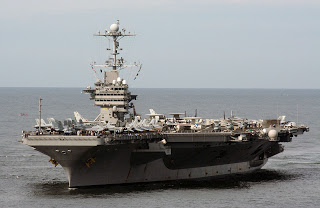 The Brazil Naval Blog has photography up of the USS George Washington (CVN 73) pulling into Rio de Janeiro harbor. The George Washington (CVN 73) is currently participating in the Partnership of the Americas (POA 2008) deployment as the ship travels to Japan. Other ships participating include the USS Farragut (DDG 99) and USS Kauffman (FFG 59).