Thursday, October 31, 2024

Space?

You can find the latest edition of the Grounded argument over at Medium: War is Boring:
And so, in effect, we argue that the conflation of air and space is wrong; when properly conceived of as a commons, space is more like the sea than like the air. Military culture structures how an organization envisions its role, and its relationship with other organizations, and the cooperative, commerce oriented framework in which the Navy conceives of the commons makes more sense in application to space than the Air Force’s militaristic “dominance” approach. Moving from the abstract to the concrete, the organizational assets that currently find a home in the Air Force can easily be shifted to the Navy. We won’t miss the Air Force; indeed, our space policy may improve in its absence.
Essentially, the argument combines the work of Alex Vacca with some of the more interesting stuff on maintenance of the commons. While space has effectively defaulted to the Air Force (one of the first questions I get is "What about space?"), when we think about how the services approach the commons, it turns out that the Navy's way of thinking makes more sense than the USAF's approach. My co-author (Max Lord, a student of mine), put the argument together in a term paper at the end of last year; this is the distillation of the case.

See also an argument that we should create a "Coast Guard" for space, and this account of the role played by the escort carrier USS Croatan in space exploration.

At the Diplomat, I have an unrelated argument about China, innovation, and intellectual property law:
It’s true that direct investment in advanced military technological innovation is declining in the United States, and that it will likely continue to decline in the future. However, the U.S. continues to derive enormous advantages from a legal system that protects and supports technological innovation. Moreover, the U.S. could improve its technological standing by ensuring the extension of protection to smaller suppliers who are shut out of the current system. Finally, the United States can continue to push China to adopt international standards of intellectual property protection, an effort which has already begun to pay dividends.

Hudson Center for American Sea Power--Inaugural Event, 07 November 2024

It gives me great pleasure to announce here the inaugural event of the Hudson Center for American Sea Power, a new organization nested within the Hudson Institute.  The Center will "...will concentrate on the size, shape, and character of American sea power. Hudson Institute's Center for American Sea Power (HCAS)will look at broad questions of U.S. and Western maritime strategy as national defense budgets decrease and challenges as diverse as Asia's growing naval strength and asymmetric warfare at sea grow."

To christen this new and exciting effort, Rear Admiral Christopher Parry RN CBE (Ret) will speak on the subject "Sea Power: Is the Sun Setting in the West or Rising in the East?".  Following his presentation, HCAS Director Seth Cropsey will lead a panel discussion including RADM Parry, former U.S. Fleet Forces Commander ADM John Harvey, and me. 

Hudson’s Center for American Sea Power (HCAS) will fill a critical void in the public dialogue on ebbing U.S. maritime power by offering intellectual arguments and detailed policy recommendations for a robust U.S. Navy and Marine Corps, and a more effective U.S. Coast Guard.  Today, there is no organization dedicated solely to the implementation of a forceful educational program that clearly articulates to the American people the dire national security consequences associated with America’s continued decline in sea power. Accordingly, the HCAS will help spur a productive national debate aimed at reversing the decay of American seapower through a robust public affairs program of research, in-house conferences, and other activities on American seapower anchored in the work of distinguished naval experts.  The program will elevate awareness of the vital elements that have served for decades as the backbone of America’s maritime power, such as our shipbuilding industrial base, the magnitude and dependence of American commerce on port facilities, rail systems, and merchant shipping.  HCAS experts will draft and disseminate concise analyses of important current ‘in-the-news’ naval developments, domestic and foreign, that affect American seapower. 

I look forward to sharing with you some of the details of this exciting new enterprise as we undertake an aggressive, rolling start to its efforts.  Seth Cropsey and I believe that the time is now for sea power advocates to organize, write, think, and influence the direction our Nation takes in these turbulent years.  We look forward to the participation of like-minded patriots.  

Wednesday, October 30, 2024

Type 091 and what it tells us about China's nuclear submarine program

Recently, there were a rather significant release by Chinese news on the performance of PLAN's first generation nuclear submarines 091 and 092. While these news releases probably don't satisfy the curiosity of many PLA followers waiting to hear about the latest generation of attack subs, I find the release to be quite helpful in understanding PLAN.

One of the things I really enjoyed doing is comparing the 091 program to the CV-16 Liaoning project. Bear in mind, the two programs happened in two different periods of PLAN history. The construction of the first 091 started in the late 60s and the last unit did not launch until 1990. Its development lasted through the political turbulent years of 70s and the decade of military cuts in the 80s. In comparison, the CV-16 development lasted through this past decade when PLAN had its most budgetary and political support for naval power projection.

In spite of all of this, there are also similarities between the two program. In both cases, China had to go alone with almost no help from outside sources. As a result of this, both projects proceeded in a very methodical manner. Aside from the extended research before they start doing work on the ships, land based simulation models were built to help train the crew members. They did not try to do too many things too quickly. For CV-16, they first practised carrier take-off/landing on land based simulation air strip before trying touch-n-go on CV-16 before finally giving each of the original J-15 crew a chance to do take off/landing. In between each steps, PLAN took their time evaluating lessons before moving forward. As we go forward, CV-16 will gradually practice more complicated take-off and landing scenarios in its training process. In the 091 project, the entire test program went through multiple boats. No. 401 went through numerous testing after it joined service in the early 1970s before being forced back to the dry docks for extensive modifications 10 years later and not emerging again until 6 years after that. The long endurance patrol testing that one would expect out of something like an attack sub did not happen until with No. 403 in 1985. Only after No. 404, the first production version of Type 091, was in service did PLAN really finish testing of all the critical mission requirements. In 1988, No. 404 went through deep dive testing to 300 m, submerged torpedo launching tests and sailing at maximum submerged speed of 22 knots. Obviously, the testing period of 091 was very long (over 15 years), but one can see the similar gradual process of expanding on the mission envelope with carrier operations.

The big differences between the two program are obviously the technical preparedness and budgetary constraint of the two programs. China certainly walked into Type 091 project about as technologically limited as one can be in such a strategic program. The first two units were basically test mules that are already decommissioned. Even No. 404 and 405, the production certified units of the class, took 12 to 13 years from laying down to joining service. That's something CV-16 project never had to worry about. China was as ill equipped as one could imagine to start a program like 091 from budgetary, technology and political support point of view. It was as well equipped as it could be for the CV-16 project.

At the same time, looking at the 091 program can also give us clue about the current and future Chinese attack submarines. One of the biggest challenges for the 091 program was getting a safe working nuclear submarine into a submarine at a time when China could not even build its own civilian nuclear plant. One can imagine that the reactors in Type 091 boats experienced its shares of nuclear safety and reliability issues over time. Due to the low efficiency of its generators, Type 091 could only operate at a maximum submerged speed of 22 knots. So I think that the biggest change from Type 091 to 093 was having a safe and reliable reactor that can sustain a much higher submerged speed (say 30 knots). We know that it took 13 years to launch the last unit of Type 091. Let's say that time was cut to half ( 7 years ) fro the lead boat Type 093 class due to improved technology and funding, that would still mean the first unit would've been laid down in the mid 90s. At that time, China's civilian nuclear technology was only able to commission the Qinshan-1 CNP-300 plant employing first generation safety/efficiency. One could imagine that even with improved safety and reliability, these reactors on Type 093 probably weren't very efficient and quiet. The Chinese bbs rumours of pebble bed reactors for 093 are quite ludicrous when one actually thinks about the timelines.

Fortunately for PLAN, China's civilian nuclear industry has made a lot of progress since then. The second generation CNP-600 plants were used in the Qinshan-2 project that were connected to the grid in the early 2000s. With the recent proliferation/localization of CPR-1000 plants, transfer of technology from the AP-1000 project and the development of CAP-1400 power plant, the Chinese civilian industry should be able to design its own 3rd generation nuclear plant in the near future. If we assume that similar progress was made in the military nuclear reactors during the same period in noise level, safety and efficiency, it would reason that quieter and more powerful reactor would be available to power larger submarines. Seeing that the most recent 093B submarine was launch sometimes last year, it could be using a new type of reactor available in the early 2000s that would be a full generation ahead of the ones available for the first two 093s. That could lead to smaller/quieter/more efficient reactors allowing for more space for noise isolation technology and more power available for greater maneuverability. For the next generation of attack submarine (Type 095 class), it should be using a reactor from around 2010 that will be another generation safer and more efficient. If 091 and 093 programs are good indications, the first Type 095 will also likely to be a prototype unit that will have problems resolved in later unit.

Of course, all of that is speculations on my part, but we rarely get new information on China's nuclear submarine force.

War on the Rocks Defense Spending and Strategy Contest

For the Armchair Defense Secretaries out there, the War on the Rocks Blog is sponsoring a "Defense Spending and Strategy" contest, with nifty prizes and universal acclaim afforded the constestants.


Net Assessment of Net Assessment

I got to my garage office this morning all fired up to put a few thoughts down on the growing din surrounding the rumors of the closing of the Office of Net Assessment.  Lazarus' piece this morning makes a solid run at defending the Office, and joining a growing list of defenses (a flavor of which can be gotten here, here) from across the community of defense thinkers.  As of yet, I have not seen a single attempt to lay out why the office should be closed.  This imbalance alone is troubling to me, and I wonder whether or not the rush to defend ONA isn't simply an example of the "groupthink" mentality that Lazarus would have us believe ONA is essential in combatting.

I have no special insight on this subject, save only that of someone who has participated in ONA run war-garmes and who has a circle of very close friends who are vehement defenders of the status quo.  That said, a few questions present themselves:

1.  Has the function of Net Assessment and the Office of Net Assessment become conflated?  Reading defenses of the status quo would lead one to conclude that the current organization, its structure, independence, and leadership is the ONLY way in which DoD could generate quality net assessment.  I find it hard to believe that this is true.

2.   In times of serious budget cutting, is the "ONA only costs $XXM a year" defense defensible?  This is the logic of the rice bowl and the sacred cow, and taken to its absurd limit, would result in very few cuts to the defense budget. 

3.  How WRONG has ONA been?  This is perhaps the most interesting question of all.  The literature of the defense of ONA is littered with the triumphs of the organization, which are trumpeted by an ever increasing cadre of acolytes who move on from ONA to populate the defense and strategy shops of the most well-known think tanks and consulting firms in Washington.  These organizations then compete for ONA's coveted studies and analysis funding.  Over the course of 40 years, this group has grown in number and influence, and it represents the front-line troops in the battle to defend the current structure and organization of ONA.  Yet no one ever talks about the "mistakes" ONA has made.  Surely after 40 years, an organization with as free-ranging a mandate as ONA has made some mistakes?  Perhaps even some profound mistakes.  What have THESE been?  What influence have THEY had on Secretaries of Defense and Service Secretaries? 

As a sentient being I do not have enough information to lead me to conclude that ONA should remain in its current form and/or is as valuable as its defenders would have us believe, because all I have ever heard is HALF the story.  Nor do I have enough information to lead me to conclude that it should be altered.  What I have is a growing number of defenses of an organization that has nurtured a salutary relationship with an influential group of thinkers who can be called upon to rise to the defense of that organization when under fire.

I am ready to believe that bureaucratic infighting and jealousy are the only reason that ONA has been predictably and reliably attacked irrespective of the party in power.  I just haven't been convinced of it.  Smart, dedicated people over the years have looked at ONA and determined that the "juice wasn't worth the squeeze."  These people have not been heard from.

Bryan McGrath 


Tuesday, October 29, 2024

Assessing the Office of Net Assessment

2002 ONA Publication
      Recent discussion around changing or perhaps eliminating the Pentagon’s highly respected Office of Net Assessment (ONA) has centered on its contributions to national security over the years and its venerable and iconic leader Mr. Andrew Marshall. Arguments have been made that perhaps what ONA does is duplicated by other Pentagon offices. Reports also indicate that much of ONA’s work is sub-contracted to various think tanks rather than indigenously produced. Many of ONA’s products deal specifically with defense policy, so some experts have suggested that it should reside under or be replaced by the office of the Undersecretary of Defense for Policy. A review of how the United States, as opposed to other historical great powers, makes grand strategy should readily inform those interested in U.S. national security of why moving or eliminating ONA is a very bad idea.
Andrew Marshall
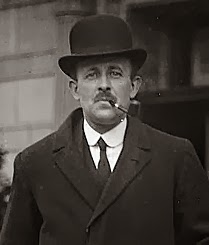
     The U.S. method of creating grand military strategy is very different from that of other great powers of the recent past. Imperial Japan and Imperial Germany were dependent on small, elite military staffs to provide concepts of grand strategy to even smaller groups of military or civilian leaders. Nazi Germany and the Stalinist Soviet Union relied too on military staffs but reserved final decisions for a single dictatorial ruler. The British Empire for a long period of its history relied on a fairly large professional national security organization of appointed departmental civilian permanent undersecretaries. These powerful individuals advised (and in many cases) moderated or controlled the decision-making of elected officials. This system created a relatively constant British foreign and defense policy over decades rather than just over the tenure of one leader. One such official, Royal Marine Lieutenant Colonel Maurice Hankey became the powerful Secretary to the Committee for Imperial Defence, and held that position for the next 26 years. He advised numerous Prime Ministers including his near-contemporary Winston Churchill and eventually left government as Lord Hankey. These non-political officers constituted what British Imperial historians Ronald Robinson and John Gallagher referred to as “the official mind” and they gave it credit for the remarkable stability in the management of the British Empire from the 1860s through the 1930s.
Maurice Hankey
     The United States is unique among global powers in that the vast bulk of national security decision-making authority is vested in elected civilian leaders and their political appointees, whose authority extends deep into the organization structure of the Department of Defense. This arrangement began after the Second World War with a need to manage the awesome power represented by nuclear weapons, and a desire to ensure firm civilian control over both this technology and the military officers who would wield it on the battlefield. It has continued and grown over the last sixty years with a much expanded civilian presence in the business of national security. Military advisors such as the Joint Chiefs of Staff (JCS) provide strategic advice and geographic Combatant Commanders manage battle plans for their theaters of operation. The U.S. however has no “General Staff” of long service professional military officers devoted to the creation of grand strategy, nor a powerful staff of professional defense civilians capable of resisting political pressure to sea changes in defense or foreign policy. There have been positive proposals for a U.S. system of “national security professionals”, most recently through the now defunct U.S.-based Project for National Security Reform (PNSR), but these appeals have fallen on deaf ears. U.S. politicians enjoy their power over the U.S. Defense Department and prefer to choose from sources of additional advice rather than be forced to accept them from unelected bureaucrats.
     Many of these come from the vast “unofficial mind” of the U.S. in the form of its large number of defense-oriented think tanks. These organizations, both government and privately funded, are staffed with knowledgeable public intellectuals and provide an array of analysis and opinions for politically-appointed defense officials. Think tanks also have professional and in some cases partisan divides based on their expert staff and funding sources. A U.S. presidential administration may rely on think tank advice and appoint its experts to defense-related positions, but it is not required to accept advice contrary to its own position. Multiple think tanks united around a single cause can apply significant pressure to change administration policy. This happened in the early 1980s when several of these institutions combined forces in support of the defense reorganization reform movement that culminated in the Goldwater Nichols Act of 1986. This is a rare occurrence however and administrations are usually quite effective in pursuing their own course in defense policy. The legislative branch is usually required to intervene in a bipartisan fashion in order to affect change as occurred at the end of the Vietnam War. Given this situation, a presidential administration and its political appointees in the Office of the Secretary of Defense might easily create a poor climate for truly efficient national security decision-making by surrounding themselves with too many people and opinions in direct agreement with their own.
     This situation is why the retention of the Net Assessment office and its direct access to the Secretary of Defense is so vital. This is one independent institution within a very political defense establishment. Mr. Marshall is the closest equivalent the U.S. has to a “permanent undersecretary”. He and his staff of experts owe no allegiance to a specific party or ideology. Since 1973 a succession of thirteen Defense Secretaries has been beneficiary of ONA’s academic, research-driven insights and analysis. The office has not always been correct, but its presence as an independent source of national security thinking must be maintained. Anyone who has worked in an office or organization that resists outside influences or advice is aware of the dangers such behavior presents to an institution and its mission. Without the check of an independent Office of Net Assessment, the Pentagon establishment is even more in danger of such  “group think” mentality. It is vital to retain the ONA in its present form and reporting arrangement in order to ensure that at least one independent voice is heard in an increasingly partisan Department of Defense.


Sunday, October 27, 2024

Review - Out of the Mountains: The Coming Age of the Urban Guerrilla

David Kilcullen's new book, Out of the Mountains, is based on the premise that  demographic trends and the democratization of technology will force many, if not most, future wars into highly connected, densely populated, littoral areas.  And whether or not Western militaries currently have any intention of fighting in those sorts of conflicts, history demonstrates we will. Efforts that begin as humanitarian assistance or noncombatant evacuation may overlap areas of complex urban conflict.  Even during state-on-state wars, irregular operations in urban terrain will feature prominently. These conflicts, regardless of the form they take, will share several characteristics.

Through a series of vignettes that include Somalia, the Mumbai attacks, and the Arab Awakening, the author shows how urban-littoralized battles are occurring in increasing frequency and involve not just local, but international actors.  Whereas I provided a Reader's Digest version of the new phenomenon of networked urban "flash" insurgencies in UW 2.0, Kilcullen lays out in significant detail how soccer hooligans, social media, and online activists became the action arms in the revolutions that rapidly toppled Arab governments earlier in the decade, and how these same types of actors will impact future urban conflict.
Megacities: dense, littoral, and connected.
Rather than a static terrain feature, Kilcullen sees urban areas as organisms, with people, goods, money, etc. flowing through that system at various rates similar to the way a metabolism regulates the flows of nutrients through a living being.  In keeping with the biological analogy, terms such as infestation and parasite illustrate how transnational criminal networks or occupying militaries might respectively interact with and change a city. Examination of this same model from the perspective of licit and illicit maritime traffic flowing through ports and densely populated coastal regions might be a useful research subject.
 
There is value in this book for a range of audiences; urban planners, diplomats, NGOs involved in conflict resolution, Marines, and special operators can all take away something from Kilcullen's field research and analysis.  For naval observers, the appendix, in which the author discusses some capabilities required by military forces operating in and around networked urban environments, might be the most interesting part of the book.  Kilcullen questions some of the assumptions behind current Naval/Marine Corps doctrine including the ability to bypass urban areas with vertical lift and the validity of sea-basing, although he notes that expeditionary logistics are as important as ever. 
He stresses the need for new tactical organizational constructs and that properly selected, trained, and trusted junior officers and NCOs will be paramount in these conflicts.  "In a coastal urban setting, the complexity of the environment will demand this level of trust right from the outset." 

In a future post, I'll offer some of my own ideas on how navies can prepare to support the fight in coastal megacities.
 
The opinions in this post are those of the author's alone, presented in his personal capacity.

Friday, October 25, 2024

Airpower Movie of the Week

Tonight, several comrades and I are going to "simul-tweet" an airpower film. The project effectively boils down to selecting a film, selecting a time to press "play" simultaneously, and then tweeting under the hashtag #airmovie. Tonight's film will be the Battle of Britain (available on Netflix Instant), a star-studded 1969 extravaganza reputedly containing some of the best aerial dogfight scenes committed to cinema. Expect the discussion to touch upon the relative responsibility of the Royal Air Force and Royal Navy in pre-empting Sea Lion. We will be starting at 9:30pm EDT.  Anyone is welcome to join; I will be tweeting under the @GroundedUSAF handle. If it works out, we may try Firefox next weekend.

Thursday, October 24, 2024

Book Review: A History of Air Warfare

John Andreas Olsen's A History of Air Warfare is the companion volume to his Global Air Power, and is by far the stronger of the two volumes. The collection includes chapters on air warfare in World War I, the European and Pacific theaters of World War II, Korea, Vietnam, the Arab-Israeli wars, the Falklands, Desert Storm, Bosnia and Kosovo, Iraq and Afghanistan, and Lebanon, as well as a conclusion of three "Perspectives" chapters.  Most of these chapters are quite good, and even the disagreeable ones are useful.  As a volume, it represents a useful contribution that can be enjoyed by audiences with various levels of expertise.

Richard Overy and Richard Mueller turn in workmanlike accounts of the air wars in Europe and the Pacific in World War II; the pieces are well-written and don't miss much, but won't surprise specialists in the field.  The Stephens and Thompson chapters on Korea and Vietnam strike similar notes.  Lawrence Freedman's chapter on the Falklands War strikes the appropriate balance between the air contributions of the RAF and the Royal Navy, while also discussing the problems and opportunities faced by Argentine air power.

Perhaps most importantly, the essays include a variety of different, often antagonistic perspectives on the history and future of airpower.  Martin Van Creveld, for example, contributes "The Rise and Fall of Air Power," which is notably negative with respect to the impact that airpower has had on twentieth century warfare.  Richard Hallion's "Air and Space Power: Climbing and Accelerating," has an unsurprisingly different take on the relation between airpower and the future of warfare.  Williamson Murray's chapter on air employment in Operation Iraqi Freedom is altogether hostile to the Air Force as an institution and airpower as an intellectual construct, while John Andreas Olsen's appraisal of airpower in the Gulf War is optimistic to the point of being apologetic.  These differences of opinion on some of the foundational disputes over the history of airpower are a strength; they give a strong sense of intellectual vibrancy, rather than of cheerleading.

Moreover, many of the essays leave the reader something to engage with.  Itai Brun's detailed discussion of Operation Cast Lead leaves much to be desired, completely missing the point of how tactical operations targeting dual-use national infrastructure have, in effect, become strategic bombing. Brun details the strategic effects that the IDF Air Force sought to accomplish, but seems to think that because it tried to achieve those aims through the use of tactical assets, and in combination with a ground offensive, that no strategic campaign occurred.  As Brun himself notes, this would be very surprising to the people who lived near the vast array of infrastructure, political, and communications targets that the IDF struck in Lebanon. Brun also lays the blame for the war squarely on Israeli civilian policymakers, which is, in fairness, about half right. On a related subject, Shmuel Gordon's essay on the history of  IDF air superiority operations against Syria and Egypt is genuinely outstanding.

This is an exceptionally useful work, and I suspect that I will assign it again to my graduate Airpower course, although I doubt I'll bother with the companion volume.  For specialists it's a convenient "go to" for a number of well-known, important conflicts. For less committed audiences, it provides interesting, readable accounts of most of the major air wars of the twentieth century, delivered with just enough grit to generate a degree of disagreement and debate.  As one other review notes, the volume falls short primarily in terms of discussion of the intellectual history of air power, but this is a flaw that's easily remediable with a bit of supplementary reading;  I might recommend Philip Meilinger's edited volume Paths of Heaven (free here)  as a suitable companion, if you have the time.

Cross-posted to LGM.

SCMR/QDR not a Substitute for Strategy

President Eisenhower "cooks" up strategy

The Solarium Project
 The October 19th Defense News carried an article entitled “QDR Process Helps DoD See Vulnerabilities”. The piece goes on to explain how a combination of the recent Strategic Choices and Management Review (SCMR) and the upcoming 2014 Quadrennial Defense Review (QDR) are effectively the vehicles by which the United States creates and updates its grand military strategy. This is not the best method for managing the long term strategic interests of a global power like the United States. The SMCR/QDR process is based almost completely on budgets and technology. The actual strategic interest part of the process is largely hidden from public review and is overshadowed by the financial and technical details. A short survey of the 20th century would reveal that the United States has devalued real strategic thinking since the end of the Eisenhower administration in 1960. This process accelerated with the passage of the Goldwater Nichols Act of 1986 and the end of the Cold War. The U.S. must reconsider the way it creates grand strategy if it ever hopes to develop new and innovative means for managing threats in the 21st century.

     The process of downgrading strategic thought in the United States came just after one of its most significant achievements. In his search for a strategy that met budgetary constraints and national objectives, President Dwight Eisenhower convened the Solarium Project in the summer of 1953 to develop a realistic and effective Cold War master plan. This effort brought together experts in multiple fields related to national security, including academia, the science community, and uniformed military officers. Three potential courses of action were gamed and measured by multiple criteria over a period of five weeks of intensive work. In the end, the work of many experts in diverse disciplines created a reasonably successful national security strategy. Its attendant force structure was specifically tailored to that strategic construct even though it involved some substantial cuts in military capabilities.
Defense Secretary McNamara
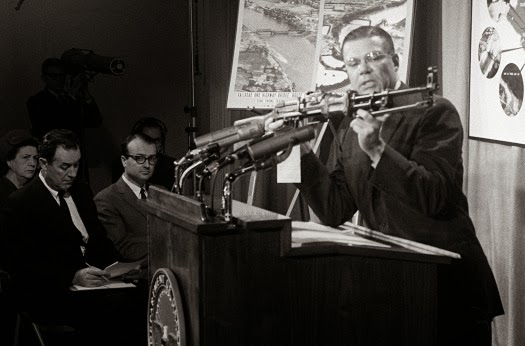
     Enter the Kennedy administration in 1960 and with it the financial and technological model of national security management. Incoming Secretary of Defense Robert S. McNamara employed statistical analysis methods he learned while serving on the post- World War 2 Strategic Bombing Survey group and later as the President of the Ford Motor Company in order to update the Defense Department’s management system. Large numbers of civilian experts entered the Pentagon for the first time to support McNamara’s vision. These analysts tended to reguard uniformed military members as mere executors of their strategic thinking. One of McNamara’s senior analysts, economist Alain Einthoven, the first director of the Program Analysis and Evaluation (PA&E) office was supposedly once asked if senior Air Force officers ought to be consulted on an Air Force reorganization plan. Einthoven responded by saying “there was little need to talk with the bus drivers when reorganizing the bus company.” This attitude of contempt for uniformed opinions continued in McNamara’s implementation of the Planning, Programming and Budgeting System (PPBS) as the institutional vehicle for long range defense planning and strategy. It cemented a preference in the Pentagon for measurable statistics rather than broad concepts that had been the hallmark of previous U.S. strategic thinking. Entrenched civilians, who were often political appointees, used such tools as PPBS to gradually assume many of the duties of strategic military planning since the 1960s. Military commanders in the field have been increasingly dependent on and sometimes at the mercy of these bureaucrats. Military historian Allan Millett described these changes as the process by which “the United States embedded an organizational structure that progressively reduced the autonomy of commanders and increased the likelihood of civilian intervention into the preparation and execution of military plans.”
The JSPS "system of systems"
     The passage of the Goldwater Nichols Act of 1986 accelerated this process. Although intended to return operational authority to the uniformed military in the wake of poor decisions made in the Vietnam conflict, it succeeded in achieving nearly the opposite.  An additional tenet of the legislation was to “strengthen civilian control of the military”. This was accomplished by limiting the power of the service chiefs and strengthening that of the Secretary of Defense and the Chairman of the Joint Chiefs of Staff (CJCS). While it was hoped that a powerful independent Chairman would be a counter-balance to political leaders seeking to involve the nation in new Vietnams, making the Chairman the principal military advisor to the President essentially made the nation’s top military officer a de-facto member of the President’s administration. The Chairman was also placed in control of the budgeting and strategy machinery of the Defense Department (created or inspired by McNamara’s efforts) through leadership of the Chairman’s Program Assessment (CPA) and Joint Strategic Planning System (JSPS). These changes cemented a bond between the CJCS and the Secretary of Defense that would be nearly impossible for one service or combination of services to resist if they disagreed with an administration’s strategic choice.
      Before the late 1980’s, the military services or ad hoc combinations of them produced most of the United States’ long-range strategic military planning. The Navy’s 1950’s and 1980’s Maritime strategies, and the Air/Land battle concept of the 1970s were examples of this exemplary service production and cooperation. Goldwater Nichols effectively removed the service chiefs from this role and substituted scattered combatant commanders in place of centralized service-based planning. In place of four service chiefs competing for resources, six geographic military commanders and three functional ones now aggressively challenge each other for influence and money. Before the Goldwater Nichols Act, the services, Congress and the administration bargained amongst themselves to produce grand strategic vision. With the services swept out of the business of big strategic thinking, the financial and technological structures created by McNamara and now directly under the control of the Chairman remained the only foundation for the creation and measurement of grand strategy. Rather than an academic environment where multiple options are principally war-gamed for success, strategic concepts are instead subjected to financial and technological measurements that may or may not reveal their strengths and weaknesses.
     Past successful strategies always had technological and budgetary limitations but remained relevant across time due to the strong strategic sense behind their conception. The Navy’s War Plan Orange for operations against Japan in the Pacific as conceived employed coal-fired battleships, but when implemented used aircraft carriers and submarines. The Cold War strategy of containment was created when propeller-driven aircraft were the sole delivery source for atomic weapons. It achieved final success in an age of thermonuclear weapons delivered by multiple means. What similar strategies have been conceived by the McNamara-inspired, budget and technology -driven national security process? The disastrous Vietnam conflict and its mania for budget and analysis-driven warfare does not inspire confidence in the current system to create something as long-lasting and viable as Containment. The Troop Surge of 2007 that has been credited with turning the tide in the Iraqi counterinsurgency effort was largely created and implemented by the services instead of joint authority. Innovative new concepts such as the Navy and Air Force’s “Air/Sea Battle” concept are clearly at a disadvantage in the current system. Anything that costs more than expected or faces a technical challenge is at risk of being eliminated. In the Defense News piece the Air Force representative’s first comment on how the SCMR and QDR influenced strategic choices was about financial limitations. The second was that aircraft carriers are threatened by new technology. These were similar to criticisms leveled by Secretary McNamara and his civilian analysts at the U.S. military services in the 1960s. This ingrained institutional focus on money and technology at the expense of the geography, logistics, history, and cultural studies that have informed past successful strategies leaves the U.S. ill-prepared to confront the challenges of a new and potentially violent period of history.
     Historians may likely refer to the period from 1991-2010 as the short continuation of America’s “unipolar moment” as first articulated by journalist Charles Krauthammer at the end of the Cold War in 1990. That era is now at an end. A host of state and non-state actors now threaten the hard won peace achieved at the end of the Cold War. A new strategic concept as bold and multi-disciplinary as that generated in Eisenhower’s Solarium project is required to manage these new threats. Strategy limited to mere budgetary and technological choices has an operational record of failure. The U.S. should strongly consider another Solarium-inspired project for creating grand strategy rather than expect the 1960’s era, McNamara-inspired analysis machines to generate a solution to America’s 21st century security needs.

Wednesday, October 23, 2024

Multipurpose Navies

My latest at the Diplomat tries to explain the Republic of Korea Navy:
Last week, Kyle Mizokami argued that the Republic of Korea Navy is “Impressive … and Pointless.”  Mizokami makes the nutshell case against South Korea’s shift to the sea: "In the country’s rush to embrace its destiny as a seagoing nation, South Korea has prematurely shifted resources from defending against a hostile North Korea to defeating exaggerated sea-based threats from abroad. Seoul is in the midst of a strategic shift that has shorted defenses against the North and put its forces in harm’s way." 
There’s no doubt something to this argument.  The largest ships of the ROKN can, in context of the current state of disengagement between North and South Korea, look like little more than floating targets. South Korea treated the sinking of the Cheonan with admirable restraint.  Imagine, however, if an over-excited North Korean sub skipper decided to try to torpedo Dokdo or Seojong the Great?  It’s difficult to imagine that Seoul could avoid aggressive retaliation under those conditions, even given uncertainty about the North Korean response. 
But navies serve multiple purposes.

Monday, October 21, 2024

Foreign Entanglements: The Legacy of Clancy

On this week's Foreign Entanglements, Steve Saideman and I talked about the legacy of Tom Clancy. Ironically, significant technical problems ensued:
 

Sunday, October 20, 2024

PLAN passing through the Strait of Magellan

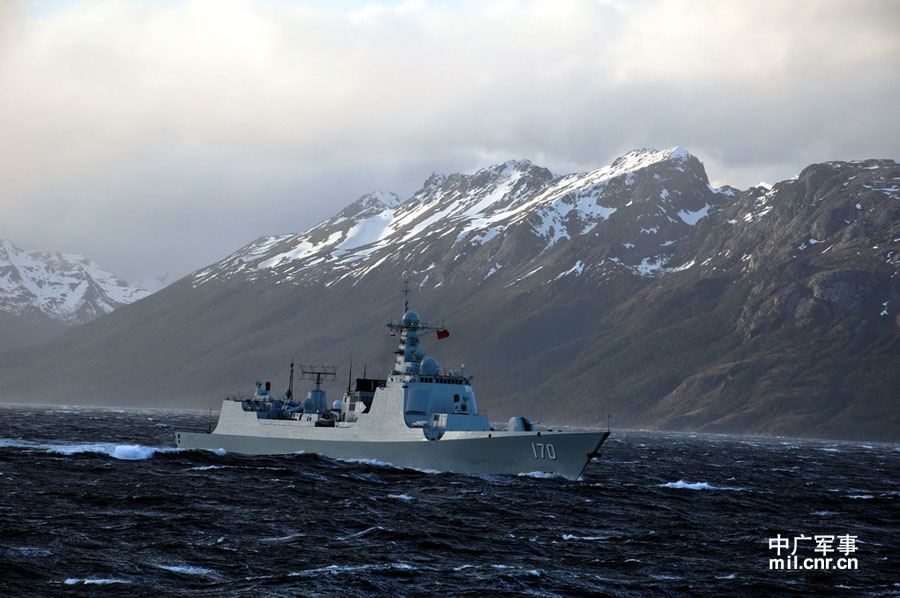
Here is a really nice photo of the first 052C, 170, passing through the strait of Magellan. It's the first time this has happened in the history of PLAN.


This is a symbolic illustration of PLAN's continual progress in becoming a blue water navy. No. 170 is in South America as part of a flotilla making port calls at Chile, Brazil and Argentina as shown in this article
SANYA, Hainan, Sept. 3 (Xinhua) -- Two Chinese navy warships sailed out from Sanya harbor in south China's Hainan Province Tuesday on a voyage to Chile, Brazil and Argentina. The fleet is made up of the missile destroyer Lanzhou and missile frigate Liuzhou, both serving in China's Nanhai Fleet, as well as the replenishment oiler Boyanghu serving in the Donghai Fleet, navy sources said. Boyanghu set off from base on Sunday and will join the other warships later. Their voyage will cover about 28,000 sea miles across the Pacific and to the South Atlantic via the Strait of Magellan. It will be the first visit of the Chinese navy to Argentina, the sources said. Lanzhou missile destroyer, with a full-load displacement of 6,400 tonnes, has served in a number of drills and escort missions in the Gulf of Aden and waters off Somalia. Liuzhou missile frigate has a full-load displacement of 4,000 tonnes.
The other two ships in this flotilla are No. 573 Liuzhou (a Type 054A FFG) and No. 882 Boyanghu AOR. Interestingly enough No. 882 is from a different fleet than the other two ships.

Saturday, October 19, 2024

AEI/Heritage Project for the Common Defense (Navy) Weekly Read Board


Wednesday, October 16, 2024

Podcast: Rear Admiral Thomas J. Moore

Last semester I led a graduate course on Seapower at the Patterson School. We were fortunate enough to have the opportunity for a 90 minute discussion with Rear Admiral Thomas Moore, PEO Aircraft Carriers.  After the discussion, Admiral Moore agree to a short podcast conversation with one of our students.  Because of a variety of technical problems, the podcast wasn't available until recently.

But here it is.  Enjoy!

Book Review: Global Air Power

Global Air Power, edited by John Andreas Olsen, is a collection of nine essays on the international development of military aviation.  Six of these essays concentrate on nations (United Kingdom, United States, Israel, Russia, India, and China), and three on regions (Asia-Pacific, Latin America, and Continental Europe). The essays are primarily historical, although most conclude with description of the impact of that history on modern institutions and procurement decisions. Unfortunately, this is not a book about airpower, or even a book about military aviation. Rather, it is a book a air forces; where they came from, what they have done, and what they do today. This perspective puts significant, obvious limitations on how useful the volume is as an account of airpower history and of the contemporary role of airpower in military affairs.

The chapters on the U.S. and the U.K. are useful short histories of the RAF in the latter, and the USAAS/USAAC/USAAF/USAF in the former.  Richard Hallion and Tony Mason are both excellent scholar/practitioners who have made significant contributions in the field, and they do a good job in a relatively short space. These are not, unfortunately, very helpful histories of military aviation in either the United States or the United Kingdom; in both cases naval (and in the U.S., Army) aviation is given short shrift. To be sure, the conflicts and debates that led to the independence of the RAF and the USAF are covered, but there's relatively little about the contributions made by the RN, the USN, the USMC, and the U.S. Army in World War II and the Cold War.

The entire decision scheme with respect to the regional chapters is odd. One might think, for example, that the ability of the carrier fleet of the Imperial Japanese Navy to spearhead the conquest of the better part of littoral East Asia would bear some consideration in a history of airpower in the Asia-Pacific. Unfortunately, the volume's treatment of Japanese naval aviation, its political impact, and its destruction is minimal. The chapter also covers DRV airpower strategy in the Vietnam War, and the histories of Indonesian and Australian airpower.  These latter three are all interesting subjects, but frankly they don't fit in very well with the discussion of Japan.

Similarly, the decision to include single chapters on Latin America and Continental Europe is...  interesting.  On the one hand, the Latin American chapter is useful as a description of the development of airpower in "second tier" military powers, and in states which have historically faced only limited international threats.  Unfortunately, much of the discussion actually relates a history of the use of U.S. airpower in Latin America, rather than describing how particularly Latin American conceptions of airpower may have affected military politics, relations with non-state actors, and procurement policies. On the upside, the Latin American chapter probably does the best job in the entire volume of describing the contributions made by the aviation arms of all the relevant military organizations, including the Central Intelligence Agency and the U.S. Coast Guard.

And this discussion is particularly troubling given that Latin America is given the same space, in a volume about Global Air Power, as Continental Europe. Not to understate, but it turns out that France, Germany, and Italy are all extremely important players in the history and contemporary practice of airpower. France has long had one of the world's most important aviation industries; the German Luftwaffe, for a time, held off the combined forces of the RAF, USAAF, and the Soviet air forces; Italian engineers and airpower theorists made critical early contributions to the development of aviation practice and theory. No volume can include everything, of course, but the decision to lump those three into a single chapter is, to say the least, curious. Christian Anrig, the author of the Europe chapter, makes the sensible-under-the-circumstances decision to deal only with contemporary European airpower, but this obviously sets the European chapter apart from the accounts in the rest of the book. 

The national histories are useful, but suffer from the same blinkered approach to the history of airpower practice. For example, the chapter on Soviet aviation argues that the Soviet's most significant problem was a failure to take account of the promise of strategic airpower.  With due respect, the notion that the USSR should have invested more heavily than it did in strategic bombers at any time after 1935, or really at any time ever, is simply incredible; I can't imagine a worse use of Soviet resources prior to World War II than the production of four engine bombers. Similarly, the USSR's half-hearted commitment to the post-war strategic bomber looks, in hindsight, far more sensible than the USAF's infatuation with whatever could fly fastest and highest, until it couldn't. A more careful consideration of why the Soviets made a careful decision to set aside strategic airpower in favor, first, of tactical airpower and then of missiles would have been considerably more illuminating.

All that said, this volume's biggest value is in providing manageable, coherent accounts of the development of several important air forces in one place.  The accounts of Indian, Chinese, and Israeli airpower are all useful, particularly the last. I used the book as part of my graduate course on Airpower, and it was effective for this purpose, especially as the students had already had time to develop a sense of skepticism about the collection's focus.  Unfortunately, not many of the essays include much in terms of a structural analysis of how different institutions affected the development of airpower in the various nations, apart from a few canards about the need for independent airpower.  Consequently, Global Air Power is an interesting, but flawed and limited, account of the development of international military aviation.

Tuesday, October 15, 2024

Air-Sea Battle Defined in Testimony Last Thursday

On Thursday the House Armed Services Committee’s Seapower and Projection Forces Subcommittee conducted a public hearing on the Air-Sea Battle Concept involving a handful of Congressmen and a panel of senior leaders from the Navy, Air Force, Marine Corps, Army and Joint Staff. The panel included Rear Admiral Upper Half James G. Foggo III, USN, Assistant Deputy Chief of Naval Operations (Operations, Plans and Strategy) (N3/N5B), Major General James J. Jones, USAF, Director of Operations, Deputy Chief of Staff for Operations, Plans and, Requirements, Brigadier General Kevin J. Killea, USMC, Director of the Marine Corps Warfighting Laboratory, Major General Michael S. Stough, USAF, Vice Director, Joint Force Development, J7, and a late addition - Major General Gary H. Cheek, US Army, Assistant Deputy Chief of Staff G3/5/7.*

The hearing was not widely attended by members of the subcommittee. The hearing was not widely attended by the press. There were very few journalists in attendance, and I am aware of only one media article discussing the hearing. There were no submitted written statements as far as I know. The hearing lacked the political theater found elsewhere during the current government shutdown. At no point during the hearing was a partisan point a political context raised or made. There were no threats made to China, or anyone else, and there were very few sound bytes produced that would draw in a broader American audience to the content of the discussion.

The video is here.

The Air-Sea Battle hearing was a public intellectual discussion between the US military and Congress on matters related to the art of war. Since the opening of the Air-Sea Battle office in the Pentagon, the DoD has been unable to publicly articulate what the Air-Sea Battle Concept is intended to do. The absence of a clearly articulated Air-Sea Battle Concept has allowed critics to define the concept on behalf of the DoD, and leverage any context in that criticism. Following the testimony of Rear Admiral Foggo who articulated the concept clearly, in context, with examples, and with thorough regard to definition - a clear understanding of Air-Sea Battle has been established as the intellectual baseline for future public commentary. An excerpt from his prepared oral testimony is available on the Navy Live blog.

For future discussions of Air-Sea Battle, nerds like me (and you) now have plenty to discuss. Examples ranging from overlapping, integration of multiple capabilities provided by the US Army, US Navy, and US Air Force in providing air defense coverage of the Persian Gulf highlights the defensive utility of the Air-Sea Battle Concept in action, just as Operation Odyssey Dawn - the military action against Libya in 2011 (that RADM Foggo was directly involved in btw) - highlights the offensive utility of the Air-Sea Battle Concept. It is not every day recent exercises involving US Army Apache helicopters operating from US Navy ships is discussed in a Congressional hearing, but Air-Sea Battle Concept isn't an every day type of discussion.

For the first hour of the hearing, through statements, questions, and answers Air-Sea Battle Concept was defined and explained in thorough detail to those interested in the intellectual explanation of a joint, complex military concept. In the future, critics of Air-Sea Battle who missed this hearing can be dismissed outright as ignorant, because critics who actually paid attention to this hearing are going to make much better arguments than they have in the past.

There are numerous examples of conversations within the hearing I could choose from to discuss, but this one has been on my mind:
WITTMAN:

Thank you, Mr. Chairman. Gentlemen, thank you so much for joining us today. I appreciate you taking time to give us your perspectives on the AirSea Battle concept.

Brigadier General Killea, I'd like to go to you and get your perspective on the Marine Corps' role within that AirSea Battle concept. Looking at where we've been and where we're going with the size of our amphibious fleet as you know continues to be on the decline, the proposal is to retire early two more LSDs. How does the size of our amphibious fleet affect the Marine Corps ability to carry out its role in an AirSea Battle plan?

KILLEA:

Thank you for that question, sir. That's a fantastic question and I think that goes to the collaboration that has to go on amongst the services within the AirSea Battle Office.

Once we identified the capabilities that we have and then the gaps are identified from that and then the services propose solutions to those gaps and the AirSea Battle Office will take those solutions and rack and stack them and then provide them an advocate, a capability's list that goes forward.

So if that capability's list includes additional amphibious shipping or something that could augment the capabilities of that amphibious shipping, that would come out of the functions and the process of the office.

But I think for the Marine Corps where we stand today with our amphibious shipping is actually on pretty good stead for the missions that we have for our focus -- for our forward presence in crises response and as we get into a major combat operation that would involve this kind of environment, then our participation with that is only going to be as good as we are pre-integrated with that joint force through the efforts that we've been talking about this morning. I hope that answers your question, sir.
As the US pivots to the Pacific, logistics is going to be important. The ability to maneuver forces to exploit the size of the region to ones advantage is also going to be critical in the next war in the Pacific, regardless of who the adversary is. I would like to see more discussion regarding the augmentation of amphibious forces, because while I don't think the Marine Corps needs to have the standing capability to assault with more than 1 MEB at a time, if the future United States is going to be truly expeditionary, the Marine Corps is going to need to be able to move as many MEBs as possible around theaters of battle.

The Army is not the expeditionary force, the Marine Corps is. A healthy discussion regarding how to increase the concurrent expeditionary nature of the Marine Corps is a conversation worth having. If one considers amphibious assault a tier I capability for moving expeditionary forces, and the ability to maneuver forces in permissive environments is a tier II capability, then I would like to see a 2:1 MEB ratio for the Marine Corps regarding Tier II/ Tier I concurrent maneuver capacity.

The MLP is as good a place as any to start.


For an example of what I am thinking... If a war was to break out on the Korean peninsula for any reason, the US Marine Corps may not need more than a single MEB capable of amphibious assault in that conflict. I'm not talking about reliving the Inchon landings, rather I am speaking directly to taking the various islands along the North Korean coastline that might have to be taken in support of choking off logistic lines at sea along the North Korean coast during war.


But there is another issue... the US might also need the ability to move large numbers of Marines into South Korea quickly, not necessarily in an assault posture, but in a permissive southern port with the ability to roll off the ship into the order of battle. That tier II level of capability is what the MLP is supposed to provide the Marine Corps, but with AFSBs and with a limited number of MLPs, one wonders how many Marines can be moved quickly.

I'd like to see more discussion regarding whether there is legitimate value for the Marine Corps to have fewer traditional amphibious ships and more non-tradiational expeditionary vessels. For example, can someone explain why 12 LHA/LHDs + 12 LPD-17s for 24 total amphibious ships wouldn't be enough amphibious assault capability if the Marine Corps also operated an additional 8 MLPs and 8 AFSBs? I think a legitimate conversation regarding the AoA for the LSD replacement is missing from the Marine Corps, because in my opinion, throwing the budget for high end amphibious ships at the Marine Corps holds less value than spreading that same money around on a greater capacity although reduced forcible entry capability. If we truly examine the way the Marine Corps is evolving in the 21st century, those 12 LHA/LHDs are a lot more important to the future battlefield than the ability to heavily lift a company of main battle tanks with LSDs during an amphibious assault.

At minimum, I'd like to see someone challenging the Marine Corps on the LSD(X) as a full amphibious platform instead of as a less expensive alternative that could be produced in multiple versions and greater numbers. The Marine Corps of 2013 is focused on preserving forcible entry, but I'd like to see more emphasis placed on expanding global capacity, particularly as it relates to more permissive environments around Africa where the nation has found itself needing Marines that can't be there because they don't have enough big, expensive amphibious ships to cover COCOM demand.

There was another moment during the hearing that took place about an hour and five minutes into the hearing that I want to highlight. While the hearing that clarified, explained, and defined the Air-Sea Battle Concept specifically was a necessary and worthy exercise for Congress, the strongest takeaway for me occurred when Chairmen Randy Forbes decided to ask a prepared question:
FORBES:

The gentleman from Texas is recognized for five minutes, Mr. (inaudible). Then if the gentleman has no questions, I have just three left, as I said, I deferred them until the end of -- the first one is since we understand that the Secretary of Defense released the Defense Strategic Guidance in January 2012, but as yet, an actual defense strategy has not been released, how is the department designing and executing operational concepts such as AirSea Battle in the absence of an actual defense strategy, in other words what defense strategy is the joint staff combatant commanders and service is using has the baseline to design operational concepts such as AirSea Battle?

And if a defense strategy does exist in your view, can you describe it for us and what formal document articulates it for the public?

FOGGO:

Sir. Go ahead, if you like, Mike (ph).

STOUGH:

So I just can say from the joint perspective -- for the view of the joint staff at this point, really, the focal point is far when you talk about force development activities which is really -- I think what we're talking about here. It is the defense strategic guidance. It is the 10 missions that are laid out there.

For example, we're talking about here the mission to defeat the Anti-Access Area Denial Challenge, to be able to address that and, but that's a precursor, if you will, or it's a foundational to all the other missions that we would be able to accomplish.

FORBES:

General, is it your thought that that guidance and -- how many pages was that guidance? Eleven?

STOUGH:

I think -- yes, sir.

FORBES:

At 11 pages that that guidance was in fact are now, are National Defense Strategy?

STOUGH:

No, sir. I mean, no -- that -- I think the strategy you said that's published is probably 2012 is the last strategy that's published.

FORBES:

OK. So we had a strategy in 2011, but the guidance has basically changed that strategy, has it not or -- I'm just asking. I'm not ...

STOUGH:

That's a good question. I can't say it's fundamentally changed the strategy because the missions that it -- has outlined...

FORBES:

And maybe you can take that for the record. We don't want to put you on the spot. But one of the things we're wrestling with now is what's our strategy, you know, what -- we don't want to have a strategy that developments -- that develops based on our procurement policy.

We would prefer to have a strategy that we're doing our procurement after that, but at least for most of us sitting up here, we've had a rough time getting our arms around that or getting someone that can answer that for us, and I don't think we want to -- we feel comfortable relying on an 11 page guidance and saying that's our strategy. So if you guys would confer at some point in time and get back to us for the record on that, I think all of us would appreciate that.
When a Congressman asks four Generals and an Admiral what formal document articulates the military strategy for the public, and all five of the military leaders fail to articulate the military strategy for the public...

That's not good. In no way is the answer to the question Forbes is asking good enough. At the time it sounded humiliating, but it should have been a humbling experience for those military leaders.

In a world where military strategy matters, which should include the Air-Sea Battle shop one would think, the answer given in testimony should be embarrassing for the DoD, the Chairman of the Joint Chiefs, all the service Chiefs, and the Secretary of Defense. There is no other way to put it, that moment in the hearing Thursday is a reflection point in history that can and will be recited again and again in the future until such a time the question can be answered in front of Congress.

And for Congress - both the House and the Senate, this sad state of affairs regarding the absence of a military strategy that guides activities of the DoD is the result of Goldwater-Nichols. YOU Senator, and YOU Congressman, enabled this deficiency in strategic thinking, and it is up to you guys to fix it.

Overall, this was an informative hearing worth watching in the archived video if you missed it.

* I was unable to find an official online biography for Major General Gary H. Cheek, and considering the historic animosity for Air-Sea Battle by the US Army, I found that both ironic and amusing.