
Tuesday, June 24, 2024

Monday, June 23, 2024
Updates on CV-16 Liaoning
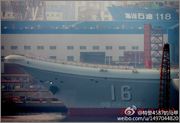
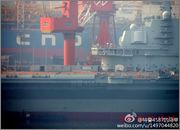
Most recently, CV-16 came out of dry dock in Dalian. It had entered there for regular maintenance and repairs in middle of April after over a month of training and exercise. It looks like the hull has been repainted and the non-skid layers got re-applied.

Saturday, June 21, 2024
Wednesday, June 18, 2024
Small Boats, Big Missions
A patrol boat renaissance of sorts is underway in the United States Navy. In the video below, the Coastal Command Boat, a one-off predecessor of the MK VI PBs coming online next year, goes through its paces in FIFTH Fleet. The CCB complements the Patrol Coastals (a much larger offshore patrol craft) and the Riverine Command Boats (RCB) which have operated quite successfully in the Arabian Gulf for some time now.
Dating back to the days of Jefferson’s gunboat navy, smaller craft (and we’re talking less than 100 feet in length here) have faced a number of operational constraints. Relatively short legs, limited-ranged weaponry, marginal sea-keeping, and most importantly, crew endurance, have confined most boats to inland waters and relatively calm coastal seas. These physical limitations will not change with the Navy’s new patrol boats, but what has evolved is the breadth and depth of missions combat craft can now accomplish.
A shrinking fleet drives us to creativity with fewer ships. The Littoral Combat Ship has been sold as a replacement for a whole series of ships - FFGs, PCs, and MCMs; however LCS has still not successfully deployed forward with fully-operational mission packages to validate that vision. The reality is that PBs may be capable of supporting these missions too, and in some cases do a better job than a larger ship for a significantly lower investment. Equipped with some impressive remotely operated weapons and capable of carrying a VBSS team, the MK VI will conduct traditional force protection, coastal patrol, and interdiction missions. And with talk of arming the boats with missiles such as the Spike or Griffin, they could also support some low-end ASUW tasks. The boat's solid C4I package, combined with sensors and unmanned air vehicles, will quickly make them a preferred ISR platform, getting into areas where larger combatants might be constrained by draft or simply too visible. Arguably most unique is the boat’s ability to contribute to mine counter-measures operations using embarked unmanned undersea vehicles (and old-fashioned EOD divers).
The MK VI can operate from a coastal base, a well deck, such as those on the LPD-17 class, or be craned aboard other ships. There are pros and cons with each option, but the key is versatility. Embarking on mother ships, as the RCBs have done in the Gulf, provides combatant craft the strategic mobility and logistics support required to operate in forward deployed patrol areas near critical choke points, surveillance targets, and notionally, mine fields.
Perhaps what’s most interesting about this small boat renaissance was that the requirements for new and more heavily armed PBs in C5F was, at least by my estimate, driven by the former C5F commander, VADM Fox, an aviator, not a Surface Warfare Officer. Combatant craft are not a panacea for the surface warfare community's surface warfare deficiencies (though this and this might be). Nevertheless, now is the time for SWOs to get onboard and adequately fund, support, and recognize the unique capabilities of combatant craft as force multipliers. The importance of small US Navy combatant craft in both peacetime and future wartime distributed maritime operations will be proven out as it has been time and time again over the past two centuries.
The opinions and views expressed in this post are those of the author alone and are presented in his personal capacity. They do not necessarily represent the views of U.S. Department of Defense, the US Navy, or any other agency.
Dating back to the days of Jefferson’s gunboat navy, smaller craft (and we’re talking less than 100 feet in length here) have faced a number of operational constraints. Relatively short legs, limited-ranged weaponry, marginal sea-keeping, and most importantly, crew endurance, have confined most boats to inland waters and relatively calm coastal seas. These physical limitations will not change with the Navy’s new patrol boats, but what has evolved is the breadth and depth of missions combat craft can now accomplish.
A shrinking fleet drives us to creativity with fewer ships. The Littoral Combat Ship has been sold as a replacement for a whole series of ships - FFGs, PCs, and MCMs; however LCS has still not successfully deployed forward with fully-operational mission packages to validate that vision. The reality is that PBs may be capable of supporting these missions too, and in some cases do a better job than a larger ship for a significantly lower investment. Equipped with some impressive remotely operated weapons and capable of carrying a VBSS team, the MK VI will conduct traditional force protection, coastal patrol, and interdiction missions. And with talk of arming the boats with missiles such as the Spike or Griffin, they could also support some low-end ASUW tasks. The boat's solid C4I package, combined with sensors and unmanned air vehicles, will quickly make them a preferred ISR platform, getting into areas where larger combatants might be constrained by draft or simply too visible. Arguably most unique is the boat’s ability to contribute to mine counter-measures operations using embarked unmanned undersea vehicles (and old-fashioned EOD divers).
The MK VI can operate from a coastal base, a well deck, such as those on the LPD-17 class, or be craned aboard other ships. There are pros and cons with each option, but the key is versatility. Embarking on mother ships, as the RCBs have done in the Gulf, provides combatant craft the strategic mobility and logistics support required to operate in forward deployed patrol areas near critical choke points, surveillance targets, and notionally, mine fields.
Perhaps what’s most interesting about this small boat renaissance was that the requirements for new and more heavily armed PBs in C5F was, at least by my estimate, driven by the former C5F commander, VADM Fox, an aviator, not a Surface Warfare Officer. Combatant craft are not a panacea for the surface warfare community's surface warfare deficiencies (though this and this might be). Nevertheless, now is the time for SWOs to get onboard and adequately fund, support, and recognize the unique capabilities of combatant craft as force multipliers. The importance of small US Navy combatant craft in both peacetime and future wartime distributed maritime operations will be proven out as it has been time and time again over the past two centuries.
The opinions and views expressed in this post are those of the author alone and are presented in his personal capacity. They do not necessarily represent the views of U.S. Department of Defense, the US Navy, or any other agency.
Tuesday, June 3, 2024
In a World Very Much Like Ours, Part II
A companion to this piece appears at Lawyers, Guns and Money.
Did
President Romney push Russia into invading Ukraine?
As
disorder continues in Ukraine’s eastern provinces, and as Russian forces remain
(despite Russian President Vladimir Putin’s comments) deployed in threatening
fashion along Ukraine’s border, finger-pointing has begun in Washington.
More
than a few analysts have laid responsibility squarely on the Romney
administration. During the 2012 Presidential campaign, President Obama and
Democratic proxies ridiculed then-candidate Romney referred to Russia as the
United States’ “number one geopolitical foe.”
Romney persisted, turning an off-mike moment with then-Russian President
Dmitry Medvedev into a line of attack against President Obama’s foreign policy.
While
the Romney administration claims that Russian aggression has vindicated the
President’s view of Moscow, many analysts and former policy officials
disagree. Senior Democratic foreign
policy officials lay the blame for Russian aggression squarely on the Romney
administration’s decision to undo the “reset” and adopt a harsher attitude
towards Russia. “We struggled to develop a rapport with the Putin-Medvedev
government that could have avoided this mess.
And then the Romney people came in and threw all of that away,” said one
senior Obama administration official.
Relations
between the United States and Russia were hardly smooth during the Obama
administration, but most observers agree that they represented a high point
between the Bush and Romney presidencies.
“Romney turned campaign rhetoric into reality. He clearly understood nothing about Russia,
and nothing about how Putin would respond to such overheated statements,” said
one senior analyst associated with a Democratic leaning think-tank. “Romney’s comments were amateurish, and he’s
matched words with actions. Romney has displayed no understanding of how
geopolitics work, beyond juvenile posturing.”
A
former Democratic Congressman placed blame more broadly. “We’ve seen exactly what
happens when the United States doesn’t make an effort to include Russia in the
future of its own region. In 2008 Bush
sat and did nothing when Russia invaded Georgia. Now, we sit and do nothing while Putin takes
half of Ukraine. Tough words and no action
makes us look weak on the world stage, and Iran and China are watching.”
Several
foreign policy analysts also voiced concern over the future of Russia’s
relationship with China, suggesting that the Romney administration’s hostility
may irrevocably have pushed Moscow into Beijing’s arms. “The geopolitical
implications of this are gruesome. While losing Ukraine, we’ve cemented the
Russia-China axis we’ve always feared.”
Indeed,
some analysts suggested that the Russian invasion of Ukraine could prove fatal
to Romney’s “Asian Pivot.” This policy, one of the major carry-overs from the
Obama administration, sought to redistribute American military and diplomatic
efforts towards Asia. “The lesson that Beijing learns from this is that the US
can be easily distracted by the Middle East, and doesn’t have its heart in
maintaining an anti-Beijing alliance system in East Asia. It doesn’t help that China now has Moscow in
its corner,” said one scholar of Sino-American relations.
What
could Romney have done to stop Russia from invading Ukraine? Critics affiliated
with Democratic leaning-organizations argue that a better effort at
communication could have alleviated Russian concerns over the deposition of the
Yanukovych regime.
 I'm an assistant professor at the Patterson School of Diplomacy and International Commerce, University of Kentucky.
Sunday, June 1, 2024
What China still seek from Russian military export
With the recent signing of the major gas deal between China and Russia amidst the entire situation in Ukraine, there has been a big push by the media and Putin himself to frame all of this as somewhat of an alliance between the countries. While I generally think this is overplayed, I think the military cooperation part of things can be explored. Russia is coming to China from a position of weakness and is probably willing to sell technology they were not willing to before. The question is what China actually wants from Russia at this point.
Last year, I talked about the possible Su-35/Lada deals here. At this point, I would bet that neither deal goes forward. Even if some kind of conventional submarine deal gets signed, it will be more for a design based on Lada that will use mostly Chinese combat systems, engine and weaponry. The Su-35 talks have floated since 2008 and still have not ended up anywhere. The closer we get to J-20, the less it makes sense for China to purchase Su-35. In the recent visit by Putin, the 2 countries signed deals for cooperating on a new upgraded version of Mi-26 and large airliner. In the aviation fields, China’s biggest import from Russia remains to be high performing turbofan engines.
In the most recent join sea drill between China and Russia, Russia sent a fleet consist of the Slava-Class Cruiser Varyag, a Udaloy class destroyer, a Sov class destroyer and a landing ship. Chinese fleet was consisted of No. 151 Zhengzhou (Type 052C), No. 139 Ningbo (Sov class), No. 112 Harbin (Type 052), 2 Type 054As and landing ships. The drill lasted for 5 days in East China Sea, so it was probably the largest such drill between the 2 countries. If this exercises had taken place in 2005, there would’ve been many articles about how this is a showcase of Russian weaponry for export to China. We certainly don’t hear that kind of talk now. Just by focusing on Type 052C Zhengzhou and Slava-Class Varyag, we can see the different approach China has taken in its naval modernization vs Soviet naval philosophy. In the role of area air defense, Type 052C probably has comparable to superior capabilities to Slava with its 48 cell HHQ-9 VLS and more modern AESA MFRs + combat system vs 64 cell S-300 VLS. It’s pretty much weaker in everything else (close-in air defense, ASuW and ASW). Like its big brother Kirov class, Slava class can operate and pack a lot of punch (with 16 P-500 missiles) by itself, whereas 052C is better served as an air defense escort in a flotilla with other offensive options. When looking at where PLAN has proceeded in its modernization, it makes a lot of sense why China did not purchase the unfinished Slava class Ukraina when it could have done so in the middle of last decade. I have talked about how Sov class had become the white elephants of PLAN, because they could not effective communicate and operate with other ships due to having different combat system, communication equipments and data link. Numerous projects were started in recent years to create subsystem to solve these problems when the Sov destroyers go through their mid-life overhaul. Purchasing the Ukraina or any other Russian warships will have cause similar difficulties in combat and logistics. PLAN seems to have a pretty good direction forward with mass production of Type 052D and Type 055, so it has not been tempted to buy Russian hardware since early 2000s.
Since combat aircraft and submarine purchases also seem unlikely with the slow progress of talks over Lada and Su-35, what else is China still buying from Russia outside of the engines? New purchase of S-400 SAMs is possible, but China seems to be doing pretty well with the success of HQ-9 in the Turkey competition. Transport and utility helicopter is another such area. Russia is just finishing the delivery of 48 Mi-171s to China this year and has signed agreement for developing an improved Mi-26 with China. It looks like both of these helicopters should see more orders in future even as more domestic options like Z-15 and Z-20 become available, since they occupy different roles. Another area is in large transport aircraft and tankers, where China has been purchasing refurbished IL-76s from Russia and IL-78s from Ukraine. The ongoing conflict between Russia and Ukraine could possibly give Ukraine more incentive to sell refurbished IL-76/78s and former Soviet designs (possibly improved version) to China. One interesting example is Zubr class LCAC where Russia and Ukraine argued over Ukrainian right to sell license production of Zubr class to China. The second Zubr was shipped early to China due to its shipyard’s location in Crimea. Now that Crimea has become part of Russia, China will probably continue to build more Zubrs as needed without further negotiation with Russia.
The final area where China would want Russian help is nuclear submarines and strategic bombers. I think even with China’s stronger bargaining power, it is still nearly impossible for Russia to sell plans for Tu-160 or Akula-II to China. The most it could get here are design help for these strategic platforms.
As we move forward, I think we will get to a point where Russia will start buying military subsystems from China. That will be quite a shift from where things were 2 decades ago.
Last year, I talked about the possible Su-35/Lada deals here. At this point, I would bet that neither deal goes forward. Even if some kind of conventional submarine deal gets signed, it will be more for a design based on Lada that will use mostly Chinese combat systems, engine and weaponry. The Su-35 talks have floated since 2008 and still have not ended up anywhere. The closer we get to J-20, the less it makes sense for China to purchase Su-35. In the recent visit by Putin, the 2 countries signed deals for cooperating on a new upgraded version of Mi-26 and large airliner. In the aviation fields, China’s biggest import from Russia remains to be high performing turbofan engines.
In the most recent join sea drill between China and Russia, Russia sent a fleet consist of the Slava-Class Cruiser Varyag, a Udaloy class destroyer, a Sov class destroyer and a landing ship. Chinese fleet was consisted of No. 151 Zhengzhou (Type 052C), No. 139 Ningbo (Sov class), No. 112 Harbin (Type 052), 2 Type 054As and landing ships. The drill lasted for 5 days in East China Sea, so it was probably the largest such drill between the 2 countries. If this exercises had taken place in 2005, there would’ve been many articles about how this is a showcase of Russian weaponry for export to China. We certainly don’t hear that kind of talk now. Just by focusing on Type 052C Zhengzhou and Slava-Class Varyag, we can see the different approach China has taken in its naval modernization vs Soviet naval philosophy. In the role of area air defense, Type 052C probably has comparable to superior capabilities to Slava with its 48 cell HHQ-9 VLS and more modern AESA MFRs + combat system vs 64 cell S-300 VLS. It’s pretty much weaker in everything else (close-in air defense, ASuW and ASW). Like its big brother Kirov class, Slava class can operate and pack a lot of punch (with 16 P-500 missiles) by itself, whereas 052C is better served as an air defense escort in a flotilla with other offensive options. When looking at where PLAN has proceeded in its modernization, it makes a lot of sense why China did not purchase the unfinished Slava class Ukraina when it could have done so in the middle of last decade. I have talked about how Sov class had become the white elephants of PLAN, because they could not effective communicate and operate with other ships due to having different combat system, communication equipments and data link. Numerous projects were started in recent years to create subsystem to solve these problems when the Sov destroyers go through their mid-life overhaul. Purchasing the Ukraina or any other Russian warships will have cause similar difficulties in combat and logistics. PLAN seems to have a pretty good direction forward with mass production of Type 052D and Type 055, so it has not been tempted to buy Russian hardware since early 2000s.
Since combat aircraft and submarine purchases also seem unlikely with the slow progress of talks over Lada and Su-35, what else is China still buying from Russia outside of the engines? New purchase of S-400 SAMs is possible, but China seems to be doing pretty well with the success of HQ-9 in the Turkey competition. Transport and utility helicopter is another such area. Russia is just finishing the delivery of 48 Mi-171s to China this year and has signed agreement for developing an improved Mi-26 with China. It looks like both of these helicopters should see more orders in future even as more domestic options like Z-15 and Z-20 become available, since they occupy different roles. Another area is in large transport aircraft and tankers, where China has been purchasing refurbished IL-76s from Russia and IL-78s from Ukraine. The ongoing conflict between Russia and Ukraine could possibly give Ukraine more incentive to sell refurbished IL-76/78s and former Soviet designs (possibly improved version) to China. One interesting example is Zubr class LCAC where Russia and Ukraine argued over Ukrainian right to sell license production of Zubr class to China. The second Zubr was shipped early to China due to its shipyard’s location in Crimea. Now that Crimea has become part of Russia, China will probably continue to build more Zubrs as needed without further negotiation with Russia.
The final area where China would want Russian help is nuclear submarines and strategic bombers. I think even with China’s stronger bargaining power, it is still nearly impossible for Russia to sell plans for Tu-160 or Akula-II to China. The most it could get here are design help for these strategic platforms.
As we move forward, I think we will get to a point where Russia will start buying military subsystems from China. That will be quite a shift from where things were 2 decades ago.
Subscribe to:
Posts (Atom)