Thursday, August 23, 2024

3rd Fleet Focus: Cocaine Confiscated on High Seas

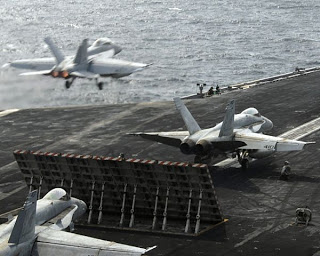
UPI has an interesting story to go along with this image from Navy NewsStand.

Four suspected drug runners and 11 bails of cocaine were plucked from the Pacific Ocean off the Mexico-Guatamala coast, the U.S. Coast Guard said Wednesday.

Coast Guard officials in Alameda, Calif., said a 50-foot semi-submersible craft was spotted Monday by a U.S. Customs and Border Protection surveillance aircraft about 300 miles southwest of the Mexico-Guatemala border. The vessel was abandoned by its crew and sank a short time later, the Coast Guard said. The cocaine bundles bobbed to the surface as a boarding team from the USS DeWert approached to rescue the crew.

"This case shows the challenges our counter-drug patrol forces face, and the lengths to which the drug smuggling organization will go to get their deadly product to the U.S.," said Rear Adm. Craig Bone, tactical commander of U.S. counter drug operations in the Eastern Pacific. "This low-profile semi-submersible craft was very difficult to detect."

The exactly how much cocaine was seized had not been determined and no additional information was provided about the suspects.

More than 90 tons of cocaine has been seized in the Eastern Pacific this fiscal year, which ends Oct. 1.
Eagle1 saw this too, and has background on the use of semi-submersible's for drug smuggling.

I'm impressed, $352 million in cocaine! This is a really nice job of inter-agency cooperation, multiple assets from DHS and the Navy resulting in some good work.

Wednesday, August 22, 2024

6th Fleet Focus: USS Bainbridge Deploys Friday

In perhaps the quietest international naval deployment in recent memory, the departure of Standing Naval Maritime Group 1 on August 4th has produced not a single shred of news since their departure. The official SNMG1 site reported the first week was focused on training and integration, important tasks for sure, but considering Saturday the deployment will officially be 3 weeks old, it is a safe assumption they have arrived (or will have) to the Gulf of Guinea and have done so with a purpose. I'm actually encouraged a bit by the lack of media reports, if they are going to do some good, best not run around with a high profile announcing your presence, particularly when areas like the Niger River Delta continues to produce a number of challenges.

What we do know however is the USS Normandy (CG 60), which deployed on April 14th of this year will soon be replaced by the USS Bainbridge (DDG 96). As regular readers are aware, I have been looking forward to the deployment of the USS Bainbridge (DDG 96).

As I have said before, I find it more than a bit ironic that Commander Stephen J. Coughlin, the CO of the USS Bainbridge (DDG 96) is a graduate of the Naval Academy class of 1988. On April 14, 2024 the USS Samual B. Roberts (FFG 58) hit an Iranian M-08 mine in the Persian Gulf during Operation Earnest Will. I find it ironic because I recently completed reading No Higher Honor (ISBN 1-59114-661-5) by Bradley Peniston, who pointed out that when the frigate was in the Gulf in 1988 it literally had no mine detection capability other than a handful of spotters.

The result of that tragic event was probably the driving factor in increasing the capabilities of destroyers in mine warfare. Nearly 20 years later, the USS Bainbridge (DDG 96) represents the lessons learned from that event.

The AN/WLD 1 (V)1 Remote Minehunting System (RMS) is intended to be the mine detection system of choice in the future. While it is a primary component to the Littoral Combat Ship MIW capability, on January of this year the USS Bainbridge become the first ship the RMS has been installed to.

The second ship to receive the AN/WLD 1 (V)1 Remote Minehunting System (RMS) was the USS Forrest Sherman (DDG 98) in February. The USS Forrest Sherman, currently deployed with the Enterprise Carrier Strike Group, had a little incident with a WWII era mine in Ukraine's Black Sea port of Sevastopol during a recent visit. While I haven't heard of the RMS system being involved in that incident, I think it is noteworthy the US Navy has deployed their first two DDG-51s to receive the MIW UUVs, particularly at a time of increased rhetoric between the US and Iran in the Gulf.

A wise precaution given current events if you ask me.

While the local media report states the USS Bainbridge (DDG 96) is heading to the Med, this is another example of an ignorant reporter. It was released in European news the ship will replace the USS Normandy (CG 60) as flagship of SNMG1 during the African deployment, sometime during its Cape Town leg, and will be with SNMG1 as it patrols off Somalia and the Horn of Africa before returning to the European theater in early October.

In Defense of the Indefensible San Antonio Class

I have been critical of the LPD-17 program, fairly I think, and I'm not alone. The program has any number of problems ranging from cost overruns to design considerations, and any criticism thrown at the LPD-17 program is almost certainly justified. About a month ago, the USS San Antonio (LPD 17), the most expensive amphibious ship ever built, was finally given the green light.

The rest of the class isn't without problems, the USS New Orleans (LPD 18) is going to cost around 350 million over budget, another black eye on the program, despite these costs being a direct result of the original first in class CAD screwup. How does someone balance 1.1 billion dollars in contractor screw ups and 1.5 billion in Hurricane costs, in what is now a 15.5 billion dollar program for 9 ships when the original plan called for 12 ships. I'm not counting the 10th LPD-17, which will likely be included in this years budget.

Well, in defense of the indefensible, what exactly makes the LPD-17 class so expensive, and is it worth it? You decide.

The San Antonio class is a 25,000-ton expeditionary warship (making it approximately twice the size of the next largest LPD in the world) designed to operate 25 miles off a defended shore, and in a nuclear environment. The ship has a radar cross section equal to or smaller than a DDG-51/79 with whipping hardening for its hull girders; shock hardening; blast hardened bulkheads; fragmentation protection; and nuclear blast protection.

The San Antonio class also has a four-zone collective protective system, and an ability to receive contaminated casualties through a specially-designed triage center off the flight deck. It has extensive fire insulation along with mist firefighting and smoke ejection systems. It is equipped with the same SPQ-9B X-band radar and cooperative engagement capability being installed on AEGIS/VLS combatants, a first class electronic countermeasures system, towed torpedo decoys, and a variety of other offboard decoys.

The San Antonio class will be armed with two 21-round RAM launchers, two 30mm guns counter-boat guns, and has the space and weight for 16 VLS cells, which could carry either 64 ESSMs or 32 ESSMs and eight land attack missiles (which would represent more firepower than most of the worlds frigates),

Accounting for these characteristics, the San Antonio class will be the most survivable amphibious warship ever built, and if we remove the costs of the first in class ship (not LPD-18), these substantial upgrades come at a cost of around 10 million dollars per thousand tons of light displacement more than the Whidbey Island class LSDs in FY2008 dollars.

The amphibious warfare capabilities of the San Antonio class include carrying 700 troops, with a surge capacity of 800, and will have two medical operating rooms, a 24-bed ward, and overflow capacity for 100 casualties. The San Antonio class has a flight deck that will accommodate two MV-22s or CH-53s, or four CH-46 equivalents; a hanger that can store an additional MV-22 or CH-53, two CH-46 equivalents, or three AH/UH-1s. The San Antonio class includes a new low-maintenance well deck that can store either two LCACs or one large displacement landing craft. For storage the ship supports 24,000 square feet of vehicle stowage on three vehicle decks, one of which can carry 14 EFVs (enough to carry a full rifle company); and 34,000 cubic feet of cargo and ammunition stowage in two major holds. Moreover, the San Antonio class was specially designed with the amphibious patrolling mission in mind, with berthing spaces designed to maintain platoon unit cohesion, sit up bunks for its embarked troops, and increased air conditioning capacity.

Why am I going through this exercise? Earlier this year I had the opportunity to 'tag along' in a tour of the PCU USS Mesa Verde (LPD 19) with one of my colleagues, a retired 16 year veteran of the Marine Corp. As we were given the tour, I was constantly being educated by my colleague why specific aspects of the LPD-17 class were clearly designed by Marines for Marines, and how well thought out the ship obviously was in design. This type of admiration is obviously contradictory to most of the commentary out there regarding the class, but it explains why I am not surprised at all to read the details included in Christopher Cavas's latest report.

Shipbuilder Northrop Grumman declared a “clean sweep” after the Navy’s third LPD-17-class amphibious ship completed a series of builder’s trials in the Gulf of Mexico.

“These were very successful builder’s trials,” spokeswoman Debbie McCallum said Aug. 17. “We’re very pleased.”

The Mesa Verde is the third ship of the long-troubled San Antonio class of 25,300-ton amphibious dock ships, but is the first to be built at Northrop’s Ingalls shipyard in Pascagoula, Miss. Most of the ships are being built at the company’s Avondale shipyard near New Orleans.

Yes, it is true that the LPD-17 class at 90 million dollars per thousand tons of lightweight displacement makes the class the most expensive amphibious ship ever built. The first in class actually costs 130 million dollars per thousand tons of lightweight displacement, when historically amphibious ships have averaged 70 million dollars per thousand tons of light displacement (all figures according to CBO).

The question is should amphibious warships be built to operate 25 miles off a hostile coast, with low observability on par with combatants like AEGIS destroyers, with the capacity to carry firepower greater than most of the worlds frigates, with design considerations that matter in amphibious operations like larger hallways and advanced well decks and hanger facilities? I think the answer, in this era of the long war, is an emphatic yes, so I for one will look forward to December 15th, 2007 and hope for good news between now and then regarding the Navy sea trials of the USS Mesa Verde (LPD 19).

It might not be popular to say among SWOs, but given the option of the DDG-1000s or the LPD-17, I'll take the LPD-17. The last 5 DDG-1000s will cost 3.5 billion per in FY08 dollars according to the CBO. A new LPD-17 costs 1.7 billion in FY08 dollars according to the CBO, if they are built at a rate of 1 per year. That means for the cost of the last 5 DDG-1000s (17.5 billion) one could buy 10 new LPD-17s which wouldn't necessarily need to be amphibious ships, but NECC motherships for MSO and littoral/tributary support operations, Global Fleet Station specialized ships, or hospital ship replacements.

Tuesday, August 21, 2024

7th Fleet Focus: The Royal Australian Navy Carrier Strike Squadron?

My friend Eric has covered every up and down, left and right, for and against point and counterpoint in the Australian 'stop-gap' F/A-18 Super Hornet purchase. His reaction this morning to this article in The Australian was my first reaction, but the more I have thought about this, the more I think this might be a good idea.

A select handful of Royal Australian Air Force instructors will be chosen for lessons on how to land on US aircraft carriers flying the new F/A-18F Super Hornet fighter.

The plan, which could eventually lead to participation in US carrier-based operations, marks the first time Australian pilots have flown off aircraft carriers since the retirement of the navy's flagship carrier HMAS Melbourne in 1982.

The carrier training underscores the rapidly evolving military partnership between the US and Australian military.

Senior US navy sources said the relationship was likely to involve an increasing convergence in training and tactics between the RAAF's fast jets and their US equivalent.

RAAF Flight Lieutenant John Haly will become the first Australian air force pilot to become carrier-qualified when he attempts his toughest flying skills test later this year.

Asked to clarify RAAF Super Hornet training, Defence Minister Brendan Nelson said yesterday: "There is no plan for RAAF pilots to undertake training in aircraft carrier landings."

The official government line contradicts briefings provided to The Australian by senior US military officials at Lemoore Naval Air Station in California that other RAAF "Top Gun" instructor pilots are expected to follow Flight Lieutenant Haly and be provided with carrier training.

Full-scale Super Hornet training for RAAF air crew starts in the US in 2009.

I have a feeling the only thing we have learned here is that what Defence Minister Brendan Nelson says isn't always to be taken at face value, oh wait we already knew that. The question here is whether or not the Australian Super Hornets will have a tailhook. If they do, I'd say an Australian Carrier Air Squadron is probable, without a tailhook I'd say unlikely.

Integrating strike fighter squadrons from other countries onto US Carriers isn't a bad idea, its just the number of nations where it would, could. or should be tried is somewhat small. Many people have assumed strike squadron integration could become common in the future with the Joint Strike Fighter, but I don't think so.

Australia isn't buying the VSTOL Joint Strike Fighter (or hasn't officially expressed interest to), they are buying the land based conventional version so it isn't like operations off US Carriers is a capability option in the future (unless something changes). While it is possible it could 'potentially' happen in the future with the VSTOL JSF, the US Navy may choose not to allow integration of VSTOL JSFs on its big deck carriers, logistically it may not be an option if the US is supporting the Navy JSF version, and the Marines simply may not have extra space for non US VSTOL JSFs on its smaller aviation ships.

Personally, I hope Defence Minister Brendan Nelson is wrong, and Australia is preparing its pilots for Carrier operations. I think this capability would make up in some part for the gap between the F/A-18E/Fs and the F-111s, because strategic mobility gained might balance out strategic payload and range lost. It would also, most importantly, show some strategic depth in planning between the US and Australia. The US is best when it is playing the role of logistical enabler. Australia on the other hand, plays an active role in regional stability in the South Pacific.

In the future, Australia may deploy its two soon to be built LHDs on a stability mission in the region and the F/A-18Fs could fly off a US Carrier to provide close air support to those operations. May sound simplistic, but it is hard to say the US is doing anything other than simply providing 4 acres of sovereign property in the middle of some large body of water for Australian air operations, which is no more than another country would be doing if they were allowing Australia to utilize their airfield.

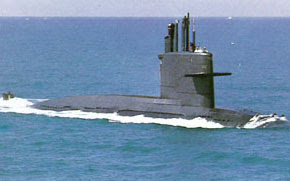
Taipei Times Reporting US Will Build Submarines For Taiwan

The Taipei Times ran an article on Monday regarding a meeting last week in Washington. Because stories like this tend to disappear quickly (in fact the story is currently not cached on US google as I write this), I'm posting in full. You decide.

Chinese Nationalist Party (KMT) Legislator Shuai Hua-min (帥化民) said on Saturday US officials have told a delegation of Taiwanese legislators that Washington will go ahead with the sale of diesel-powered submarines to Taiwan even if the Democrats win next year's US presidential election.

The delegation was also told that four US companies that intend to participate in the bid have found European manufacturers to cooperate with, Shuai said.

In a visit arranged by the Ministry of Defense, Shuai, KMT Legislator Su Chi (蘇起), and Democratic Progressive Party (DPP) Legislator Mark Ho (何敏豪) arrived in Washington on Wednesday.

The delegation also visited companies that intend to participate in the bid for the diesel-powered submarines.

Shuai said his first priority in discussions with US officials was to ascertain whether the sale would go ahead even if the Democrats won next year's presidential election. Both military and state department officials said there was not a great possibility there would be any change of policy, Shuai said.

His second priority was to confirm that there would be no reductions in the arms systems sold, he said. US officials said this would depend on the state of cross-strait relations.

Will this happen? Hard to tell, according to the Asia Times the US State Dept is busy blocking the sales of P-3Cs and PAC-3 missiles to Taiwan. Considering submarines would be a much larger escalation than ASW aircraft and AAW missiles, both of which are mostly defensive systems, I remain skeptical.