Showing posts with label Influence Squadrons. Show all posts

Monday, November 28, 2024

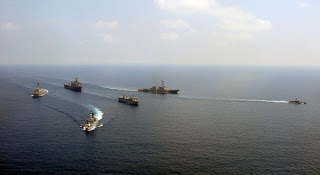
An Influence Squadron!

Exciting:
Russia is sending a flotilla of warships to its naval base in Syria in a show of force which suggests Moscow is willing to defend its interests in the strife-torn country as international pressure mounts on President Bashar al-Assad's government.

Arab League sanctions and French calls for the establishment of humanitarian zones in Syria have increased international pressure on Assad to end bloodshed that the United Nations says has killed 3,500 people during nine months of protests against his rule.

Russia, which has a naval maintenance base in Syria and whose weapons trade with Damascus is worth millions of dollars annually, joined China last month to veto a Western-backed U.N. Security Council resolution condemning Assad's government.

Izvestia newspaper reported on Monday, citing retired Russian Admiral Viktor Kravchenko, that Russia plans to send its flagship aircraft carrier the "Admiral Kuznetsov" along with a patrol ship, an anti-submarine craft and other vessels.

"Having any military force apart from NATO is very beneficial for the region as it prevents the outbreak of armed conflict," Kravchenko, who was navy chief of staff from 1998-2005, was quoted as saying by Izvestia.

An indication that Russia continues to support the regime, and also that any multilateral effort to conduct a no fly zone regime change would have to go through a venue other than the United Nations Security Council. Still, it's a risky move, because if Assad falls, the new regime will likely remember the visit of the Kuznetsov for just as long as the Indians remembered the deployment of the USS Enterprise into the Bay of Bengal in 1971. You have to wonder about the decision-making procedures in the Kremlin; how much information do the Russians have about the foundations of the regime, and how much of this is generated by anti-NATO animus as opposed to an effort to engage in regional influence?

Wednesday, September 7, 2024

Daunting Question

Well, the compressed first course at National War College has come to a close. In just a few short weeks, we have heard from the EUCOM Commander, the Secretaries of State and Defense, several former ambassadors, and a variety of faculty and guest lecturers. It has been something of a whirlwind, but has given me much to think about.

Unfortunately, the busyness also allowed me to avoid addressing a common challenge to new authors: What to write about? Taking the third item of Admiral Stavridis' advice, "Read, Think, Write", here I go: I plan to start a broader discussion of the Coast Guard role beyond American shores with two rhetorical questions at the bottom of the post. Before I get to those, I will explain my concern.

I believe that the public has little awareness of the work of the Coast Guard beyond our shores, nor that the Coast Guard, analysts, bloggers, pundits, etc (I include myself in this grouping) do a very effective job of changing that. In the looming fiscal tightening, questions of value and return on investment should rightly be asked. Those who see value in various missions of the Coast Guard, as well as the Coast Guard itself, have a responsibility to make that value, tangible and intangible, known; not to overstate or exaggerate the case, but to get the case out there. It strikes me that we all talk to each other, in various forums, but rarely is the point made to the broader public.

Limited public awareness of what Coast Guard ships, aircraft, and people do worldwide undermines the competitiveness of the capital projects that enable those missions. I suspect that, for ID readers, this is an easy case, and that I will even receive some suggestions on how to improve my points. My concern, however, is that in agreeing with each other (at least to some extent), we have neglected to tell anyone else.

So now to my rhetorical question, followed by a challenge to us all:

In the foreign policy context, How is the Coast Guard an instrument of national power?

The challenge question to all of you who believe you have an answer to the first (including me): What can we do to better pass that word to the broader public?

I leave both of these as open questions until my next post, which should be two weeks or so. Please share your thoughts on this point by comments (preferred) or e-mail.

The views expressed herein are those of the blogger and are not to be construed as official or reflecting the views of the Commandant or of the U. S. Coast Guard. Nor should they be construed as official or reflecting the views of the National War College, National Defense University, or the Department of Defense.

Thursday, November 11, 2024

Is Roughead Talking Influence Squadrons For the South China Sea?

No, not by name, but I would sure love to hear the context of this discussion.
The U.S. Navy's top officer is urging China to work with the United States in the South China Sea despite Beijing's declaration of "indisputable sovereignty" over an area where more than half the world's oil tankers transit.

Admiral Gary Roughead, U.S. chief of naval operations, said on Wednesday it was important to build cooperative ties with the People's Liberation Army Navy, which has pushed further afield as Beijing's influence and international trade has grown.

"The work we do in the Somali basin, in my opinion, should be replicated in the South China Sea and other places at the same level of cooperation," Roughead told a forum on U.S. naval power organized by Government Executive Media Group, a Washington publisher.
Yes, I absolutely love that the CNO is out front talking about this because my first impression was how that statement immediately had me thinking of an article written last month by LCDR BJ Armstrong posted over at the USNI blog titled Developing Realistic Security and Assistance Squadrons: Another View of Operationalizing the Influence Squadron.

Hey @CNO_PAO, perhaps a transcript?

This is very good for China in 2010 for two reasons. First, it builds partnerships and relationships with the regional nations and interested stakeholders sending exactly the message China is saying but not sending in action - peaceful rise. Second, it builds confidence in China's ability to work with regional nations and interested stakeholders in dealing with security challenges in China's sphere of influence.

Like I have been saying lately, we are not China's problem even though they still blame us for their woes - every single nation in the region who is being highly resistant and skeptical of China during their current rise represents China's problem right now. Ultimately, that makes working with the US the best option for China to manage that problem, and there is no better way to start building a working relationship with China than the daily tasks associated with cooperative maritime security - exactly what the Security and Assistance Squadron (or Influence Squadron) is all about.

Wednesday, October 6, 2024

Developing Realistic Security and Assistance Squadrons

For nearly 20 years none has challenged the supremacy of the United States in the open-ocean, blue-water environment. Increasingly, the contest of ideas is being waged in niche arenas, in the littorals, the near-shore green-water areas, and up and down contested riverine estuaries that provide concealment and cover for terrorists, pirates, and warlords. It is in these areas that the slow erosion of law and order is an accepted fact of life, and it is in these areas that the U.S. Navy must go if it is sincere in its strategic premise that preventing wars is at least as important as winning them. This is the environment of the Influence Squadron.

It is a naval force tailored to missions both new and old. Harking back to the founding of the republic, Influence Squadrons will be numerous enough to combat piracy-the only naval mission actually enshrined within the U.S. Constitution-and strong enough to take on terrorists who smuggle weapons across the seas as well as interdict the drug lords whose products kill more Americans per month than al Qaeda has in its history. Larger numbers of platforms will also enable Influence Squadrons to both provide local medical assistance in the form of vaccinations and respond swiftly to natural disasters and thus prevent epidemics of such diseases as dysentery and cholera.

In addition, the simplified characteristics of the Influence Squadron's platforms will help the Navy to build partnership capacity and perform security force assistance missions without over-awing local coalition partners with Aegis-level technology. These missions will extend and solidify the continuing U.S. role of defining and administering the global political-economic system. To perform these missions, Influence Squadron commodores will need a strong and varied complement of platforms to cover low-end missions. Function, in this case, will follow form.

More Henderson, Less Bonds, Proceedings, April 2010, Commander Henry J. Hendrix, U.S. Navy
In his April 2009 groundbreaking Proceedings article Buy Fords, Not Ferraris, CDR Jerry Hendrix advocated that in order to meet the broad requirements of the Cooperative Maritime Strategy for 21st Century Seapower, the US Navy needs to realign force structure to better manage steady state engagement operations with regional partners. Among observers of the US Navy, this strategic concept resonated as a responsible function of US naval power, but in the form advocated (the article suggested reducing the number of carriers in the fleet) it was met with visceral objection within the big blue Navy. In his second Proceedings article discussing Influence Squadrons, CDR Hendrix expanded the role of Influence Squadrons while also describing in specifics the form an Influence Squadron would take as an operational squadron supporting sustained presence in various regions globally.

Full disclosure. When I first read Buy Fords, Not Ferraris, it became my objective to get to know Jerry Hendrix, and over time we have become very good friends. My thought process was - this fool is about to get thrown out of the Navy for writing this article, because as I saw the environment in the Navy; I did not believe the Navy would be very accommodating of any Commander who writes an article that challenges the status quo via Proceedings. Time has proven my assumptions in 2009 both regarding Jerry's career and the resilience of the Navy leadership to take criticism completely inaccurate. However, you might ask, if Jerry and I have become such good friends - why haven't I ever written about More Henderson, Less Bonds until now?

The answer is - I believe the Influence Squadron represents an incomplete concept that 1) needs to be tested before any serious investments are made and 2) better developed as a Joint concept more than it has been described to date in the two Proceedings articles. I see one specific issue completely absent from the Influence Squadron as produced to date that I believe must be addressed.

The Selective Engagement Problem

In December of 2009 I was shocked when Bryan McGrath posted that he believed a serious review of the Navy's maritime strategy was necessary, as CS-21 represents a document he was personally intimately involved in developing. He noted legitimately a concern that allies "will quickly grow disenchanted with us as the operational realities of declining budgets drive us away from cooperative security arrangements and toward selective engagement and offshore balancing." We are already seeing policy decisions during a time of difficult budgets force the Navy to primarily focus on high end naval requirements, but even more remarkable on the point of selective engagement - 3 years after the release of CS-21, Task Force 151 represents the only example where the US Navy has attempted to develop a force towards addressing a low end spectrum security threat. With all due respect to the US Navy, if results matter - Task Force 151 has been a feeble effort, at best.
The naval forces have done a much better job with cooperative assistance. Global Fleet Stations and Medical Diplomacy and Engagement activities have been impressive activities of the maritime services over the last few years. The Southern Partnership Station, the African Partnership Station, and the Pacific Partnership deployments all represent forward thinking engagements where maritime forces can and have made a significant impact in developing partnerships in various regions. It is important to note however that while these are very important and useful activities, at a time when security problems in the maritime domain are expanding and the nation is fighting enemies in a global war on multiple maritime fronts - these engagement activities provide no direct warfighting contribution to the global war effort. Ultimately the success of promoting security with these deployments depend almost entirely on secondary effects by training other nations to make a contribution towards maritime security.

I find it frustrating that three years after the release of maritime strategy the Navy cannot point to a single major activity, whether experimental or traditional, where the entire range of low spectrum threats are addressed as a dedicated naval solution to a specific regional problem - the very quiet Philippines operations being an "almost" example. While the Navy is clearly globally distributed, as a naval observer I would argue that the Navy's version of "mission tailored maritime forces" is in reality either 'whatever can be spared from high end requirements' or 'mission tailored engagement only' activities. Where is the intellectual rigor within the COCOMS towards deploying naval capabilities that aligns "mission tailored maritime forces" to a region specific to the strategic objective of "preventing war?" The absence of a single example, and compounded by the feeble results of Task Force 151 in the context of expanding problems off Somalia, explains why Influence Squadrons resonates as a starting point, or strategic foundation, for how to leverage naval power along the broad range of capabilities short of major war at sea.

Evolve the Influence Squadrons Capability

We are seeing serious negative trends is Somalia. In an AP interview last week, Interpol's secretary general Ronald K. Noble said "we believe that 'the Afghanistan' in the next five to 10 years will be Somalia and those parts of Africa (countries in the north and west)." That is a serious warning, and in the context of all the counter-terrorism activities across Europe over the last week, it is a warning that goes to the heart of CS-21 regarding preventing future war. As the US prepares to potentially draw down forces in Afghanistan, will events unfold that will make Somalia the next land war against terrorist extremists? If that scenario is possible (and I believe we are trending towards probable), then it should be the strategic purpose of naval forces to prevent such a war from occuring - as it is the specifically stated strategic purpose of naval forces as spelled out in the US Navy's own maritime strategy.

I completely understand this is a policy issue, but this is the case that Navy leadership must be able to make at the policy level if the Navy is to justify its role as a military capability intended to prevent future war.

One of my biggest complaints with the US Navy today is how discussions regarding the rise of al-Shabab in Somalia immediately trends towards a conversation of a problem on land. The same is true of conversations surrounding Somali piracy - very smart people stand up to sound smart describing piracy as a problem on land. These are factual statements, but it is also a factual statement that throughout the history of the United States, naval power formed the foundation by which our nation has successfully influenced events on land.

My issue with Influence Squadrons as described is that it is an organization of capabilities that addresses functions of naval power specific to the maritime domain. In public policy debates of the 21st century, even Navy advocates often refer to the shore line as a great wall that seemingly prevents naval power to be influential to problems that originate in ungoverned spaces on land - short of recommending major combat activities. The shore is not a wall; it is a Maginot line waiting for military power from the sea to blitzkrieg across selectively for purposes of positively influencing local conditions. In ungoverned spaces like Somalia where security threats like terrorism and piracy are on the rise; where narcotics, human migration, weapons proliferation, human trafficking, and other illicit activities are prevalent primarily due to the conditions on land - it is critical that naval forces develop and deploy mission tailored maritime forces with the capabilities to influence this entire range of challenges. I believe the US Navy is capable of fielding "Influence Squadrons" with the ability to make positive regional influence, and I include regions like Somalia that are ungoverned and extremely complicated.
Developing Realistic Security and Assistance Squadrons

It is said that rising powers like China prevent the US Navy from adequately providing the forces necessary to address regional security problems in places like Somalia. I would argue that the rise of China is why addressing problems in other regions is critical to overall US strategy that emphasizes positive sum arrangements among allies. With that said I completely understand why the shipbuilding budget cannot be adjusted at this time to meet regional security challenges in places like Somalia. I also do not believe the funding must come from the shipbuilding budget to address the range of threats in places like Somalia.

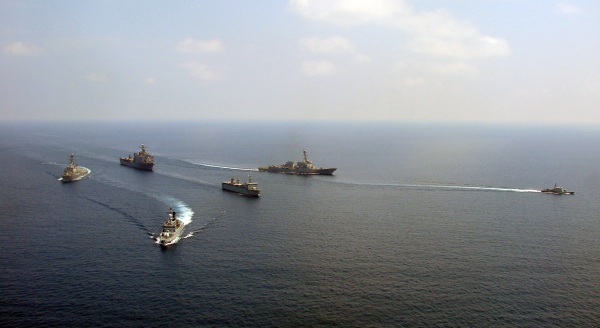
Whether one calls it an Influence Squadron or African Partnership Station - East, I believe the US Navy should deploy a realistic security and assistance squadron to the Horn of Africa scheduled to arrive in October of 2011. This squadron would be developed with existing platforms the Navy already has access to and would consist of:

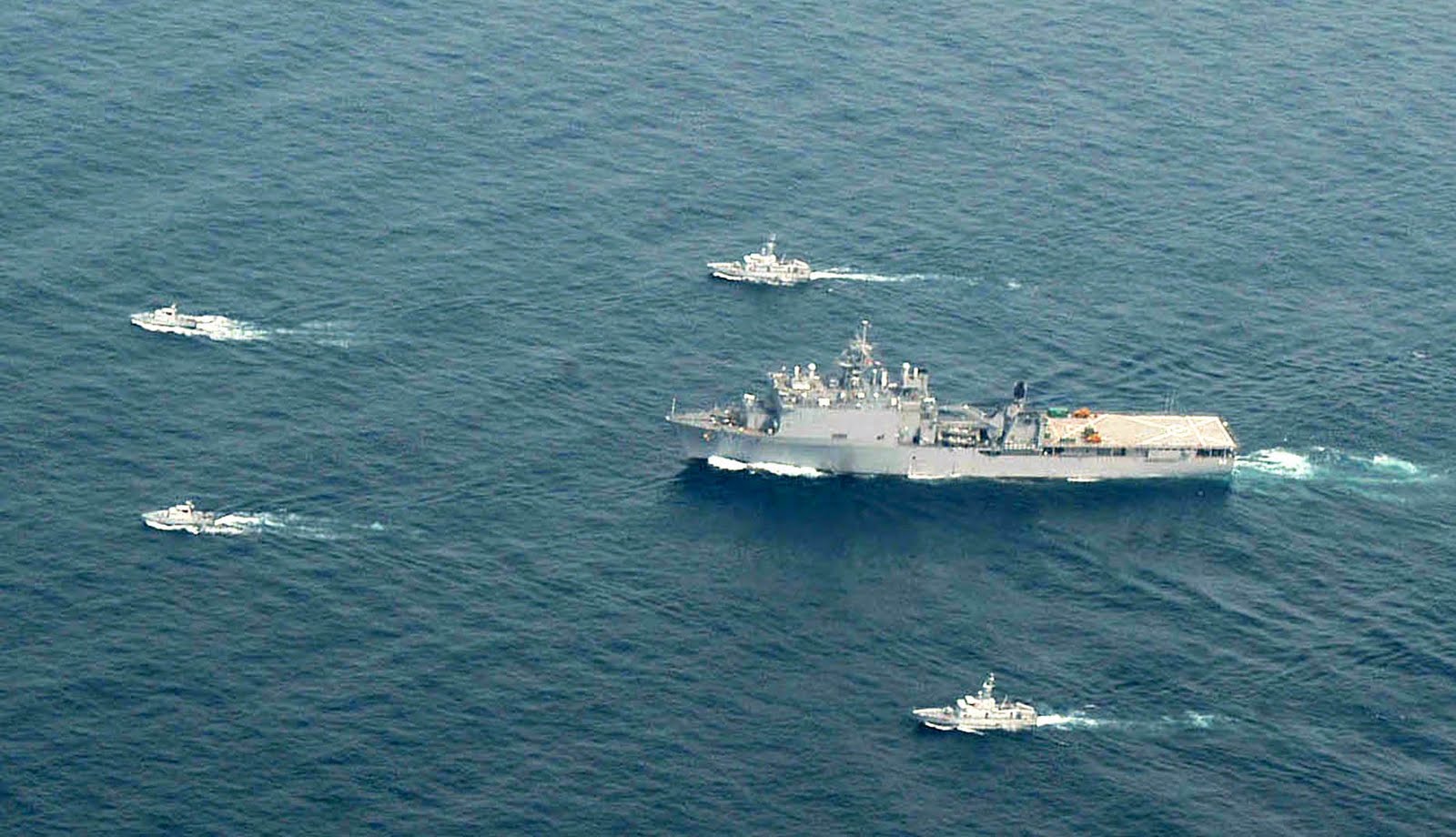
The most reliable LPD in inventory whether 2 years old or 42 years old. The LPD will support a company sized SOF capable force of Marines tailored to meet the requirements of anti-terrorism, anti-piracy, and regional security assistance training. The well deck will support the M80 Stiletto and small boats, and a 2 helicopter UH-1 detachment is a requirement. The LPD will act as flagship for the squadron and primarily focus on influencing activity ashore.

A dedicated T-AKE to provide logistics support for the squadron.

FSF-1 Sea Fighter. Sea Figher will primarily be used as a UAV launch, recovery, and maintenance platform for the squadron, but will also function in regional maritime security operations and as a security training and assistance platform for regional security engagement and exchange.

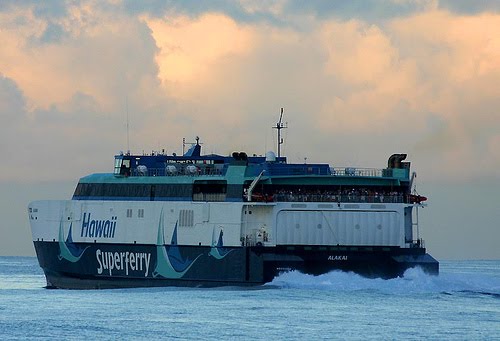
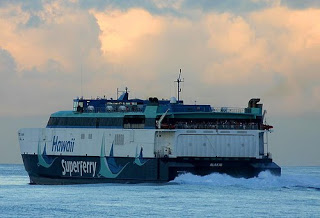
ALAKAI and HUAKAI (both PDF), which for the record MARAD purchased at auction for $25 mil each on September 30, 2024 (so the rumor goes). These ships will function as UAV platforms in addition to transporting riverine squadron equipment and other detachments from the NECC. Supporting small boats and participating in regional training exchanges, the high speed vessels will be expected to do a lot of everything.

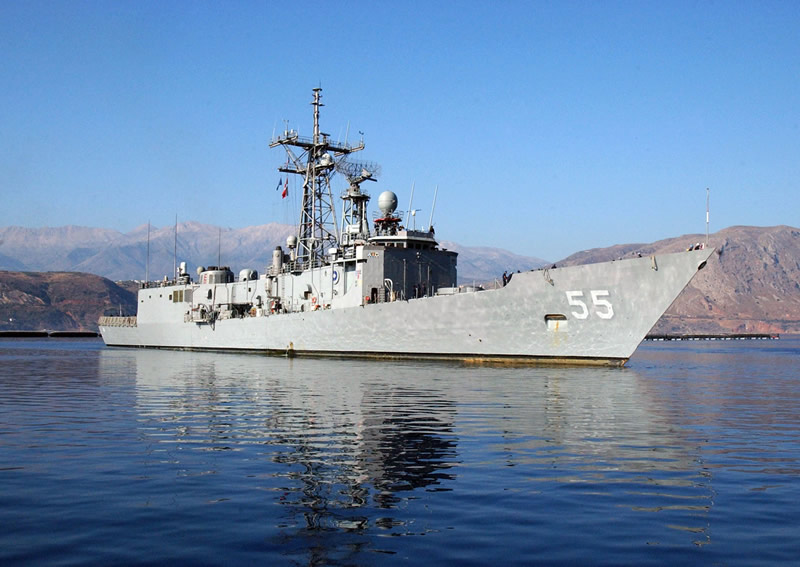
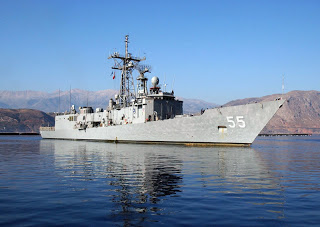
Two Perry class frigates. These ships will be outfitted with both lethal and non-lethal weapons of many types, and also serve as platforms for helicopter detachments. These are my primary pirate hunters.

Sea SLICE is my primary inshore platform that would be utilized to support disruption operations against both terrorist and pirate related activities.

The USCGC Bertholf (WMSL 750), which will work in cooperation with regional Coast Guards to establish fishery protection operations and training around Somalia.

Other assets will include Coast Guard LEDET and DOG detachments, a Riverine detachment, a SEABEE det, and a Navy medical det with at least 4 doctors.

This force would be sent with a mandate to kill terrorist, hunt pirates, assist the various United Nation operations in the region, train local security, and generally establish a proactive American presence off the Horn of Africa leveraging less restrictive rules of engagement for the purposes of preventing a future war that could potentially require western ground forces in Somalia. The squadrons mandate includes building security capacity and information exchange with the regional Coast Guards including regional nations but specifically the Coast Guard and maritime security forces of Somalia, Somaliland, and Puntland. Disruption of terrorist activity and pirate activity is a primary function of this squadron. Any nation willing to join this security and assistance squadron would be required to commit forces for training and workups by February 1, 2011.

To me, that is what an Influence Squadron would be. It would operate both at sea and selectively on land. It would be designed to meet the entire range of challenges in a region suffering from maritime security and governance instability issues. It would consist of enough vessels that it can support security operations and regional engagement concurrently. It would be constructed using existing assets readily available for purchase or charter. It would provide opportunity for buy-in from allies willing to conform to established ROE, or allow for logistical support from allies wanting to contribute but politically unwilling to commit at the warfighter level. It combines joint maritime service capabilities into a single force, tailored to the mission, globally distributed while regionally concentrated to meet specific emerging security problems with the intent of preventing war. The squadron sustains presence for 6 months, October 2011 until March 2012 - with Sea Fighter and Sea SLICE remaining permanently deployed to the region as operational assets for future operational experimentation.

The US Navy doesn't need to invest major shipbuilding budget money to deploy Influence Squadrons, but should indeed leverage GWOT operational funding to invest a small amount towards preventing a future war in Somalia using existing vessels readily available, and letting loose a few highly creative Navy and Marine officers ready to prove that US naval power can influence the global war on terror in ungoverned regions at a much lower cost than land military power can.

Friday, May 21, 2024

Distributed Operations in Narrow Seas

Wars on multiple fronts and irregular threats have forced the US military to evolve some unique command and control structures and atypical deployments. Even the Army is thinking about decentralized C2. Anyone who has worked with conventional army forces at the operational level knows it’s a major stretch to have them think in term of deploying anything smaller than a BCT.

The past 8+ years of war has taught us many things as an Army.
One particular lesson we’ve learned is that decentralized threats
are best countered by also decentralizing our own capabilities. To
adapt to what we’ve learned, the Army is training its leaders to
think, act, and operate more decentralized. Now, through the
promotion of mission orders, commander’s intent and a new pilot
program titled “The Army’s Starfish Program”, we are taking additional
steps to promote decentralization as yet another tool to counter
decentralized and networked threats.

- LTG Martin Dempsey, Commanding General, Army TRADOC

At this point, the average naval observer is probably thinking “so what; the navy has always done distributed operations; that’s just the way we deploy.” And of course that thought would be spot on - to an extent. The Navy employs ships independently, over expansive ocean areas. But the majority of these ships are commander commands containing hundreds of Sailors (equivalent to an Army battalion); not exactly a force construct one would consider especially nimble or adaptive. And it’s only been fairly recently that naval planners have begun to deemphasize deploying ships via the CSG/ESG construct. The chaos of an irregular environment calls for decentralization at a much lower level of both force structure and leadership autonomy. A military force’s ability to successfully combat irregular threats directly correlates to the decentralization of that force. In recognition of this environment, the Marine Corps is experimenting with company-level distributed operations, which could some day supplant, if not replace the MEU construct. Special operations forces are traditionally even more decentralized, with 12 man ODAs and 16 man platoons as the typical unit for force application.

Littoral fighting requires decision making condensed in time and space. Operations in confined sea spaces require acquiring, tracking, and when necessary, engaging numerous mobile targets on land and afloat. Simultaneously, naval operators must discern which targets are legitimate combatants and which are fishermen, merchants, or enemies masquerading as the above. In short, the fog of war thickens in near-shore environments. These dynamics apply whether one is fighting conventional coastal navies or non-state maritime actors. However the latter often enjoy advantages that a conventional navy cannot, primarily in that they blend in with local traffic.
Certainly these sorts of operations aren’t new. The pages of naval history are replete with battles in near shore areas - from Mosquito Fleet engagements in the Everglades during the Seminole Wars, to Savo Island, to the Gulf of Tonkin. Is today’s US Navy configured and trained to fight tomorrow’s littoral battles? Yes, we have built the littoral combat ship (sort of), a fairly robust NECC, and some other capabilities that enhance the Navy’s ability to operate where the sea meets the land. But other areas, such as surface navy force structure, command and control, and TTPs are not optimized to succeed in coastal regions. I don’t see much here that indicates that the Navy, or at least the Seapower and Expeditionary Forces Subcommittee, is emphasizing irregular challenges.

It’s likely that future terror and insurgent groups will recognize the operational and strategic advantages sea power brings to their movements. To fight a persistent campaign in this sort of environment requires unconventional approaches. Navy command and control schemes must be flattened and better networked. The more independently deployed vessels can operate, the faster they can react to dynamic situations. If the US Navy is to remain relevant against decentralized threats and still be able to cover a wide number and variety of distributed missions globally, it will have to build a larger quantity of less expensive surface vessels to complement the high end capabilities such as DDGs. These ships will be much smaller, less expensive, and hence more numerous than the LCS; ie, something like the “Fords” of the Henry Hendrix’s Influence Squadrons. And optimally, we would not be fighting alone in the littorals even when engaging an enemy nation state. When at all possible, surrogates or partners familiar with the battle space should be employed. These relationships must be developed and nurtured.

The opinions and views expressed in this post are those of the author alone and are presented in his personal capacity. They do not necessarily represent the views of the U.S. Department of Defense or any of its agencies.

Thursday, November 19, 2024

The Year of 'Payload Centric Warfare' Force Structures

A decade ago when the Streetfighter debate broke out, there was a smaller debate discussing 21st century ship design that got lost somewhere along the way. The focus of that debate was on the littorals and the Streetfighters, but one of the important ideas that carried over was the concept of focusing on payloads when developing 21st century waships.

That eventually led to technology development of modularity, and with that the concept of payload quietly became a comfortable, familiar idea but absent the Naval Postgraduate School SEA LANCE study (26MB PDF here), the conversation regarding payloads never really materialized into serious intellectual analysis. While SEA LANCE concentrated on towed payloads, conceptually the idea focused on increasing payload flexibility options for new ships. It really was a novel way of thinking, very much ahead of its time.

As I finally emerge from too many weeks of obligations, I have had time to think about what I see as an emerging Payload Centric Warfare capability developing momentum inside the US Navy today. This isn't a new capability, the US Navy has always enjoyed the large payload capacities of Aircraft Carriers and Amphibious Ships, and this decade the Navy has exploited the utility of high speed vessel transport capacity allowing the Navy to move relatively large payloads with smaller vessels at high speed. The definition of "Payload" I am using here doesn't directly apply to the MSC, as I refer to payload as a warfighting and peacemaking capability, not as a term substituting for cargo.

When naval officers discussing LCS say "everything you know about how to operate, maintain, fight, and survive has to be rethought," they are right. It is actually much bigger than LCS. Traditional line of thinking in the military has long paired form and function as a symbiotic relationship, but in this era of warfare, we have learned they are not. US convoys in Afghanistan aren't getting hammered by mobile vehicles or heavily fortified platforms, rather the most dangerous weapon system leveraged by the enemy to great effect is manpower without body armor or backpack. The reason that man is lethal against our platforms is because the enemy is able to leverage the environment to exploit the emerging 21st century principles of war on the battlefield better than we currently are.

Attack, Speed, Maneuver, Control, Flexibility, Precision, Surprise, and Communications are the principles of war that are achieving the most successful results on the 21st century battlefield, and I note they are the principles of war being integrated into the emerging AirSea Battle doctrine the Air Force and Navy are working on. Read that Air Force Times article, read this paper (PDF), and observe the concepts advocated while noting who the authors are and where they are serving in the DoD today.

The Littoral Combat Ship news this week being discussed here and elsewhere glanced over a key point. In the 21st century, emerging weapon systems and technologies are not the only payloads for naval ships; manpower has become a critical payload to peacemaking the maritime domain in the 21st century. What was lost in the analysis, including my own, is that the Navy didn't add manpower to the LCS, manpower became the module of the LCS. The distinction is key. Ships that are not flexible enough to separate form and function are becoming relics of the last era of naval warfare, and that idea has not set in among many who are observing the direction of the Navy today - and I think the LCS discussion this week can be examined as evidence of that point.

This year has been remarkably quiet, and as a Naval blogger, somewhat boring to discuss actually. For all the promises by the new administration for an open dialog, the Navy has become a closed book when it comes to public discussion of the ideas being developed. There have been multiple force structures debated, discussed, and wargamed this year as part and separated from the QDR development process, and yet only one force structure and doctrine concept from the Naval community was ever discussed publicly. Influence Squadrons, at its fundamental core, was conceptually the idea of regionally distributing platforms capable of Payload Centric Warfare for cooperative engagement and capacity building purposes during peacetime, and going under and over the sea to penetrate A2AD networks in war.

Another idea that emerged this year that no one has publicly discussed yet, but I believe will get some attention in public when discussed in detail, is the force structure produced this year by the Naval Postgraduate School often called the New Navy Fighting Machine (NNFM). What I like to call Streetfighter Part Deux, Captain Hughes and others at the Naval Post Graduate School have produced an evolution of the Streetfighter concepts first promoted a decade ago. At its core is a Payload Centric Warfare concept that distributes warfighting and peacemaking capabilities into networks of smaller systems to swarm and overwhelm A2AD networks.

The force structure concept that is emerging as one most likely to make it into the QDR is the "boxes" force structure concept. The "boxes" concept emphasizes open architecture combat systems on warfighter centric platforms like CruDes and Subs, flexible payload space on everything else, and emphasizes a distributed, joint operations doctrine. Note again the emphasis of Payload Centric Warfare where "boxes" are filled with common combat systems and open space is utilized for flexibility.

The common theme among these naval force structures discussed during this QDR year is the flexibility towards platform payloads. It is also noteworthy that none of the force structure debates this year ever discussed frigates, primarily because cold war era frigates do not have the flexibility to separate form and function. The view of naval warfare inside the strategic planning and policy bubbles are rapidly evolving, but the LCS announcement this week highlights how the Navy has a long way to go towards building public support to conceptually embrace a broader vision of flexible payloads that, as of today anyway, appears to be viewed with skepticism when packaged in the form of the LCS.