REPORTS FROM MARITIME FORCES AND COMMERCIAL MARITIME INTERESTS INDICATE CONCERN WITH THE POTENTIAL FOR LOCALIZED DISRUPTION TO SHIPPING IN CONJUNCTION WITH FUTURE IRANIAN NAVAL EXERCISES. DURING PREVIOUS EXERCISES IRANIAN MARITIME FORCES CONDUCTED BOARDINGS AND INSPECTIONS OF MERCHANT SHIPS, INCLUDING THOSE FLAGGED TO EUROPEAN NATIONS. THE POSSIBILITY EXISTS THAT IRAN WILL ATTEMPT TO CONDUCT BOARDINGS AND INSPECTIONS DURING EXERCISES BETWEEN DECEMBER 2011 AND MARCH 2012. THE MOST LIKELY LOCATION FOR THIS ACTIVITY WOULD BE IN THE VICINITY OF THE STRAIT OF HORMUZ, PARTICULARLY IN AREAS CLOSER TO IRANIAN TERRITORIAL WATERS.

Showing posts with label Iran. Show all posts
Showing posts with label Iran. Show all posts
Thursday, December 22, 2024
Noteworthy Message Traffic
Picked this up from the public broadcast, issued last night as an ONI Special Advisory.

Friday, October 14, 2024
Money is the End Game With Iran and Saudi Arabia
 By now everyone is familiar with and has likely read many discussions regarding the remarkable claims made this week regarding the Iranian Quds Force assassination plot to kill the Saudi Arabian ambassador to the United States on US soil. If you aren't in part skeptical, you may not be very well informed.
I truly believe everyone should be very skeptical but not quite dismissive of the claims being made by the US government.
My short take is that the US government appears to have been initially skeptical like the public is today, but when they got a better sense of who the backers from Iran were, red flags went up. My thoughts on this are also that the US government must have accumulated some very credible evidence for the President to be this vocal in support of the Justice Departments case. Politically, the President's own base is more likely to be the most skeptical of the claims being made because the case fits almost perfectly into one of former UN ambassador John Bolton's wild conspiracy theories - which is nothing short of the most politically ironic turn of events in foreign policy I've witnessed in awhile. Honestly, isn't this scenario akin to the political equivalent of Dick Chaney joining Code Pink?
With the case now in the hands of the US Justice Department, presumably there will eventually be evidence made public. I'd like to reserve the right to be skeptical until I see this evidence.
The best media source covering this story, in my opinion, has been the New York Times. The NYT Lede Blog, for example, is part of the NYTs award winning coverage to completely own this story, and I found their coverage of Gary Sick's The Gulf/2000 Project messageboard traffic to be very useful in seeing what the experts were saying. I want to highlight one point made by Kenneth Katzman, a very brilliant Middle East analyst at the Congressional Research Service, who made one comment that has been repeated many times that I'm not quite sure really works anymore.
There is simply no precedent — or even reasonable rationale — for Iran working any plot, no matter where located, through a non-Muslim proxy such as Mexican drug gangs. No one high up in the Quds, the I.R.G.C. command, the Supreme National Security Committee, or anywhere else in the Iranian chain of command would possibly trust that such a plot could be kept secret or carried out properly by the Mexican drug people. They absolutely would not trust such a thing to them, given Iran’s undoubted assumption that the Mexicans are penetrated by the D.E.A. and F.B.I. and A.T.F., etc — and indeed this plot was revealed by just such a U.S. informant.Ten or so years ago, I think this would be 100% accurate, but I'm not sure that is true anymore, or maybe I would suggest this may not be 100% accurate anymore. I don't want to give the impression that Kenneth Katzman is inaccurate, only that he (and others) might be overstating the IRGC precedent a bit.
I note that the US government now says that the IRGC is the primary government agent for Iran in developing Iran's nuclear technology and other military technology like ballistic missiles, which is business done with non-Muslim nations. We also know the Quds Force has developed ties globally - including in South America - through their illegal smuggling (arms trafficking, etc) operations with non-Muslim organizations. That doesn't make me less skeptical, but the trend lines for the Quds Force point towards working more and more with non-Muslim groups over the last decade in virtually every other area of responsibility for the organization - and this has in part been due to necessity to circumvent economic sanctions. If assassination was reinstated as an IRGC policy option recently as some monitoring sources have suggested, using a non-Muslim proxy inside the US might be the preferred way to take action as to misdirect accusations away from Iran. After all, if the plot had succeeded as outlined in the accusations, would anyone believe any US President who claimed the Iranian Quds Force was the agent behind the a bombing that would be specifically linked to a Mexican drug cartel? I think that would be a very difficult story to believe as well.
None of this makes me less skeptical though, only that I note both Gary Sick and Kenneth Katzman have both previously noted other IRGC operations with non-Muslim proxies - in particular the illegal smuggling activities, so it is a bit of a stretch to suggest there is "no precedent" regarding IRGC activities involving non-Muslim proxies. No non-Muslim proxies for assassination plots? Absolutely right, but the development of a nuclear weapons program is to me a much more serious plot than an assassination plot on an ambassador, and even the hesitant UN people claim Iran has been supposedly getting help from non-Muslims for that activity.
I'd also note that shadowy government organizations like the IRGC don't have a track record of applying "reasonable rationale" for the actions and plots they hatch. Seriously... organizations like the CIA and Mossad, or the KGB during the cold war... many of the ideas these organizations float and sometimes act on do not always apply "rational" thinking in the way you or I might apply the term. We know, for example, Iranian nuclear scientists keep getting killed. Are you more or less skeptical of Iranian government claims that the CIA or Mossad is behind those killings than you are of this US government claim? Uh...
With all of that said, I'm still skeptical of the US governments claims, because despite all the suggestions for actions that could be taken against Iran in response to this alleged plot, I believe it is fairly clear where this is really going.
We have been hearing for months now about the impending gigantic defense deal between the US and Saudi Arabia that is supposedly close to being finalized. Latest reports put the defense deal at somewhere in the neighborhood of $90 billion. A $90 billion defense export sale by the Obama administration to Saudi Arabia is going to shatter all previous peacetime defense export sales records in size, scope, and money.
For context comparison, that agreement will be worth ~75% of the entire nation of China's total military budget for 2010, and Saudi Arabia intends to spend that money buying US military equipment and the training to use that equipment. Most of the equipment that has been discussed in media for that defense deal that Saudi Arabia wants to buy, like AEGIS, is very high end military equipment. This deal, if it happens, is not just a big deal - it's shaping up to be the single biggest US military defense deal since the Lend-Lease Act.
If you are President Barack Obama, and you don't want to urinate all over one's own political base who is exhausted with US wars in the Middle East and frustrated with US foreign policy in the Middle East (that always seems to lead with combat boots), it is good politics to have high tensions between the buyer (Saudi Arabia) and a useful scapegoat like Iran if one is going to sell that much military hardware to a single country and avoid political blow back.
With all of this rhetoric that includes phrases like "Act of War" as a backdrop, including the implied threat of military action against Iran as a response, I think the US action in this case is going to be the impending US-Saudi Arabian defense deal. This plot accusation is not exactly 90 billion reasons why we are selling top US military kit to Saudi Arabia, but at least the justification for the sale will have some positive political spin potential with this plot part of the background noise. Also, for the record, if half of that $90 billion goes directly towards building 'stuff' like ships, planes, and vehicles - that is going to be a legitimate economic stimulus directly from a government export deal that the administration can take full credit for.
Friday, September 30, 2024
The Next Phase of Iranian Naval Expansion
 The Iranians have disclosed the next phase of their naval expansion, which will go from small boat swarms, seaplane squadrons, and small, missile carrying corvettes and patrol vessels to...
Iran's Deputy Navy Commander Captain Mansour Maqsoudlou has announced the country's plan to design and manufacture aircraft carriers.I have no idea what to expect, but I suspect it will not look like aircraft carriers used by the rest of the world. I will also add that while Iranian naval capabilities are very different than what other nations are deploying, that doesn't mean they are automatically ineffective. It simply means the Iranian military solutions often has strengths and limitations depending upon environment and conditions, and they execute a very different battlefield doctrine to address what they see to as a sophisticated threat (US) with their own version of low cost countermeasures.
The initial designs for building the carriers have been approved and the process of research, design and manufacture will start soon, Captain Maqsoudlou told IRNA on Wednesday.
The Iranian commander pointed to the Navy's capacities to accomplish the task despite the time-consuming nature of aircraft carrier building.
The Navy has set an agenda to produce vessels of different classes, some of which are being mass-produced and others being under study, Maqsoodlou pointed out.
Iranian maritime capabilities are asymmetrical by design leveraging just about everything from small boats to seaplanes. I don't have any idea what an Iranian aircraft carrier will look like, but I will admit up front that I expect the Iranians will take a unique approach to fielding a limited but useful capability on a tight budget, and for that I do admire the Iranian ingenuity and imagination when it comes to the way they address military challenges of modern littoral warfare.
We'll have to wait and see though. This could also be the latest of a never-ending supply of Iranian naval absurdity.
See EagleOne for his thoughts, and a great pic.
Wednesday, September 28, 2024
Iran's new Anti-Ship Missile
 Iran has come out today with news of a new missile. From PressTV, Ghader anti-ship missile was mass-produced and delivered to the Iranian Navy. There is an associated video at the link.
Ghader missile, an anti-ship cruise missile equipped with technology that makes it undetectable by the best radars. Ghader missile was mass produced and delivered to the both naval forces of Iran, Islamic Revolution Guard Corp (IRGC) and the Military by Iran's Ministry of Defense on Wednesday. The missile has been designed, constructed and mass produced by Iranian experts and engineers to be used against large battleships and aircraft carriers. Iran's President first inaugurated Ghader missile late August of this year. Western media was very skeptical of the event.This is old wine in a new bottle. The Ghader missile is basically a slightly upgraded Noor missile with an extra 20km range. The Noor missile is an Iranian produced export clone of the Chinese C-802 which uses an inertial and terminal active radar for guidance. The C-802 is a relatively inexpensive Chinese missile design that leverages low cost simplicity, which makes it ideal for Iran whose defensive maritime strategy is primarily intended to be asymmetrical leveraging large quantities of inexpensive equipment for saturation, leveraging mobility and portability for survivability, and is intended to mix just enough stealth precision with mass distraction.
Ghader missile can be fired from air, ground and the ship. . It is equipped with digital auto-pilot, anti-jamming radar technology and is programmable. Ghader can detect and find its target in the sea in low altitudes and sink them. Iran's high ranking military officials say that production of such weapons is exclusive and that Iran is the only country with such capabilities.
High ranking naval officials talked of the destructive power of Gahder missile.
Ghader missile has a range of more than 200 Kilometers
The C-802 is best known as the weapon used by Hezbollah to sink an Egyptian merchant ship in the Mediterranean Sea and slightly damage the low RCS Israeli corvette INS Hanit. As we have discussed before, the C-802 radar guidance is questionable, so it could be that one aspect of the Ghader missile is improved active radar during the terminal phase. In the case of the INS Hanit, the radar focused in and struck the deployed crane that was left extended over the flight deck - basically the only part of the little corvette that wasn't stealthy - and because the C-802 warhead is a 165 kg time-delayed semi-armor-piercing, high-explosive warhead - most of the explosion on the corvette went out over the sea. The fuel from the missile caused quite a bit of damage on and below the flight deck, but for the most part the ship took very little damage relative to the attack, which is why it was back to sea conducting operations before that conflict was over.
The video shows several Ghader missiles have been produced which raises the question, what is the delivery vehicle for this "mass-produced" missile? My theory is we will see these on a new class of PCMs soon, because for years now it has been my impression that Iran's military production has been geared towards a Streetfighter style defensive maritime strategy.
Humpday Humor
CNN has updated the image in their Iranian Navy story, but before they added the video of Barbara Starr this picture was what led the article. I didn't notice it at the time, but do you notice anything strange going on in this photo?

This is the caption provided by Getty.
For those who didn't catch the humor on first look, I'm specifically noting the formation of sailors where it appears one sailor has broken formation to grab the ass of his shipmate.
You have to love the Iranians and their photo propaganda ops. It is consistently pure photo humor gold. This photo reminds me of the good ole days where on a random hot July afternoon they would tow a swimmer delivery vehicle down the military parade route with a guy in his full diving suit - including oxygen tanks and mask - and sit at attention as if on drill. You have to pity the poor sailor who drew that duty.
Extra credit for the best comment.

This is the caption provided by Getty.
Iranian clerics standing in front of the 'Jamaran', Iran's first domestically built warship, during naval maneuvers in the Persian Gulf on February 21, 2009. Iran's navy on February 19 launched in the Gulf its first domestically made destroyer in a ceremony attend by the supreme leader and the commander-in-chief Ayatollah Ali Khamenei, the media reported. AFP PHOTO/EBRAHIM NOUROZI (Photo credit should read EBRAHIM NOUROZI/AFP/Getty Images)I can only assume the stringer who took the photo is someone who works for the Iranian government, as it is hard to imagine just anyone can take photos next to Iranian naval vessels.
For those who didn't catch the humor on first look, I'm specifically noting the formation of sailors where it appears one sailor has broken formation to grab the ass of his shipmate.
You have to love the Iranians and their photo propaganda ops. It is consistently pure photo humor gold. This photo reminds me of the good ole days where on a random hot July afternoon they would tow a swimmer delivery vehicle down the military parade route with a guy in his full diving suit - including oxygen tanks and mask - and sit at attention as if on drill. You have to pity the poor sailor who drew that duty.
Extra credit for the best comment.
Iranian Naval Diplomacy: Public Absurdity is the Usual, Expected Distraction
 The national radio news (CNN or CBS, I forget) led - as in this was the first story - with this rather interesting news.
Iran plans to send ships near the Atlantic coast of the United States, state-run Islamic Republic News Agency reported Tuesday, quoting a commander.If we speculate based on comments earlier this year by Air Force Gen. Douglas Fraser, the head of U.S. Southern Command, it probably means Iran is going to send one of their corvettes escorted by one of their logistics vessels to make a port visit to Venezuela. It will be interesting to see which vessels Iran sends on this rather long voyage.
"The Navy of the Iranian Army will have a powerful presence near the United States borders," read the headline of the story, in Farsi.
"Commander of the Navy of the Army of the Islamic Republic of Iran broke the news about the plans for the presence of this force in the Atlantic Ocean and said that the same way that the world arrogant power is present near our marine borders, we, with the help of our sailors who follow the concept of the supreme jurisprudence, shall also establish a powerful presence near the marine borders of the United States," the story said.
It is unclear when Iran plans to send out this flotilla to the Caribbean Sea, but it is worth noting that if it is soon - and it probably would happen within the next few weeks based on Iran's historical pattern for major announcements and major deployments - both the Iranians and the Chinese will have naval vessels in the Caribbean in the fall of 2011. That both China and Iran would be operating in the Caribbean in and of itself does not represent a national security threat, but it does expose the United States to the uncomfortable emerging geopolitical reality of the 21st century where regional powers do have global ambitions. Politically I see no evidence that US leaders have prepared American civilians for this emerging 21st century reality.
I see the Iranian deployment in two ways. First, Iranian power projection by sea is by itself - not a national security threat to the United States. Any ships the Iranians deploy to the western hemisphere poses no direct threat at all. With that said, direct threat is not their intention even if their rhetoric wants you to focus on that aspect of their deployment.
By now we should all be familiar with the Iranian playbook. They have a long history of successful practice. Americans who don't work for the Federal government but want to read specific examples of Iranian arms smuggling can always spend their time going through Wikileaks cables, which is basically a collection of stories regarding Iranian smuggling efforts to every asshat dictator in Africa. I have no idea if Iran is producing nuclear weapons with their nuclear program, but I do know Iranian leaders have never met a murderous dictator on this planet that they couldn't wait to sell weapons and ammunition to.
When it comes to Iranian naval diplomacy we should expect Iran to publicly say the absurd while privately doing the obvious. It is hard to imagine anything more absurd than the Iranian Navy projecting power to the US east coast, nor is it hard to imagine an activity more obvious than for the Iranian Navy to smuggle weapons banned under the UN sanctions regime that targets Iran.
Back in February when the Iranian corvette Alvand and the Iranian supply ship Kharg crossed the Suez canal to make port in Syria, there was much speculation regarding what Iran was trying to achieve. My initial thought was the Iranians were probably smuggling weapons on the Kharg. Later we learned that my speculation was accurate, and within several days of the Iranian naval vessels departing the region the Israeli Navy seized the merchant vessel Victoria which had recently left the same port in Syria and happened to be heavily loaded with Iranian arms that are illegal for export under UN sanctions and were intended for delivery in Gaza.
Various UN resolutions passed over the last two years by the UN Security Council has made trafficking weapons by merchant vessel much more difficult for Iran, or more specifically the IRGC (and the North Koreans too, btw). This diplomatic effort to curb illegal arms trafficking is one of the great achievements of the State Department, even if it rarely gets the praise it deserves. Attention to detail regarding the various vessels worldwide known to be part of the weapons smuggling business on a global scale has made it difficult, if not impossible, for nations like Iran or North Korea to deliver serious weapon components to other nations. This is largely a result of aligning UN resolutions to focus on the logistics of trafficking arms by sea. Those merchant vessels do not have the fuel for very long voyages, and have to stop in various ports internationally where nations have often either denied access to port or demanded a standard Coast Guard inspection upon arrival to port. The combination of denial or inspection has been very effective in curbing known smuggling and proliferation activities significantly.
Based on what we have seen from Iran the last few years, it is getting more and more clear the Iranians no longer trust their merchant vessel network for long range voyages, which is why we are seeing the Iranian Navy now making longer voyages in various seas - including consistently to the "Red Sea" and "Gulf of Aden" to fight pirates, even though every nation involved in anti-piracy knows that isn't what Iran's Navy is actually doing - except by occasional random accident.
Using naval ships to move weapons cargo makes things significantly more reliable as a transport mechanism for potentially illegal or politically controversial cargo by Iran, because no nation is ever going to allow a foreign government to thoroughly inspect one of one of their naval vessels. If Iran has secured access to various ports between Iran and the destination near the United States capable of providing the logistics necessary for the journey, then deploying naval vessels to the western hemisphere would be the logical way for Iran to deliver weapons to this part of the world.
So in my opinion, if we go based on the history of Iranian naval deployments to Eritrea, Sudan, or Syria to name a few, the Iranians are sending naval vessels to the western hemisphere for purposes of insuring successful delivery of high technology military components ranging from ballistic missile components, nuclear technology, or some other very sophisticated missile system like the anti-ship missiles intended for Gaza they smuggled in February.
All the Iranian sourced propaganda about Iranian naval power projection to the Atlantic, or even the western political focus regarding some marginal increase in geopolitical influence by Iran in Latin and South America is - in my opinion - nothing but noise. The real focus for serious observers should be to see (1) what weapons Iran is trying to deliver and (2) to whom they are trying to deliver them.
I'll also be curious if either the (3) UN has anything to say or if (4) if the US has anything beyond a generic, meaningless statement on the subject.
Tuesday, April 26, 2024
Fairly Obvious What He Meant By "Conditions"
 I am not nor would ever claim to be an expert on Bahrain and the issues involved with the protests that are taking place there, but I think like most Americans, I understand the US response (or non-response) is based entirely on the presence of the 5th Fleet in Bahrain. I, like most Americans, am also fully aware that Saudi Arabia and UAE have sent in military and police capabilities into Bahrain to break up the protests.
Where protests in North Africa began as struggles for the rights of civilian and citizen, it has been my impression that Bahrain from the beginning has been a sectarian struggle first with a civil rights argument layered on top. I have no idea if that is true, but Iranian influence in Bahrain has been cited by many people including US government officials.
Progressive Realist has a post by Shayan Ghajar of InsideIRAN worth reading on the tensions between Iran and Bahrain. The entire article is important, but you don't need to be a rocket scientist to understand what this is saying.
One day earlier, Brigadier General Mohammad Reza Naqdi, commander of the Basij militia, issued a belligerent call for more direct action towards Bahrain. Criticizing the political divisions plaguing Iran-perhaps a reference to the infighting between president Mahmoud Ahmadinejad and the Supreme Leader over the Minister of Intelligence-Naqdi urged Iranians to unite against the brutal suppression of protesters in Bahrain:What is the "condition" that needs to change in order to facilitate direct involvement by Iran?
“If the current conditions do not allow us to get directly involved in the battlefield, we should change the conditions and play a direct role on this scene,” Naqdi declared, according to Fars News, which is affiliated with Iran’s Islamic Revolutionary Guard Corps. The brigadier general did not clarify precisely how “conditions” might be changed to facilitate direct involvement in Bahrain; however, recent events indicate there may be growing pressure within Iran to do precisely that.
You don't have to be an expert to know the answer is neutralize the United States presence in Bahrain, indeed as I said earlier, everyone knows that the presence of 5th fleet is why we have done nothing in Bahrain to date.
Many weeks ago when discussing the events across the Middle East with several folks, one comment in particular stood out. Someone I know and consider a very serious person told me that before the Arab wave is over, the US will be lucky if Bahrain doesn't lead to a war between Saudi Arabia and Iran. At the time I discussed this possibility with a few people, like Rob and Bryan for example, but I just didn't see it.
But I don't like the comments by Brigadier General Mohammad Reza Naqdi any. In fact, it is difficult to read his comments as anything other than a threat against United States presence and interests in Bahrain.
Thursday, April 21, 2024
Still Thinking About the Swarm
Tonight I took a break from reading and did a bit of surfing on YouTube, something I almost never do anymore. Somehow or another I found myself watching videos on Iranian swarming boats, and picked out these two among the several I watched.
The two types of boats being shown are the Serag class Rocket Fast Speed Boats that shoot 107mm rockets, to good effect too btw; and the Zulfiqar class Missile Fast Speed Boats that I believe shoot an Iranian produced of the C-701 ASMs.
I do not know how many of these boats have been built, but I remember reading a PRESSTV news transcript that said Iran intended to build 300 Serag class Rocket Fast Speed Boats.
That ~1200 ton target the boats are shooting at ended up taking at least 18 hits (don't ask me how I know, I just do). It's easier to hit a bigger ship with unguided rockets, particularly a taller ship like both versions the Littoral Combat Ship. An even worse thought though is what 107mm rockets would do to the composite structure of the DDG-1000.
The Littoral Combat Ship is supposed to be optimally designed to fight that specific small boat swarm threat. Here is my problem though. Both versions of the Littoral Combat Ship have the Mk110 57mm multi-purpose, small caliber gun that can fire salvos up to 220 rounds per minute, and has a range of 9 miles (~15 km). Unfortunately the MK110 57mm only has 400 rounds in the turret and two ready service magazines with 240 rounds each. I just don't like the idea that if you shoot for only 2 seconds 30 times, you have consumed 60% of your turret ammo and have to begin thinking about reloading magazines in the middle of a fire fight.
The two types of boats being shown are the Serag class Rocket Fast Speed Boats that shoot 107mm rockets, to good effect too btw; and the Zulfiqar class Missile Fast Speed Boats that I believe shoot an Iranian produced of the C-701 ASMs.
I do not know how many of these boats have been built, but I remember reading a PRESSTV news transcript that said Iran intended to build 300 Serag class Rocket Fast Speed Boats.
That ~1200 ton target the boats are shooting at ended up taking at least 18 hits (don't ask me how I know, I just do). It's easier to hit a bigger ship with unguided rockets, particularly a taller ship like both versions the Littoral Combat Ship. An even worse thought though is what 107mm rockets would do to the composite structure of the DDG-1000.
The Littoral Combat Ship is supposed to be optimally designed to fight that specific small boat swarm threat. Here is my problem though. Both versions of the Littoral Combat Ship have the Mk110 57mm multi-purpose, small caliber gun that can fire salvos up to 220 rounds per minute, and has a range of 9 miles (~15 km). Unfortunately the MK110 57mm only has 400 rounds in the turret and two ready service magazines with 240 rounds each. I just don't like the idea that if you shoot for only 2 seconds 30 times, you have consumed 60% of your turret ammo and have to begin thinking about reloading magazines in the middle of a fire fight.
Wednesday, April 6, 2024
A Pattern of Containment
First, it was this report from March 10th:
Iranian weapons en route to Taliban have been seized by International Security Assistance Force (Isaf) in the border city of Nimroz.On March 15th an Iranian ship was seized, followed on March 16 with details:
The weapons include 48 rockets with a range of 20 kilometers, officials have said.
The seized rockets reportedly double the usual range of the rockets used by the Taliban.
The “Victoria”, The ship seized by Israel allegedly en route from Iran to militants in the Gaza Strip on Tuesday contained tons of weapons include six C-704 anti-ship missiles in ready-to-be launched containers, was presented today to the International press.Also on March 16, a false alarm in Turkey:
An Iranian cargo plane flying to Syria was ordered to land in south-eastern Turkey amid reports it may have been carrying military material.Then this report from March 17:
A lengthy search at Diyarbakir airport found the plane was carrying 150 tonnes of food; it was allowed to leave on Wednesday afternoon.
South Korea and Singapore have intercepted suspected nuclear and weapons materials bound for Iran that breach UN sanctions imposed on the Islamic republic, diplomats said on Thursday.Also on March 17 in Malaysia:
The two seizures, made in the past six months but only revealed now, add to a growing list of alleged Iranian attempts to breach an international arms embargo, which are bringing mounting pressure to tighten sanctions, they said.
Police quizzed 34 people after seizing parts and equipment believed meant for making weapons of mass destruction, including nuclear warheads, from two containers on March 8.On March 31 Turkey searched another plane with different results:
The parts were from China and bound for Iran, said Inspector-General of Police Tan Sri Ismail Omar.
Commenting on theSun’s front page report today, he said among those questioned were the captain and crew of the merchant freighter Bunga Raya I belonging to the Malaysian International Shipping Corporation Berhad.
The report to the council's Iran sanctions committee, which oversees compliance with the four rounds of punitive steps the 15-nation body has imposed on Iran over its nuclear program, said a March 21 inspection turned up the weapons, which were listed as "auto spare parts" on the plane's documents.The intelligence activities involved in this type of consistency are noteworthy.
The plane was bound for Aleppo, Syria, and was given permission to pass through Turkish airspace provided it made a "technical stop" at Diyarbakir airport, the report said.
Saturday, March 26, 2024
Maritime Weapons Interdictions
As “UNIFIED PROTECTOR” kicks off, it’s worthwhile to look at some recent interdictions of sea-born smuggled weapons. The Emiratis displayed excellent intelligence fusion and interagency cooperation in last week's seizure of thousands of weapons headed for the Houthis. The last thing Yemen needs is more small arms fueling one of the three or four (depending on how you count) ongoing insurgencies there.
Here is an interesting video on Israel’s interception of weapons probably bound for Hamas. As alluded to in the video, six C-704s represent a serious sea denial capability that fortunately was disrupted before reaching the hands of terrorists.
Judging by the destinations, Iran was probably responsible for both of these shipments... And to complete the trifecta, earlier this month, the Malaysians seized possible nuclear-related cargo sailing from China to Iran.
The opinions and views expressed in this post are those of the author alone and are presented in his personal capacity. They do not necessarily represent the views of U.S. Department of Defense, the US Navy, or any other agency.
Judging by the destinations, Iran was probably responsible for both of these shipments... And to complete the trifecta, earlier this month, the Malaysians seized possible nuclear-related cargo sailing from China to Iran.
The opinions and views expressed in this post are those of the author alone and are presented in his personal capacity. They do not necessarily represent the views of U.S. Department of Defense, the US Navy, or any other agency.
Wednesday, March 16, 2024
ASMs to Hamas
More detail on the seized ship cargo from Noah Eshel at Ares:
Delivery of these would seem to have represented a major increase in Hamas' military capabilities. Targets would presumably have been IDF Navy corvettes and patrol boats, although one of these could obviously give an LCS an extremely bad day.
An initial investigation revealed the ship was loaded with C-704 anti-ship missiles - shore-to-sea missiles with a range of 35 km that could put at risk Israeli vessels at sea as well as strategic infrastructure targets near Ashkelon. Iran is known to possess and is actually producing such missiles, which, along with identifying documents (including a missile identification document, below) gives substantial evidence of Iran’s involvement in the weapons smuggling attempt...
Delivery of these would seem to have represented a major increase in Hamas' military capabilities. Targets would presumably have been IDF Navy corvettes and patrol boats, although one of these could obviously give an LCS an extremely bad day.
 I'm an assistant professor at the Patterson School of Diplomacy and International Commerce, University of Kentucky.
Saturday, March 5, 2024
Iranian Navy Returns to Red Sea
This press report from Iran is remarkably accurate.
Considering how easily Iran was able to send shock waves through Israeli politics, not to mention US markets, I'd also suggest that their objective was, in part, to make fools of some American hawks. And given the overreaction by many Americans due to the warnings of those hawks, Iran was quite successful.
Rear Admiral Habibollah Sayyari told reporters on Saturday that the ship convoy has ended its mission in the Mediterranean Sea and has returned to the Red Sea through the Suez Canal, IRNA reported.I highlight the phrase "Iran's ships successfully carried out the mission" because it raises the question what that mission was exactly. I personally believe Iran delivered some sort of heavy equipment to Syria that otherwise could not be flown to Syria directly. I doubt we'll ever know if that theory is correct, or at least not for awhile.
He pointed out that the ships, Khark and Alvand, will continue their mission in the Red Sea.
The Iranian commander said that consolidating ties with regional countries, providing security for shipping lines in the Gulf of Aden and training naval students were among the objectives accomplished during the mission.
The 1,500-ton patrol frigate Alvand is armed with torpedoes and anti-ship missiles, while the larger 33,000-ton supply vessel Khark has 250 crewmembers and can carry three helicopters.
Sayyari said that Iran's ships successfully carried out the mission despite Israeli regime's efforts to hamper the operation.
Considering how easily Iran was able to send shock waves through Israeli politics, not to mention US markets, I'd also suggest that their objective was, in part, to make fools of some American hawks. And given the overreaction by many Americans due to the warnings of those hawks, Iran was quite successful.
Thursday, February 24, 2024
Picture Worth a Thousand Words
Could only be better if it was a photo, but close enough. From Gypsy Rogue and published at The Jawa Report.

This picture compares the Iranian corvette Alvand with a silhouette of an Arleigh Burke class destroyer. This little 4 missile corvette in the Mediterranean Sea is one of the two Iranian ships making all the news. Freedom of the seas is a rule set long enforced by the United States, so when Iran exercises that freedom they are simply conforming to our global rule set.
This picture compares the Iranian corvette Alvand with a silhouette of an Arleigh Burke class destroyer. This little 4 missile corvette in the Mediterranean Sea is one of the two Iranian ships making all the news. Freedom of the seas is a rule set long enforced by the United States, so when Iran exercises that freedom they are simply conforming to our global rule set.
Monday, February 21, 2024
Iranian Navy Set to Cross Suez Canal
 The Associated Press has confirmed when the Iranians will cross the Suez Canal.
Suez Canal officials say two Iranian naval vessels are expected to start their passage through the strategic waterway early Tuesday.It seems pretty clear that from the Iranian point of view, this is a communication exercise. Timing for Tuesday, they are hoping for maximum impact to make the headlines on Tuesday as folks get back to work after a three day weekend.
Canal officials say the ships are expected to pay a fee of $290,000 for the crossing. The officials spoke on condition of anonymity because they aren't authorized to speak publicly about the matter.
If the ships make the passage, it would mark the first time in three decades that Iranian military ships have traveled the canal that links the Red Sea to the Mediterranean.
The question isn't if anyone will do anything - the US Navy guarantees freedom of the seas to the world, including Iran. The question is whether people will overreact politically to news of the transit. Keep in mind, it is to the advantage of Israel and Iran for the US markets to overreact, because impacts to our markets give cover to politicians who support Israel's claim the Iranian Naval movements are bad for the US. I
don't see any scenario where the US Navy reacts to the Iranians in any way. I will never to presume to know what Israel will do when it comes to Iran.
For those who are curious, yes, I do believe the purpose of the Iranian naval force is to deliver weapons for Hezbollah in Lebanon. This voyage is expensive for Iran, so I am thinking there must be a payoff in it somewhere otherwise it wouldn't be done.
Thursday, February 17, 2024
Additional Thoughts on Iranian Naval Diplomacy
This is my response to several email responses who either suggest, imply, or outright state that I am a fool for suggesting in my last post that Iran is exposing weaknesses in the US Navy. You bet your fancy pants they are exposing our weaknesses, because they are exploiting the US Navy's inability or lack of desire to deter political influence from naval diplomacy being applied to our economy from a competitive state.
Two Iranian ships are exercising naval diplomacy near the Suez Canal. The Israeli's are freaking out, likely for valid reasons, but largely for reasons that aren't being well disseminated in the media. The impact to the oil markets as of earlier this morning was $.90 a bbl and the US uses 21 million bbl per day. The political influence inflicted by Iran has already cost the US around $19 million in oil futures in 24 hours - mind you from the naval diplomacy of a corvette and a tanker which is operating right next to a US Navy Carrier Strike Group.
Future prices are hedges and are influenced heavily by actions, and the perception of those actions. The increase in price of oil reflects concern over Iranian ships, and when you think about it, the challenge to influence investors is rooted in either ignorance to the dangers two ships represent to a global market or lack of confidence in the deterrence methods of maintaining stability in the markets. The "perception" aspect matters in this market, so the ability to influence perception is an important capability in this case.
Now, according to the US Navy's own strategy, the US Navy claims its global responsibilities include the stability and freedom of access to sea lines of communication, meaning the primary strategic justification for supporting the organization you belong to is to maintain stability for purposes of commerce. How do we reconcile the strategic justification of your organization juxtaposed with the political and economic influence being applied to us by the political influence through naval diplomacy of a couple Iranian ships? The key question here is whether the Navy is a deterrence to that Iranian political influence or not? I believe the US Navy should accept as a primary role to ALWAYS be a deterrence to the naval diplomacy of regimes like Iran.
If we extrapolate the influence Iran is applying to the global oil market, in the last 24 hours alone they have had at least $100 million impact - with a f-in corvette no less! Oh btw, who gets to sell oil at higher prices?
This little corvette and tanker just paid for itself many times over with a single deployment.
If the US Navy as an organization doesn't see a role for itself in the strategic politics of situations like this, then I'm thinking I need to question the value of our nations investment in naval forces. If the Navy as an organization considers itself too big to manage the complexities of strategic competition absent a shooting war, then taxpayers and Congressmen should rightfully ask whether the return on investment in the Navy by the taxpayer is worth it.
The strategic political competition in peacetime is being fought today in the information and communication space. Either the Navy learns to engage that fight during the information era, or needs to give up money to other instruments of national power that will engage that geopolitical competition.
Two Iranian ships are exercising naval diplomacy near the Suez Canal. The Israeli's are freaking out, likely for valid reasons, but largely for reasons that aren't being well disseminated in the media. The impact to the oil markets as of earlier this morning was $.90 a bbl and the US uses 21 million bbl per day. The political influence inflicted by Iran has already cost the US around $19 million in oil futures in 24 hours - mind you from the naval diplomacy of a corvette and a tanker which is operating right next to a US Navy Carrier Strike Group.
Future prices are hedges and are influenced heavily by actions, and the perception of those actions. The increase in price of oil reflects concern over Iranian ships, and when you think about it, the challenge to influence investors is rooted in either ignorance to the dangers two ships represent to a global market or lack of confidence in the deterrence methods of maintaining stability in the markets. The "perception" aspect matters in this market, so the ability to influence perception is an important capability in this case.
Now, according to the US Navy's own strategy, the US Navy claims its global responsibilities include the stability and freedom of access to sea lines of communication, meaning the primary strategic justification for supporting the organization you belong to is to maintain stability for purposes of commerce. How do we reconcile the strategic justification of your organization juxtaposed with the political and economic influence being applied to us by the political influence through naval diplomacy of a couple Iranian ships? The key question here is whether the Navy is a deterrence to that Iranian political influence or not? I believe the US Navy should accept as a primary role to ALWAYS be a deterrence to the naval diplomacy of regimes like Iran.
If we extrapolate the influence Iran is applying to the global oil market, in the last 24 hours alone they have had at least $100 million impact - with a f-in corvette no less! Oh btw, who gets to sell oil at higher prices?
This little corvette and tanker just paid for itself many times over with a single deployment.
If the US Navy as an organization doesn't see a role for itself in the strategic politics of situations like this, then I'm thinking I need to question the value of our nations investment in naval forces. If the Navy as an organization considers itself too big to manage the complexities of strategic competition absent a shooting war, then taxpayers and Congressmen should rightfully ask whether the return on investment in the Navy by the taxpayer is worth it.
The strategic political competition in peacetime is being fought today in the information and communication space. Either the Navy learns to engage that fight during the information era, or needs to give up money to other instruments of national power that will engage that geopolitical competition.
Iranian Navy Exposes a US Navy Weakness
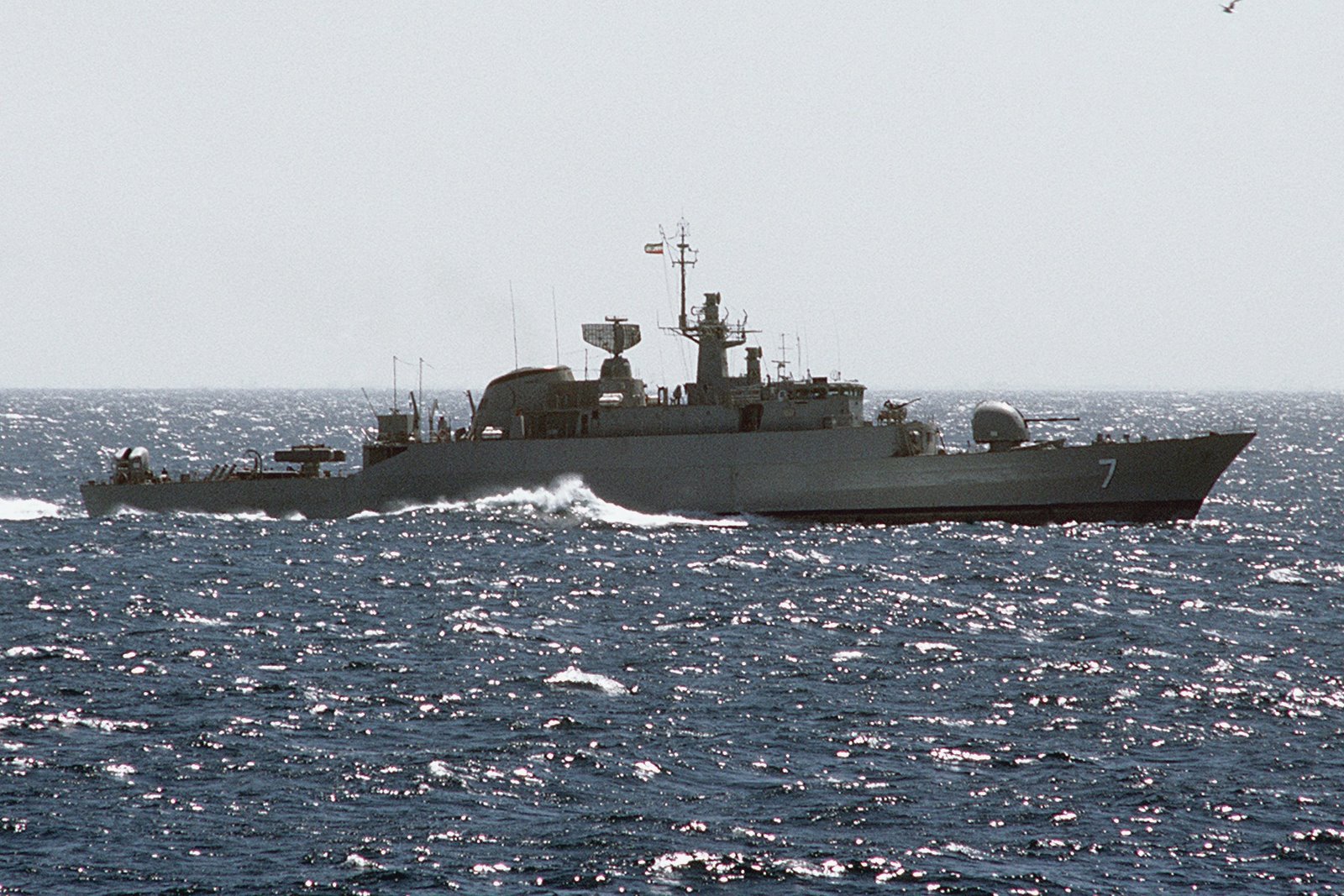 The USS Enterprise (CVN 65), USS Leyte Gulf (CG 55), and USNS Arctic (T-AOE 8) crossed the Suez Canal from the Mediterranean Sea to the Red Sea on Tuesday. On Wednesday the Israeli's began to protest very loudly by revealing that a pair of Iranian Navy ships were approaching the Suez Canal from the south and were preparing to cross on their way to Syria.
When I first heard this news, I began hoping that perhaps our Naval forces had passed their naval forces in the Red Sea somewhere, and someone was smart enough to get useful pictures for public communications. I seriously doubt that happened, but it should have.
The two Iranian ships are the corvette Alvand and supply ship Kharg, both pictured in this blog post. The Alvand is the flagship of the Iranian Navy. Displacing around 1,500 tons, the ship comes armed with 4 C-802 anti-ship missiles, a 4.5in gun, torpedo launchers, and various smaller machine guns and mortars. The US Navy has seen this class of ship before, in battle. During Operation Preying Mantis in 1988, the Iranian corvette Sabalan was left paralyzed and on fire from a 500 lb bomb from an A-6, while another pair of A-6s crippled the Sahand where she later sunk southwest of Larak Island following a Harpoon strike from the USS Joseph Strauss (DDG-16). For the sake of symmetry, I'll note the A-6s involved in Operation Preying Mantis that slapped around the sister ships of Alvand were from the VA-95 "Green Lizards" and flown off none other than the USS Enterprise (CVN 65).
The Iranian flagship Alvand is not a naval threat to anyone in the region, and is not why Israel is raising concern. The ship has terrible anti-air capabilities that are no match against the capabilities of the Egyptian Air Force, the Royal Saudi Air Force, the Israeli Air Force, or Carrier Air Wing One on the USS Enterprise (CVN 65). While the media portrayal of the Iranian Navy near the Suez is one of distressing concern, the reality is that corvette represents the biggest regional target at sea for thousands of nautical miles. The media may describe the presence of the Iranian corvette in the context of doubt, fear, and concern; but given Israel's outrage and tendency to be trigger happy - allow me to suggest the scariest place to be in the Red Sea today is anywhere near that ship. I note the irony between how the news narrative represents a complete disconnect between perception and reality.
Speaking of Israeli concern, assuming it is legitimate and not parochial; it likely has to do with the supply ship Kharg and not the corvette Alvand.
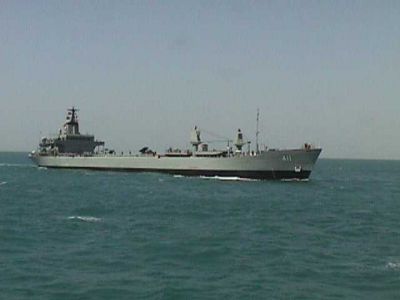 The supply ship Kharg is much more interesting. The Kharg is the largest ship in the Iranian Navy displacing around 33,000 tons and is a modified Olwen class fast fleet tanker. This is a big ship, and with the current tensions between Israel and Hezbollah, Israel is likely very concerned about what the ship is carrying. As a Navy ship rather than a commercial ship, the ship will not be searched for cargo so the concern by the Israeli's is that the ship could carry weapons to Syria where weapons can be unloaded and sent to Lebanon. There are rumors that go back several years that the Kharg has been often been observed in the Gulf of Aden delivering weapons from Iran to destinations like Eritrea and the Sudan.
If you follow the Wikileaks cables you will note that this known arms smuggling connection between Iran and Eritrea was how the Government of Yemen believed the Houthis were being armed, although the cables actually reveal that is not how the Houthis are being armed based on different intelligence.
Are the Israeli's being paranoid? Probably not. The Kharg is the best choice of vessel to move substantial arms from Iran to Hezbollah quickly and without harassment. It is around 2,150nm from Bandar Abbas, Iran to Jeddah, Saudi Arabia - where these Iranian ships made port last week. While I understand that a little corvette might have to make stops every few thousand nautical miles - even a corvette with the range of the Alvand - why does a fast fleet tanker like Kharg need a fill up after only a few thousand miles travel?
Probably because the tanker is carrying more than fuel.
What To Do
The Israeli's can get trigger happy in a hurry, so I have no idea what they will do. However, I noted with interest that PJ Crowley described the US position on the presence of the Iranian ships approaching the Suez Canal as one of "curiosity." OK, I buy that, I'm certainly curious as well. But the real question is what if anything should the United States do?
Well, if you are the US it depends if you think the Israel will attack the ships. If you do think Israel is going to get trigger happy, we should do nothing. However, if the US does not believe the Israeli's are going to attack the Iranian ships, this is what I believe the US should do.
It is more than a little disturbing to me that a ~1,500 ton Iranian corvette built in 1971 with 4 ASMs and no air defenses escorted by an old oil tanker can send the price of US oil up 1.8% for simply sailing on the ocean. Iran just significantly shifted an economic market in the US with a piece of shit corvette even though the USS Enterprise (CVN 65) was literally right there. Think about that a second...
An increase of 1.8% comes to $.67 per bbl of oil, and the United States uses 21,000,000 bbls of oil per day. That means that through soft power presence alone the Iranian Navy flagship, which by every modern naval standard is nothing more than a ~1,500 ton unrated corvette with a questionably trained crew and supported an old tanker, and yet the Iranian Navy just sent a $14 million shiver down the spine of the energy economy of the United States. To add insult to injury, that bump in oil cost could potentially sustain itself for several days while the Iranian Navy operates in that region.
How do we reconcile the ability of an Iranian corvette half way around the world to influence a US economic market with the rhetoric by the United States Navy leadership who attempts to link US naval power with US economy? How can observers not draw the conclusion that investors in this country have lost all association with American naval power and the sustainability of regional peace when an Iranian corvette can make this kind of economic impact while operating right next to a US aircraft carrier strike group? Investors in the US oil futures market must not even associate US naval power as a deterrent to economic disruption when oil shoots up 1.8% based on presence alone, and in this case the US naval power present is a carrier strike group. Is this a matter of stupidity or ignorance on the part of the investors, or does this say something about the US Navy's ability to articulate it's own value to the nation?
So, clearly the Navy has a communication problem... How can the US Navy address this? Well, if I was given 5-star rank for a day I would sail my Arleigh Burke class destroyer along side the Iranian Navy flagship for a "wave and hello" and take a photograph of the two ships side by side while underway. I realize that strategic communication is a forgotten, and perhaps lost art in the US Navy, but if you put a photograph on Navy.mil with the two warships in near proximity that illustrates the sheer size difference between the flagship of the Iranian Navy and a US Navy Arleigh Burke class destroyer, I will predict that the unofficial PASSEX is worth several thousand words to a great many reporters and Americans while also being a photograph worth about $14 million in savings to the US energy economy a day.
With a single photograph the concerns of an Iranian corvette threat to the Mediterranean Sea can be turned into an opportunity to communicate a visual public reminder of what US naval power looks like, and likely turns the Iranian naval threat to the Mediterranean Sea into the punchline of a joke - exactly what it should be.
Tuesday, February 8, 2024
Iran Continues to Improve Their Anti-Ship Ballistic Missile Capability
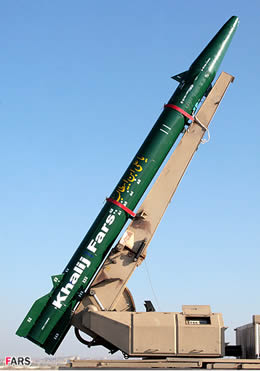 Anytime an article is using a title that says "Iranian Ballistic Missile Scores a Direct Hit on a Target Ship" I am interested. With that said, I'm not sure the anti-ship capability of a missile is being demonstrated well when the target ship is stationary.
Iran demonstrated today a new type of short-range ballistic missile (SRBM) based on the Fatah 110 platform, capable of hitting targets at a range of up to 250-300 km with high precision. During an operational demonstration the missile was fired at a target vessel floating in the Persian Gulf, scoring a direct hit. Accordingly, the new missile was named ‘Persian Gulf (Khalij Fars).Iran’s Fateh 110 is based on the Chinese DF-11A SRBM, and China has a whole bunch of DF-11A SRBMs. A few thoughts.
The missile apparently uses mid-course inertial guidance (INS) and an electro-optical homing seeker to achieve terminal attack precision. Previous versions of the Fateh 110 (also designated M-600 in Syrian use) used a tipped nose, while the current model has a rounded nose presumably housing the guidance kit. As the new version demonstrated in this test, the accuracy of the new missile is far better than the 0.3% of the range, attributed for the earlier model of Fateh 110 which relied only on inertial guidance. This type of solid-rocket propelled missile can carry a 450 kg warhead.
- Iranian ballistic missile technology continues to improve. Iran continues to invest in the improvement of their ballistic missile inventory and capability. Iran is exploiting the range and speed of SLBMs for maximum effectiveness. It is unclear what the top speed of a Fateh 110 is when on terminal descent, but point defenses like SeaRAM or CIWS are unlikely to stop this missile.
- The Fateh 110 is a credible weapon system. The simplicity of the system insures low cost and high lethality. That may also make the missile easier to counter, but the requirement that an enemy must counter an attack by a low cost weapon system is an important indicator that a weapon system is well designed. Iran's shorter range approach to anti-ship ballistic missiles removes a lot of the difficulty China faces with the DF-21D.
- The old art of saturation attacks is not lost on the Iranians, indeed it can be described as appearing to be the tactic intended in many of their capabilities. Given the limited stores of defensive missiles on ships, no Navy can afford to get caught up in an equal exchange of missile rounds with Iran as their inventory continues to grow. It's basically the old Soviet saturation model, eventually the number of missiles the Soviets would deploy would overwhelm the defense.
Thursday, September 30, 2024
On Propaganda Wars
This video appears to originate from MEK (but credit IranNTV). MEK is still listed by the State Department as a terrorist organization. Regardless, this video is a classic use of social media for propaganda purposes.
Very clever stuff if you ask me. This kind of stuff is blocked in Iran though.
Very clever stuff if you ask me. This kind of stuff is blocked in Iran though.
Wednesday, September 29, 2024
The Swarm
 It is very easy to look at this technology and be dismissive... but that is our weakness isn't it? We are a technology society and look at the specifics of technology to form the basis for our judgments. If a technology doesn't conform to our conceptual expectations regarding capability, then 'it doesn't pass the smell test' and is usually dismissed with sarcasm. I expect there is plenty of sarcasm to be easy shared upon examination of this little piece of tech being fielded by Iran.
Iran's state TV says the country's powerful Revolutionary Guard has received its first three squadrons of radar-evading flying boats.Radar-evading? Not likely. I'd also add that as a small sea plane this little thing almost certainly requires sea state 1 to land and take off in water - meaning it is highly dependent upon environmental conditions. Finally, as a machine of war I am skeptical how reliable its communications suite is, not to mention unimpressed with its token machine gun.
The report says the domestically made craft can be used for surveillance and can carry guns and transmit data. Its production is part of Iran's effort to boost its arsenal and military capabilities despite international sanctions over the country's controversial nuclear program.
Iran announced last year it had successfully tested the plane, dubbed the Bavar-2, or Confidence-2. A flying boat is a seaplane with a hull that allows it to land and travel on water.
See how easy it is to dismiss this stuff solely on the examination of technology? I'm being kind to some of the comments I have already seen from others...
But as I observe Iranian military capabilities in the maritime domain, it isn't the specifics of the technology that concerns me - it is the commitment Iran is making at the tactical level to technologies that fit a certain capability set intended to exploit specific capabilities fielded by their opponents. The Iranians appear to believe that swarm tactics give them advantages over the capabilities of western naval powers (specifically the US) to which they define as their greatest threat. The question is: In the confined waters of the Persian Gulf, does quantity of small, agile forces leveraging swarm tactics offer a tactical advantage over the capabilities of high quality, larger but numerically inferior naval vessels of the US? Is the break point the number of assets or is it a capabilities based metric of combined arms that can be leveraged?
When you start going down the road of what 20 small boats at 35+ knots attacking a destroyer looks like, the questions that come to my mind are - how many .50 cal machine guns do you have on your ship? How quickly can you get ammunition to those guns if they must sustain fire over long periods of time? How protected are those positions from incoming machine gun fire?
The weakness of our Navy isn't air attack from a tactical fighter, nor is it the ASM attack from a fast attack missile craft - indeed fighting those capabilities are the strength of our ships. The weakness comes in the form of swarms - and mixing several of these flying boats with a couple dozen boghammers in a swarm attack will result in:
- CIWS ammunition being exhausted quickly
- SeaRAM ammunition being exhausted quickly
- Reliance on small arms to fight off the attack
How will those doors work when a grenade goes off on top of your MK 41? I have seen folks laugh at the idea of the MK 46 30mm guns on the LCS - but I'd like to see these guns incorporated into all surface combatants, and specifically located in a way where they can decompress the angles and shoot targets very close in.
I'm the first to admit I am completely unimpressed with the technologies fielded by the Iranian Navy and IRGC - but if deployed by tactically leveraging their numerical advantages with sound formations and dedicated trained personnel, our ships will find themselves in a world of trouble if we have to fight numerically superior swarms in confined shallow waters. The Navy talks about not wanting to fight fair, but the question is whether our Navy ships have enough weapons to combine combat power against an enemy - and at point blank range that can be problematic for ships designed specifically to fight at standoff ranges.
And fighting at point blank range is exactly what all these fast, low signature platforms Iran is developing are intended to do.
Tuesday, August 17, 2024
The Iran Questions
 I think The Atlantic deserves a lot of credit. They have effectively leveraged the reputations of their intellectual capital towards bringing about a serious and constructive discussion on the issues related to the Iranian nuclear program. It started with two contributions in the most recent edition - this article by Jeffery Goldberg and this article by Robert Kaplan.
Impressive is the follow on articles here, here, here, here, here, and too many other places both on the site and around the web to link. What we are seeing is fantastic journalism being leveraged to generate a Web 2.0 model for the collaboration and debate of serious issues and ideas on the web, and it is so rare in American politics today that I think some folks are overreacting and believe the sky might be falling. Hardly, the discussion is both healthy and informative - something that has been missing in regards to serious national security debates in the 21st century.
There are three key questions emerging that I think are worth a blog post.
- Will there be military action against the Iranian nuclear program?
- If military action is inevitable, who will take that action against the Iranian nuclear program?
- What is a legitimate plan C that doesn't involve military action?
The answer to the first question is - probably, yes. I do not believe the current US diplomatic effort has a chance in hell succeeding. I'm old school when it comes to diplomacy, I firmly believe Roosevelt's model was exactly right, and in particular with the Middle East - every approach must be speak softly and carry a big stick. I think the US does a terrible job speaking softly, because in my opinion all we do is loudly offer sanctions as a solution to every problem. I also think that when it comes to the diplomacy of carrying a big stick, the US instead brings a tiny twig of bamboo. This is a discussion about nuclear weapons, and our stick is a conventional military confrontation that the whole world believes would do little to hurt the government of Iran.
Both Progressives and Conservatives will argue that President Obama is somehow different than President Bush when it comes to Iran. I don't see the difference - and if it exists - it is too nuanced for the Iranians to notice. At the end of the day both presidents used sanctions as the carrot and a twig represented by conventional military power as a stick. I don't think that model has a chance in hell of working. Want results - ditch the sanctions and work on issues that actually mean something to Iran - like investment and trade with a focus on economy. We didn't have to kill the Iranian economy with sanctions - it was already dead.
But we also need a bigger stick. We are talking about a nuclear weapons program - one that the national security establishment of this country has significant concerns with (enough that Presidents imply the threat of military action). The stick needs to be proportional to the threat - and if the threat is that Iran would allow the use of nuclear weapons under any conditions - then perhaps we need to imply the use of nuclear weapons against Iran. I'm not a big fan of MAD, nor am I a fan of preemptive strike - but I think a hint of both would be constructive towards making our twig look a bit more like a Louisville Slugger. It will also do wonders for getting the attention of anyone in the world who doesn't understand how serious we take this issue.
Conventional military power is not a threat to Iran. Invasion is beyond silly to contemplate, and beyond the capacity of the DoD when forces are engaged in Afghanistan. Conventional air strikes would have to be over a long period of time if they were going to be effective towards the objective - and even then I think most people agree that is simply a delaying effort with no tangible impact on the calculations of the Iranian government. Threaten to put a nuclear bomb on target in Tehran - and the whole world will sit up with attention. I know folks think it is crazy to suggest that nuclear weapons should be used as a stick in foreign policy - but remember that is the exact threat this whole issue is about to begin with. We are either serious people with serious solutions to serious problems - or we are not. I don't think most Americans are as serious about this issue as they pretend to be, and the vast majority have white lines and red lines they simply won't cross because they fear being judged by their peers. Yes, I truly believe that politically correct peer pressure no different than what one might find on an American high school playground is a player in international politics - and it why those who don't give a shit about peer pressure get their way in the 21st century. Iran, and North Korea, and even China to a large degree - don't give a shit what us Westerners think.
Since sanctions will not be removed, and the chances of Barack Obama making a threat to Iran with nuclear weapons is very near nill - I suspect diplomacy will fail and there will be a military confrontation with Iran over their nuclear program.
 Which leads to the second question...
A recent poll of opinions in the Middle East conducted by the University of Maryland in conjunction with Zogby International is a must read, because the results are remarkable. In virtually every category the Obama administration has effectively lost every single gain made with his speech in Cairo, Egypt - meaning there has been no progress at all by this administration shaping opinions in the Middle East. Even more remarkable, the poll reveals a spectacular failure on the part of the Obama administration in regards to the Iranian nuclear program issue. The question I have regarding the results is whether the poll represents legitimacy for Iran (in the eyes of Iranian leaders) on the Arab street regarding their pursuit of nuclear weapons? I do not know that answer.
Consider the following two fictional news stories:
The United States Air Force bombed several Iranian nuclear facilities last night in a daring middle of the night raid that destroyed several dozen nuclear facilities across Iran. In response to the attack, Iran attacked several neutral flagged ships in the Persian Gulf and destroyed an oil terminal in Kuwait near where US cargo ships were docked in support of Iraq war operations. A Saudi super tanker was still burning in the Persian Gulf this morning as US Navy vessels were on the scene to extinguish the fire. Saudi Arabia and Kuwait launched a protest against the actions of the United States in the United Nations this morning, blaming the United States for the attacks against the Sunni nations around the Persian Gulf.Fill in the blank. Tell me, how exactly does Iran attack anyone besides the United States in the region in retaliation for the Israelis attacking Iran? If Iran attacks Saudi Arabia, or Kuwait, or any regional country other than Israel - how do they justify the attack to the Arab street? Is the average Sunni Arab going to accept the Iranian line that the Persians attacked their country because Israel bombed them first?
The Israeli Air Force overflew Saudi Arabia and bombed several Iranian nuclear facilities last night in a daring middle of the night raid that destroyed several dozen nuclear facilities across Iran. In response to the attack, Iran attacked several neutral flagged ships in the Persian Gulf and destroyed an oil terminal in Kuwait near where US cargo ships were docked in support of Iraq war operations. A Saudi super tanker was still burning in the Persian Gulf this morning as US Navy vessels were on the scene to extinguish the fire. Saudi Arabia and Kuwait launched a protest against the actions of the Israel in the United Nations this morning, blaming _____ for the attacks against the Sunni nations around the Persian Gulf.
It is difficult to imagine how Iran can lash out against any of the Arab nations in the region after an attack by Israel without flushing Arab street opinion down the toilet. It isn't difficult to see how they might come after the US - that is believable, but the whole 'region up in flames scenario' doesn't quite register with me.
There is no doubt in my mind that the US can absolutely crush Iran. The Iranian naval and air force capabilities are only capable of achieving a major surprise attack - not of achieving success in a direct confrontation. There is no military reason why Iran couldn't be destroyed by conventional military power, but there are very serious and important political reasons why it is a very, very bad idea that the US would even think about starting a war with Iran. If we start the war, we put every one of our partners in the region at risk. The same is, to a large degree, not true if Israel starts the war - because the Sunni Arab will not accept that a Shia Persian can kill a Sunni Arabs simply because the Israeli Jew gets militant. That ain't how politics in the Middle East works.
So I firmly believe that the US will not, under any circumstances, put our Arab allies at risk to retaliation by attacking Iran. That also means the US won't be coming to the aid of Israel if they attack Iran. The only way the US enters into a war with Iran is if 1) Iran attacks us directly, or 2) if Iran attacks one of our Arab allies. Because Israel already knows this, I believe they are doing everything possible to convince us to start the war so they don't have to take the blunt of the consequences. With the latest polls showing Iran has the backing of the Arab street, I think it is a legitimate possibility that Iran wouldn't attack the US or Arab nations in the region and prefer instead to fight Israel only and primarily via proxy with Hamas and Hezbollah.
Which leads us to the final question.
Of which I believe this and this discusses an option that is not outside the realm of possibility.
Subscribe to:
Posts (Atom)