
 Proceedings subscribers (USNI members) have won again. The rest of you need to become a USNI member so you stop missing out on excellent content like the June issue of Proceedings Nobody Asked Me But... section by Rear Admiral George Worthington, U.S. Navy (Retired).
Naval Special Warfare (NSW) forces need to operate from the sea. For long-range open-water transits they depend on the Navy. But they rarely practice with blue-water ships, which are not outfitted to support U.S. special operations forces (SOF) with space for staff planning; troops; stowage for ammunition, small arms, and demolitions; a diving-recompression chamber; or dedicated communications terminals. Worst of all, amphibious ships are earmarked full time for Marine embarkation and not available to SEALs, especially with the 2006 establishment of Marine Corps Special Operations Command. SEALs and Special Warfare Combatant-craft Crewmen (SWCC) need dedicated open-ocean ships.Rear Admiral Worthington goes on to answer the question in quality detail. I thought it was particularly interesting that he rejects the LCS and suggests the old Newport class is closer to the mark. I'm not sure I either agree or disagree with his points, but I think it goes to the heart of a serious limitation of LCS in that the platform lacks the endurance to be a credible afloat forward staging base.
NSW comprises several SEAL teams, a single SEAL delivery vehicle (SDV) team, and special boat teams. These commands are blended together for deployments as a squadron, and all report to the commander, U.S. Special Operations Command through the NSW Command headquartered in Coronado, California. Overseas, they report to the geographical combatant commanders.
The teams—supported by various units and U.S.-based groups—catch rides in whatever surface ships or submarines are allotted for a given operation. But, as noted previously, the surface ships are not oriented to special operations forces that could be Army Special Forces, Marine Special Operations, or (most usually) Navy SEAL and SDV teams.
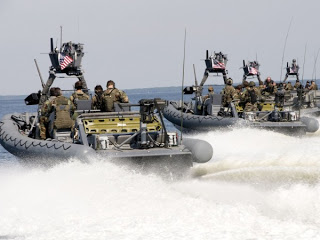
NSW craft include the 82-foot MK V special-operations craft, now approaching 20 years’ service. This has an aluminum hull, water-jet drive, some crew-served weapons, and is capable of 50-plus knots and a 600 nautical-mile range. Next down, the 36-foot rigid-hull inflatable boat, a workhorse capable of 40 knots, has a crew of three SWCC and can transport eight SEALs. At the bottom of the list is the 15-foot combat rubber raiding craft, made by Zodiac of North America. This carries nine passengers at 30 knots for 60 nautical miles. SDVs are specialized, free-flooding underwater insertion vehicles.
So why do SEALs need a dedicated blue-water support craft?
The MLP might actually a good fit, but with only 3 planned there will never be enough MLPs to meet the demand.
By the way, last week at GenNext Rear Admiral Worthington discussed this topic among others, and below is listed the key takeaways from his presentation:
- The SEALs have come a long way since their formation in the 60’s. Vietnam was the trigger—they became an instrumental part of the armed forces for covert action. After Vietnam funding dried up until the 80’s and the SEALs had a revamp
- In Rear Admiral Worthington’s opinion, too much has been leaked already regarding the killing of Osama Bin Laden. Identifying the SEALs at the Special Forces team responsible for the raid only puts them in more danger. The SEALs are responsible for the most elusive and dangerous jobs in the world, their privacy and ability to execute can potentially be affected by too much exposure.
- The OBL operation was a complicated one but something the SEALs could “do in their sleep”. Rear Admiral Worthington noted, “I bet their heart rate didn’t go above 92 when they stepped in that compound. “
- Mobility issues for the SEALs remain. They need dedicated helicopter squadrons for special operations and dedicated surface ships. He also touched on the shortfalls of the current Newport Class LST/Littoral Combat Ship (LCS).

No comments:
Post a Comment