
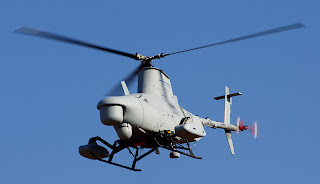
 Amy Butler of AviationWeek has the scoop on the Fire Scout downed in Libya. Basically, one of the 2 Fire Scouts operating from USS Halyburton (FFG 40) in support of NATOs military campaign against Libya was shot down while doing some targeting work. I only have a few thoughts.
First, while I can't say I like losing any aircraft, I am very pleased to see that field testing the Fire Scout included putting the system in a position where it could be shot down. Yes it sucks to lose a drone, but it is part of the evaluation process in determining the vulnerability, reliability, and contribution of these type of systems in combat zones.
Second, from the outside looking in, there are several things we don't know - like where USS Halyburton (FFG 40) was in relation to the drone when it went down. Is this how naval vessels will extend ranges in littoral operations, and is it possible that a better weapon systems on the LCS could leverage the Fire Scout with fires from the sea? USS Halyburton (FFG 40) has had a rather remarkable deployment to date, including quite a bit of excellent largely unreported work off Somalia before being deployed to Libya. It really is too bad for the Navy that NATO has done such a poor job allowing PAOs to contribute the stratcom side of that ships deployment - because the tech makes it more interesting than what much of the rest of the fleet is doing (unfortunate, but true).
Finally, there is a cost-value relationship at work with unmanned systems, and ultimately the Navy can make some value judgments regarding the loss of the Fire Scout vs the loss of an alternative platform performing a similar mission. I note the reaction to losing the drone was curiosity rather than outrage. I think it is important, because drones appear to give Navy commanding officers more flexibility in taking risks that might otherwise not be taken with a manned platform. I don't know about you, but I think it is a healthy thing that COs have the option of taking greater risks in combat - as long as that option is exercised wisely.

No comments:
Post a Comment