
 Interesting that discussing these topics is what the Air Force calls "dereliction of duty" - hopefully the Navy doesn't follow such an incredible model of blatant stupidity. Clearly the Air Force believes strongly in the letter of the law, and not the intent. If it is possible for the DoD to be less responsible with public information on the internet, including pornography, I'd be shocked.
Basically the story goes like this. There is a WL cable out there that nobody in uniform without proper clearance can read, but bloggers like me and the rest of the American public can read. The cable originating from the London embassy and basically gives an account of experiences of the Captain of the HMCS Ville de Québec (FFH 332) operating off the Somali coast in 2008.
Since I won't be linking to the actual cable, I'll just link to this Foreign Policy article that is also probably blocked by most military establishments.
These were the early day of Somali piracy, when some of the high-profile hijackings were just beginning to occur. No international task force montitored the waters those days; no one was yet sure just how to handle the threat -- or just how deep the treat really went. The Canadian captain, Chris Dickison, believed that the hijackings were just the tip of the iceberg: "Dickinson also said clear links between the pirates and established terrorist networks exist. In many cases, they are the same people, using the same routes. Most commercial maritime operators in the area are surprised that the international community does not do more to disrupt the linkages." (When pressed for more details, the embassy source apparently dubbed further information for "Canadian Eyes Only.")In December of 2008 CENTCOM stood up Task Force 151, and now we can add NATOs Operation Ocean Shield and EU NAVFOR as other examples of anti-piracy activities that have come about since these observations were made by Captain Dickison.
The 2008 cable also goes on to provide a bit more insight into what happened to the MV Faina itself -- an international intrigue that in some ways is still unfolding. When the ship was first apprehended, it became clear that it was transporting weapons to Kenya -- on what appeared to be the behalf of the government of Southern Sudan. This was later confirmed in cables released by WikiLeaks earlier this year. But it's never been totally clear where all the weapons ended up after they were released by the pirates (in exchange for ransom.) The 2008 cable offers some insight: "Dickinson added that the weapons on board the MV Faina, still being held hostage when the cable was written, were all offloaded onto Somali shores."
Watching Somalia is always interesting, but for years no one has wanted to discuss links between pirates and terrorists because there is no political will anywhere to do anything about it. First thing is first though - we are going to quit ignoring the problem. See bold from this article:
Vice Adm. Mark Fox, who is commander of the U.S. Navy's Bahrain-based Central Command fleet, warned that the pirates' growing use of larger, often commandeered ships, is a "game-changer" that allows them to go farther out to sea where Navy ships are not often present.I'm playing the trump card, if anyone in the world would know for certain whether links exist between al Shabab and pirates - Vice Adm. Mark Fox is the man. He is noting the link, the link exists, we are no longer ignoring the link. It's there. Period. What it means is a discussion. What we do about it is a discussion. Regardless, lets quit pretending that Somalia is 100 separate small cups and admit that Somalia is everything in one big ugly bowl.
The pirates' links to al-Shabab insurgents are also a worry, Fox said.
Fox recommended more effort to hit pirate supply lines and track their money. He stopped short of calling for a greater use of military force, but he said the coalition must go after pirates with the same intensity they use when targeting terrorists.
"We have not used the same level of rigor and discipline in terms of following the money on the counter-piracy piece as we have the counterterror," Fox told reporters during a breakfast meeting. "We should be applying the same techniques."
We are going to quit pretending the militia force being stood up in Puntland is an anti-piracy force. You reporters who say such nonsense need to get better sources, Puntland is not building an anti-piracy militia of security contractors, they are building a private Army with a little nod and wink from well financed investors, and they are going after Mohamed Said Atom. Weapons runner for al Shabab? Yep. Political opposition of Mr. Abdurrahman Mohamud Faroole? Yep. MSA's a generally bad dude, and nobody cares if another African warlord gets killed. I have no idea to what extent Erik Prince is involved with Saracen in Puntland, but at the end of whatever rainbow he is chasing in Puntland you can bet there is a big pot of gold - and the motive isn't for some higher purpose than money.
We are going to quit pretending Mr. Abdurrahman Mohamud Faroole isn't in deep with pirates - he is. Puntland is a pirate state, and Mr. Abdurrahman Mohamud Faroole is getting kickbacks for ransoms, because he could never hold power otherwise. Faroole isn't a good guy, and just like the vast majority of people in power in Africa - he can be bought, and almost certainly is being bought off by folks with financial interests in the resources in Puntland. Anyone who believes the TFG in Mogadishu has any influence at all in Puntland is dreaming. They don't, and they don't have any influence in Somaliland either.
The reason we have to state clearly the mess in Somalia right now is because governments are changing the rules, and there will be blowback. When South Korea, Malaysia, and now India raided ships occupied by pirates they upped the stakes for everyone. The reports of torture that are making it into the media prompted the following statement today:
BIMCO, the International Chamber of Shipping, INTERCARGO, INTERTANKO and the International Transport Workers' Federation are outraged that Somali pirates have executed, apparently in cold blood, a seafarer on the merchant ship Beluga Nomination which had been attacked and hijacked by armed pirates on 22 January in the Indian Ocean, 390 nautical miles north of the Seychelles. Three seafarers were reportedly taken aside for 'punishment' after an attempt by the Seychelles coastguard to free the hostage crew resulted in the death of a pirate. We express our deepest sympathy to the seafarers involved and to their anxious families.Turns out the pattern is broader than some imagined, following India's assault of a Thai mothership the other day it has been learned that 5 crew members were allowed to starve to death.
The international shipping industry is truly disturbed at reports that pirates have been torturing seafarers physically and mentally, often in the most barbaric ways, including hanging them over the ship's side by ropes around their ankles with their heads under water and even subjecting them to the horrendous practice of keelhauling.
We wholeheartedly condemn these violent acts and once again strongly urge governments to empower their naval forces to take fast and robust action against pirates, and the vessels under their control, before passing ships are boarded and hijacked.
This latest particularly atrocious action appears to represent a fundamental shift in the behaviour of Somali pirates. The cold-blooded murder of an innocent seafarer means that ship owners and their crews will be re-evaluating their current determination to ensure that this vital trade route remains open - over 40% of the world's seaborne oil passes through the Gulf of Aden and the Arabian Sea. The shipping industry will be looking at all possible options, including alternative routes, which could have a dramatic effect on transport costs and delivery times - piracy is already estimated to cost the global economy between $7-12 billion per year.
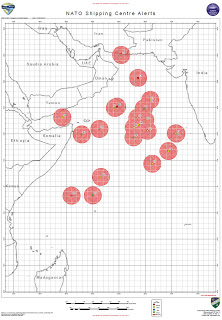
Look, India had no choice, the action was described as 100 km off Kavaratti Island, Lakshadweep. Pirates have been operating motherships off the Indian coast for months now (see IMB, NATO, EUNAVFOR, or ONI for more data) and it didn't take much evaluation of the pirate patterns for everyone to realize the pirates were somehow able to get logistics support on land somewhere within Indian territory for the motherships to consistently operate in those areas for that long. India had to send a strong message, and they did. Vice Admiral Mark Fox called out India just last month to take actions against pirates off their own coasts - public criticism by a US Admiral of Indian resolve in the fight against piracy could politically not go ignored by the Indian Navy. The Indian Navy and Coast Guard have made multiple hits with consistent success against pirates, and I suspect the pirates will adapt accordingly.
Both South Korea and Malaysia acted in what they believed were their best interests as well. Governments changed the rules of engagement. South Korea went with zero tolerance, Malaysia used the standard of successful citadel defense, and India protected their home waters. It is difficult to fault any government for any specific action taken.
But that leaves the maritime industry in a tough spot, and now they have to adapt as well. The news that crew members from pirated vessels are being keelhauled combined with the murder of a crew member on the Beluga Nomination, and now new revelations that crew members from the Thai fishing vessels being allowed to starve to death - adds pressure on the maritime industry to take actions of their own. The press release quoted above discusses evaluation of "alternative routes," which to me reads like a game of chicken between the industry and governments. If governments think they will win that game, they are wrong. If the shipping industry decides to start taking alternative routes away from piracy originating from Somalia, the price of everything is going to go up - ALOT - and politicians will be forced to act, or be replaced in their next election for watching the price of everything go up and doing nothing about it. Sorry, but the maritime industry is more powerful due to the amount of money involved than just about every other industry in the world, and if they find a single voice - no country tied to the global economy can stand up to that pressure.
When any one group - whether the pirates, the nations providing naval forces, or the shipping industry - changes the rules, everyone must adjust their rules. We have already seen naval forces change the rules, followed by pirates changing the rules regarding the treatment of hostages. Should the maritime industry decide to change the rules, it is a good bet it will hit all of us in the wallet.

No comments:
Post a Comment