Wednesday, April 22, 2024

HASC Seapower and Projection Forces Mark

Received this from HASC SPPF Subcommittee Chairman Rep. Randy Forbes (R-VA) office this morning.  A whole lot of goodness here...but admittedly, the bar for goodness is set pretty low these days.  This is the mark of a Chairman with a clear view of American Seapower and the guts to push for it.

----------------------------------------------

Carriers:
·         Authorizes continued funding for CVN-79 and first year funding for CVN-80 planning and long lead item procurement.
·         Grants economic order quantity (EOQ) authority for the construction of CVN-80 and CVN-81 in order to allow the Department to purchase components in batch form, reducing overall cost of items procured.
·         Continues full funding authority for the refueling and complex overhaul (RCOH) of CVN-73.
·         Provides incremental funding authority for the RCOH of five Nimitz class aircraft carriers: CVN-73, CVN-74, CVN-75, CVN-76, and CVN-77.
·         Instructs GAO to study costs and delays to the Navy's two-phase contracting strategy for CVN 79, a plan that is likely to slow CVN-79 construction by 18 months.

Destroyers:
·         Provides for the construction of two Arleigh Burke-class guided missile destroyers.
·         Increases funding authority for Aegis destroyer modernization in FY16, following removal of five destroyer mods from the FYDP.
·         Authorizes the Navy to begin Flight III destroyer acquisition including ability to modify existing multiyear destroyer construction authority.

Littoral Combat Ship:
·         Authorizes the construction of 3 LCS.

Amphibious Ships:
·         Accelerates advance procurement of the new LX(R) amphibious ship by two years.
·         Authorizes funding for the completion of LPD-28.
·         Authorizes advance procurement for the 5th Afloat Forward Staging Base.

Auxiliary Ships:
·         Authorizes procurement of the first TAO(X) auxiliary oiler ship.
·         Moves funding for this ship into the National Defense Sealift Account to provide Navy additional flexibility in completing construction.

Virginia Class Submarines:
·         Authorizes the construction of two Virginia class submarines, continuing the highly successful block buy.
·         Expresses support for incorporating Virginia Payload Module (VPM) into the entire Block V Virginia class buy, as opposed to the Navy's current plan to only equip two-thirds of the Block V Virginia class with VPM in the 2020s.

Ohio Class Replacement:
·         Provides $1.39 billion in R&D for SSBN(X), representing the Navy's largest R&D investment.
·         Moves this R&D funding into the National Sea-Based Deterrence Fund, created in last year's NDAA.
·         Reiterates the fact that the ORP acquisition program will "have an extraordinary and detrimental impact to investments in the shipbuilding and construction, Navy, account if traditional funding levels of this account are sustained.  The committee also believes that the entirety of the Department of Defense investment capabilities need to be used to recapitalize this strategic asset."
·         Expands the authorities of the National Sea-Based Deterrence Fund to include incremental funding authority, Economic Order Quantity authority, and an expanded reprogramming authority from the entire DoD to support SSBN(X) with the goal of preserving stability in the SCN account in future years.
·         Calls attention to the "serious resource challenges" inherent to ORP and instructs GAO to assess technology challenges and industrial base implications with the purpose of reducing or preventing cost growth and schedule risk in the program.

Cruiser Modernization/BMD Demand:
·         Prohibits the removal of BMD capabilities from any Ticonderoga-class cruiser until SECNAV certifies Navy has obtained BMD capabilities required by the most recent Navy Force Structure Assessment.
·         Prohibits the retirement, inactivation, or storage of Ticonderoga-class cruisers and Whidbey Island-class amphibious ships.
·         Requires the modernization of two cruisers using previously authorized and appropriated SMOSF funds.
·         Limits the term of cruiser modernization availabilities to 2 years, preventing unnecessary layup of these assets and reducing the likelihood that they may be inactivated at a later date.

Tomahawk Block IV: 
·         Increases Tomahawk procurement to a minimum sustaining production rate of 198 missiles.

MQ-8 Fire Scout:
·         Increases procurement to minimum sustainment rate of 5 air vehicles.

Long Range Strike Bomber:
·         Expresses strong support for the new bomber program as a "key element" in DoD's planned investment in long-range strike.
·         Authorizes the full amount for the program that DoD can execute in FY16, given contract award delays.
·         Instructs GAO to complete an assessment of technology challenges and cost implications associated with LRSB.

KC-46A Tanker:
·         Expresses strong support for KC-46A Tanker as a critical enabler of power projection.
·         Funds the program at the maximum level DoD can execute in FY16.

UCLASS:  Expresses strong support for unmanned carrier-based, long-range penetrating strike capability, specifically stating, "The committee believes that sea-based, long-range strike capabilities have incontrovertible merit and have been an integral element of the U.S. carrier air wings in the past.  Looking ahead, this capability may be the most important capability that the aircraft carrier can provide in contested environments and anti-access/area-denial scenarios.  The committee believes that pursuit of a long-range penetrating strike capability should therefore be a critical focus of naval investments.  The committee also believes that the capabilities offered by unmanned aviation may be the only capability that can support this mission requirement."

Combat Logistics Force Assessment:  Calls for an independent assessment of anticipated future demands of combat logistics force ships and challenges these ships may face in contested maritime environments.  Specifically the review shall include an assessment of CLF "operating in a dispersed manner and not concentrated in carrier or expeditionary strike groups, in accordance with the concept of distributed lethality of the Navy" and an assessment of the force to support Naval assets "engaged in major combat operations against an adversary possessing maritime anti-access and area-denial capabilities, including anti-ship ballistic and cruise missiles, land-based maritime strike aircraft, submarines, and sea mines."

Mine Countermeasure Master Plan: Requires SECNAV to submit a mine countermeasures master plan concurrent with annual budget requests which assesses degree to which current and future capabilities can meet operational plans and contingency requirements.

AMDR Assessment: Calls for a review of the maturity of Air and Missile Defense Radar and the Navy's plans for developing, testing, and integrating AMDR. 

Naval Electric Weapons Systems Fielding Plan:  Notes that electric weapons, such as directed energy and electromagnetic railguns, have "the potential to provide revolutionary new capabilities for Navy platforms, including increased range, increased safety, and deeper magazines than conventional weapons.  The committee believes that such system will be important in the future to counter cost-imposing strategies in an anti-access environment where swarms of low-cost weapons could be used to overwhelm higher-cost, limited numbers of defensive weapons."  As such, the mark instructs SECNAV to develop a plan for fielding electric weapons for both the current and future fleet, including details regarding allocation of the requisite power and space for the fielding of such systems.

Maritime Security Program: Reiterates the critical role that the Maritime Security Program provides the Department in that it provides on-demand "economical commercial sealift capacity, assures a United States-flag presence in international commerce, supports a pool of qualified United States-flag vessels during times of war or national emergency, and serves as a critical component of our national security infrastructure."

Shipbuilding and Industrial Base: Expresses concern regarding the health of the surface combatant industrial base.  "While the Navy public shipyards are expanding to meet significant workload increases associated with the growth of unplanned Nimitz-class carrier work and the nuclear undersea warfare industrial base is programmed to increase their capacity with the introduction of the Ohio-class ballistic missile submarine replacement program beginning in fiscal year 2019, the committee notes that a limited shipbuilding and conversion Navy account may disproportionately and irrevocably impact the non-nuclear surface combatant industrial base."  The language continues, "The committee believes that continued long term, multiyear procurement and block buy contracts are integral to sustaining the overall industrial base."


Coast Guard Polar Icebreaker: Expresses the view that "the administration has inadequately valued the necessity to procure required icebreaker capability.  The committee believes the failure to acquire all domain access capability in polar region expeditionary may irreparably harm Department of Defense national security mission, and may leave the Department in which the Coast Guard is operating unable to meet its anticipated future responsibilities…"

Oscar II SSGN Modernization


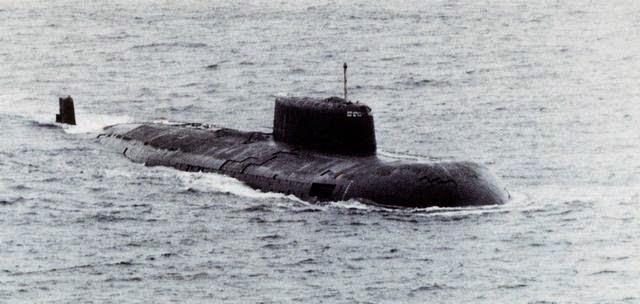
Oscar-class SSGN, Undated (U.S. Department of Defense)


A few weeks ago a colleague passed me a Google translation of a TV Zvezda report on the Russian Navy’s plans for fielding advanced cruise missiles . Written in reaction to ADM William Gortney’s Congressional testimony in March that touched on Russian cruise missile threats to North America, the article initially highlights how Yasen-class attack submarines will carry up to 24 3M-55 Oniks (SS-N-26) ASCMs or 3M-14 Kalibr LACMs; presumably the sub can also carry 3M-54 Klub (SS-N-27) ASCMs. This information is not new in open source reporting.
What was new, at least to me, was the article’s assertion that the surviving Oscar II SSGNs’ 3M-45 Granit (SS-N-19) ASCM launchers will be replaced with “universal launcher” cells that can each contain up to three Oniks or Klub missiles. In doing some online digging, there have been rumors on non-authoritative sites for the last few years that Oscars undergoing modernization will receive this upgrade. The Zvezda report is the first one that is authoritative.
It’s impossible for me to say whether a launcher cell that can house three Oniks or Klub missiles can actually be integrated within the former space occupied by a Granit cell. That kind of question is never as simple as ‘does the peg fit in the hole?’ For the purposes of this piece, though, I’m going to assume that the hull and mechanical implications of the change can be readily accommodated.
The takeaway is that an Oscar II with the new launcher cells would be able to carry up to 72 advanced cruise missiles. That’s very impressive. Not only would the sub pose a formidable threat to naval battleforces, but it could also pose a medium-range land-attack threat. It is reasonable to interpret Oscar IIs with these capabilities as ‘gapfillers’ that account for fiscal or technical difficulties building out the Yasen-class.
A key follow-on question, though, concerns the means by which a modernized Oscar II would receive over-the-horizon anti-ship targeting cues. The Cold War-era method for doing this was fraught with exploitable vulnerabilities. A more modern approach would still likely be dependent upon cues from reconnaissance aircraft, space-based sensors, or perhaps a shore-based fusion apparatus. None of these are devoid of exploitable vulnerabilities, either. While there is no guarantee that a U.S. or NATO battleforce would be able to effectively blind, deceive, or otherwise degrade Russian oceanic surveillance-reconnaissance-strike systems in the event of a conflict, there is no guarantee that those systems would be able to successfully target their prey either. The principles I proposed last fall for maritime scouting and anti-scouting competitions would almost certainly apply.
Another question concerns their patrol areas. I have never seen any open source reporting of an Oscar deployment outside Russia’s maritime periphery. From their 1980s introduction through the present, their principal task has been serving as part of the Russian homeland's ‘outer layer’ defense against U.S. carrier strike groups. Oscars simply could not conduct over-the-horizon anti-ship engagements very effectively outside the coverage of Russian oceanic surveillance-reconnaissance systems. With a notional land-attack capability, however, modernized Oscars could conceivably be deployed further forward. For example, modernized Oscars might be used to threaten land targets reachable from the southern Norwegian Sea, the North Sea, the Sea of Japan, or the Northwestern Pacific. This bears watching.

The views expressed herein are solely those of the author and are presented in his personal capacity. They do not reflect the official positions of Systems Planning and Analysis, and to the author’s knowledge do not reflect the policies or positions of the U.S. Department of Defense, any U.S. armed service, or any other U.S. Government agency.

Monday, April 20, 2024

Time for a Standing Indo-Pacific Maritime Group (IPSMG)


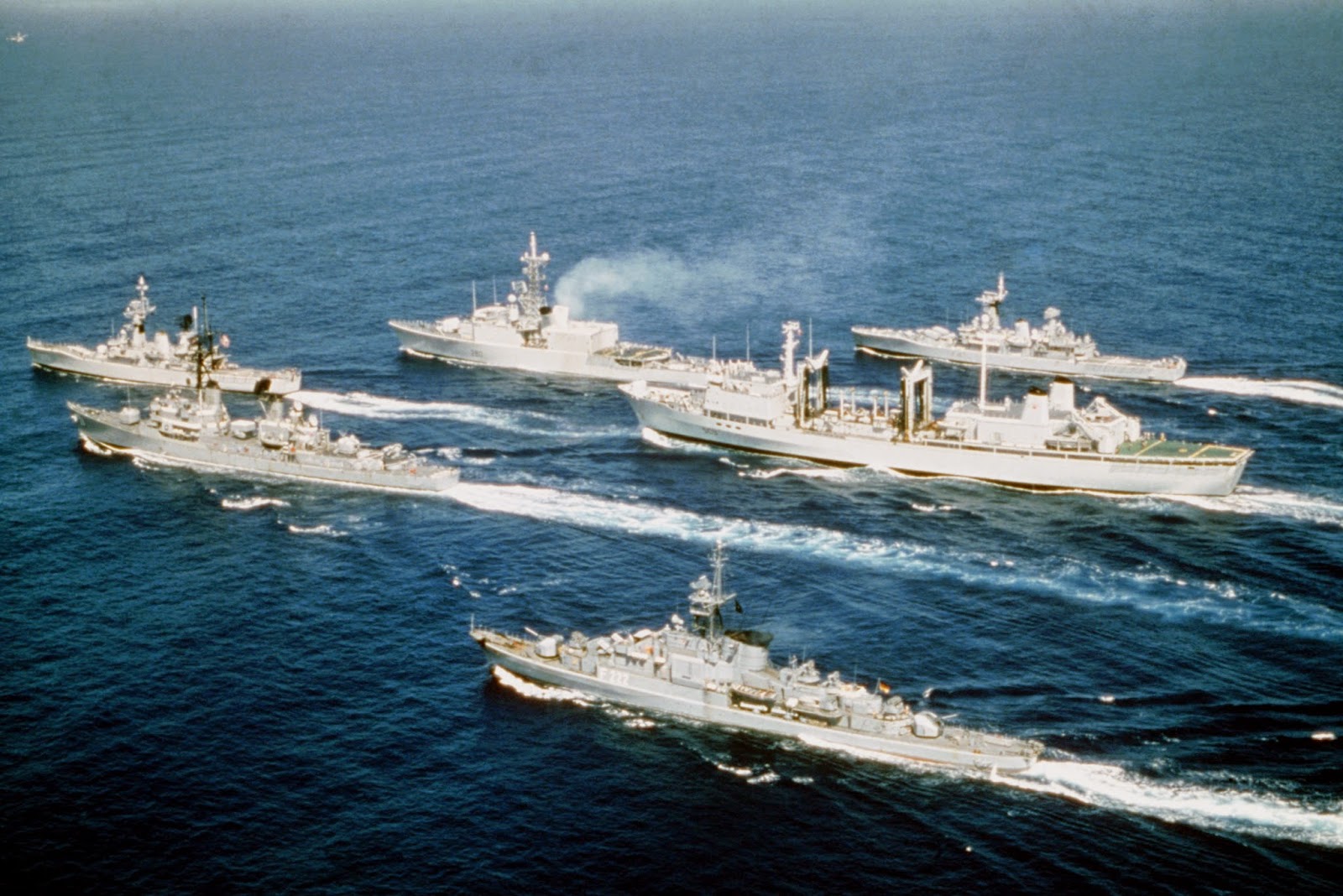
STANAVFORLANT in 1982
U.S. Strategists, senior military officers and diplomats continue to struggle with China’s apparent “salami slicing” strategy in the East and South China Seas. The Chinese have utilized a unique combination of military and quasi-military methods to extend their influence and control in these bodies of water contiguous with the Chinese mainland, but not under direct Chinese control since the end of the Ming Dynasty in the 1640's. The U.S. and its allies have yet to find an appropriate response to Chinese activities which include coast guard deployments to these waters, the building of airfields in the disputed Spratly islands, uncoordinated dredging operations in these waters, and the potential declaration of another air defense zone (ADIZ) in the South China Sea as the Chinese did in the East China Sea in November 2013.[1] A unilateral U.S. military response, however, is perhaps just what Chinese authorities want. The direct deployment of U.S. military forces to either body of water would represent a significant military escalation and allow the Chinese to label the U.S. as an outsider attempting to influence Asian affairs where it has no historic claim. The U.S. and its close friends and allies in the Western Pacific and Indian Ocean can, however, counter unilateral Chinese incursions into these areas with a maritime tool pioneered by the North Atlantic Treaty Organization (NATO) at the height of the Cold War. The U.S. should invite the nations of the region, including the People’s Republic of China and Russia, to join a Standing Maritime Group similar to the NATO Standing Maritime Groups that have been a fixture in Northern European waters and the Mediterranean for nearly 50 years.
          The Standing NATO Maritime Groups, conceived in the late 1960’s as the Standing Naval Force Atlantic (STANAVFORLANT), were an attempt to create a regular deployment of the Alliance’s warships to promote common operational standards. The brainchild of Rear Admiral Richard Colbert, USN, STANAVFORLANT was intended to prevent future maritime disputes that might explode into major wars. Colbert believed that the 1967/1968 Arab Israeli War might have been averted or better contained by such a force. He wrote,” “If a few of the maritime nations had formed a squadron of destroyers and contested the closure of the Gulf of Aquaba—perhaps by escorting an Israeli ship through—in support of the principle of freedom of the seas and Innocent Passage, the situation there might have been pacified and the Arab-Israeli war, such as it was, averted for a time or altogether.”[2] For Colbert, European and Mediterranean waters were just the beginning. He envisioned global U.S. participation in a network of similar partnerships. He wrote, “With this as a prototype conceivably we can follow suit with similar forces in time in the Mediterranean, the Indian Ocean, the Western Pacific, and very importantly Latin America. As the Soviet Union continues to expand its sea power worldwide, I can think of no more pragmatic and meaningful counter to their activities than the United States participating as partners with friendly countries in their various areas.”[3]
          Colbert’s model is well suited to the present situation in the Western Pacific and Indian Ocean where general cooperation might have deterrent value. A multinational maritime security force, with a rotational command and staff system based on that of the present NATO Standing Maritime Groups, would be an excellent tool for promoting common maritime operating procedures in the region and reducing tensions amongst the participating nations. Such a force might begin with a U.S. initiative toward its friends and allies in the region and expand to include all nations who wish to participate, including the People’s Republic of China and Russia. The Russian Navy, for example, participated in NATO’s Operation Active Endeavour in September 2006 when the Russian frigate Pitliviy joined the mission. While the NATO Standing Maritime Groups are divided into combatant and mine warfare-specific units, an Indo-Pacific Standing Maritime Group would welcome a variety of vessel types depending on what nations are participating and the mission to be undertaken. These efforts could include counter-piracy patrols in international waters, humanitarian assistance and disaster relief (HADR) operations, as well as good will visits to promote peace and understanding in the region. The solution to the present strained maritime security environment in these waters should not be a unilateral U.S. military or even diplomatic effort, but rather a multinational maritime undertaking. In such a situation, those that refuse to join would be more likely seen by the international community as troublemakers and not as active participants in reducing tensions.
          Just as “only Nixon could go the China”, the United States is the nation best positioned by its 160 plus years of direct involvement in East Asian maritime affairs to initiate a multinational standing naval force in the Indo-Pacific basin. An Indo-Pacific Standing Maritime Group is the first step to promoting greater understanding amongst the nations that border its littoral. It can welcome those who desire greater cooperation, and just as effectively isolate those who refuse to join in the international solution it presents to tensions in the East and South China Seas. It is a better first step than a direct, increased U.S. military presence.


[1] Bonnie Glaser, “Conflict in the South China Sea”, Washington D.C., Council on Foreign Relations (CFR), April 2015.
[2] John Hattendorf, “Admiral Richard G. Colbert: Pioneer in Building Global Maritime Partnerships,” Newport, RI, The Naval War College Review, Summer 2008, p. 121.
[3] Ibid.