We've got a new website up at The Hudson Institute, and here is the link to the Hudson Center for American Seapower's Page.
We're just stating out but look to post a lot of relevant content there.
UPDATE: Thank you to everyone who has passed along the news that our website is being blocked by DoD systems (and others that mimic DoD). We are looking into how we can rectify this.
UPDATE TO UPDATE: We are in a bit of a Catch-22 here, so I could use some help from those on the "inside". When you are denied access, there is a message that comes up suggesting that you contact someone to suggest that it shouldn't be blocked. PLEASE DO THIS. Our discussion with CYBERCOMMAND is that this "a helpdesk issue, we don't respond to requests from the outside". If you could post any correspondence between you and your helpdesk or summarize it, in the comments of this post, I would be grateful. Pls ensure you take whatever privacy steps you feel necessary.
Bryan McGrath

Wednesday, March 5, 2024

Tuesday, March 4, 2024
US Soft Power in Ukraine is Missing Hard Power's Escalation Control
The most frustrating thing about watching events unfold in the Ukraine is the realization that the United States apparently learned nothing from the Russian invasion of Georgia in 2008. If you recall the invasion of Georgia in 2008 by Russia, you will also recall it took place right in the middle of an American election. It would appear that timing favored Russia, because lessons were apparently not learned, indeed there is scant evidence the issue was truly studied.
Today, in nearly every avenue of action, tactical options are being discussed on how to 'react' to Russia's occupation of Crimea. For the last 5+ years, time has been lost that could have been used developing a policy that included strategic options for how to deal with aggressive Russian military behavior. Many of those options are finally being explored (like working the region towards energy independence from Russia) but they are years away from being employed, and lack value in dealing with the current crisis.
In 2007 the United States Navy developed the Cooperative Strategy for 21st Century Seapower in which the strategic object of preventing war was elevated to a primary mission statement of the US Navy. There was some hope that the DoD would adopt this stance as part of it's lexicon of capabilities provided. In rhetoric, the DoD demonstrated some appreciation for the concept of preventing war, but there is scant evidence the strategic object has been developed into an actual capability. Planning and rhetoric aside, the United States right now needs to prevent a war in the Ukraine. Yes, Russia has invaded the Crimea, and is using military power - but this is not a war, yet. Should the shooting start inside the Ukraine, the distinction between the non-violent occupation by the Russian military and an all out shooting war will be made evident, so no need to parse definitions.
As of Tuesday March 4, 2014, success for President Obama's soft power diplomacy policy depends entirely on preventing a war inside the Ukraine. I have been observing two starting assumptions represented in the mainstream assumptions of many "experts." I guess I am naïve to reject the prevailing wisdom of experts, time will tell.
First, I do not underestimate Putin, and I believe too many important people in this process are underestimating Russia right now. I have seen a number of media and political folks who talk to the White House regularly speak as if they believe Putin is acting from a position of weakness, and that Putin has somehow lost control of the situation and is improvising. Please stop. The EU is who lost control of the situation, and everyone has been scrambling ever since as Russia has set the parameters for the conditions inside the Ukraine to date. This administration has a history of underestimating Putin right up to the point where they get kicked sideways and told what the end game is - which seem to always favor Russia and leaves the US in a poker game holding a pair of twos trying to save face. This Rice/Kerry/Hagel team has yet to win on the field of play in foreign policy has no business underestimating this or any opponent, and has every reason to continuously expect the unexpected. The US must shape conditions favorably when given any opportunity, and right now I do not see the United States taking this kind of full court press approach to suggest we are in it to win it.
Second, I believe we are overestimating our ability to shape the outcome. Today NATO met and started discussing the situation, and tomorrow the EU will meet and start discussing their options. The US really needs the assistance of both NATO and the EU to prevent a war and shape the outcome favorably to our interests, but I am unsure the US will ultimately get much assistance from either the EU or NATO. It didn't even take 24 hours for both Germany and Great Britain to fold on economic and trade sanctions as a form of diplomatic coercion, and with the constant reinforcement in rhetoric by Senior US officials that there are no military options, I think it is absolutely clear that the study of strategy is completely dead in the DoD today. The effectiveness of the President's preferred soft power approach to crisis resolution depends on a single condition - that war inside the Ukraine is prevented. I am unclear how the US or Europe can guarantee that war is prevented inside the Ukraine without deterring the further use of Russian military power, and even though the situation might not escalate into a war, diplomatic success depends on the guarantee that war is prevented.
The US needs to shape conditions towards a favorable diplomatic solution, and I am not convinced the US is doing this today.
I believe Russia's primary objective is to take Crimea without using violent military force. Russia believes they can play a long game, wait out the Ukrainian military forces still inside Crimea, and eject those forces from the region. I am not one of those who believes Russia will simply annex Crimea, rather Russia will establish an autonomous state like they did in Georgia with South Ossetia and Abkhazia. Just like in South Ossetia and Abkhazia, Russia is the only country that wins that arrangement. The US needs to be thinking right now how to handle this outcome - because this is the best case outcome right now and we know it. History shows US policy over time does nothing but punish the people inside those regions, not Russia, so the US clearly needs to start the hard work of developing a new policy that addresses the situation more realistically.
I believe President Obama and the United States could potentially soon be standing alone against Russia on the issue of the occupation of Crimea in the Ukraine. I am not convinced the US can apply sanctions unilaterally without serious blowback by Russia, but maybe we can? It seems to me the US needs to define exactly what our national interest is in the Ukraine before we apply sanctions, because there are ways that Russia can put pressure on other, well defined, national interests in a game of diplomatic warfare against one another. I have no idea if President Obama sees the Ukraine situation as a national interest to the US, because I am yet to hear him articulate his argument why the crisis in Ukraine unfolding is a national interest of the US.
If we assume the occupation of Crimea represents a threat to our national interests, and I do believe it is, the US must guarantee that we do everything possible to prevent escalation of hostilities. To do so, the US must deter Russia from taking any further territory with military force. I am of the opinion that if 1) Russia starts facing a violent confrontation in any form, including insurgency, or 2) if our diplomatic warfare activities actually hurt Russia, that Russia will seek to occupy more territory in the Ukraine with hard military power, and will not hesitate to create a refugee problem with hard power. Ukrainian authorities continue to observe, every day, that Russia is massing more troops on the Russian border side of the Kharkov, Luhansk and Donetsk regions. If things start to go unfavorably for Russia, as of today nothing exists that will stop Putin from drawing a line from Kharkov to Odessa and occupying all points East. I don't think Putin is interested in a prolonged occupation, but that territory would given Russia several key advantages in diplomatic negotiations - including not just the territories, but a forced relocation refugee problem that would make everything inside the Ukraine considerably more complicated for any nation attempting to support the Ukraine with economic packages.
Obama has several military options to prevent a war. First, NATO could establish a air defense zone over Ukraine. If NATO is conducting the anti-air defense of Ukraine, the Russian military is not going to find success advancing in the Ukraine while being bombed from the air by the Ukrainian Air Force while also fighting the Ukrainian Army on the ground. NATO support for the Ukraine towards Air Superiority over the Ukraine would add significant assurance to the situation on the ground inside the Ukraine that Russia would not further advance militarily. I do not understand why the US DoD hasn't already been out front with this military option, diplomacy depends on the prevention of further hostilities, and the US is often quick to discuss setting up no-fly zones over enemy states, but is somehow slow in providing the same level of support to people we call friends?
NATO should also start mobilizing MIW capabilities just outside the Black Sea in case they are needed, because if the port in Odessa gets blocked by Russia, logistics is going to get very difficult for the Ukraine quickly. The railroads in the region are not that great, and cannot support Ukraine if - for any reason - access to the port of Odessa becomes restricted. Bryan discussed the need for more US seapower, but in my analysis of the kind of seapower the US would use in a situation like this given the various treaty obligations and operational challenges, the US Navy doesn't really field the kind of naval capabilities most needed for this type of conflict prevention strategic objective with the exception of the Littoral Combat Ship. The capabilities at sea needed are those for operating in the littoral, functional for electronic warfare and ISR, and capable of MIW. A CVN in the Eastern Med could sink the entire Black Sea Fleet in a day if it came to that, but this is about sea control without hostilities - soft power at-sea capabilities, not hard power like aircraft carriers. I'm not convinced even the LCS is a good fit for this crisis, but a combat capable corvette certainly would be. Other NATO nations have that capability, so perhaps US Navy logistics is the best capability for the US Navy to bring to this type of war prevention engagement.
Finally, NATO should commit some special units for military training and Ukrainian Army readiness inside the Ukraine - and do it starting today. The presence needs not be large, but the need to prevent war demands reassurance to the Ukrainian military to reinforce professionalism and maintain preparations towards the prevention of escalation of conflict with Russia. Sending ground forces in gives the US and EU escalation control, and does not represent escalation of tensions in and of itself - in fact it stabilizes tensions. The cost of these type of engagement activities in prevention of war pales in comparison to the costs of a refugee crisis on the border of yet another NATO nation, and one look at the refugee crisis coming from Syria should be a reminder that preventing a war before it starts is an excellent investment by NATO compared to reacting to the conditions of war after the the shooting starts.
It is incredible to me that the DoD has offices like Air-Sea Battle and the Office of Strategic Landpower and yet the DoD seems incapable of offering what I see as obvious military options that help deter Russia from further conflict. My biggest concern is that these military options have been presented to the President, and the Obama Administration (Susan Rice?) rejected these options, because I believe rejecting such options would represent nothing short of faith based foreign policy absent the serious substance necessary to control conditions in the real world; a political decision that, in my opinion, would justify every criticism related to weakness and incompetence of the administration and the people in it made to date.
As of today there are no obvious efforts being made towards preventing escalation of the crisis in the Ukraine by Russia if they choose to do so, even though US diplomatic activities will - by intent and presumably by effect if effective - escalate the crisis by imposing costs on Russia. Hard power in the form of forward deployed military presence represents the deterrence capability necessary to empower the effectiveness of diplomatic solutions by the Obama administration, and has the capacity to contain crisis through the stabilization of conditions that work favorably for our diplomatic soft power.
If the US is unwilling to set conditions for US diplomacy to work, expect the conditions to be changed by Russia in a way that works unfavorably against our diplomatic activity.
Foreign Entanglements: Entangling Crimea
On the latest episode of Foreign Entanglements I speak with Dmitry Gorenburg about the invasion of Crimea:
 I'm an assistant professor at the Patterson School of Diplomacy and International Commerce, University of Kentucky.
Monday, March 3, 2024
Sunday, March 2, 2024
Ukraine, Russia, Options, and the False Choice between Capacity and Capbility
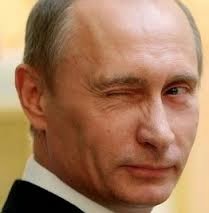 Lieutenant Colonel Vladimir Vladomirovich Putin (KGB) Ret., who managed to create great warmth in the hearts of both George Bush and Barack Obama in his post-service employment, has moved on after his Sochi 2014 triumph to a well-timed
Putin's move is driven by a number of factors, not the least of which is the continued ownership of a naval base at Sevastopol, his desire to rebuild a non-communist inheritor of the greatness of the Soviet Union, and his desire to secure Russia's "near abroad". I am no expert in matters of Russian History or European realpolitik, and so my analysis cannot go much deeper than reading and understanding the thinking of others who are. Twitter is aflame with their opinions, some of which make sense.
I find myself generally in agreement with those who lament that we do not have many military options in this matter, though I do believe we have some diplomatic cards to play, and it sounds as if the Administration is largely playing that hand well. That said, my reading of history leads me to believe that diplomacy becomes more effective when there is military power available to supplement it.
Were I a Joint Staff Officer I would be busy with contingency planning, but since I am not, I will restrict my musings to the subject of how we got here.
Simply put, we got here because V.V. Putin made a calculation that the price he would pay for his actions in Ukraine was less than the benefit he could accrue. Some may try to make it more than that, but they would be wrong. This is a straightforward calculation of strength and weakness, and in Putin's mind, the West is weak, or at least not strong enough to make a difference.
Logical contributors to Putin's mindset must surely be the geographic insularity of the region by land, and while proximate to the sea, the paucity of any available naval strength to contend with his adventurism. So while the West may recall Ambassadors and cancel meetings (these are not unserious moves), Putin calculates that he will quickly consolidate his gains and a new normal will prevail. He is likely correct in this assumption.
He is correct because Russian forces WILL quickly consolidate their gains--because there is nothing to get in the way.
We got here because the United States vacated the Mediterranean as a hub for forward deployed naval combat power in the 1990's, and Europe's navies responded to the vacuum by getting even smaller. While some may wonder whether military action would have been in our interest here, it is an academic discussion. There is little we could do. I make no claims about land or land-based air power, but from the perspective of what seapower can accomplish, the key to it accomplishing anything worthy at all is to be there, or close by. Where we choose to "be" these days is in the Western Pacific and the Indian Ocean/Arabian Gulf, and these are good decisions, though the diminishing size of our Fleet will make posturing force in even these two areas more problematic.
Seapower is about options and options become more limited where it is not employed. Here is where the false choice between capacity and capability arises, one heard a great deal in these days of defense budget cuts and strategy-making. We are led to believe that faced with declining resources, it is best to choose capability over capacity, that we can and should assume additional near and mid-term risk while we protect long range advances and technology. This is the argument for cutting an aircraft carrier and its related argument, reducing the number of air wings. This is the argument for cutting the fleet size, and for regrettable (but innovative) necessities like subjecting ships to inactive modernization periods. But options--the kind of options that the world's most important nation (I believe) still (I believe) wishes to to consider--are a function of capacity. Already unable to provide the combat power required in the two hubs mentioned due to insufficient capacity (Fleet size), we find ourselves with the growing realization that we can longer ignore the Mediterranean and its related waters. Libya and Benghazi, Syria and now Ukraine--each situations in which the options available to the President were limited by the capacity of the force at his disposal. There is not enough naval power to deter and dissuade, and to provide forceful backup to our diplomacy. And so the Mediterranean--once a center of our national security interest--becomes a conservation of force theater.
As I lamented the other day, I believe our system to be horribly broken, and it is that system upon which we must rely to reach the conclusion that I have--that we need a larger Navy, more widely fielded, and assuming a larger share of the national security burden. Until that day comes, we must be more prepared for events to occur that we find distasteful, but for which we have no answer and no capacity to mitigate in situ. We will lodge protests, issue stern condemnations, recall diplomats and cancel summits. But we will be smaller and we will less consequential. And we will have chosen that path.
Bryan McGrath
Subscribe to:
Posts (Atom)