Below please find the video of today's Hudson Center for American Sea Power panel discussion with Seth Cropsey, RADM Chris Parry, ADM John Harvey and me.
Video streaming by Ustream
Bryan McGrath

Thursday, November 7, 2024

Wednesday, November 6, 2024
The future of PLAN destroyers
Most recently, the 4th 052C joined service with PLAN as 151. Over the next half a year or so, the final 2 052Cs should also join service in the same flotilla. The first 052D started sea trials a little while ago and the construction for this program is proceeding very nicely. We have 3 052Ds launched along with modules for 2 others in JN shipyard. There is also speculations that Dalian shipyard also got works for 052Ds. The product run for 052D is expected to reach 8. That would mean a total of 16 052B/C/Ds. A big question is what will happen after this production run is over. These 16 ships will form 4 destroyer flotillas. At this point, 052D is already as fully loaded with weapon/sensor as its hull could handle. As part of PLAN's continuous modernization, a new Type 055 class is expected to be built to lead the next generation of PLAN surface warship.
There is a lot of discussions on SDF recently regarding whether or not this Type 055 class is needed, so I'm going to just jump in here to talk about what i think of this speculated class. If we look at recent new classes, typically the first one or two ship of a particular hull type gets produced with current generation of sensors of weapons. In the case of 054, it was equipped with radars, missiles and close in weapon systems that were already on other ships. In the case of 052B, it was equipped with newer subsystems than 051B and 052, but they were proven Russian or Chinese copy of Russian subsystems that were on Sovs. Although both 054 and 052B were said to use a newer generation of combat systems, the visible weapon subsystems were already mature. And the reason for that is PLAN generally does not like to create a new surface ship hull type (with new propulsion system) and also putting new weapon or sensor subsystems on there. When one considers how new some of these subsystems are to PLAN, it certainly makes sense that they would want to be conservative and evaluate them on existing platforms first. As a result of this, the new VLS, radar suite and CIWS were installed on 052C and 054A class.
And with the introduction of the impressive 052D class, a even more complete VLS (and associated radars) along with a new main gun, the HQ-10 CIWS and new type of variable depth sonar are squeezed onto this existing hull after already getting that new generation of 052C subsystems. I would expect this new VLS to be on all future major PLAN surface ships. From that stand point, any new missiles that's designed for this VLS would be usable by all PLAN surface ships post 052D. I do expect that the first 055 will use a lot of the subsystems that we already see on 052D, but with more VLS and larger radar or one with higher placement. The first couple of ships will be used to test out a new larger and more stealthy hull using a new propulsion system. There has been quite the discussion on SDF on whether this class is needed when China can just keep on mass producing 052D like it is doing with 054A. I think it's important to note that 8 052D + 6 052C is quite an extended production run for this class of ships. As PLAN becomes more of a blue water fleet, it believes that a larger platform with more modern propulsion system is required to be better suited for blue water operation. This would allow better speed and manoeuvrability in escorting carriers, smoother operations in bad weather conditions/sea state and greater ability to lead a flotilla. On top of that, 052D's hull has very little left for expansion in the future and would not be able to support any future weapon system like laser or a more powerful ABM radar that would have greater power requirement than what the current propulsion system offers. The 055 platform does not need to be the size of a 12000 ton cruiser like some have suggested. Something along the lines of Arleigh Burke class or Kongo class with future expansion possibilities would more than satisfy PLAN requirements. Once PLAN is satisfied with the 055 platform, it will then proceed with installing new weapon subsystems.
Similarly, although 054A has been one of PLAN's most successful program, it will need to be succeeded by a new platform using the new standard VLS along with a new type of propulsion system. A 4000 ton class frigate with maximum speed of 27 knots, CODOD propulsion and a hangar/helipad designed for Z-9/Ka-28 is not really the ideal ASW escort to a carrier group. This next generation frigate will need to be large enough to support the new VLS (and latest ASW missiles) while still have enough space to land/house any future PLAN helicopters and install the latest generation of sonar. We are already seeing the most recently launched 054A equipped with a new type of variable depth active towed array sonar and a larger hull would allow the housing of more equipment/weapons for ASW missions. A more powerful and quieter propulsion system would also make it more suitable for blue water ASW missions.
I expect these new surface ships to come online in the 2nd half of this decade which would be a good time for CV-16. At the end of the day, PLAN really needs an advanced attack submarine to protect itself once it sails beyond the first chain of islands. That is why the 095 project is so important for them.
There is a lot of discussions on SDF recently regarding whether or not this Type 055 class is needed, so I'm going to just jump in here to talk about what i think of this speculated class. If we look at recent new classes, typically the first one or two ship of a particular hull type gets produced with current generation of sensors of weapons. In the case of 054, it was equipped with radars, missiles and close in weapon systems that were already on other ships. In the case of 052B, it was equipped with newer subsystems than 051B and 052, but they were proven Russian or Chinese copy of Russian subsystems that were on Sovs. Although both 054 and 052B were said to use a newer generation of combat systems, the visible weapon subsystems were already mature. And the reason for that is PLAN generally does not like to create a new surface ship hull type (with new propulsion system) and also putting new weapon or sensor subsystems on there. When one considers how new some of these subsystems are to PLAN, it certainly makes sense that they would want to be conservative and evaluate them on existing platforms first. As a result of this, the new VLS, radar suite and CIWS were installed on 052C and 054A class.
And with the introduction of the impressive 052D class, a even more complete VLS (and associated radars) along with a new main gun, the HQ-10 CIWS and new type of variable depth sonar are squeezed onto this existing hull after already getting that new generation of 052C subsystems. I would expect this new VLS to be on all future major PLAN surface ships. From that stand point, any new missiles that's designed for this VLS would be usable by all PLAN surface ships post 052D. I do expect that the first 055 will use a lot of the subsystems that we already see on 052D, but with more VLS and larger radar or one with higher placement. The first couple of ships will be used to test out a new larger and more stealthy hull using a new propulsion system. There has been quite the discussion on SDF on whether this class is needed when China can just keep on mass producing 052D like it is doing with 054A. I think it's important to note that 8 052D + 6 052C is quite an extended production run for this class of ships. As PLAN becomes more of a blue water fleet, it believes that a larger platform with more modern propulsion system is required to be better suited for blue water operation. This would allow better speed and manoeuvrability in escorting carriers, smoother operations in bad weather conditions/sea state and greater ability to lead a flotilla. On top of that, 052D's hull has very little left for expansion in the future and would not be able to support any future weapon system like laser or a more powerful ABM radar that would have greater power requirement than what the current propulsion system offers. The 055 platform does not need to be the size of a 12000 ton cruiser like some have suggested. Something along the lines of Arleigh Burke class or Kongo class with future expansion possibilities would more than satisfy PLAN requirements. Once PLAN is satisfied with the 055 platform, it will then proceed with installing new weapon subsystems.
Similarly, although 054A has been one of PLAN's most successful program, it will need to be succeeded by a new platform using the new standard VLS along with a new type of propulsion system. A 4000 ton class frigate with maximum speed of 27 knots, CODOD propulsion and a hangar/helipad designed for Z-9/Ka-28 is not really the ideal ASW escort to a carrier group. This next generation frigate will need to be large enough to support the new VLS (and latest ASW missiles) while still have enough space to land/house any future PLAN helicopters and install the latest generation of sonar. We are already seeing the most recently launched 054A equipped with a new type of variable depth active towed array sonar and a larger hull would allow the housing of more equipment/weapons for ASW missions. A more powerful and quieter propulsion system would also make it more suitable for blue water ASW missions.
I expect these new surface ships to come online in the 2nd half of this decade which would be a good time for CV-16. At the end of the day, PLAN really needs an advanced attack submarine to protect itself once it sails beyond the first chain of islands. That is why the 095 project is so important for them.
American Decline
 |
| DOD photo by Erin A. Kirk-Cuomo |
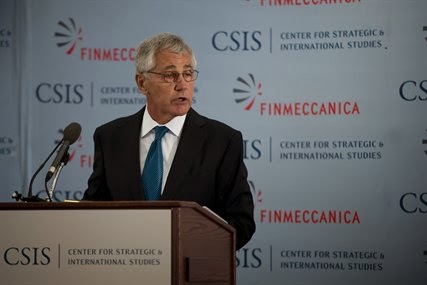
In the 21st century, the United States must continue to be a force for, and an important symbol of, humanity, freedom, and progress for all mankind. We must also make a far better effort to understand how the world sees us, and why. We must listen more. We must listen more.It is easy to lament the costs of a decade of war, and even easier to succumb to the isolationist desire to withdraw from the complexity of the global environment when, without question in the 21st century, we have not proven ourselves as a nation to be perfect stewards or leaders. The privilege to be less ambitious in the world is reserved for those without a stake in the system, or those nations that lack ambition for a better world and find themselves ambivalent to a liberal value system founded on the principle of freedom. The comfort of isolationism can be afforded to nations which have issued no promises, but has no place for the United States which strives for social and economic prosperity in the present imperfect global system that is underwritten by defense guarantees with more than 50 countries around the world.
After more than a decade of costly, controversial, and at times open-ended war, America is redefining its role in the world. At the same time, more Americans, including elected officials, are growing skeptical about our country’s foreign engagements and responsibilities. But only looking inward is just as deadly a trap as hubris, and we must avoid both in pursuing a successful foreign policy in the 21st century.
America’s role in the world should reflect the hope and promise of our country, and possibilities for all mankind, tempered with a wisdom that has been the hallmark of our national character. That means pursuing a principled and engaged realism that employs diplomatic, economic, and security tools - as well as our values - to advance our security and our prosperity.
As we look out across the strategic landscape, the United States military will remain an essential tool of American power and foreign policy, but one that must be used wisely, precisely, and judiciously.
Most of the pressing security challenges I’ve described today have important diplomatic, national and global, economic, and cultural components, and they cannot and will not be resolved by only military strength.
As we go forward into a historically unpredictable world, we will need to place more of an emphasis on our civilian instruments of power, while adapting our military so that it remains strong, capable, second-to-none, and relevant in the face of threats markedly different from what shaped it during the Cold War and over the past two decades.
America’s hard power will always be critical to fashioning enduring solutions to global problems. But our success ultimately depends not on any one instrument of power. It depends on all of our instruments of power working together. And it depends not only on how well we maintain and fund all of our instruments of power - but how well they are balanced and integrated with each other.
But as the nation reorients our position in the world and as Secretary Hagel notes, attempt to balance and integrate America's instruments of power, we must ask ourselves the hard questions and learn from our mistakes if we are to move ahead smarter, wiser. It would be easy to note the external and environmental challenges taking place as it relates to economic and technological changes abroad, but a sole focus on those issues is only half right. While I agree with Secretary Hagel we cannot be solely focused on ourselves, it is not hubris (as he implies) to focus on ourselves first. We cannot simply reorient our policies to reflect the rise of the BRIC nations, nor can our nation afford to simply adapt to the rise of regional bases of power that seemingly reflect a decline of global American power. The biggest challenges the US faces in foreign policy are not external, rather internal, and fixing our house is required if we wish to continue global leadership in other neighborhoods.
In his speech Secretary Hagel says "We must not fall prey to the false notion of American decline. That is a false choice and far too simple an explanation. We remain the world’s only global leader. However, the insidious disease of hubris can undo America’s great strengths. We also must not fall prey to hubris."
In my opinion it would be hubris if we as a nation can't admit that American decline exists. Indeed it requires hubris to ignore the reasons why.
The first reason America is in decline is because elected national leadership is dysfunctional by every single definition applicable. This is not a problem that can be directed to any single political party, this is a shared burden of failure across the board. On one hand we see figures like Senator John McCain lament endlessly how supposedly outraged he is the Department of Defense can't even audit itself, while on the other side Congress hasn't passed a single budget on time since 2005. Good governance begins with consistency and reducing as much as possible uncertainty, and yet national political leaders haven't been able to provide either consistency or certainty in government. Today, the DoD is once again operating under a continuing resolution, built on top of budget disruption from the previous two fiscal years (both of which also required long term continuing resolution), and lets not ignore that sequestration isn't simply a budget cut, but more intrusively it prevents the DoD from making important budget adjustments to adapt to funding cuts. The budgets of most agencies in the United States are based on funny numbers pulled out of thin air as a result of annual Congressional mismanagement of their responsibilities, and the expectation that any agency can audit itself today contradicts the very purpose of a budget in the first place.
The responsible party for this mess is primarily Congress, but two Presidents in a row have demonstrated a remarkably inept level of leadership in addressing the problem, even when they are in the majorities. Until national leadership is held accountable to a basic expectation of good governance, American decline will continue. Congress needs to pass budgets on time, insert consistency and stability into government, and govern responsibly. Partisans can still argue issues all day, but the promotion of stability for government should be a primary objective of elected leaders. As the executive, the President has the responsibility to lead in this regard, and absolutely should make it an election issue - because it is.
Historians will argue that good governance has never actually been a feature of US government, and they would not be inaccurate to make such observations. I would simply highlight that the role government has today as the driver for the liberal social and economic systems of the nation has increased considerably relative to previous times in our nations history when poor governance existed for long stretches. As the central role of government increases in both power and influence over those areas where American power is based so too must the quality of governance increase in order to insure stability and consistency for the foundations of American power.
The second reason America is in decline is because America suffers from poverty in military strategy. There is little question Goldwater-Nichols has brought institutional structure to the diverse military bureaucracies, and the result has been one of operational and tactical brilliance. However, Goldwater-Nichols has not addressed the poverty in military strategy America has suffered from in one form or another since at least Vietnam. Examples of sound military strategy, like the Navy's maritime strategy of 1984, represent the exceptions that prove the rule - as they are strategies developed by civilian outliers empowered politically over a sufficient length of time to achieve results. The results were produced almost by accident because the enabling factor was primarily a strong foundation of strategy both within the civilians of the Department of Defense, but also and more crucially, civilian leaders with strong strategic backgrounds among the most vocal and influential inside the national command authority.
In hindsight there can be no question the single most visible failing of Goldwater-Nichols is the absence of a qualified, educated, and superior strategic intellect assigned to the National Security Council to insure that critical component of the national command authority has access, education, and the potential for understanding how decisions will influence the long game. Where are the strategic enablers for the Joint Chiefs of Staff today ready to perform that crucial, missing role of making a choice absent consensus?
Today the services attempt to convert money into military power through the medium of vast service bureaucracies, each dedicated to the perpetuation of its own preferred forms of military power. Despite the best efforts of Goldwater-Nichols the DoD still lacks a mechanism to reduce less useful forces to make way for those more greatly needed. The priorities of the past are often simply perpetuated with no process for creative destruction available to make way for the new. When war breaks out or a new obligation is found that demands military power, the same institutions can do no better than to share out the responsibility of fighting so that everyone shares the burden, or budget stake, in the fighting.
It is the characterizing feature of military strategy at all levels that it rejects compromise and imposes sharp choices, but the DoD today is capable only of feeble compromises. Evidence that Secretary Hagel has either the political skill or political support to break through the institutionalized demand for compromise remain absent in public evidence today. American decline isn't measured by the reducing size of the Army or dwindling size of the Navy fleet, either of which can be the result of making strategic choices, rather strategic poverty in our military manifests in instances like the humiliation that was paraded globally following the brilliant operational and tactical success that culminated in the fall of Baghdad, but entrapped our nation in Iraq fighting an insurgency for nearly a decade. While it is legitimate to question civilian leaders with limited backgrounds in military strategy like President Bush, how do we easily dismiss how General Tommy Franks, a four star General of the US Army, lacked the strategic foresight necessary to understand or even imagine potential consequences of our nations military actions?
But even as the nation is publicly humiliated by the absence of institutionalized strategic thinking in the Army, the strategic thinking in the US Navy today is featured prominently by it's absence, and what passes as strategic in the Navy challenges the very core of whether the US Navy even values maritime strategy. Nevermind how ineffective the Cooperative Strategy for 21st Century Seapower is in actually informing a strategic choice - the very purpose of a strategy; observe with honesty how the leaders of the US Navy have limited the services value in the 21st century by being incapable of exercising basic advantages inherent in seapower.
The US Navy today is capable of only a single strategic function because the US Navy is organized for only a single military function; specifically to defeat, deter, or cooperate with the military forces of another state. If any strategic problem cannot be solved by defeating, deterring, or cooperating with the military forces of another state, the US Navy is incapable of providing the nation with a service. The US Navy has a rich history of both naval diplomacy and naval suasion in addressing complex challenges the nation must manage overseas, and yet one cannot find a single example in the 21st century where the US Navy has provided a strategic service to the state that wasn't specific to defeating, deterring, or cooperating with the military forces of another state.
Until strategy exists both in the Department of Defense and in the military services, the value of American military power will be in decline. For any other nation, decline of military power would not inherently represent decline of national power, but much of the global system America prospers from today is founded upon the security guarantees provided by the US military, so military decline for America, when actual and not simply relative, represents decline for the nation.
Finally, the US must address the poverty that exists in American diplomacy. I noted earlier the DoD has become operationally and tactically brilliant. Here I will note that things are equally unequal in the State Department. The State Department has excelled in promoting US business interests globally and carrying forward the banner of US soft power globally in the promotion of American economic power. A visible manifestation of this excellence is visible in Embassy's world wide today in the form of the line found at the desk for green card applications.
While the State Department has been very effective promoting American economic interests, the decline of American diplomatic capacity to influence the global security environment is also a feature of the State Department in the 21st century. In the same speech to CSIS quoted above, Secretary Hagel doesn't even acknowledge the complete and total diplomatic humiliation Secretary of State John Kerry - and by extension the United States - was delivered by Russia in the context of Syria earlier this year. The latent naval suasion used in a deterrent function exercised by the Russian Navy off Syria achieved the necessary perception to completely deter President Obama from attacking Syria, and gave Russian diplomats every advantage over the US in the diplomatic outcome. Whether one believes the US should have attacked Syria or not isn't relevant to the outcome, because the outcome is a nonbinding resolution that ultimately conceded to every diplomatic requirement made by Russia and that outcome was purely a result of our own self-inflicted incompetence. Some choose to fool only ourselves for domestic political reasons that all is fine that ends fine, but the outcome of that diplomacy is far from over, and let us not ignore that the international community perceives the outcome as a massive US diplomatic defeat.
American diplomacy has become mostly stick with small or invisible carrots. The primary advocate for war against Syria was none other than the Secretary of State - our nations top diplomat. Three consecutive Secretary's of Defense - Gates, Panetta, and Hagel - have advocated additional funding for the Department of State. It has become vogue for pundits to praise such calls, but absent in the discussion of those calls are the basic questions regarding what the additional finances bring of value to the nation. More money doesn't fix the culture problem that was evident in the State Department employee resistance to surging to Iraq. If State Department employees reject culturally the functions of state to the places the State Department is required, what exactly does more money do except allow politicians to throw money at a problem without actually addressing the problem?
Why is it COCOMs praise the State Department in speeches, but one never hears any such praise from the operators who lack Flag/General rank but are part of the engagement between the DoD and State on the ground? The unsuccessful relationship between the US Army and the State Department in Afghanistan is well documented. The stories about the relationship between the State Department and SOCOM aren't quite as public, but all indications are both sides could do a lot better to support the other.
It is impossible for the US Navy to perform a strategic engagement or even begin to attempt strategic influence around the world without a strong partner in State, and on the flip side it makes no sense to me why the US Navy wouldn't represent a natural partner for State in attempting to build networks of influence across domains in foreign nations where American influence today is limited but America has interests offshore. Is it a feature or bug that naval diplomacy and the diplomatic capacity of the State Department have been aligned in trajectory - downward - since the cold war? It seems to me that if Chuck Hagel is truly interested in improving the power of American diplomacy, he could in his capacity as Secretary of Defense start by addressing the poverty of naval diplomacy today and build that capacity in a way that assists the State Department.
Is American decline perpetual? No. Is there evidence of American decline? Absolutely. The government has become a driver of the liberal social and economic power for America, and if that is to be the case, good governance is a prerequisite for the growth of American power. As long as American military power is the foundation of security promises that underwrite the global economic system, the wise exercise of military strategy - not grand strategy - will remain a critical precondition of American power to insure judicious use of American military power. Finally, American decline is assured if the US cannot reinvigorate our nations diplomatic capacity as it relates to the global security environment, because without effective diplomacy the nation can only solve problems with military power - an activity that history tells us will surely bankrupt the state.
Monday, November 4, 2024
We Need a Balanced Fleet for Naval Supremacy
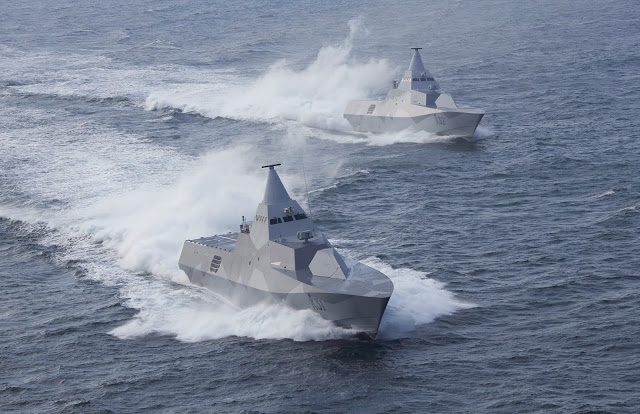 |
| The Swedish Visby class is representative example of a small combatant the author argues might work as part of a balanced US Navy force structure. |
Lazarus’ essay entitled Naval Supremacy Cannot be ‘Piggybacked’ on Small Ships attempts to rebut essays of Captains Hughes, Kline, Rubel and Admiral Harvey (here and here) advocating the employment of small missile combatants operating as flotillas in the littoral environment.
Technological changes underway today will increasingly challenge the way we conduct business today. The United States will have to adapt to retain its lead. In order to adapt, debates such as these must be part of a larger Cycle of Research, an ongoing iteration of wargames, analysis, and fleet exercises.
Lazarus has constructed a straw man to knock down, because no one has suggested a flotilla of small combatants can replace the big ships in the current fleet, which was designed to either dominate the open oceans or project power efficiently over the land when the sea is a safe sanctuary. The proposals favor supplementing the fleet—as have most dominant navies since the onset of torpedoes, mines, and submarines—with smaller combatants that can fight in cluttered and dangerous littoral waters without risking big warships’ great value in terms of procurement costs, lives, and multi-purpose combat capability. The small combatants should comprise only a small part of the fleet value in terms of displacement tonnage and cost but a large fraction of the fleet in terms of numbers of ships.
Lazarus argues the original authors have neglected critical concepts such as historic effectiveness, geography, strategy and logistics. Lazarus’ arguments against the flotillas are drawn from history and historic analogies centered mostly on the time periods before and during World War II. However, he neglects to address the significant technological changes which have occurred in the missile age and now in the robotics age. He also neglects the significant number of such vessels which can be employed for a modest budget and the impact of numbers in the increasingly offensive dominant environment of the ocean today and in the future. We will address each of his arguments and show why the addition of the Flotilla concept is far superior to the all big ship strategy currently being pursued by the US Navy. But in the end the United States Navy is not building a balanced fleet, but one of few large vessels risking a potential catastrophe.
Small combatants are and will continue to be the bane of capital ships daring to enter the littoral environment. Lazarus argues small combatants with capital ship killing weapons, with the possible exception of submarines, have historically never lived up to their reputation and larger ships’ adaptations neutralized their effectiveness. He cites the poor performance of torpedo boats which were only successful in night or stealth conditions. Later in the essay he returns to the topic and cites the poor performance of the US Asiatic fleet, including torpedo boats and submarines, in the opening days of World War II. What he leaves out is that the “big gun” navy neglected the Asiatic Fleet (a recurring theme) and the ineffectiveness of their primary weapon, the torpedo. Admiral Richardson has often cited the badly flawed torpedo combined with the risk adverse personalities of fleet submarine commanders as greatly reducing their effectiveness [comments before the Center for Naval Analysis in 2012]. Once both factors were addressed, the effectiveness of submarines increased greatly. The same might have been said of torpedo boats, but there weren’t any in the Asiatic Fleet.
The value of missile boats is not necessarily in their effectiveness against capital ships but in their effectiveness in sea denial missions, particularly against commercial and amphibious operations. In WWII, PT boats and other light craft were noted for their defectiveness against German and Japanese resupply efforts. Further PT boats were employed to screen against their German counter part (E Boats) during landings at Normandy.
Lazarus neglects to address the significant technological changes of modern times and differences between torpedo boats and missile boats. To start, even with advances in the range of torpedoes in WWII, they still required the boat to close well within the range of the rapid firing weapons of their targets, and the screening torpedo boat destroyers. Modern Anti-Ship Cruise Missiles (ASCMs) are very effective when fired from over the horizon. Large warships operating with their very unique electronic signatures make it easy for an opponent to locate, track, and identify them. In contrast the small combatants are much harder to locate in the clutter of the littoral environment.
Modern missile technology has made small combatants very lethal and their continual improvement will make them more so in the future. Lazarus cites the poor performance of early missile armed combatants such as those which sank the Israeli Navy Ship (INS) Eilat, (a destroyer) in October 1967. He further points out the historic ineffectiveness of missile corvettes in the Falklands, Libyan, Iranian, and Iraqi conflicts. In particular he cites the effectiveness of air power in neutralizing these ships. In all of those cases those fleets never sailed in force or made a concerted effort to fight. He leaves out the large number of successful ASCM engagements and their increasing effectiveness over time particularly by the Israelis who were willing to fight.[“An Analysis of the Historical Effectiveness of Anti-ship Cruise Missiles in Littoral Warfare” NPS thesis by John C. Schulte 1994. (PDF)]
Another striking conclusion of the Schulte study is its historical review of the ineffectiveness of hard kill systems in combat against ASCMs. The increasing effectiveness of ASCMs, as their sensors capability increases, reinforces the already offensive dominant tactical environment of the sea.
A force of smaller combatants is far more survivable than those made up of larger combatants. Lazarus accurately notes a smaller combatant when hit with a large weapon such as an ASCM is likely to be lost, probably with all hands. These smaller combatants are more likely to take with them a larger proportion of their crew when struck, but their crews are on the order of 20 to 40 in comparison to modern destroyers with upwards of 500. When such ships, such as the HMS Sheffield were struck they lost 20 ratings and officers. He further cites the arguably flawed and biased study by Secretary Lehman stating the larger the ship (the secretary was addressing aircraft carriers, not ships in general) the less vulnerable to attack it is. However detailed analysis presented by Captain Hughes in Fleet Tactics and Chris Carlson’s Variable Damage Effects (PDF) in Naval Wargames 2008 demonstrate very vividly ships gain very little resiliency to damage as their size (and costs) grow. Further the larger a ship is, the larger its radar cross section and other signatures, increasing the probability of being hit.
Finding the ships of a flotilla is far more challenging than a cost equivalent force of larger ships. To illustrate this we will compare the cost equivalent force of one Arleigh Burke destroyer (DDG), and four Soliman Ezzat class missile patrol craft (PCM). We will assume the ability to track and detect a destroyer and a PCM are the same 50%, despite the fact the PCM probably has a smaller radar cross section. The probability of locating the entire destroyer force is 50% while the probability of detecting the four PCMs simultaneously is 6.25%. Finding, tracking and planning an engagement against four PCMs is similarly challenging.
Numbers in naval warfare matter. Lazarus misapplies one of Napoleon’s maxims regarding the value of large battalions. What Napoleon was citing was the importance of numbers in the offensive dominant environment he was fighting in. The same is so at sea. To illustrate this point we will compare two cost equivalent forces the US could deploy today. The first is a new Arleigh Burke destroyer (DDG), and the second four new Soliman Ezzat class PCMs. The destroyer costs about $1.5B to acquire while each PCM costs less than a quarter that. We will assume optimistically the DDG can take three Exocet missile equivalents to be rendered out of action while each PCM would only take a single hit. An enemy force desires to have an 80% confidence it can wipe out the entire force. We will assume the enemy has ASCMs each with a 50% probability it can hit either a destroyer or a PCM. The probability of hitting the destroyer is actually greater than that of the PCM due to its larger RCS, but we will credit its hard kill systems with making up the shortfall (though history does not support this theory). To have an 80% confidence at least three missiles will hit and take out the destroyer an opponent would have to launch at least eight. To have an 80% confidence of taking out the PCM force, an enemy would have to have sufficient confidence in striking each of the four to meet the total confidence. The fourth root of 80% is just shy of 95%. The enemy commander would have to have a 95% confidence of hitting each PCM to have an 80% confidence of wiping out the entire force. To have a 95% confidence of hitting each PCM at least once would require 5 apiece. Thus an enemy commander would have to devote 20 missiles to the PCM force, vice just 8 to take down the destroyer; a significant increase in resources and a much tougher coordination effort. Disbursing combat capability across several platforms greatly increases the resilience of a combat force and modern combat networks enable them to mass force effectively when necessary. [See Distributed Networked Operations by Jeff Cares, 2005]
The resilience of a flotilla is a strategic advantage in a crisis situation. The level of effort and coordination required to destroy the flotilla significantly reduces the first mover advantage of an opponent. Quite simply numbers matter in this kind of environment. This is what Napoleon was talking about.
With proper doctrine and preparation geography and logistics favor flotillas of smaller vessels. While in general logistics do favor larger ships, technology and ship designs have improved the endurance of smaller ships. The Sentinel class coast guard patrol boat (WPC) of 353tons has a long range endurance enabling it to cross the Pacific Ocean in the same manner as the LCS and its design makes such a journey easier on the crew. Further advances in ship stability systems, navigation, engineering, and weather avoidance have markedly improved the effectiveness of smaller vessels in the open ocean.
It is true nations operating flotillas of smaller vessels close to home gain significant advantages in the employment of interior lines of communications and logistics in both the operation and support of such a force. This is why Captain Hughes and company advocate the development of forward operating bases and related capabilities to support such a force overseas in countries under threat. Given China’s bellicose behavior of late in the South China Seas, countries in the region have been and should continue to explore the opportunity to make themselves a harder target to intimidate or attack. This hedgehog strategy reinforces the main concept behind Colonel Hammes distant Blockade strategy of local nations only having to protect themselves in a crisis or conflict. However, other maritime nations take their cue from the United States Navy and would be more likely to employ these effective platforms if the US Navy took them more seriously and trained with them.
Flotillas of smaller vessels are more survivable in the ballistic missile environment. China has developed long range missiles which can target fixed ports and airports. They have also been developing Anti-Ship Ballistic Missiles (ASBMs) reportedly designed against Aircraft Carriers. They do not have an unlimited supply of such missiles, particularly long range versions. Therefore the ability to disburse logistics capabilities increases survivability just like that of the combat force. If the United States continues to concentrate logistics capabilities in few large ports able to take the few large Combat Logistics Fleet (CLF) ships, then it will continue to make itself vulnerable to long range ballistic missiles, similar to what occurred in WWII. PCMs have a 2 meter draft and are able to operate in a wide range of small ports, fishing villages, protected anchorages, etc. If flotillas are combined with a mobile land logistics component and the use of offshore supply vessels, they can distribute the logistics nodes and remove the brittleness of overly centralized logistics enemy ballistic missiles are designed to take advantage of. [“Rethinking Littoral Logistics” by Captain David C. Meyers and Commander Jason B. Fitch, Supply Corps, U.S. Navy, Proceedings August 2012]
Modern weapons development makes combat in the littorals too dangerous for carrier or land based aviation assets against a near peer competitor. Airfields in a contested environment are increasingly becoming vulnerable to precision strike regime weapons such as ballistic missiles, cruise missiles and unconventional forces armed with guided rockets, mortars, and artillery (G-RAM). Further ASBMs, ASCMs and other proliferating weapons are increasing the risk of Aircraft Carriers to operate in the littorals. Aircraft Carriers have an extremely large signature making them vulnerable to attack from over the horizon or the clutter of the littorals. Further the loss of a few patrol vessels is less likely to trigger existential angst to the American public than a burning aircraft carrier.
Flotillas are more survivable in the littoral environment as commerce raiders than larger ships when there is a loss of air cover. Lazarus questions the survivability of flotillas given the threats from the air cover as described in the previous paragraph. If the Chinese were to eliminate our land and carrier based aviation capabilities in their initial attack, the flotilla would be more likely to survive if operated correctly. Open ocean commerce raiding missions without air cover against an opponent who has air superiority became dangerous and ineffective in World War II, but employment of flotillas in littoral environments in a contested air environment was common then and can again work to their benefit. Properly employed to take advantage of the clutter of the littorals the effectiveness of air launched ASCMs would be greatly neutralized. Meanwhile advances in shipboard weapons such as the rolling airframe missile give corvettes an effective weapon to neutralize the flight profiles most aircraft require to employ bombs, rockets, etc. Further, combining the use of modern obscurants with missile boats’ small size will make them a challenging target in any engagement. In contrast large combatants are far less capable of hiding in the littoral environment. Due to their high profile and small numbers, they raise their profile higher by constant radiation, making them more likely to be attacked and more likely to be hit by weapons with dual seekers employing anti-radiation modes.
The current and potential proliferation of advanced cruise and even targetable ballistic missiles makes the use of flotillas even more important than ever. All ships are increasingly at risk from attacks like the C-802 which hit the INS Hanit in 2006. As described earlier, larger ships are not able to take much of a hit in relation to their size and cost. Further larger ships are more likely to be hit in such a circumstance. Left out of most discussions was the fact two C-802 missiles were fired in the INS Hanit incident in 2006. One of the missiles hit and sunk a much larger Cambodian-flagged freighter. Unalerted and not employing decoys or other electronic techniques INS Hanit was struck by only one missile. Had she been a larger ship in similar circumstances, she might have been struck by both weapons and sunk. More importantly the INS Hanit incident marks the proliferation and possibility of surprise by such weapons. This creates an offensive dominant environment, the logical response to which is numbers. Similarly Republic of Korea Ship (ROKS) Cheonan incident of 2010 demonstrated the willingness of some opponents like North Korea to attack without warning. ROKS Cheonan was struck by a torpedo which a larger vessel such as an Arleigh Burke would not have survived either. This is not the environment for a small number of large vessels. Larger numbers provides the ability of a force to absorb such an attack and still be able to respond.
The ability to produce large numbers of smaller vessels would give the United States a significant strategic advantage in a potential conflict. Having built, operated and developed proper doctrine for the use of flotillas the US would be in a position to take advantage of rapid production in the event of a conflict. Smaller, cheaper, and easier to build than their larger cousins, missile corvettes and missiles boats can be built in a much larger range of shipyards and factories, many not adjacent to the ocean, far more rapidly than destroyers and larger vessels. This would signal to a potential adversary the ability of the United States to reconstitute its forces in an extended conflict, a critical element in the calculus of anyone planning such a move.
Lazarus argues for a balanced fleet. However, the United States Navy is not a balanced fleet. It is unbalanced towards a small number of large ships. The LCS promised as a replacement for PCs, frigates, and minesweepers has too large of a signature to survive in the littoral environment of the future. Captain Hughes and his compatriots in the seminal work A New Navy Fighting Machine describe in great detail how a modest portion of the shipbuilding budget (about 10%) can produce a large number of small but lethal missile boats. These vessels, if properly employed, can have an outsized impact on maritime strategy and give the United States strategic stability necessary in a very dangerous future environment.
The United States needs to employ a cycle of analysis to properly address these issues and many others. The power of flotillas of small ships and other concepts require serious analysis and research. The alternative analyses presented by Captains Hughes, Kline, Rubel, Admiral Harvey, Lazarus and others is but one element of the Cycle of Research codified in Dr. Peter Perla’s The Art of Wargaming (Page 288). The other elements include extensive wargaming and fleet exercises. The iteration of cycles of wargaming, analysis, and fleet exercises conducted years after year between World War I and II were critical contributions to the success of the United States in World War II (See Kuehn’s Agents of Innovation and Nofi’s To Train the Fleet for War). The technological changes underway today demand the recreation of the Cycle of Research to prepare the fleet for the future. There are changes underway today just as radical, if not more, than occurred during that previous interwar period and they demand serious exploration.
The views expressed in this article are those of the author and do not reflect the official view, policy, or position of the Department of Defense or the United States Government.
Subscribe to:
Posts (Atom)