
Wednesday, December 7, 2024

Dusk Approaches For the Big Deck Nuclear Carrier Age

Presented for comment. Confirmed by multiple sources, this is the very latest from OMB to the DoD regarding aircraft carriers and FY13:
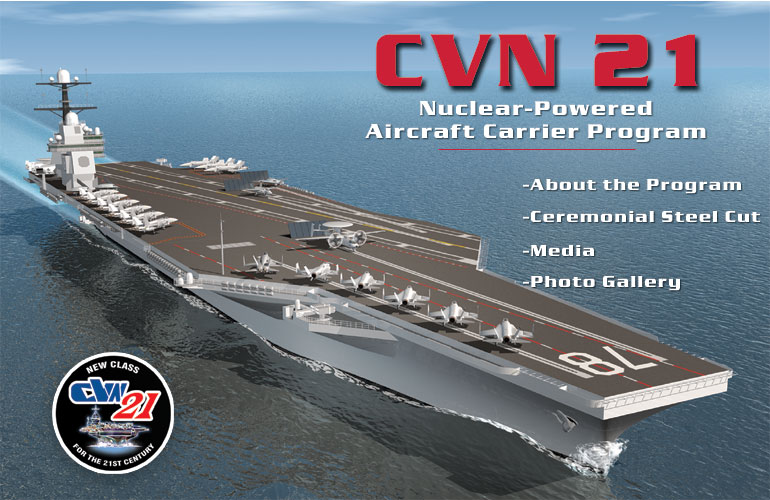
The navy has proposed an additional 2-year schedule slip to its newest carrier, CVN79, which would extend the funding profile from the original 8 yrs to 12 yrs. The Navy would initiate the 4-yr construction process in FY15 after 8 years of advance procurement activities. Given the challenges of implementing the BCA caps, OMB allows the additional 2 year slip to CVN-79. However, the Navy should request authorization to commence regular CVN-79 construction in FY13 and continuing through FY18. The CVN-79 funding profile does not change, and because construction belongs in FY-13, there is no need for additional advance construction. The navy should work with OMB to develop a legislative proposal to implement this guidance. For the subsequent carrier, CVN-80, the Navy should include no more than 8 years total funding.
This is what Matt Mulherin, President of Newport News Shipbuilding, told a group of folks like me on the phone a few weeks ago:
I think everybody gets it; that if we don’t build it on a five-year center proves to be the most efficient timeline, so as soon as you’re finished being a structural guy on Ford you walk over and be a structural guy on Kennedy. I think everybody gets that, so they understand that the cost is an adder. I think what we've got to think about - and that’s why we’re focused on - is, “How do we drive cost out?” because you don’t want to be the used-car salesman that says, “You've got to buy it today because tomorrow it’s going to be more expensive.” I think everybody gets that. I think the value proposition of this whole thing is, “Let’s work with the Navy and figure how we take cost out of it,” so they want to buy.
Nope, I don't think everybody gets that it, or at least the accountants at OMB don't get it.

This schedule change almost insures the cost of CVN-79 is going to be enormous due to loss of trade skill at the yard, which means CVN-80 is also going to be a whole lot more expensive. By 2020 aircraft carriers are going to have such an enormous cost that there is no way the nation will build CVNs after CVN-80.

I see only two ways this doesn't happen. Either Obama loses in 2012 and the new President addresses this issue directly, immediately following election, or in some future 2016-2020 time frame the nation funds and builds 2 carriers of the Ford Class just like Reagan built 2 with the Nimitz class as a way of getting long term costs for the CVN as a strategic entity under control.

Otherwise, there will be 3 Ford class carriers, and by around 2025 the nation will have decided that based on cost alone a new way to project airpower from the sea will be necessary in the future. If you don't believe this move will end the big deck aircraft carrier, then you are in denial how the industrial reality will be seen in a political context once the costs go up.

For the record, opponents of big deck nuclear aircraft carriers will welcome this news, as they argue for purely military and strategic reasons that CVNs are too difficult to protect in future naval warfare to justify their price anyway. They are not fools. They know this kills construction of the big deck after 2025, hell everyone except those who talk out of their ass in politics knows this change will effectively end the age of big deck aircraft carriers as we know it today.

What do I think? Honestly, my first thought was that this almost insures Virginia goes red in the 2012 election unless people who live in Virginia hate jobs for people in their state and actually want that large area around Norfolk to be a ghost town, so it's hard to see this as the end of the road - rather the beginning of something different altogether.

But I also honestly believe the Aircraft Carrier Admiral of the US Navy today has a better than 50/50 shot of being the Battleship Admiral of 1941, and those Aircraft Carrier Admirals will be the very last people under any circumstances to admit that the age of the big deck nuclear powered aircraft carrier has been approaching dusk for some time now anyway.

My argument is this: at $10 billion a pop, and now likely in the $15 billion average range for CVN-79 and CVN-80 under this new schedule that will almost certainly cost the US taxpayer way more money than it would ever save - can the Navy do more and better for the same money? ~$30 billion for 2 aircraft carriers that has no aircraft or escorts and drives requirements for both aircraft and escorts in the rest of the US Navy budget is an investment that goes well beyond ~$30 billion, and for just $30 billion I am pretty sure Newport News could build 8 SSGNs at $4 billion a piece average based on the SSBN(X) design because of cost savings that would come from increasing the quantity of submarines purchased during the 2020s decade.

In my world of strategic and political theory, I'd take those SSGNs with that money anyway while admitting under many circumstances not named China that I'm probably getting the raw deal. This is a bigger deal than the politics and economics and budgets will ever reflect in conversation. What is the true value of 50 years of projecting airpower from sea? A big deck nuclear powered aircraft carrier today is a strategic investment that the US really can't afford get wrong. Making the wrong choice would be a strategic and political blunder of incalculable magnitude; one history would record as our nation casually tossing aside the aircraft carriers strategic advantages without a clear understanding of the consequences, but doing so knowing full well that once you lose the big deck production line - there is no going back.

I'd be really curious to see how the CBO scores this, because I was told by very serious folks when this rumor started earlier this year that the nation would not save any money long term by doing this move, and wouldn't be saving more than $1-2 billion in a single fiscal year at a time the Obama budgets are in the trillions. If the CBO found that to be true, this would be incredibly EPIC fail by economic and political standards for the Obama administration.

Very ironic this news is breaking on the day remembered for Pearl Harbor. Maybe that's karma trying to tell the Aircraft Carrier Admirals something they don't want to hear...

Tuesday, December 6, 2024

VTUAV Updates


In the past year or so, Navy Fire Scouts have been proving their value in Afghanistan, Libya, for counter-piracy, and other operations. The Navy recently announced the stand up of its first operational VTUAV squadron, HSM-35, in 2013. As the author notes, the Navy has taken a cautious approach to deploying UAVs. Better late than never, I suppose.

What is interesting is that the Fire Scouts are being incorporated into an existing rotary wing squadron, rather than getting their own squadron as the Air Force has done with their unmanned aircraft. The Navy has recently experimented with data links between manned helos and unmanned aircraft. Does it make sense to include UAVs in a helo squadron or should they be considered a capability distinct from manned aviation? I’ve heard arguments for both ways. What do y'all think?

Also of note, the Navy has decided to arm the MQ-8s with 70mm guided rockets. This capability is hugely important and will extend the anti-surface/ground attack capability of small surface combatants.

The opinions and views expressed in this post are those of the author alone and are presented in his personal capacity. They do not necessarily represent the views of U.S. Department of Defense, the US Navy, or any other agency.

Sunday, December 4, 2024

What would happen if European embargo is lifted

I have written in the past about the gap that has closed between China and Russia's military industrial complex. At the same time, I've also talked about the gap closing between China and Western countries. One of the questions that have always been asked is what would happen if the European arms embargo gets lifted. I certainly think that it could happen in the next 10 years. The question is what would follow after such a decision and I would like to explore the answers here.

In the event of arms embargo lifting, I think different EU countries would likely pursue different levels of military clearance when it comes to exports to China. For simplicity, I will make the assumption that most non-strategic systems from EU countries will be available to China.

For a look at how I think lifting European embargo will help China, we can take again at the cidex article. The part about Norwegian manufacturer Sensonor was most enlightening.

Sensonor’s MEMS gyroscope components offer the possibility for radically improving the accuracy of Chinese missile systems and precision-guided munitions. The central component is the STIM202 Butterfly gyro, which is a 55-gram miniature module that replaces previous-generation fibre-optic, ring laser and mechanical gyros .....
If the Sensonor technology is purchased by Chinese industry in significant numbers, their missiles and other guided weapons will achieve levels of performance and accuracy comparable to their western counterparts, but at a much lower total system cost. Even though Kotel in China are already producing a similar product, the people from Sensonor said that they are not worried about their product being reverse-engineered and illegally copied....
Why selling this product into China is not considered a violation of the EU arms embargo on the PRC is unknown. Having no ITAR content may be one issue, but the significant increase it will bring to the accuracy of Chinese weaponry certainly violates the spirit - if not the letter - of the EU embargo.

What I want to illustrate here is that EU companies are already helping PLA modernization even with the arm embargo in place. When China wants to purchase platforms or technology from Russia, it has to deal with Rosoboronexport and Russian government. Unlike its dealings with Russia, China relies on EU companies more for components and subsystems rather than whole systems. Small European companies like Sensonor provide quality commercial off the shelf products that can be used on missiles, avionics and platforms. The entire Russian defense industry has progressed more into the world of capitalism, but much of its practice is still stuck in Soviet Era mindset. The Russian companies that produce components for military systems can do so for Russian weapons, but they are not commercially competitive. In fact, many Russian weapon platforms (for domestic and export) are using European suppliers now. Similarly, China has been purchasing whatever dual use components it can from EU companies. In many cases, Chinese suppliers do exist, but the European suppliers may produce higher quality components. As in the case of Sensonor's MEMS gyroscope, Chinese missiles and PGMs have benefited with increased accuracy. I feel like if the European embargo gets lifted, more EU suppliers will be able to support different COTS components for Chinese weapons. That will simply improve the quality and price of Chinese weapons. And this will be the case even if it takes another 50 years for the embargo to be lifted. We are in globalized world economy where most products require suppliers from different countries around the world. Even if the Chinese manufacturers can build everything, they will never be the most competitive supplier for every component. As shown in the recent scandal over fake Chinese components, even US military systems require parts from everywhere around the world. Having the option of purchasing from a technologically advanced base like EU could only be very fruitful for new Chinese weapons.

At the moment, China already benefits from working with numerous EU suppliers. Certain weapon systems like HQ-7 SAM, Type 360 radar, 100 mm naval gun and PL-11 AAM are from contracts signed prior to the arms embargo. Other subsystems like Sky Master surveillance radar, SEMT Pielstick engines for different PLAN ships, Kamewa waterjet propulsion for 022s, Arriel-1 engine for Z-9s and different parts of Z-10 have been allowed to export under the dual use umbrella (or too old in the case of WS-9 engine). China has even been able to leverage the dual use nature of helicopters to enter into co-development projects for EC-120 and EC-175. China is also able to enter into co-development projects with European companies for WZ-16 (to be used on EC-175) and SF-A (the domestic option for C-919). I would imagine that propulsion technology is one area where China would seek for help if arms embargo gets lifted. Different types of turbofan engines and gas turbine would become available for aviation and naval platforms. The other areas that China can purchase from EU countries are radars, different types of sensors, combat systems and sonars. As we’ve already seen with foreign participation in the avionics of C-919, China still has a lot to gain for cooperation with Western companies. Due to concerns over IP, what EU countries are willing to export to China may not be better than Chinese products in many cases. China could also purchase European technology for air defence technology. In many of these areas like Long range SAMs, China has already made significant progress in the recent years. However, they could still cooperate on some kind of medium ranged active radar guidance naval SAM based on Aster-15 to replace the semi-active radar HQ-16. They could also cooperate with European countries on Anti-aircraft artillery as most of PLA’s AA artilleries are developed based on what they imported in the 80s. They could also obtain different kind of air defence ammunitions like DART to improve the capabilities of the 76 mm naval gun and future naval gun class. I don’t think China needs to import gun systems, but they could certainly get help on improving target acquisition and guidance. They could also cooperate with European countries to obtain the latest torpedoes. The capabilities of Chinese torpedoes are rarely mentioned, so it’s hard for me to get an idea of where they are. However, Europe certain has advanced light and heavy torpedoes that China could purchase.

There are also whole systems that China could purchase from Europe. European countries are generally fairly advanced in weapon sectors that highly leverage civilian technology like helicopters and transports and comparatively less advanced in weapon sectors that require specialized military industries like any kind of strategic platform like nuclear submarine and aircraft carrier. China can certainly purchase different kind of naval helicopters like NH-90 for the navy. It can also purchase large transport like A400M or the A330 tanker or a platform for AWACS. Even though China is making progress in these areas, it’s still quite far behind Europe in large aircraft. I’m not only talking about R&D, but also production capabilities. China is still probably a generation behind Europe in submarine technology. Even the latest submarine we saw out of WuChang shipyard is still behind the likes of U-212 and Scorpene in terms of acoustic levels and signature management. I don’t think China needs to purchase entire systems, but it could cooperate with European companies like DCN to improve the design off future submarines. Other than these areas, I can’t see a compelling case for China to purchase any other large system from Europe.

Pivot to the Gates of Tears

The clash between radical Islam and modernity manifesting itself in the littorals of the Indian Ocean is an interesting subject. Recently, one of my friends currently patrolling the Indian Ocean invited my attention to book on this very topic by Camille Pecastaing, a professor at Johns Hopkins SAIS.

The title and cover jacket (a photo of a lone Aegis cruiser) of Jihad in the Arabian Sea are a bit misleading; navalists looking for a detailed account of terrorism on the high seas might be disappointed, with only one chapter really devoted to al Qaeda’s activities on the water along with a quick treatment of Somali piracy. Those interested in understanding the reasons behind AQ's operations at sea can save some time and read a more concise account of that subject here.

That said, I'd strongly recommend the book anyone involved in researching the region or preparing to deploy there. The book provides a wealth of context on the Horn of Africa and Arabian Peninsula’s importance to al Qaeda. Detailed chapters on the violence and chaos endemic in Somalia and Yemen for decades give the reader a greater understanding of the conditions that allowed terrorism to take root there. Knowing the history and geography of areas in which policy makers and strategists are trying to devise solutions seems like common sense, but is often dismissed in favor of combing over the latest intelligence reports for "ground truth."

Rob Farley (and others) have written about the coming “pivot” of US defense focus to the Asia-Pacific. The reality is that a pivot has already occurred, especially in naval focus. As al Qaeda’s core has been decimated in South Central Asia, the network has dispersed to safe havens around the Indian Ocean and Africa where it can parasitically latch onto other insurgencies and unrest. Yet terrorism is just one of the problems driving US national interests in the region.

As Pecastaing writes, “At the dawn of the twenty-first century, the challenges for the countries on the littoral of the Arabian Sea are civil war(s), piracy, radical Islamism, transnational terrorism, and a real risk of environmental and economic failure on both sides of the [Bab el-Mandeb] strait.” Since the demise of Saddam Hussein, attention of the US Navy has shifted from the Arabian Gulf to the Indian Ocean in response to those challenges. While ground forces remain locked in a protracted nation-building effort in Afghanistan, since 2005-ish, the US Navy has dealt with a range of irregular threats from the Mediterranean to Pakistan’s Makran Coast. Quiet, but platform-intensive counter-terrorism operations, coalition piracy efforts over millions of square miles of ocean, large scale humanitarian assistance operations, and support to regime change in Libya are just a few of the missions that have driven demand and PERSTEMPO sky high for Naval and Marine Corps units of all types. Although in the long term, forecasters of a pivot to East Asia are likely correct, in the mid-term, we should expect continued requirements for naval presence in and around the Gates of Tears.

The opinions and views expressed in this post are those of the author alone and are presented in his personal capacity. They do not necessarily represent the views of U.S. Department of Defense, the US Navy, or any other agency.

NPR Discussion of Military Retirement Benefits and Health Care

I did an interview with NPR on Friday for a piece airing on "All Things Considered" tonight (Sunday), and the topic was military retirement and health care benefits.  Apparently, I am one of three or four folks they interviewed for the segment, in which they wanted to put a "human face (voice)" behind some of the issues in the news today. 

A link to the story and the podcast is here.

Bryan McGrath