Wednesday, July 20, 2024

Exercising the Cannibalisation Option

During the Navy Readiness hearing last week, at one point Representative Forbes raised the issue of cannibalisation as a major challenge facing the US Navy. However, details regarding the extent of the issue were never provided during the hearing.

Sam Lagrone at Janes wrote about the cannibalisation issue on Tuesday. This is what the ugly byproduct of 'efficiency measures' and 'enterprise' management solutions like "Just in Time Logistics" looks like:
The US Navy (USN) is relying heavily on a maintenance option the service considers "a drastic measure to only be utilised as a last resort" to allow its ships to pass their basic inspections and maintain the operational effectiveness of its fleet, according to previously unreleased data provided to the US Congress and obtained by Jane's .

In four consecutive quarters in 2010 the USN reported a rate of so-called "cannibalisation" of components between ships of on average twice the current allowable maximum allowed limit (MAL) of about one instance per four ships (.28), according to the data.

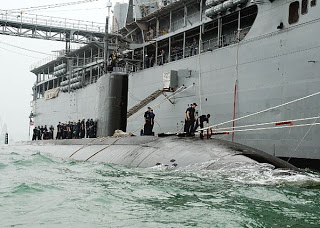
"It's not a cost efficiency when we look at our cannibalisation rates," Vice Admiral Kevin McCoy, Commander of Naval Sea Systems Command (NAVSEA), told a US congressional committee on 12 July. "That means we're taking parts off one ship to put on another ship so we can meet the inspections."

Across the fleet in 2010, the USN saw an average rate of cannibalisation of .48, or about one instance per two ships across the entire year. Across the nine ship classes identified in the data, five ship classes exceeded the MAL.

The US submarine force had by far the highest instances of cannibalisation, according to the data. In the first three months of 2010 US nuclear attack boats (SSNs) and Ohio-class nuclear ballistic missile submarines (SSBNs) saw a collective cannibalisation rate of 1.4, or about one-and-a-half instances per ship.
At the end of the report the article has a brilliant chart that breaks down the cannibalisation rates by type of US Navy vessel.

Cannibalisation incidents per ship per quarter


Jan-Mar 2010Apr-June 2010July-Sep 2010Oct-Dec. 20102010 Totals
Carriers0.450.640.360.090.385
Sub Tenders0.50000.125
SSBN1.431.071.290.861.1625
SSGN10.250.50.750.625
SSN1.41.261.190.931.195
Amphibs.0.370.230.090.110.2
Combatants0.270.410.310.310.325
Auxiliaries00000
Minesweepers0.330.060.280.430.275
Average Across Classes0.640.440.450.390.48

While the nation is at war, this is the behind the scenes ugly of what is keeping a peacetime Navy under current operational tempo, and to make matters worse this is before the budget cuts.

The chart is too generic to draw too many conclusions, but it certainly raises several questions.

I'd be very interested in reasons why the Amphibious Ships and Minesweepers have a lower rate of cannibalisation than other types of surface vessels. In particular, how is it possible the amphibious ships are suffering from low cannibalisation when in fact the average age of the amphibious ship force was much higher over this time period than the average age of the surface combatant force? I'd also be very curious to see if cannibalisation is more common in certain ports than it is others, for example, is it frequent in Norfolk but infrequent in San Diego, for example?

Because nuclear powered carriers, nuclear powered submarines, and surface combatants generally have more advanced electronics than other types of vessels, is it possible these numbers suggest the cannibalisation problem is more related to electronic technologies rather than engineering issues? If it is true the problem is more related to electronics than engineering, it begs the question what the aircraft numbers look like, but also how the Navy intends to get on top of this problem as the Navy starts to incorporate unmanned technologies into the fleet when by design unmanned technologies generally have more electronics than the manned systems they are replacing.

One more question... anyone notice there is apparently no cannibalisation taking place on ships operated by the Maritime Sealift Command? Those ships are operating at least as much as any other ship in the fleet - and probably more - so what is the MSC doing right that the Navy can learn?

The entire cannibalisation issue tells us a story... it is a story about COs who are held to ultimate responsibility and accountability for their ship, and who are doing everything they can to get their ship ready.

This is also a story about some Flag Officer somewhere (or more likely - several Flag Officers) playing with the system as if it is made up of monopoly money, and not being held accountable for their poor decisions made in the name of efficiency. With that said, the lines towards accountability go like this... until Congress and specifically the Senate holds military leaders accountable during promotion hearings, the blame needs to be properly assigned almost entirely on elected leaders unwilling to enforce accountability as a function of their oversight responsibilities. Until the Senate starts holding leaders accountable during promotions, the Senate reflects and enables a culture of leadership absent accountability in the Navy.

Tuesday, July 19, 2024

Israel Intercepts French-flagged Blockade Runner

Lots of news this morning regarding the Israeli Navy enforcing their blockade of Gaza. A French vessel named Dignity-Al Karama was seized this morning. This is the IDF statement put out on the IDF blog.
In accordance with government directives, after all diplomatic channels had been exhausted and continuous calls to the vessel had been ignored, IDF Navy soldiers boarded the Al-Karama in an effort to stop it from breaking the maritime security blockade on the Gaza Strip.

Upon expressing their unwillingness to arrive at the Ashdod port, it was unequivocally necessary to board the vessel and lead it to Ashdod.

The soldiers operated in line with procedures and took every precaution necessary while using all operational tactics determined prior to the operation, and avoid causing harm to the activists on-board while ensuring the safety of the soldiers. Following the boarding, the passengers’ health was examined and they were offered food and beverages.
There is also some video there, which will become more common as video has become the primary weapon in disputes involving states and non-states. Curious though, the French vessel didn't have any humanitarian cargo aboard, meaning the vessels purpose and intent was solely to run the military blockade for political purposes.

As incidents go, there isn't much here. No violence, no humanitarian aid, and the only news to report is that a ship was seized peacefully for trying to run the blockade. As news events go, this is not the big political splash Flotilla organizers were hoping for.

"Liberals See Opportunity for Big Cuts in Defense"

So reads a headline from this morning's Washington Times, and while it does me no good within the "vast right-wing conspiracy", I am inclined to agree with them, though the Devil as they say, is in the details.  What Larry Korb, John Podesta and Barney Frank all have in common (besides presenting a pretty reliable bellwether of what NOT to do on most things) is that they approach DoD as if it were an ATM, sitting there chock full or money just waiting to subsidize the rest of the economy.  Their collective desires to denude DoD of nearly $1 trillion spring not from a sense of what is best for the national defense of the US strategically, but primarily from the standpoint of how to find money within the existing discretionary budget to keep from making real choices on entitlements.

How then, do I agree with them?  Well, I believe that a roughly $600B base budget for defense is unquestionably too much.  How can I say this?  Because I watch the sausage get made, and I see the inefficiency.  Not Bob Gates inefficiency, mind you, where bureaucrats chase around overhead reductions that invariably will have to be reversed at some point--but inefficiency born of cowardice.  And in this case, it is cowardice wrapped in the fuzzy mantle of "Jointness", wherein as long as no service deigns to make its case more loudly than the others, none has to make any really tough choices.  And as long as the Services aren't making noise, OSD doesn't have to referee any unseemly behavior. 

Yes indeed--there's a conspiracy of silence at work in the Pentagon, an omerta-like code that promotes unity above strategy, duplication above decision, and conformity above economy.

When you don't know where you are going, all roads will get you there--and this is the approach to what passes for strategy in the Pentagon.  Lacking in requisite political direction and without the internal tools (or will) to prioritize, DoD lumbers along, occasionally forced to defend its total spending against other discretionary outlays, but never really having to defend how it allocates what it spends internally.  Adding to the dysfunction is the sorry state of our political system, in which one party's adult leadership (the Democrats) is terrified to take on DoD for fear of looking weak, and the other party's adult leadership (the Republicans) is unable to apply its flinty aversion to government growth to national security apparatus of the country.  Both parties are also complicit in the kabuki theater that is military entitlements, convinced that the provision of healthcare at $20 a month and paying for Major Boffamotta's children's private school tuition are necessary pillars of national defense (yes, I realize that the second part is likely not a DoD expense, but work with me.)

I look to my friends in the Republican Party to lead on this issue, but so far without any result.  I say this because like Nixon going to China--real change will only come when the Republicans call for it.  Representative Ryan's roadmap is a wonderful and politically courageous attempt to rein in entitlement spending, but it's always easier to gore the other guy's ox than it is to take on your own caucus--something Ryan recognized by punting on cuts to the defense budget.  Were I to ply Representative Ryan with one of his famous $300 bottles of wine, I feel pretty sure he'd fess up to the ridiculous and strategically vapid allocation of resources within the Defense Department.  There's an opportunity here for the Republican Party to take a measured and strategic approach to national security, one that forces DoD to make decisions--or makes them for it.  Such an approach would start from four propositions:

1.  The United States of America spends too much on defense.  We know this not because it amounts to $600B, but because the process by which that amount is arrived at is irredeemably broken.

2.  There is little linkage between defense spending and national strategy.  The lack of a coherent strategy is reflected in DoD's bloated budget.

3.  DoD will not reform itself.  It is incapable of such a thing--something of which the 25th anniversary of Goldwater Nichols this autumn should remind us.

4.  That wasteful defense spending does not deprive other programs of necessary funding--rather, it deprives the taxpayer of his/her own money.

Yes, there is indeed an opportunity for big cuts in defense spending, whether driven by liberals or conservatives.  The issue though, is not one of simply reducing a budget; rather it is one of resourcing a military consistent with our view of what we wish to be in the world.  We need to get that view right, and then have the courage to implement it.

UPDATE 7/20:  Thanks to Andrew Sullivan for linking to this piece.  

Cross-posted at The Conservative Wahoo.

Bryan McGrath

Sunday, July 17, 2024

Senator Webb Talks About A "Munich Moment" in Asia

Young Senator Webb
Virginia's senior Senator uses some strong language to describe Chinese activities in East Asia.  His sense of what is truly in the strategic interest of the country is spot on, even if his rhetoric is a bit overdone. 

Bryan McGrath

Thursday, July 14, 2024

Congress Goes Powerpoint on Navy Readiness

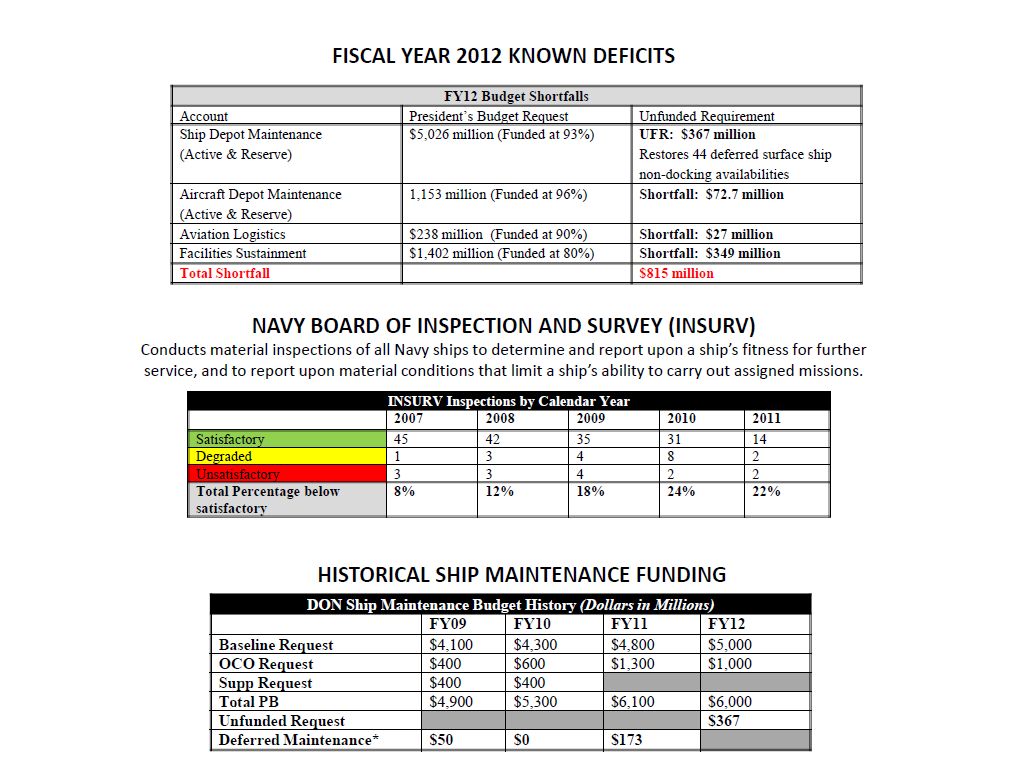
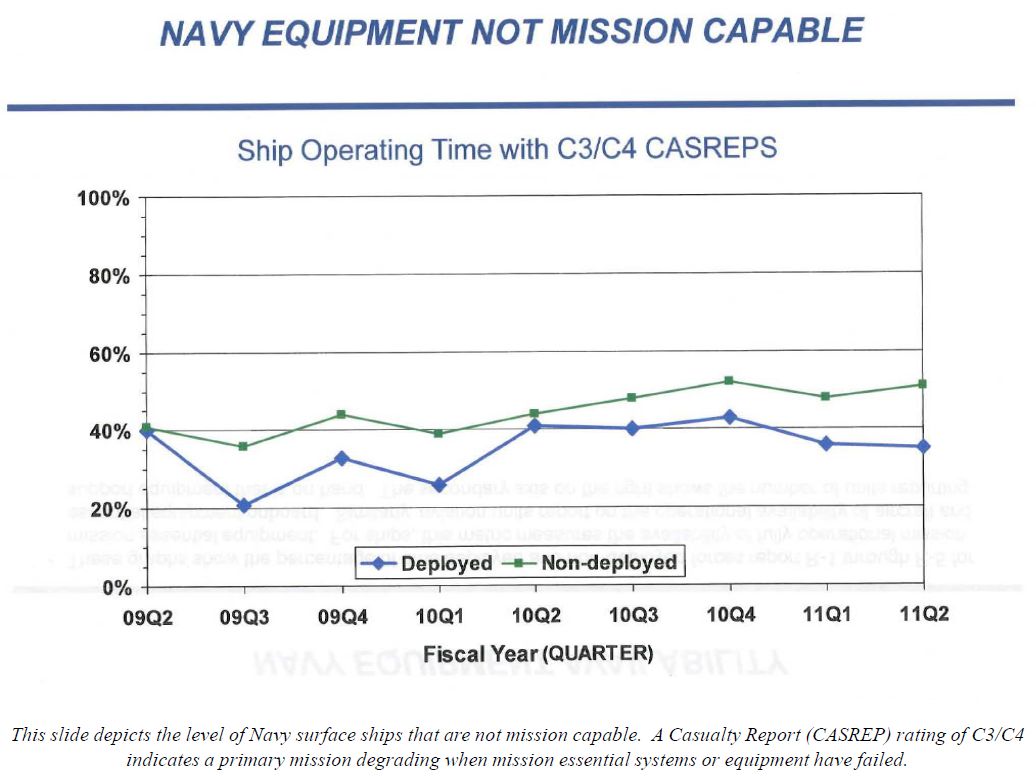
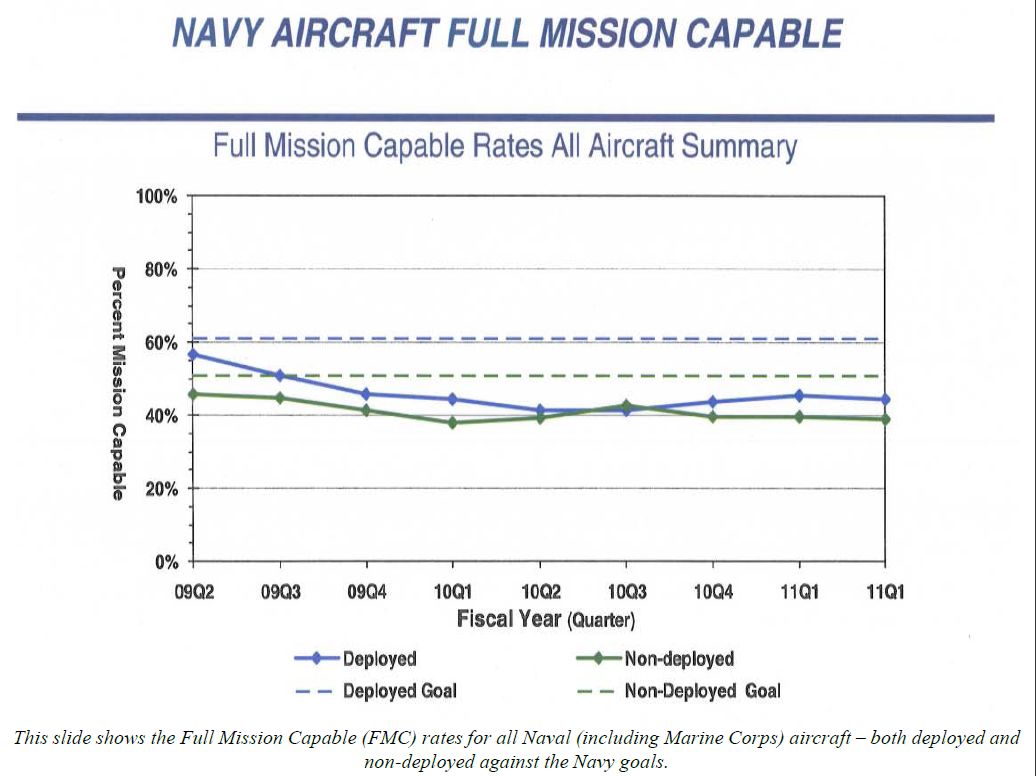
In the hearing yesterday, there was a moment where Congressman Randy Forbes of Virginia went Powerpoint on the Navy. During the opening testimonies, the Navy went Powerpoint on Congress when explaining the Fleet Response Plan. These were the very interesting slides Rep. Randy Forbes used in his response. Click the images to read. From here.

In the last four years inspection failures for Navy ships have nearly tripled. Currently, 1 in 5 ships inspected is either unsatisfactory or unfit for combat. Since 2007 inspection failure rates have risen from roughly 8% to 24%. Yet, this year alone, the Navy faces a $367 million funding shortfall for ship maintenance.

On average, Navy deployed ships are forced to spend nearly 40% of their time with at least one major equipment or systems failure. Essential equipment or systems on Navy ships could include anti-air defenses, radar, satellite communications, or engines. Almost 40% of the time, deployed ships have at least one essential piece of equipment that has failed and prevents them from meeting a primary mission.

Over one-half of our currently deployed aircraft are not combat ready. Fifty-five percent of deployed Navy and Marine Corps aircraft are not fully mission capable. For every two aircraft sent on deployment, one of them cannot perform a critical mission for which it was deployed . Despite this, the Navy faces a nearly $100 million funding shortfall for aviation maintenance and logistics this year alone.
It was remarkable to me that Rep. Forbes kept apologizing to the two Vice Admirals for beating them over the head with the facts regarding Navy readiness. In my opinion, I think it would have been more appropriate for Navy leaders to apologize to Congress and the American people for being consistently below the stated readiness requirement.

When Congress asked the panel who in the Navy is responsible for Readiness, both VADMs were quick to point to ADM Harvey. Remember, Commander Fleet Forces Command is responsible for fixing these problems, while former Commanders at Fleet Forces Command who were simply voting present during the deteriorating surface ship standards are somehow not responsible.

For evidence, just look to the next CNO.