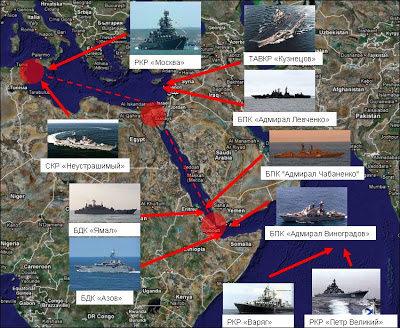
Background here, which based on his commentary, may have been what spurred him to produce the graphic.

 As an upstate New Yorker, let me voice my rarely vocal political opinion that Governor Patterson has made the right choice with Kirsten Gillibrand. From Albany Times Union:
Here’s what we know for sure: Gov. David Paterson will finally reveal his choice to replace Hillary Clinton in the U.S. Senate at noon today.Attorney General Andrew Cuomo would have been a good choice, but this is a great choice in my opinion. The media is running around asking why. Here is why. Next year this Senate seat will go to election, and by putting her in this position, she will never lose it, ever. Cuomo carried only 58% of the state vote in a deep blue state, Gillibrand carried a red district with 58%. She is smarter than her public charm presents, and she is not only well liked, but she relates well with people in a way that doesn't smell politik. She is serious about family, serious about jobs, and has always demonstrated to her constituency that she is serious about her job of representing them. It does annoy my very progressive friends that she gets a 100% NRA rating, which by the way, doesn't bother me at all. I've met her several occasions, and have nothing but good things to say about her.
While there’s nothing official about who will be standing next to him at the Capitol, strong signs are pointing in the direction of U.S. Rep. Kirsten Gillibrand, D-Greenport.
While Gillibrand’s spokeswoman denied any contact between Gillibrand and Paterson throughout the day Thursday, a highly placed Democratic source said that members of New York’s Congressional delegation were briefed Thursday afternoon that Gillibrand will be named.
 Matt Armstrong has found a gem of an article. I do not jest when I suggest in the hands of someone clever this article could fuel talk radio shows on either side of the political isle for a month. This is a really interesting Russian analysis of how to attack the United States with soft power.
Having discovered that economic power does not immediately translate into political influence and may in fact alienate those it is supposed to attract, the Russian government needs to identify new ways to influence the West but finding that its options are not nearly as good as many in Moscow had thought, according to a Russian analyst.There are some money quotes in Andrey Pronin's paper. This paragraph is just a sample.
And the most effective way to do that, Andrey Pronin writes in an essay posted today on a Moscow State University portal that has often served as a source of foreign policy ideas for the Russian government, is for Russia to deploy what he calls its "soft force" against American "soft power".
"In the 1940s and 1950s," the Moscow analyst continues, "a significant part of the most respectable Western intelligentsia held leftist views and openly sympathized with the USSR, and English aristocrats worked for Soviet intelligence services on the basis of their convictions in this regard."
Today, he says, Russia needs to find "allies interested in itself within America" and to "form a pro-Russian lobby, a circle of influential people who respect and support Russia and who will exert an ever greater pressure on the political establishment of the United States" on behalf of Moscow. ...
Moscow needs allies, and the two most obvious ones are India and China, neither of whom Pronin suggests is comfortable with American-style globalization. If such a "union of the three giants" is formed, he concludes, Russia will occupy the leading role of a scientific and innovative center and the developer of humanitarian technologies and standards."
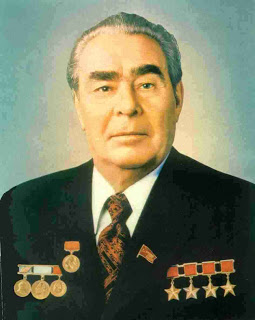
The situation in American society favors the implementation of these plans. In many ways the United States today is reminiscent of the Soviet Union period of stagnation under Brezhnev. Militarism, foreign adventures, attacks on freedom of speech and human rights, censorship, the presence of the official ideology are evident. Multinational and multiracial American society does not have a common history and defines itself in terms of ideology, which is a more fragile foundation of national unity, rather than a common culture and history that binds cultures. If you choose to continue the comparison, the U.S., as in the Soviet Union, should be a peaceful ideological and cultural revolution. The challenge for Russia is to give impetus and direction to the process. Russia should contribute to the U.S. situation in a way similar to how the US promoted the collapse of communism in the Soviet Union, namely by injecting quarrel into the most creative layer of Soviet intellectuals with Brezhnev nomenclature. Russia needs to formulate such a cultural project that, first, develops influence over American intellectuals, and secondly, leverages against the American political system that is out of balance, and split the American artistic and intellectual elite in power.In other words:
 I think something got lost in translation.
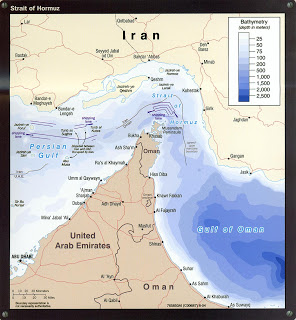
Iranian technical university student Hassan Sharifzadeh drafted a new reconnaissance submarine that can avoid radar detection, the Iranian Fars news agency said.I don't know about you, but the idea of a submarine being able to avoid "radar" made me laugh out loud. I also laughed when I saw the photo in the article.
No crew will man the submarine which will be controlled remotely.
The submarine can reach a depth of up to 8 meters and carry 8 kilograms of explosives to place near enemy positions. A SIM card connects the controller to the submarine.
The submarine also makes photos and videos and sends the data to the control center, Sharifzadeh said.
