
Tuesday, December 2, 2024

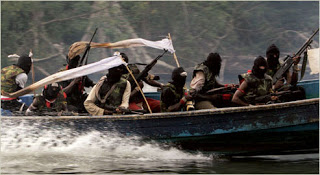
UN Passes New Resolution For Somali Piracy

News report here.
Acting under Chapter VII of the UN Charter authorizing the use of force, the 15-member body called for the “seizure and disposition of boats, vessels, arms and other related equipment” used or suspected of being used for piracy, which has recently reached a peak off the coast of the Horn of Africa country with the hijacking of a Ukrainian arms ship and a Saudi oil tanker.

The Council said it continued “to be gravely concerned by the threat that piracy and armed robbery at sea against vessels pose to the prompt, safe and effective delivery of humanitarian aid to Somalia, to international navigation and the safety of commercial maritime routes, and to other vulnerable ships, including fishing activities in conformity with international law.”

It welcomed steps by Canada, Denmark, France, India, the Netherlands, Russia, Spain, the United Kingdom, the United States, and regional and international organizations to counter piracy, specifically citing North Atlantic Treaty Organization (NATO) escorts for WFP vessels and the European Union decision to launch a 12-month naval operation.

Taking note of the crisis situation in Somalia, which has been riven by factional fighting and has not had a functioning central government since 1991, and the lack of capacity of the Transitional Federal Government (TFG) to interdict pirates as well as TFG requests for international aid, the resolution authorizes cooperating States and organizations to enter Somali territorial waters to repress piracy.

It also calls on countries, in cooperation with the shipping industry, the insurance industry and the UN International Maritime Organization (IMO), to issue ships entitled to fly their flag appropriate advice on avoidance, evasion, and defensive techniques to take if under attack or threat of attack when sailing in waters off the Somali coast.
The resolution also asked Secretary-General Ban Ki-moon to report within three months on ways to ensure long-term security off the coast of Somalia, including UN World Food Programme (WFP) deliveries, and options for coordination and what the leadership role for the UN might be for rallying Member States and regional organizations.

What does it all mean?

It means God loves irony. Hillary Clinton was just named Sec. of State, and the time line of three months means that when she enters office she will have until March 2nd to advise Secretary-General Ban Ki-moon regarding a framework under the UN that is acceptable to US strategic interests to fight piracy off the coast of Somalia.

I think there is some irony that Hillary's first big task as Sec of State is to form the rule set for what will almost certainly be the next US military action, probably in association with the United Nations, and it involves a country that is one of the skeletons in the Clinton closet. I see some symmetry here, because she gets to fix an outstanding issue that still lingers in US policy that she is more than qualified to understand better than most. Her 8 years in the Senate Armed Services Committee should also come in handy here.

The strategic approach to piracy requires patience, but with AP Møller Maersk, CMA-CGM, MSC, Pacific Carriers, TMT, Seaarland Group, and Motia Compagnia di Navigazione now all routing ships around the Cape of Good Hope instead of the Suez, both the shipping market and global politics are all still moving in the direction that best serves US strategic interests for cooperation and partnership, and it all leads to legal framework needed to deal with the problem both at sea, and in Somalia. I have a feeling, that unless the EU is wildly successful next week when they begin their EU piracy mission, the world will be quite receptive to ideas, suggestions, and guidelines recommended by Secretary Clinton, after all, the whole world wants the US Navy to help, and may actually require it, only further helping her position to manage the rule set.

The more and more the media continues to highlight piracy as the problem, the better and better the maritime strategy at work in regards to Somali piracy helps US strategic interests in my opinion. While many look at piracy as the problem, I am very comfortable stating that piracy has become the solution for a stretched US military in the post Bush world, and if your willing to look a little further into the future, the solution for many problems hampering Somalia as well.

After all, we still haven't even heard from China yet. There are still many chapters in this novel to be written.


Update: Full text of resolution here. You know, this has some interesting language, for example, articles 14 and 15 look like the foundation of a legal framework. This resolution clearly won't solve the problem, since it is limited to sea, but it might allow international forces to shoot back by reducing the concerns regarding taking prisoners.

Submarines in the Indian Ocean

The Pakistan / India naval balance has been and is continuing to be an excellent look at a regional naval competition between states with differing goals. Strategy Page offers an update on the submarine acquisitions of both sides. Pakistan is retaining consistency, moving to acquire three modern SSKs via licensed production of the German Type 214. Although I'm not sure if the Pakistani 214s will have the fuel cell systems of the several European models of this boat, it seems that they will get the AIP systems and, possibly, retrofit these onto some of their older Agosta 90B boats.

Pakistan's navy is a small frigate navy with a submarine force which appears optimized for either commerce raiding or attacks on high-value warship targets. Although they possess two AORs, they do not possess significant power projection assets. This is in line with their navy's position in the region, that of a defensive force (and spoiler) against India.

India, on the other hand, has a much more varied set of naval capabilities. Through construction and purchase, they have built up a respectable amphibious capability, and are working on setting up forward outposts to support sea control missions around the Indian Ocean basin (notably on Madagascar to support African coast antipiracy missions). Their submarine force is at present a conventional one, but they have experience (via a lease for several years) at nuclear submarine operation. They have indigenous nucs under construction and have recently been in the news for their maneuvering to acquire ex-Soviet SSN hardware. Rumorintel has them planning to use their domestic nuclear submarine production cap to produce at least one SSBN for nuclear deterrence.

India is also upgrading its SSK fleet, choosing to pursue the French Scorpene with AIP as well. Their submarine fleet is presently some three times the size of Pakistan's, at 16 boats not counting those under construction. Their indigenous production and 10 boats of the ex-Soviet Kilo boats (in Indian service, the 'Project 877'/ Sindhu class) has left them with a relatively new and capable force (despite arguments in the Indian journals and press about the 'lack of capability' of the 877s).

Are these new acquisitions upgrades, increases in capability, or simple fleet maintenance? It's a bit clouded, but we can make some guesses.

Pakistan's acquiring three new boats is numerically simple replacement of their oldest - two Agosta 70 boats commissioned in 1979 and 1980. At that, these boats are coming up on thirty years of service, and with their new boats not scheduled to come online for four to five years, this makes the new acquisitions a relatively straight fleet-maintenance purchase by numbers. The AIP capability, especially the refits, are a different story. It's harder to tell if this is a capability acquired simply because it has become relatively common and affordable on SSKs, or if it reflects different thinking on the part of the Pakistani navy.

Although not comparable to nuclear propulsion, AIP (Stirling and fuel cell operation) does offer a significant upgrade to a SSK. These boats can operate quietly, if conservatively, for several days submerged - which in combat scenarios with a coastal neighbor is nothing to sneeze at, especially when that neighbor has high-value naval assets such as large amphibs and aircraft carriers. Pakistan's navy has not done well in prior clashes against the Indians, but those clashes are also not properly characterized as high-effort naval combat. Gunboats and frigates have gone head to head in sea actions, mostly.

India has now (and will in future) the capability to credibly prevent Pakistan from operating at sea either commercially or militarily in the case of full-scale conflict. India, however, is also concerned with other adversaries; in addition to the antipiracy mentioned earlier, India worries about the rising influence of China in Africa and in the Indian Ocean, and their fleet reflects this. They have long maintained at least one active CV, and their efforts to acquire new ones (Gorshkov) are well-documented. In the case of high-effort conflict, I would expect the Pakistani navy to attempt to engage Indian navy assets to prevent them from supporting ground operations and in general to attempt to whittle down India's capabilities and influence in the region. India, on the other hand, would attempt (as in the past) to fix and engage the smaller and less capable Pakistani fleet in order to achieve local sea control in support of anti-commerce and shore strike missions.

At first glance, if and when India manages to acquire nuclear attack submarines, they won't directly increase the threat to Pakistani naval assets, which will mostly operate in the littoral anyhow. The Indians will, however, gain the ability to credibly oppose the PLA(N) in their own ocean, and will gain sea denial at long ranges through SSN patrol. At present, however, their determination to both modernize their SSK force as well as pursue a blue-water SSN capability indicates at least two components to their goals. The SSK force is good for commerce attacks and for sea denial in the littorals, where Pakistan operates. The SSNs are a statement of intent to pursue sea denial farther afield, and perhaps even threaten SSBN assets of their opponents.

I remain interested in India's acquisition of SSBN capability. Given that their most likely target sets (Pakistan and China) are relatively nearby, their patrol patterns and technological requirements are somewhat eased. India gaining a secure second strike capability is of high importance against Pakistan, since land-based missiles (even mobile ones) are high-value and fragile targets in the event of an all-out conflict. While it will not necessarily increase their counterforce capability against Pakistan or China, it will up the deterrent power of Indian nukes - and if they only have one or two SSBNs, those will become high-value targets for other submarines.

I will be watching closely to see if Pakistan and India and China slip into the patterns the U.S. and U.S.S.R. evolved during the cold war of shadowing each others' assets both for potential counterforce and for simple warning surveillance.
Image from Wikipedia of an Agosta 90B

The Latest Evolution Of Pirate Tactics

When thinking about NATO and Somali piracy it is important to keep in mind, the ends of strategy at this time is not to fight piracy, rather it is simply to deter piracy. This would be an interesting after action report, one that would probably drive the hawks of piracy batshit.
The Italian warship, Luigi Durand de la Penne, also used its helicopter against the pirates, dispersing their attack, a NATO official said.

"This is probably the biggest multiple, coordinated attack we've seen," the official said, adding that more than 12 pirate boats were involved, perhaps as many as 20.

"There were so many of them, that it was more important to protect the motor vessels than to go after these dispersing boats," the official said, on the sidelines of talks between NATO foreign ministers in Brussels.

"These attacks are more and more brazen," he said, adding: "The bottom line is: this is a busy part of the world."

The vessels under threat were the Hambourg Star, flagged out of Liberia, the Hong Kong registered Overseas Hercules, Iranian flagged Iran Esteghlal, the Sea Queen from Singapore, and the Alexander Sibum flagged in Antigua and Barbuda.
Final score, no hostages taken and no pirates were hurt. In the world of the current NATO anti-piracy campaign, that is total victory. Yes, I agree the evolution of tactics is interesting, but even if pirates swarm with 200 ships and capture 15 ships in a convoy, the problem remains primarily political, not Navy centric.

It will be interesting to see if we can finally get a political reaction when the pirates decide to take on a warship. Given the steady tactical evolution, that action will probably come soon.

Send Them To Davy Jones... Maybe Not

Why don't we just arm up commercial ships and fight back? I've been reading several blogs associated with the maritime blogger community thinking maybe opinions are changing with all the piracy, but all indications are the idea of arming commercial ships remains unpopular despite all the piracy. For those armchair gunners who think putting force on ships is the answer, this is an interesting read.

Also interesting, Kennebec Captain notes that the incident the other day where the British security professionals abandoned ship when the Biscaglia was being taken by pirates has an interesting twist, the security folks were unarmed, but were using a LRAD. I guess it was not effective? LRAD is not a new system, it could be that pirates have adapted and it is losing its effectiveness

That really is part of the issue here. Firearms are not on commercial ships, and most captains don't want them on the ship because it can create more problems than it can solve. What happens when a ship fights back, kills someone, and pirates still hijack the ship? Will they seek revenge on a crew member? Think about all the legality issues here, if ships start fighting back, what happens when a Japanese whaler shoots someone from the Sea Shepherd Conservation Society during a TV scene? If I owned the Japanese Whaling Company under assault in that show, I'd sue both the organization and the Discovery channel itself for funding piracy, because the Discovery channel is clearly funding acts on that show that can be accurately described in Article 101 (PDF).

If pirates are now overcoming non-lethal means of piracy deterrence like LRAD, is arming up commercial shipping the next step? It is going to be very interesting to see what the EU does when their ships deploy, particularly with the Germans deploying so many troops, and it sure would be nice if we could get someone in the media to actually ask one of our elected officials about piracy.

It amazes me how so many political pundits in this country will spill ink discussing piracy, often without the slightest clue what the hell they are talking about, but these same folks don't seem to care our nations elected leaders have still not been required to answer a single question on the piracy issue, despite all the media attention. Am I the only person who thinks that is odd?

US Flagged Cruise Ship Attacked Off Yemen

Pirates are evolving. Ransoms are higher depending upon the number of people are taken hostages, which explains why they would go after a cruise ship.
Pirates chased and shot at a U.S. cruise liner with more than 1,000 people on board but failed to hijack the vessel as it sailed along a corridor patrolled by international warships, a maritime official said Tuesday.

The liner, carrying 656 international passengers and 399 crew members, was sailing through the pirate-infested Gulf of Aden on Sunday when it encountered six bandits in two speedboats, said Noel Choong who heads the International Maritime Bureau's piracy reporting center in Malaysia.

The pirates fired at the passenger liner but the larger boat was faster than the pirates' vessels, Choong said.

"It is very fortunate that the liner managed to escape," he said, urging all ships to remain vigilant in the area.

While people are sure to jump and start crying where the US Navy is, the place to start hammering questions is not the Pentagon, it is on Capitol Hill and the White House. The Navy cannot take unilateral action without a political policy regarding Somali piracy , and that policy does not exist.

Is it too late in the Bush administration to ask what him about this incident? Is it too early in the Obama administration to begin the conversation of piracy? Unlike almost every other attack we have seen for the last several years, this ship is flagged US, we can't ignore this one because the protection of US flagged ships is our national interest.

More details are available via the press release of the incident on the Oceania Cruises website.

Cruise ships are unlikely and probably the most difficult target for piracy though, representing one of the hardest types of ships to take at sea. Cruise ships can do 25 knots, or more, so unless total surprise is achieved it is hard to believe a cruise ship could be taken by Somali pirates.