Tuesday, November 20, 2024

Saudi Arabia Wants a Littoral Combat Ship Fleet

In July I pointed out that Saudi Arabia was interested in the purchasing the Littoral Combat Ship, specifically the General Dynamics version. Saudi Arabia has been advertising since 2005 that they were interested in purchasing 4-6 Patrol Frigates and 6-8 Corvettes in 2007. 2007 would be year two in a three year massive military purchasing spree, which started with Army and Air Force purchases in 2006 and will conclude in 2008 with athe purchase of new submarines. It was originally thought Saudi Arabia was going to purchase the French FREMM, but it appears the Multi-Mission Combatant (MMC) version of the Littoral Combat Ship (LCS) is getting all the attention lately.

The Saudis are not known for the skill of their military commanders. Their military is among the most spectacularly equipped in the world, which only serves to emphasize the poor quality of its leaders, soldiers, airmen, and sailors. This lack of large scale proficiency is Saudi Arabia's weakness.

That is why with the $20 billion in spending discussed for Saudi Arabia, most of it will ultimately go for training. We are already seeing a lot of this with the purchases so far, if you read the details of the specific purchases for the Saudi Air Force and Army over the last year and a half, you will notice the price is far and above the equipment costs. That is because Saudi Arabia understands that it needs better military training, something our defense industry provides, and is working on that problem.

When you talk about naval vessels, it is noteworthy the MMC version of the Littoral Combat Ship has a crew roughly a third of the Riyadh-class frigate. Not surprising then, in leading up to the purchase of Littoral Combat Ships, it was disclosed that Saudi Arabia is looking for as many as 12 warships and is looking to spend between $11 - $13 billion dollars, which as you might guess, is high for 12 Littoral Combat Ships because it includes training costs.

The coming sales may include Patriot anti-missile battery upgrades for several countries, plus a new class of shore- patrolling warships for Saudi Arabia's eastern fleet, according to retired Air Force Lt. Gen. Jeffrey Kohler, who held talks on the matter before stepping down in August as the Pentagon's top arms-sale official.

The warship piece "of the so-called package could run as high as $11 to $13 billion and take well over a decade before delivery of the last ship" of up to 12 vessels, he said in a telephone interview.

Eastern Fleet. Iran. Iran has risen far enough for both Riyadh and Washington's tastes. With the minimal crew size of the LCS MMC, a well trained crew of sailors would be able to field a formidable force of LCS MMCs to curb Iranian influences at sea in the Persian Gulf. The LCS MMC could be the right tool for Saudi Arabia to push back against Iran in the Gulf, something the US is tired of doing without regional assistance. While it has been reported that Lockheed Martin was pushing the LCS at the Dubai Air Show, the characteristics of the General Dynamics MMC LCS previously discussed for Saudi Arabia.

Principal Characteristics:
LOA: 127.6m
Beam: 31.6m
Draft: 4.4m
Displacement Full Load: 3120MT
Max. Speed (Light Load): >40 knots
Range: Cruise @16 knots: 4,500 nm
Sprint @ 36 knots: 1,500 nm
Mission Bay: 1,100 sqm (11,800 sqft)
Flight Deck: 1,030 sqm (11,100 sqft)
Accommodation: 110 personnel

Armament Options Include:
32 Missile Vertical Launch System
1 57mm Gun (Forward)
8 Harpoon Missiles
2 Close-in Weapons systems
6 ASW Torpedoes

Propulsion and Electrical:
Gas Turbines (2)
Diesels (2)
Waterjets (4) and Retractable Azi Thruster
Diesel Generators (4)

While there is legitimate reasons why the JDAM should be discussed, and perhaps not be given to Saudi Arabia within the context of the current proposed defense sales, the MMC version (either GD or LM) of the Littoral Combat Ship is the most appropriate defense sale the US is making to the region outside of Patriot missiles. The name of the game in the Persian Gulf is security. The MMCs proposed supposedly come not only with AEGIS but additionally a ~1000 sq meter modular command center (which I've heard rumors is intended for MIW), which to me appears absolutely perfect for both the defense and security requirements of the maritime environment of that region.

Encouraging the Release of the Navy Strategic Plan (NSP)

When the Maritime Strategy was released, we were told a Navy Strategic Plan (NSP) had also been produced to accompany the Maritime Strategy, but it was classified and unavailable for discussion. I was one of a number of people who was left wanting.

Inside the Navy (subscription) is reporting that an unclassified version of the Navy Strategic Plan (NSP) may be released. "May" means "maybe" or "perhaps" because no decision is made, however the article also says the Navy also intends to rewrite the current NOC to match the new Maritime Strategy.

Morgan said naval officials are “just breaking ground” on writing a new NOC that will be issued in the spring of 2008.

“What that will do is it will take the maritime strategy and then explain for Marines and sailors everywhere what mission we’re going to perform to support the strategy, and in general terms, how we’re going to operate,” he said. “So we will begin to implement the maritime strategy by explaining how we’re going to operate.”

The service also has a classified document intended to drive budget decisions for making that strategy a reality, called the Navy Strategic Plan (NSP).

Morgan said naval officials have not decided whether to publish an unclassified version of the current strategic plan. (ITN reported on Nov. 5 that Adm. Jonathan Greenert, commander of U.S. Fleet Forces Command, said Oct. 23 at a conference in Panama City, FL, that an unclassified version of the plan will be released.)

“We’re considering being able to publish the unclassified portions of the NSP,” Morgan told ITN. “That decision has not been finalized yet. If there’s merit to that we’ll carefully consider it, but there is no specific plan right now.”

Personally speaking, I encourage Admiral Morgan to release an unclassified version of the NSP. I had my say of the Maritime Strategy, and like others I'm ready to move on and focus in on what it means. Considering these comments by Admiral Morgan are made at a presentation in Florida intended to explain the Maritime Strategy, clearly I believe more information like an unclassified NSP available online would contribute to your efforts.

Steeljaw Scribe has more on the NOC and NSP. Considering he helped put together this stuff for the Navy when he was active duty his take is a must read analysis of the context for the NSP and NOC for the new Maritime Strategy.

Those Chinese Made Hard Drives

Xformed is discussing the hard drives made in China that came packaged with a Trojan horse virus installed. I think it is an interesting discussion, it goes back to concerns regarding trusting Chinese imports, which are taking a beating today. I'm not sure his information is completely accurate, as it is slightly different than the information we got comes from our weekly meeting/briefing with our security vender. It could be there is more than one incident, but some of the information matches.

Some have pointed to this incident as part of a larger problem of Chinese espionage on the United States, but in reality, it is part of a much broader criminal problem originating from China that goes completely unnoticed to most of the world, that world that ignores the complaints of online video gamers.

The hard drives in question are Maxtor brand, which is owned by Seagate. Only 1800 or so were infected, and they were chosen specifically. While it is true these large volume hard drives are often found in government, the hard drives are also very popular among that other super tech community, gamers.

As I have said before, I got started in IT in gaming. The gaming culture today, not just in the US but in the world, is high tech competitiveness and is so much larger than most people realize. The virus that was discovered on the Maxtor Basics Personal Storage 3200 hard drives built in China is called Win32.AutoRun.ah, which is a molar virus that searches for passwords to online games. The 'hackers' weren't trying to steal national secrets, rather they were looking to steal online gaming accounts for World of Warcraft and other online Massive Multiplayer Online Roleplaying Games.

That might sound silly, but there is big, big money in this type of theft. I have previously briefly discussed my involvement in the Real Money Trading (RMT) aspect of online gaming, but I'm not sure I ever really stated the potential. There are 1800 known cases of infected computer systems under this incident, if only 1% turned up account information for World of Warcraft, that would be 18 accounts. Depending upon the account, the potential exists to earn between an average of $150 and $250+ selling the equipment used by characters in the game. That could be anywhere between $1000 - $4000 dollars. When you consider the annual salary of the vast majority of 4+ year college degree professionals in China is about $5000 today, and lower for less educated workers (the typical IT worker may only earn $1500) you can see how only 1% returns on this hack might be very lucrative.

This type of crime is very common. For years the Chinese would scan gaming message boards constructed in PHP searching for known vulnerabilities, and once they exploited admin access they would query the database for the terms "pw" or "password" etc.. Ultimately, many, many US game accounts would be stolen by retrieving game account IDs and passwords through the history of private messages sent via those forums, and ultimately some gamer in the US would be ripped off by a Chinese IT worker who had stolen his gaming account info, stripped the game account of all the hard earned equipment that may have been accumulated through months or even years of gaming, and sold the stolen goods. This is simplistic cyber criminal behavior, hard to trace, and almost never cracked down on to this day. The gaming companies do not care. Big money on the gaming black market though, a RMT market that is now worth well over $1 billion dollars US total according to IGE back in 2005.

That $1 billion number might be low these days though, when we did RMT just a few years ago many people I know were clearing almost 6 figures without much effort, about 20 hours or so of gaming (or unattended gaming) a week.

Brazil and the Nuclear Submarine

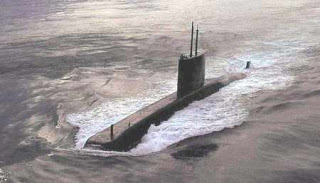
Brazil, one of the fastest rising economies in South America, a model for Green Earth types looking to get off the oil dependency, has discovered a large field of oil off shore. Supposedly, as a result of this discovery Brazil will be building a nuclear submarine.

Well, sortof. Actually Brazil has been working on a nuclear submarine since 1979, and while they have mastered many of the components they haven't yet developed a domestic submarine reactor. The latest news about the Brazilian nuclear submarine though actually includes figures. From the AP.

Brazil has been talking about building a nuclear submarine for decades, but the project got a boost in July when President Luiz Inacio Lula da Silva announced $540 million in funding for uranium enrichment and the sub program.

Jobim said earlier this month that he wants to come up with an outline within three months to build a submarine for about $1.2 billion, the Agencia Estado news service reported.

Well, sort of. According to Admiral Julio Soares de Moura Neto, it is actually a billion over 8 years, with $130 million the first year. The goal is to have an 11 MW reactor built and ready to go by 2015, with a nuclear submarine in the water by 2020.

This project is being sold as a project of national pride. Brazil already has the former French aircraft carrier Foch, but a nuclear submarine would put the nation in unique company. In alot of the commentary I have read, many believe the only thing that will stop Brazil from building the submarine is in fact the US.

It leaves a lot of questions without answers though. The Type 209s are badly in need of modernization, and in 2006 it was announced that Brazil had paid $1.8 billion for upgrading the five existing Type 209s and purchasing a Type 214, although no one over at the Brazil Naval blog seems to know anything about that. Is the money being spent to build the nuclear submarine the same money that would be allocated to modernize the Type 209s and buy the new Type 214?

The question matters, because while it may be national pride on the line for a nuclear submarine, Brazil doesn't need a nuclear submarine to guard an oil field off its coast.

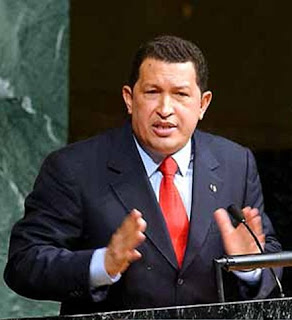
Does Chávez Control the Military?

You probably caught the Drudge link to Bloomberg that Chavez is shooting his mouth off again, how he thinks oil should be leveraged as a weapon, how the declining dollar is the fall of America, and how $200 a barrel is the predicted price of oil should there ever be war.

For me, the rhetoric was typical and of no interest, even though the New Yorker ran an article praising Chavez last weekend. I read it, left it in the bathroom where it belongs, but basically the New Yorker can't find anything wrong with a guy who is trying to destroy his nations constitution, shoots student protesters, or cracks down on critical media.

Makes me wonder what he would do to the Miami Herald.

Venezuelan President Hugo Chávez's push to radicalize his leftist ''Bolivarian revolution'' has sparked growing unease in segments of the armed forces, only partially reflected in the recent complaints by a former defense minister, military officers and analysts say.

The observers added junior officers are undisciplined, that there is a profusion of pamphlets criticizing Chávez circulating in military garrisons and resistance by some officers to carry out presidential orders and that there are complaints of corruption among senior officers loyal to Chávez.

Chávez is largely believed to have control of Venezuela's 120,000-strong security forces as the country approaches a Dec. 2 vote on constitutional reforms that would add to his already-vast powers. He has sidelined scores of critical officers and replaced them with loyalists since a 2002 military coup briefly toppled him.

Yet the dissent within the military could spread if voters approve the reforms, according to the analysts.

The article doesn't let up, in fact it piles on and goes on and on regarding the discontent with Chavez in the military. For example, Chavez changed one of his proposals back in August deciding not to remove the national guard. Now we know why.

But while addressing an audience at guard headquarters in Caracas, Carrión met with a group of corporals and ''had the novel experience of hearing the corporals criticize him openly,'' said the colonel, who said he had first-hand knowledge of the incident. Two other Venezuelans told El Nuevo Herald that they had also heard of the incident from guard officers who were present.

'They warned him that not only would they defend the institution from a potential constitutional elimination, but they would also fight to the death `if they come to take our [heavy] guns,' '' the army colonel added.

''That situation led [Carrión] to summon a meeting of the guard's general staff, and they decided to talk to Gen. Gustavo Rangel Briceño, the minister of defense. The minister spoke to Chávez, and [the president] withdrew his intention to eliminate the guard,'' the colonel added.

On Aug. 25, Chávez announced that he was withdrawing his proposal for the national guard.

Observers have assumed that the reason Chavez was off buying heavy conventional military equipment like fighter aircraft and submarines to basically bribe the military. That might be working, but military corruption can create problems too, and sometimes you can't buy off everyone.

The article ends with an interesting quote, ''The Venezuelan soldier is not willing to die for any politician, whether it's Chávez or anyone else,'' Camacho said. ``He is willing to defend his country, the Venezuelan state, but not a government.''

It opens the question, will the military protect the constitution? If Chavez gets violent, then what? The US called on regional actors to address the crackdown in Burma, but when talking about Venezuela, the US is the regional actor.