Last week, Galrahn mentioned this Kai Thaler IPRIS article on the potential cooperation between China and Brazil on carrier operations training. The article includes a discussion of what China is getting out of the deal, and also briefly summarizes China's case for acquiring an aircraft carrier. Thaler's speculation on the Brazilian side is a little bit more interesting; he suggests that Brazil may want the general prestige associated with helping to train the military of a nascent superpower, but may also want concrete Chinese support for a permanent Brazilian spot on the UN Security Council, and assistance on a nuclear submarine program.
The first two make sense, but I'm uncertain about the last. While China might be limited in its potential naval aviation training partners, it seems likely that Brazil has multiple options for collaboration on nuclear submarines. Brazil has a good defense relationship with France, and Russia has proven more than willing to share technology associated with nuclear submarines (and even to lease boats). France and Russia are legally limited in their ability to transfer nuclear technology to non-nuclear states, but China suffers under the same handicap. Why, given these options, Brazil would focus on cooperation with a relatively inexperienced operator of nuclear submarines is unclear to me. I suppose it would have helped if Thaler had detailed the sources of what he calls "speculation" that China might assist Brazil with SSN technology and expertise.

Showing posts with label Nuclear Issues. Show all posts
Showing posts with label Nuclear Issues. Show all posts
Wednesday, February 17, 2024
The Brazil-China Carrier Bit

 I'm an assistant professor at the Patterson School of Diplomacy and International Commerce, University of Kentucky.
Tuesday, January 5, 2024
Don't Make 'Em Like They Used To...
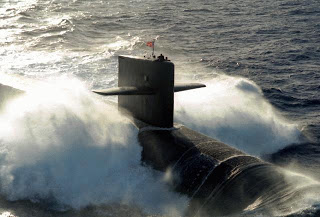
Two generations of Russian boomer in stark contrast...
I'm an assistant professor at the Patterson School of Diplomacy and International Commerce, University of Kentucky.
Thursday, December 24, 2024
DOE to Study Expansion of Nuclear Infrastructure in the US
 Building off the last story about COSCO, just in case you don't think this US administration is interested in using nuclear power as a carbon based alternative, I suggest you reconsider your theories. There is bipartisan support in the US for expanding the use of nuclear power, and the nuclear power energy business in the US. This is the latest such example, one that scales directly to the previous conversation. From the New York Times.
Poneman also said he is interested in the possibilities for development of smaller modular nuclear reactors, calling this a potentially important carbon policy option in the United States and abroad. "I certainly agree with the premise that small, modular reactors are a very interesting path to explore," Poneman said in an interview this week.Remember, it is still the law in the United States that every new class of Navy warship must be designed with nuclear power. While the theme today is common hull, and there is an exemption clause built in to the law; the law cannot be ignored or dismissed.
Sen. Jeff Bingaman (D-N.M.), chairman of the Senate Energy and Natural Resources Committee, is preparing legislation requiring DOE to develop and demonstrate two designs for small modular nuclear plants of less than 350 megawatts capacity, in partnership with private industry. Such smaller reactor models may be needed if costs of full-sized reactors continue to escalate, Bingaman said.
Poneman said the flexibility that smaller modular reactors offer could increase nuclear development opportunities in the United States. "And in the international arena, there are some countries that may not have a grid that would stably support a big, 1,000-megawatt plant, but they might be able to take a smaller, 350-megawatt plant," he said.
Monday, December 14, 2024
Retiring the TLAM-N
Galrahn beat me to Jeffrey Lewis' piece on the TLAM-N, but I think there's still justification for giving it some more attention. Lewis' argument on the retirement of the TLAM-N goes roughly as follows:
I was also interested in this bit from Lewis' article, drawn from Rick Atkinson's Crusade:
This strikes me as a classic case of organizational procedure having high politics effect, reminiscent of Graham Allison's description of the naval blockade decision during the Cuban Missile Crisis. Put simply, organizations wrestling with tactical and operational problems often come to conclusions that are at odds with (and surprising to) political authorities wrestling with strategic and political problems. Because the Cuban Missile Crisis is kind of stale, I may use the above the next time I try to explain this concept in class.
- The TLAM-N finds its target by terrain contour mapping, rather than by GPS.
- Because of problems with spoofing or jamming, the US is reluctant to use GPS to guide nuclear armed ordnance.
- Because we're more familiar with the terrain of friendly countries, the likely TLAM targeting paths run across Japan and South Korea, rather than across North Korea, China, or Russia.
- TLAMs of all varieties tend to suffer a failure rate somewhere north of 1%.
- This presents the unacceptable risk that a TLAM-N could fail over the territory of a friendly country.
I was also interested in this bit from Lewis' article, drawn from Rick Atkinson's Crusade:
For shooters from the Red Sea, the high desert of western Iraq was sufficiently rugged. But for Wisconsin and other ships firing from the Persian Gulf, most of southeastern Iraq and Kuwait was hopelessly flat. After weeks of study, only one suitable route was found for Tomahawks from the gulf: up the rugged mountains of western Iran, followed by a left turn across the border and into the Iraqi capital. Navy missile planners in Hawaii and Virginia mapped the routes and programmed the weapons. They also seeded the missiles’ software with a “friendly virus” that scrambled much of the sensitive computer coding during flight in case a clobbered Tomahawk fell into unfriendly hands. A third set of Tomahawks, carried aboard ships in the Mediterranean, were assigned routes across the mountains of Turkey and eastern Syria.
Not until a few days before the war was to begin, however, had the White House and National Security Council suddenly realized that war plans called for dozens and perhaps hundreds of missiles to fly over Turkey, Syria, and Iran, the last a nation chronically hostile to the United States. President Bush’s advisers had been flabbergasted. (“Look,” Powell declared during one White House meeting, “I’ve been showing you the flight lines for weeks. We didn’t have them going over white paper!”) After contemplating the alternative-scrubbing the Tomahawks and attacking their well-guarded targets with piloted aircraft — Bush assented to the Iranian overflight. Tehran would not be told of the intrusion. But on Sunday night, January 13, Bush prohibited Tomahawk launches from the eastern Mediterranean; neither the Turks nor the Syrians had agreed to American overflights, and the president considered Turkey in particular too vital an ally to risk offending.
This strikes me as a classic case of organizational procedure having high politics effect, reminiscent of Graham Allison's description of the naval blockade decision during the Cuban Missile Crisis. Put simply, organizations wrestling with tactical and operational problems often come to conclusions that are at odds with (and surprising to) political authorities wrestling with strategic and political problems. Because the Cuban Missile Crisis is kind of stale, I may use the above the next time I try to explain this concept in class.
I'm an assistant professor at the Patterson School of Diplomacy and International Commerce, University of Kentucky.
Friday, December 11, 2024
Observing Iranian Sanctions and Options
 From the Washington Post
A U.N. sanctions committee expressed "grave concern" Thursday about what it called apparent Iranian violations of a U.N. ban on arms exports, triggering a renewed threat by the United States and its European allies to press for broader sanctions against Tehran if it does not mend its ways.The Dutch not only have a few thoughts on the subject of Islamic Republic of Iran Shipping Lines smuggling, they show there is a way to manage the issue.
The Security Council committee, chaired by Japan, cited numerous reports of illegal shipments by the Islamic Republic of Iran Shipping Lines over the past three months, including two Iranian arms shipments seized by Malta and Israel. The United States and Israel say the weapons were bound for Syria.
"Iran has now been caught breaking the rules," said Susan E. Rice, the U.S. ambassador to the United Nations. "Such violations are unacceptable."
Rice added: "The illicit smuggling of weapons from Iran to Syria is not just a sanctions violation. It is also an important factor in the destabilization of an already fragile Middle East."
Iranian state company IRISL is avoiding Dutch ports, possibly because the Netherlands carries out more intensive checks than elsewhere in Europe.IRISL ships are often speculated to be part of s global smuggling ring that includes supplying weapons to Hamas, Hezbollah, Janjaweed in Darfur, Al Shaabab in Somalia, and are thought to be involved as suppliers to many black market groups supporting the drug trade throughout Africa and South America.
Foreign Minister Maxime Verhagen told a Lower House meeting, “this is not proof, but it is an indication that something suspicious is going on.”
The international community suspects Iran of trying to build nuclear weapon systems. As a result the United Nations Security Council has stipulated that Iranian sea and air freight can be checked.
The Netherlands has taken things a step further and checks all Iranian ships. Minister Verhagen hopes other European countries will follow its lead. The strict controls do not only prevent the import of goods for making nuclear weapons, but also prevent weapons smuggling. The minister believes these weapons are destined for radical Islamic groups to use against Israeli civilians.
An interesting update regarding the ANL-Australia, the North Korean ship heading to Iran seized by the UAE in August, from NIGHTWATCH.
Kyodo World Service reported on 6 December that Iran has decided to postpone the test launch of a new intermediate-range ballistic missile apparently due to problems with the delivery of components ordered from North Korea, a Western diplomatic source said Sunday.From the Tehran Times, a government news organization in Iran.
According to Kyodo’s account, Tehran told Pyongyang that electronic parts for improving the missile's accuracy have yet to arrive from North Korea. North Korea claims it shipped the components in 10 Iran-bound containers that were seized in the United Arab Emirates in July.
"The shipment of the electronic components was supposed to be part of the new agreement signed in late 2008 between Iran and North Korea for the continued supply of the new missile's technology," the diplomatic source said. Iran supposedly suspects the components were not actually in the containers, according to the source.
North Korea is believed to have developed the new intermediate-range missile by modifying a Soviet-made submarine-launched ballistic missile, the SSN6, one of the most reliable nuclear-capable missiles ever built. It is known as the BM-25 or Musudan among Western intelligence circles and military experts. Several sources indicate Iran bought this system from North Korea in 2005 and has a complete firing unit of 18 missiles, according to the Israeli Intelligence Chief in 2006. It probably lacks the latest electronics or production technology.
"The test, when it succeeds, will enable Iran to improve its operational SSM (surface-to-surface missile) capability, to advance to mass production of the new missile," the source added, noting that the missile's target range is between 2,500 and 3,500 kilometers depending on the warhead payload, thus posing a threat to most of Europe.
This is the most dangerous operational missile that Iran and North Korea have. No source in the public domain has reported that Iran has acquired production technology for the missile, but the North Koreans are known to sell turnkey production capabilities, which they did to Syria and Pakistan for other ballistic missiles.
The delay might be a measure of success for the counter-proliferation lobby. The usual explanation is the Iran’s are always trying to stiff the North Koreans by not paying on time or not paying the amount due. Still the Iranian arms relationship is one of the most enduring that North Korea has, after Syria and Pakistan.
Iran’s citizen Shahram Amiri who was kidnapped on a pilgrimage visit to Saudi Arabia last May has been abducted from the Saudi Arabia’s soil by Washington, the Foreign Ministry spokesman said on Tuesday.A few points on this. Western media has been talking about defectors of the Iranian nuclear program contributing to the announcement in September regarding the discovery of "secret" nuclear sites. As Reuters reports, Turkish, Arabic, and Israeli media are all talking about this being a defection. If in fact there are 11 defections and they are nuclear scientists, there may be more information on Iran's "secret" nuclear program forthcoming in the very near future.
Amiri, a researcher at the University of Malek Ashtar, was kidnapped in Saudi Arabia while visiting the country as a pilgrim.
The U.S. is accused of abducting Iranian citizens, Ramin Mehmanparast told reporters at his first weekly press briefing.
The Foreign Ministry has done everything in its capacity to obtain the release of the Iranian nationals in captivity abroad, the spokesman said, adding so far four Iranian nationals have been released.
Several Iranian nationals have gone missing while on trips abroad.
“A number of 11 individuals have been abducted directly by the U.S. or its agents across the globe,” Mehmanparast declared.
Via Stratfor.
Hamas chief Khaled Meshaal led a Hamas delegation to Sanaa, Yemen, the evening of Dec. 8 to mediate between Yemen and Iran, at Iran’s invitation, Al-Quds Al-Arabi reported Dec. 9. Yemeni President Ali Abdullah Saleh met with Meshaal Dec. 9 at the compound that contains the Ministry of Defense and armed forces high command. Saleh reportedly presented Meshaal with evidence of Iranian support for the Houthi rebels in Yemen, including the discovery of Iranians trying to smuggle weapons to Houthis at the port of Midi. Saleh dismissed Meshaal’s offer to mediate.Apparently the Yemen President has smoking gun proof that Iran is providing military support to the Shi'ite rebels that Saudi Arabia is crossing the Yemeni border to fight. We know the situation gets serious when the Saudi Air Force gets involved, and to date there have been no reports of any major Saudi Air Force actions. This is not a major dust up between Saudi Arabia and Iran, or even Iran and Yemen, but some folks are too casually ignoring Iran's role here. The explicit nature of the revelation, by the Yemeni President himself to a Hamas mediator, is a very refreshing version of blunt diplomacy.
I'm not even going to speculate the Arctic Sea mystery and connection to Iran here, but one must casually accept as normal that the routine trip to the Med from Russia took 4 months, must casually accept as normal that Russian Navy action off the West African coast meant nothing, must casually accept as normal that several asylum seekers who are accredited maritime journalists from Russia fled for no reason, and must casually accept as normal the belief that piracy has returned to the Baltic Sea after being dormant for over 400 years to believe the Russian government official story.
Where is this going?
China has made it clear they do not support UN sanctions, but you never really know until it is time to vote. The news about the IRISL is interesting, because it suggests that the UN may be considering a new form of maritime interdiction sanctions on Iran similar to those imposed on North Korea. Again, it is unclear if China would support those kinds of sanctions, but they might.
When I noted J-Street supports unilateral US sanctions, regardless of all the political meanings people have assigned to J-Street's decision, what it really means is that the President has been out working his base, and intends to do something.
The President has said all along he believes there will be a diplomatic solution to Iran, and he has said all along that he will apply tough sanctions that hurt. We are learning about this President and learning how he works. His style is to let the House and Senate do the detail work when it comes to his policy agendas. That is why I believe the Berman bill is the administrations policy. From the Politico:
The legislation seeks to cut supplies of refined petroleum products, especially gasoline, into Iran as a means of convincing that regime to end its nuclear weapons programs. Additional sanctions would be imposed on foreign exchange, banking and property transactions, including any organization that does business with the Central Bank of Iran.The key for me to the Berman bill is that it really targets the transportation industry as a whole. The same Politico article explains:
“I intend to pass the bill by the end of this year,” Berman, chairman of the House Foreign Affairs Committee, told POLITICO. His bill has 339 co-sponsors in the House, and it might be taken up under a parliamentary process that allows quick approval of widely supported legislation.
“This legislation requires that any foreign entity that sells refined petroleum to Iran — or otherwise enhances Iran's ability to import refined petroleum through, for example, financing, brokering, underwriting or providing ships for such activity — will be effectively barred from doing business in the United States,” Berman said on April 30 when he introduced his bill. “The same would be true for any entity that provides goods or services that enhance Iran's ability to maintain or expand its domestic production of refined petroleum.”This is am interesting move, but I think it would work better if coordinated with tougher maritime interdiction sanctions passed through the UN. One way or another inspecting ships for carrying fuel will be necessary, and UN maritime interdiction sanctions would open up this policy. I'm just speculating, but it does look to me like Westerners are talking about and now thinking about how to influence and inspect Iranian maritime shipping. It will be interesting how all of this comes together, or if anything comes from all of the rhetoric.
Tuesday, November 24, 2024
More on the Noisy Jin
Updating my earlier post on the Jin class SSBN, Jeffrey Lewis has a much more detailed discussion of the likely technical capabilities of the Jin, and of where the Jin stands in relation to US and Russian SSBNs. Lewis argues that the Jin's closest approximation is a Soviet Delta I, which would make it substantially louder than an Akula or anything that the USN deploys. Check it out; Lewis also has several groovy graphs.
I'm an assistant professor at the Patterson School of Diplomacy and International Commerce, University of Kentucky.
Saturday, November 21, 2024
ONI: Chinese SSBNs Much Noisier than 1970s-era Soviet Boats
Or at least that the conclusion that they've reached at FAS:
I haven't had a chance to read the original report, so can't assess whether that's a completely fair summary. This suggests, however, that China's survivable second strike capability isn't very survivable at all, and that as a practical deterrent the Jin class isn't all that much better than the Xia. The effectiveness of the Jin as a deterrent against the United States is further limited by the fact that the effective range of the JL-2 SLBM would force the Jin to sortie well beyond Chinese home waters in order to threaten the continental US. Of course, targets in South Korea, Japan, Hawaii, and elsewhere would be well within the JL-2's radius.
As Yankee Sailor noted a while back, "it's not all about us." The Jin class aren't a terribly compelling deterrent option against the United States, but they do lend prestige to the PRC, and remains relevant to China's deterrent relationship with India and Russia.
China’s new Jin-class ballistic missile submarine is noisier than the Russian Delta III-class submarines built more than 30 years ago, according to a report produced by the U.S. Navy’s Office of Naval Intelligence (ONI).
I haven't had a chance to read the original report, so can't assess whether that's a completely fair summary. This suggests, however, that China's survivable second strike capability isn't very survivable at all, and that as a practical deterrent the Jin class isn't all that much better than the Xia. The effectiveness of the Jin as a deterrent against the United States is further limited by the fact that the effective range of the JL-2 SLBM would force the Jin to sortie well beyond Chinese home waters in order to threaten the continental US. Of course, targets in South Korea, Japan, Hawaii, and elsewhere would be well within the JL-2's radius.
As Yankee Sailor noted a while back, "it's not all about us." The Jin class aren't a terribly compelling deterrent option against the United States, but they do lend prestige to the PRC, and remains relevant to China's deterrent relationship with India and Russia.
I'm an assistant professor at the Patterson School of Diplomacy and International Commerce, University of Kentucky.
Wednesday, November 11, 2024
Atomic Obsession
I had the opportunity earlier this week to diavlog with John Mueller, Professor of Political Science at Ohio State University, on his new book, Atomic Obsession. Mueller's argument is that the importance of nuclear weapons has been substantially overstated in several ways; popular culture has exaggerated the effect of individual nuclear weapons, historians and political scientists have exaggerated the importance of nuclear weapons to Cold War stability, and policymakers have wildly overhyped the threat of a terrorist group employing nuclear weapons. The book is readable and quite good, and although I would quibble with elements of the historical argument I think the skepticism about a nuclear terrorist attack is dead on. As Mueller argues, the "1% doctrine" is a somewhat sensible way of thinking about the necessity of preparedness for high lost, low probability events, but at some point the events are of such low probability that it's a waste of time to build policy around them. In this section, we discuss the role that arms control efforts might play in eventual nuclear abolition; Mueller is skeptical.
I'm an assistant professor at the Patterson School of Diplomacy and International Commerce, University of Kentucky.
Thursday, October 29, 2024
EMP Awareness Advocacy
A couple weeks ago I published at article at Right Web on EMP awareness ddvocacy, the idea that an electromagnetic pulse attack presents a clear and immediate danger to the United States. I've received several good responses to the article, including one correspondent who discussed the wide variation in EMP preparation onboard new US naval vessels, and another who posed some serious and difficult technical questions about the feasibility of any EMP attack. The science of EMP is quite complex and is the subject of bitter disagreement among experts. I think it would be fair to say that there is no clear scientific consensus on a) the amount of damage that a concerted EMP attack could cause to the United States, or b) the size of the nuclear warhead(s) needed to cause a substantial EMP effect. One key reason for this uncertainty is simply that there are hard limits on what can be learned about the effect of EMP in the absence of an actual EMP attack, and certainly in the absence of atmospheric nuclear weapon testing.
Because of the limitations of the science, I'd like to focus on the strategic question. EMP awareness advocates argue that an EMP attack provides the perfect opportunity for China, a rogue state, or a terrorist organization to strike a devastating blow against the United States. Rather than simply destroying one city, the story goes, an EMP attack could wipe out the entire US economy, and even (according to the wildest estimate) lead to the deaths of 90% of the US population within a year. The EMP attack probably wouldn't eliminate the ability of the United States to respond, but because of the initial lack of lethality, the story goes, it would be difficult to launch a devastating nuclear counterstrike. While the US could respond with its own EMP attack, China and the various rogue states have economies less dependent on modern technology than that of the United States, and accordingly could weather a counterattack.
Alright, deep breath. Here are the parts of the story that I find strategically implausible:
Now, I suppose you could argue that, in spite of the fact that such an attack is unlikely, the United States should be prepared to counter all manner of threats. I don't find this argument terribly plausible; any strategic analysis ranks potential threats, and preparedness for extremely unlikely events is discounted. More importantly, as noted above the United States already has the capacity to respond to, and accordingly to deter, the most likely forms of EMP attack.
All of this makes it terribly difficult for me to take EMP awareness advocacy seriously as anything other than as a front for arguments in favor of missile defense and preventive war. There are plausible arguments in favor of both, but neither involve electromagnetic pulse. As I suggest in the article, the weak science feeds hysteria-mongering; since no one knows exactly what might happen, advocates are emboldened to make claims about barge launched MRBMs and the death of 90% of the American population within a year. The appearance of EMP in several major Hollywood films (The Matrix trilogy, Ocean's Eleven, Goldeneye) would seem to make EMP fertile ground for political fearmongering.
What's perhaps most interesting, however, is that the EMP hype has failed utterly to catch fire. The EMPACT Niagara Conference was covered by approximately no one, despite the presence of Newt Gingrich and Mike Huckabee. That a pair of GOP heavy hitters could show up a a conference and still earn very little coverage tells you something about how seriously the media takes EMP. Moreover, this disdain isn't limited to the mainstream media. I couldn't find any articles at the New York Post, the Washington Times, or even Fox News on the Niagara conference. I'll let an editor at the Weekly Standard, with whom I spoke in service of the article, give the final word:
Because of the limitations of the science, I'd like to focus on the strategic question. EMP awareness advocates argue that an EMP attack provides the perfect opportunity for China, a rogue state, or a terrorist organization to strike a devastating blow against the United States. Rather than simply destroying one city, the story goes, an EMP attack could wipe out the entire US economy, and even (according to the wildest estimate) lead to the deaths of 90% of the US population within a year. The EMP attack probably wouldn't eliminate the ability of the United States to respond, but because of the initial lack of lethality, the story goes, it would be difficult to launch a devastating nuclear counterstrike. While the US could respond with its own EMP attack, China and the various rogue states have economies less dependent on modern technology than that of the United States, and accordingly could weather a counterattack.
Alright, deep breath. Here are the parts of the story that I find strategically implausible:
- That any adversary could believe that an EMP attack on the United States would not incur retaliation. If the Chinese launched several ICBMs as part of an EMP attack against the United States, how could they be certain that a devastating American counterstrike wouldn't be delivered even before any damage was done? The same goes for any rogue state; the idea that an EMP attack wouldn't incur retaliation assumes an extraordinary level of risk acceptance on the attacking state. There may be other reasons to believe that rogue states are immune to deterrence, but the idea that EMP is key to this belief seems implausible.
- That any adversary would willingly endure the impact of an EMP counterstrike. China hasn't spent the last thirty years developing a modern economy to risk its destruction overnight. It may in some abstract sense be true that the Chinese could weather an EMP assault better than we, but such an attack would still leave the Chinese economy a global basket case. Same goes for any rogue state.
- The idea that a rogue state or terrorist group would use one of its small, scarce atomic warheads in an attack with an extraordinarily low chance of success, and with extraordinarily high costs whether the attack succeeded or failed. The technical details matter here; EMP awareness advocates have argued that a 12-20kt warhead could, if properly used, have a massive EMP effect. There is approximately zero evidence to back this up, but then it's hard to prove that it couldn't happen. Awareness advocates would have us believe, however, that Iran, North Korea, or a terrorist group would be so confident of the success of the attack that they would use one of their very few weapons to launch an attack for which they have done no testing. To reiterate, the story is that a terrorist group would prefer to launch its nuke into the atmosphere on the chance that it could destroy US electronics, rather than use the weapon to attack a US city. I think that using the term "radically improbable" to describe this scenario is a bit of an understatement.
Now, I suppose you could argue that, in spite of the fact that such an attack is unlikely, the United States should be prepared to counter all manner of threats. I don't find this argument terribly plausible; any strategic analysis ranks potential threats, and preparedness for extremely unlikely events is discounted. More importantly, as noted above the United States already has the capacity to respond to, and accordingly to deter, the most likely forms of EMP attack.
All of this makes it terribly difficult for me to take EMP awareness advocacy seriously as anything other than as a front for arguments in favor of missile defense and preventive war. There are plausible arguments in favor of both, but neither involve electromagnetic pulse. As I suggest in the article, the weak science feeds hysteria-mongering; since no one knows exactly what might happen, advocates are emboldened to make claims about barge launched MRBMs and the death of 90% of the American population within a year. The appearance of EMP in several major Hollywood films (The Matrix trilogy, Ocean's Eleven, Goldeneye) would seem to make EMP fertile ground for political fearmongering.
What's perhaps most interesting, however, is that the EMP hype has failed utterly to catch fire. The EMPACT Niagara Conference was covered by approximately no one, despite the presence of Newt Gingrich and Mike Huckabee. That a pair of GOP heavy hitters could show up a a conference and still earn very little coverage tells you something about how seriously the media takes EMP. Moreover, this disdain isn't limited to the mainstream media. I couldn't find any articles at the New York Post, the Washington Times, or even Fox News on the Niagara conference. I'll let an editor at the Weekly Standard, with whom I spoke in service of the article, give the final word:
No…I don't go for that EMP stuff. Kind of more interested in dangerous scenarios that might actually happen. It's a f****** ludicrous scenario.
I'm an assistant professor at the Patterson School of Diplomacy and International Commerce, University of Kentucky.
Monday, October 5, 2024
The Response Problem
Galrahn makes a really good point here:
The discussion thread to this post is quite good, but I do want to add a couple of points. First, I don't altogether agree with Galrahn that an... energetic Iranian response to an Israeli strike would indicate that Iran would play fast and loose with nukes; launching an unprovoked nuclear attack without regard to the retaliatory capacity of the enemy really is a different level of crazy than trying to mine the Strait of Hormuz or some such. That said, an Iranian response to Israeli strikes really will tell us a lot about how the regime thinks about the interplay of strategy and operations. The Iranians have to do something; if they simply let the strike go, they risk losing domestic support, and undermine the future credibility of their conventional and nuclear deterrent. At the same time, as Galrahn suggests, they really run the risk of overplaying. At this point, the only way that I see the US getting directly involved is if the Iranians engage in an over-the-top military response in the Gulf or in Iraq. This may, in fact, be what the Israelis are hoping for.
If I had to guess (and really, why not speculate?) I'd say that the first reaction of the senior leadership will be caution, combined with moderate escalation in Iraq, Afghanistan, Lebanon, and Gaza. They will want to indicate that Iran has the capacity to hurt, but won't want to provoke a US response or a more extensive set of Israeli strikes. However, Iran isn't a unitary rational actor, and the IRGC often seems capable of carrying out its own foreign and military policy. I don't think that the IRGC is either insane or suicidal, but I do think that some within the IRGC might see a more intense confrontation with the West as a boon domestically. This is to say that if the IRGC believes its domestic position will improve in case of war, it may have incentive to get adventurous.
As a final point, I'd like to suggest that there is, in general, too much of a willingness to throw around the term "irrational" in discussing Iran's foreign policy. I'm not exactly wedded to the neoclassical economic/rational actor/neorealist decision-making model, but in general I tend to think that leadership groups do what they believe is in their own best interests, and that the behavior of the bureaucratic organs of foreign policy tend to make internal sense. That may not go very far, but it should dispel a bit of the "wild eyed fanatic" model of Iranian decision-making. Iran is at loggerheads with Israel and the United States because it has genuine disputes with both about the international structure of the Middle East. It's entirely reasonable to believe that the Iranian vision for the Middle East would be bad for the US and Israel, while at the same time believing that the Iranian approach to foreign policy is essentially rational.
One other thing; there's been some frustration in the comments when I haven't responded quickly, or at all, to questions and critiques. I apologize, and will try to do better, but life intrudes...
A lot of people describe really scary scenarios, and they tell you to be afraid should Israel attack Iran. We should be concerned, a lot, but Israeli concerns on that issue are not the same as our concerns. Israeli concerns are specific to Israel. I also see a fundamental flaw in the analysis that the Persian Gulf will burn if Israel strikes Iran by the same people suggesting Iran would be a responsible actor with nuclear weapons. If Iran lashes out in retaliation of an Israeli strike against other countries, including the US and their allies in the region with any conventional military weapon, then Israel is proven correct and Iran really is led by insane madmen who shouldn't be allowed to have a nuclear weapon. I do not understand the logical argument that Iran would be responsible as a nuclear power, and that Iran would irresponsibly respond to attack by Israel by directly attacking numerous other nations by closing down the Persian Gulf.
The discussion thread to this post is quite good, but I do want to add a couple of points. First, I don't altogether agree with Galrahn that an... energetic Iranian response to an Israeli strike would indicate that Iran would play fast and loose with nukes; launching an unprovoked nuclear attack without regard to the retaliatory capacity of the enemy really is a different level of crazy than trying to mine the Strait of Hormuz or some such. That said, an Iranian response to Israeli strikes really will tell us a lot about how the regime thinks about the interplay of strategy and operations. The Iranians have to do something; if they simply let the strike go, they risk losing domestic support, and undermine the future credibility of their conventional and nuclear deterrent. At the same time, as Galrahn suggests, they really run the risk of overplaying. At this point, the only way that I see the US getting directly involved is if the Iranians engage in an over-the-top military response in the Gulf or in Iraq. This may, in fact, be what the Israelis are hoping for.
If I had to guess (and really, why not speculate?) I'd say that the first reaction of the senior leadership will be caution, combined with moderate escalation in Iraq, Afghanistan, Lebanon, and Gaza. They will want to indicate that Iran has the capacity to hurt, but won't want to provoke a US response or a more extensive set of Israeli strikes. However, Iran isn't a unitary rational actor, and the IRGC often seems capable of carrying out its own foreign and military policy. I don't think that the IRGC is either insane or suicidal, but I do think that some within the IRGC might see a more intense confrontation with the West as a boon domestically. This is to say that if the IRGC believes its domestic position will improve in case of war, it may have incentive to get adventurous.
As a final point, I'd like to suggest that there is, in general, too much of a willingness to throw around the term "irrational" in discussing Iran's foreign policy. I'm not exactly wedded to the neoclassical economic/rational actor/neorealist decision-making model, but in general I tend to think that leadership groups do what they believe is in their own best interests, and that the behavior of the bureaucratic organs of foreign policy tend to make internal sense. That may not go very far, but it should dispel a bit of the "wild eyed fanatic" model of Iranian decision-making. Iran is at loggerheads with Israel and the United States because it has genuine disputes with both about the international structure of the Middle East. It's entirely reasonable to believe that the Iranian vision for the Middle East would be bad for the US and Israel, while at the same time believing that the Iranian approach to foreign policy is essentially rational.
One other thing; there's been some frustration in the comments when I haven't responded quickly, or at all, to questions and critiques. I apologize, and will try to do better, but life intrudes...
I'm an assistant professor at the Patterson School of Diplomacy and International Commerce, University of Kentucky.
Wednesday, September 23, 2024
Nuclear Deterrence, Except on Weekends
 Gordon Brown is using logic on nuclear weapons that I do not understand. Maybe one of you can explain to me how this makes the world safer under any 21st century geopolitical nuclear theory.
The prime minister was to outline plans to cut the number of submarines from four to three at a special session of the U.N Security Council on September 24, his office confirmed.Unfortunately, our President shares in Gordon Brown's delusion by wasting time and resources discussing this supposed nuclear free world. I think I may disagree with Gordon Brown regarding what statesmanship and brinkmanship is in this situation though, because negotiations with an end of stopping nuclear weapons development by either North Korea or Iran is neither statesmanship or brinkmanship, because neither country is willing to give up the capability.
But Brown added: "We are making no proposals at the moment about warheads."
"If we are serious about the ambition of a nuclear-free world we will need statesmanship, not brinkmanship," Brown was to tell the U.N. General Assembly in his speech, according to comments released by his office.
However, he was also to reaffirm Britain's commitment to maintaining an independent nuclear deterrent.
North Korea has the bomb, and Iran will have the bomb. If Gordon Brown and Barack Obama want to know what is required to stop Iran from getting the bomb, all they need to do is look at how George Bush dealt with Iraq on WMD. Nothing short of that type of effort stops Iran, so if another Gulf War isn't an appealing option, learn to accept the idea of an Iranian bomb. All this political happy talk of "tough/smart/strong/cunning" negotiations is about as intellectually convincing as the militant threat of air attack by Israel. Neither will be successful, unless Israel nukes the Persians.
But here is what I just do not understand. Isn't the entire point of a SSBN to insure that a country cannot be destroyed by nuclear weapons, because the SSBN hidden in the middle of the ocean somewhere can retaliate? If you can't maintain a persistent nuclear deterrent at sea all the time, then what exactly is the point? Does Gordon Brown believe that wars start with a phone call from the other guy saying "here we come?" Has any country that is not a democracy ever told another country they intend to attack?
Only Gordon Brown has the strategic vision to believe the nine-to-five working schedule applies to nuclear deterrence. The only way a SSBN is a successful capability is if it is always deployed, and never used. If a country can't meet those two criteria, then you don't have an actual strategy for SSBNs. I've read this argument, and I'm missing the compelling logic that explains how Britain can reduce the number of SSBNs and that will prompt others to follow their lead in reducing nuclear weapons globally.
If the Royal Navy can't build 4 SSBNs, they should build none. The Royal Navy needs a strategy where they can point to something and say "we do that great." Right now the Royal Navy points to their force and says "Can barely do everything but can do nothing well." Time for a new strategic plan if you ask me.
Just thinking out loud here, but the Royal Navy should look at all the low intensity 10% budget solutions the US Navy has been looking at. There are all of these amazing ideas, creative ideas on a low budget for expanding fleet numbers and building robust networks of green water naval forces that the US Navy rejects in favor of risk reduction.
The Royal Navy on the other hand is at the point where even the smallest stuff carries a huge risk, so why not take a risk on something intentionally? I note that taking risks with unconventional, unpredictable approaches is what China is doing, while the US Navy makes conventional, predictable decisions every time.
Tuesday, September 22, 2024
News of the Day
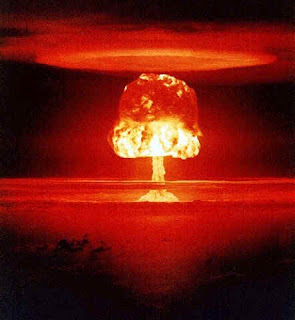 In case you missed it, the news that seems ready to break out from under the radar is in regards to a letter from nuclear proliferation scientist A. Q. Khan that was sent to his wife. The details of the letter may give us some idea of the questions the US has wanted to ask A. Q. Khan about for some time, although access to the scientist has repeatedly been denied by the Pakistan government.
The story begins with this article in the Sunday Times by Simon Henderson, and is getting more attention in India by The Times of India. I have to be honest, when I first noticed the article, I was very skeptical... but the lack of reaction kind of sums it up - this is almost certainly legit. None of the details are new exactly, most are what has been suspected for some time without specific details.
The bottom line for some will be that A. Q. Khan admits to being the guy who gave the Iranians nuclear technology, but for me the issue is the allegation of Chinese nuclear proliferation. The Sunday Times article notes this was 1982:
“We put up a centrifuge plant at Hanzhong (250km southwest of Xian).” It went on: “The Chinese gave us drawings of the nuclear weapon, gave us 50kg of enriched uranium, gave us 10 tons of UF6 (natural) and 5 tons of UF6 (3%).”This was before the civilian nuclear agreement between China and Pakistan in 1986 and before the Chinese supplied Pakistan with a civilian reactor in 1989. Makes it somewhat tough to believe what the Chinese say when they are proliferating nuclear weapons in private while playing up the non-proliferation position in public.
No wonder the US doesn't want this guy in public, can you imagine what A. Q. Khan would say on 60 minutes? He speaks English very well you know...
Thursday, September 3, 2024
Global Strike Instability
Bryan asks a good question:
I think that the answer would be thus; if a DF-21 is fired at a US carrier battlegroup during hostilities and a nuclear explosion results, we can reply by completely destroying China's military capabilities with our own nuclear reserve. Chinese ballistic missiles cannot threaten US nuclear second strike, even if they get in the first jab. The reverse, however, is not true; if the US were able to launch a coordinated first strike against China, there is at least a very reasonable likelihood that the entire Chinese retaliatory capability would be destroyed. Thus, the indistinguishability of conventionally armed ballistic missiles from nuclear represents a far greater threat to China than to the US, and is accordingly more destabilizing.
Make sense, or am I missing something?
The second part of Gertz' article speaks to China's (and the US) growing fascination with global strike. I have written elsewhere of my affinity for global conventional strike, only to be nay-sayed by those who believe it to be de-stabilizing (i.e, the other guys won't know if a NUKE is being shot or a conventional weapon). I don't mean to downplay the counter-argument--it is something we need to deal with. I would only say that I never hear ANYONE EVER raising this issue in relation to CHINESE weapons development. A DF-21 starts its flight path looking like any other ballistic missile, nuclear or not. There are obviously other factors that our systems would evaluate in order to determine what was shot--but there would almost certainly be some period of uncertainty after launch. Are we playing by the Marquess of Queensbury rules while some other set applies to China?
I think that the answer would be thus; if a DF-21 is fired at a US carrier battlegroup during hostilities and a nuclear explosion results, we can reply by completely destroying China's military capabilities with our own nuclear reserve. Chinese ballistic missiles cannot threaten US nuclear second strike, even if they get in the first jab. The reverse, however, is not true; if the US were able to launch a coordinated first strike against China, there is at least a very reasonable likelihood that the entire Chinese retaliatory capability would be destroyed. Thus, the indistinguishability of conventionally armed ballistic missiles from nuclear represents a far greater threat to China than to the US, and is accordingly more destabilizing.
Make sense, or am I missing something?
I'm an assistant professor at the Patterson School of Diplomacy and International Commerce, University of Kentucky.
Wednesday, July 29, 2024
India, Pakistan, INS Arihant and the Security Dilemma
As probably most readers of this blog know, the Security Dilemma is a concept much discussed in the field of international relations. Brought to wide attention (although not first described) by Robert Jervis in 1978 with his article "Cooperation under the Security Dilemma," it describes a mechanic by which interstate conflict can arise or worsen. At its base, the proposition is that actions taken by states to increase their own security can, at the same time, result in a decrease (real or perceived) in the security of their rivals. Arms races can be a result of the security dilemma, as can wider security spirals.
Although India has been quick to declare that the INS Arihant is a deterrent weapon system, a second-strike capability, this may not be the case against all its potential targets. An important part of the 'utility' of a strategic weapon system is the target set it is applied to. While against a distant, heavily armed opponent such as China the Arihant's 12 K-15 missiles may be useful only as a countervalue deterrent, against an opponent with a smaller critical target set this may not be the case.
Pakistan's reaction to the sub has been mixed, with official statements decrying the launch as an arms racing move but editorials within Pakistan stating that the submarine poses no significant threat to Pakistan. Another series of articles has the Pakistani navy head stating that the submarine poses 'no security threat' - although that statement appears most often in Indian news reports such as this one, with a Beijing byline. Heh.
Let's take a quick look at capabilities and targets. Against Pakistan, a nation with a small and slow-reacting nuclear capability, the 12 SLBMs carried aboard the Arihant pose quite a different level of threat. The current range for the K-15 seems to be around 700 km with a 1,000kg payload, rising to 1,200 km with a 150kg payload. While a 700 km range isn't enough to reach the northern half of Pakistan from the ocean, a 1,200 km range certainly can hit nearly all of the country other than a small region north and west of Islamabad (and, of course, Jammu and Kashmir, although it seems highly unlikely that Pakistan would stage nuclear weapons out of these disputed territories). Most importantly, however, it can certainly reach Sargodha and the "Weapons Storage Complex" there.
The FAS estimated that Pakistan had enough fissile material for a force of approximately 60 warheads in 2007. If we assume that these are stored in groups of 5 or more weapons, we have a target set that the Arihant has a very good chance of eliminating. Probably not totally; 100% functionality on an SLBM loadout isn't likely, and 100% Pk for those weapons is even more unlikely - but as the number of storage locations drops, the feasibility of this targeting option goes up.
Unlike the U.S., Russia and most other nuclear nations, Pakistan is balancing a set of problems. On the one hand, nuclear weapons offer it a security 'hedge' against external intervention. India has visibly exercised restraint during prior crises due to the presence of credible nuclear response by Pakistan. However, Pakistan also suffers from internal security threats, most especially in the more desolate northern areas which would offer the greatest concealment and operational security for its small arsenal. In addition, many observers agree that for additional security, Pakistan stores its weapons disassembled, with cores separate from the remainder of the systems. Given the expertise and tools required to properly mate the components of these weapons as well as the requirements for securing them against sabotage and theft, there is pressure on Pakistani commanders to keep the number of such sites low to mitigate risk.
It's a delicate balance. Moreoever, it's one whose likely outcome, at present, would present Indian strategic planners with a small number of extremely high-value targets, at least so long as Pakistan maintains its forces in a low state of alert. And here lies the core of the security dilemma facing Pakistan. The Arihant's missiles, assuming India can engineer a 150kg warhead or boost their range slightly, offer Indian planners an opportunity for a 'splendid first strike' if they can acquire intelligence on the current location of the Pakistani nuclear arsenal. While this may not (and probably wouldn't) be a tempting option during times of low tension, as tension begins to ratchet upwards for whatever reason, Indian planners may - no, I'll say will - begin to consider that a strategic first strike might be able to minimize their danger. It's their job. Whether or not policymakers act on this option is a completely different question - but at the very least, it gives India a potential option at an early phase of a crisis which Pakistan's only real defense against is to actively deploy and/or disperse its arsenal. That action, in turn, reduces Pakistan's nuclear force security against internal threat, and depending on the state of Pakistani Command and Control, may force Pakistan to delegate release authority to remote actors - with all the risk that that entails (those who are curious about that risk are encouraged to read Bruce Blair's classic "Strategic Command and Control" for operational risk, or Scott D. Sagan's "The LImits of Safety: Organizations, Accidents and Nuclear Weapons" for organizational risk).
This post has minimal numbers in it. I don't claim to have satisfied even myself that the Arihant provides an actual qualitative change in the strategic balance in the Indian Ocean. However, it certainly seems like a question worthy of further research. Perhaps one good starting point would be to examine the state of Pakistan's early warning systems, and their capability versus a near-offshore SLBM launch.
Although India has been quick to declare that the INS Arihant is a deterrent weapon system, a second-strike capability, this may not be the case against all its potential targets. An important part of the 'utility' of a strategic weapon system is the target set it is applied to. While against a distant, heavily armed opponent such as China the Arihant's 12 K-15 missiles may be useful only as a countervalue deterrent, against an opponent with a smaller critical target set this may not be the case.
Pakistan's reaction to the sub has been mixed, with official statements decrying the launch as an arms racing move but editorials within Pakistan stating that the submarine poses no significant threat to Pakistan. Another series of articles has the Pakistani navy head stating that the submarine poses 'no security threat' - although that statement appears most often in Indian news reports such as this one, with a Beijing byline. Heh.
Let's take a quick look at capabilities and targets. Against Pakistan, a nation with a small and slow-reacting nuclear capability, the 12 SLBMs carried aboard the Arihant pose quite a different level of threat. The current range for the K-15 seems to be around 700 km with a 1,000kg payload, rising to 1,200 km with a 150kg payload. While a 700 km range isn't enough to reach the northern half of Pakistan from the ocean, a 1,200 km range certainly can hit nearly all of the country other than a small region north and west of Islamabad (and, of course, Jammu and Kashmir, although it seems highly unlikely that Pakistan would stage nuclear weapons out of these disputed territories). Most importantly, however, it can certainly reach Sargodha and the "Weapons Storage Complex" there.
The FAS estimated that Pakistan had enough fissile material for a force of approximately 60 warheads in 2007. If we assume that these are stored in groups of 5 or more weapons, we have a target set that the Arihant has a very good chance of eliminating. Probably not totally; 100% functionality on an SLBM loadout isn't likely, and 100% Pk for those weapons is even more unlikely - but as the number of storage locations drops, the feasibility of this targeting option goes up.
Unlike the U.S., Russia and most other nuclear nations, Pakistan is balancing a set of problems. On the one hand, nuclear weapons offer it a security 'hedge' against external intervention. India has visibly exercised restraint during prior crises due to the presence of credible nuclear response by Pakistan. However, Pakistan also suffers from internal security threats, most especially in the more desolate northern areas which would offer the greatest concealment and operational security for its small arsenal. In addition, many observers agree that for additional security, Pakistan stores its weapons disassembled, with cores separate from the remainder of the systems. Given the expertise and tools required to properly mate the components of these weapons as well as the requirements for securing them against sabotage and theft, there is pressure on Pakistani commanders to keep the number of such sites low to mitigate risk.
It's a delicate balance. Moreoever, it's one whose likely outcome, at present, would present Indian strategic planners with a small number of extremely high-value targets, at least so long as Pakistan maintains its forces in a low state of alert. And here lies the core of the security dilemma facing Pakistan. The Arihant's missiles, assuming India can engineer a 150kg warhead or boost their range slightly, offer Indian planners an opportunity for a 'splendid first strike' if they can acquire intelligence on the current location of the Pakistani nuclear arsenal. While this may not (and probably wouldn't) be a tempting option during times of low tension, as tension begins to ratchet upwards for whatever reason, Indian planners may - no, I'll say will - begin to consider that a strategic first strike might be able to minimize their danger. It's their job. Whether or not policymakers act on this option is a completely different question - but at the very least, it gives India a potential option at an early phase of a crisis which Pakistan's only real defense against is to actively deploy and/or disperse its arsenal. That action, in turn, reduces Pakistan's nuclear force security against internal threat, and depending on the state of Pakistani Command and Control, may force Pakistan to delegate release authority to remote actors - with all the risk that that entails (those who are curious about that risk are encouraged to read Bruce Blair's classic "Strategic Command and Control" for operational risk, or Scott D. Sagan's "The LImits of Safety: Organizations, Accidents and Nuclear Weapons" for organizational risk).
This post has minimal numbers in it. I don't claim to have satisfied even myself that the Arihant provides an actual qualitative change in the strategic balance in the Indian Ocean. However, it certainly seems like a question worthy of further research. Perhaps one good starting point would be to examine the state of Pakistan's early warning systems, and their capability versus a near-offshore SLBM launch.
Monday, June 8, 2024
Shield to the Republic
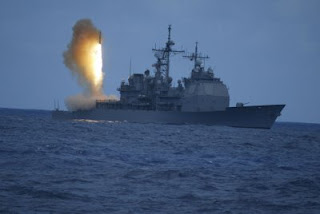 As the fleet constitution discussion in the QDR ramps up, it is important that we state first the priority pressures that have injected themselves into the naval force development process. Over the last few years, several priorities have emerged for the Navy, changing the discussion and elevating traditional roles for naval forces into primarily strategic national obligations for insuring the long term defense of the United States. We must first account for these national level requirements before looking at fleet requirements for the maritime services.
Manpower is the #1 cost priority.
Nuclear power requirements for new large hulls
BMD is now a Navy strategic role per Gates
SSBN(X) is coming, just as the triad alignment gets a shakeup.
We must understand these national priorities in order to properly plan and size the fleet constitution of the future US Navy. Understanding all 4 of these obligations are strategic in nature, national in priority, and are elevated to a core requirement of the Navy means we must elevate these issues to the top of the Navy’s list of priorities.
Manpower is the primary budget pressure facing the DoD, therefore must be factored as the most important priority for any US military service in terms of planning. The optimization of manpower not only determines what you can do, but how much you can do. Understanding where manpower requirements exist, why those requirements exist, and how they must be optimized is critical to planning fleet constitution within the means of the nation.
The discussion of energy in the 21st century is here, and the first step is the law passed by Congress requiring nuclear power in new naval ships. I know many are not happy about this, as laws become specific selections as opposed to competitive options. This changes the CG(X) discussion, but also provides opportunity. Nuclear power may or may not reduce operating costs of the operational life of the CGN(X), but it does add one important capability... The radar system necessary for 21st century ballistic missile defense requires so much power, that without nuclear power, even an all electric drive ship would be limited in speed when operating its radar. Energy, specifically fuel conservation, is now a strategic priority and must be calculated in decisions for designing new ships.
The recent changes to the ballistic missile defense of the United States made by Secretary Gates has all but handed the Navy the role as lead for BMD. This comes with significant costs, specifically requirements for massive radar systems that are going to require massive power systems, all of which drains on the Navy budget. The Gates decision to hand the Navy BMD has all but certified what the CGN(X) will be, or more specifically generated a new requirement for a Navy that carries a heavy cost.
The nuclear triad is probably going to get a shakeup this QDR, with one of the legs going away. The underwater deterrent leg of the existing nuclear deterrence triad will not go away, so the Navy has already begun funding advanced R&D for the Ohio class SSBN replacement. Th SSBN(X) is not an optional platform, the national nuclear strategic deterrence requirement will stress the Navy budget between FY2020-FY2033 as the Ohio class retires and replacements are funded.
Both of these systems; strategic nuclear strike and strategic ballistic missile defense represent national level strategic requirements placed on the Navy budget that must be fully funded in the period under review by the QDR. This Strategic Shield of the Republic will be very high tech, but also needs to have optimized manpower requirements to keep down the operating costs of deployments. Both platforms will be nuclear powered.
The Navy is going to need around 8 CGN(X) platforms with incredibly high powered (thus expensive) radar systems, and 12 large SSBN(X) replacements. These 20 vessels, 8 battleships and 12 massive submarines, will represent an investment that could run well north of $100 billion. In order for the Navy to provide the strategic role of Shielding the Republic, Congress will have to act to cap the cost to SCN on a per platform basis, specifically no more than $5 billion per SSBN(X) and $4.5 billion per CGN(X), which would still influences the SCN budget at a cost of $96 billion over the next 30 years.
What do we gain with this massive investment? We gain incentive to reduce nuclear stockpiles and stand down one arm of the nuclear triad. We gain a sea shield, a strategic deterrent against the proliferation of ballistic missiles as an offensive weapon. This shield becomes portable, meaning we give ourselves the ability to provide assurance to our international partners, thus giving them incentive to reduce their nuclear stockpiles. The combined strategic deterrence capability the US Navy provides with BMD and strategic nuclear strike becomes an enabler for dissuasion and deterrence against belligerent states developing nuclear weapons and ballistic missiles. This can also serve as a capability to reduce the inventive of would be buyers of ballistic missiles as an offensive option, after all, no one wants to spend money on a system that is ineffective for its military objectives.
The Shield of the Republic role for the US Navy is not a large capability, but it is the budget breaker in the QDR process for the Navy SCN budget. Without the CGN(X), the Navy will be unable to effectively track modern ballistic missiles, thus will be unable to guide shooters onto the target. The submarine leg of the strategic nuclear deterrence is the most secure, and most difficult to eliminate, thus making it one of the most effective buffers from nuclear attack. The role of Shield to the Republic by naval forces is as old as John Adams, but carries a significant new purpose leading into the 2010 QDR discussion. As the SCN budget breaker, the Shield to the Republic will require special Congressional attention, oversight, and potentially extra funding to avoid breaking the back of the rest of the fleet.
Tuesday, January 6, 2024
The Nuclear Navy Soft Power Oxymoron
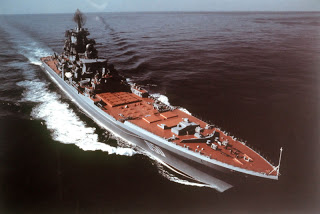 There is a bit of bureaucratic and diplomatic noise coming from South Africa.
The National Nuclear Regulator (NNR) has denied the Russian nuclear cruiser Pyotr Veliky entry into Cape Town next week for not meeting certain requirements.The article goes on to note the public announcement was made on December 12th, thus making January 12th the allowance date due to the 30 day public advisory notice mandated by law. The article also notes there were some other documents missing from the application.
The regulatory body had received an application from the South African Navy on December 5 for a Nuclear Vessel License for the nuclear-powered vessel to visit Cape Town harbor from January 9 to 15.
However, there appeared to be some confusion as the advert appearing in local newspapers last week had the dates as January 12 to 17.
The law requires that the applicant advertise in local newspapers that it had applied for a license for a nuclear vessel to visit Cape Town. The public thereafter has 30 days to comment.
This isn't the last word though, the application can still be fixed, but it is still unclear what happens even if the application is corrected and approved whether the ship will be allowed to enter port before January 12th, due to the 30 day mandatory public notice.
The USS Theodore Roosevelt (CVN 71) was the last nuclear ship to visit Cape Town, this past October actually, and was approved. I have a hard time believing the South African government is going to deny Russia access to the port after letting the US Navy dock an aircraft carrier just 4 months ago. It seems to me that would send an unnecessary signal to the Russian government.
While not a certainty, I think the most likely scenario here is that the paper pushers will get their act together and the Pyotr Veliky will be making port in Cape Town on January 12th. Keep in mind these are not trivial issues, and they are soon to be issues we have to deal with too.
Congress has changed the laws requiring virtually every future US Navy ship type to be nuclear powered, meaning diplomatic issues like this could become a lot more common in the future.
That would truly be stupid if you think about it, port visits by our big Navy ships is part of our soft power arsenal, seems to me the laws we develop for our Navy should support soft power, not make soft power a bureaucratic and diplomatic issue by adding nuclear power, something heavily regulated worldwide. After all, nothing says “We love the USA!” like a thousand sailors with wads of cash in hand making port in a foreign country and spending money.
If the future of the Navy is soft power, the considerations for a nuclear Navy need to be reviewed by Congress, as this is a huge political issue the Navy has found itself trapped in. The new administration will have to decide and will be the final word on these issues, absence of leadership in these types of discussions is not an acceptable option at the political level. Nuclear power, I'm all for it, but not in all cases.
This is a debate long overdue with the law already on the books.
Thursday, December 4, 2024
Israeli Second Strike Assets
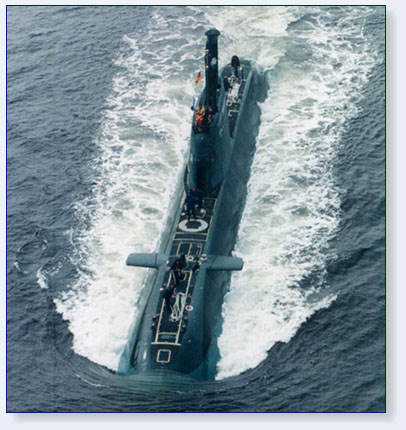 Robert Farley, over at Lawyers, Guns and Money (go Zevon!) comments on a post by Peter Juul at Wonkroom regarding Israel and U.S. nuclear guarantees. Farley agrees that Israel has a diverse nuclear weapons infrastructure, but says Israel's sea based leg is deficient, compared with U.S., U.K and French boats, consisting as it does (or probably does) of cruise missile arms aboard the Israeli Navy's three Dolphin class SSKs. I would point out that Israel is not attempting to defer an adversary anywhere near the capability of the U.S.S.R., which is what the other three forces were aimed at, so the size and weapons load of its deterrent aren't as important. He identifies their opponent as Iran, which is sensible, and does admit that few weapons are required to credibly threaten states the size of Iran and Israel.
I would note that there is one thing more important to Israel in a deterrence situation than weapons load, and that is survivability. Given that they are restricted to using diesel/electric boats with an endurance of weeks, the primary issue is ensuring that these assets are available in the case of surprise assault. The main concern Israel should have, therefore, is not necessarily to produce a larger or more capable sea-based triad leg (since there are many competing demands on their resources) but to simply maximize the likely survival of their existing leg - and they can do that with an aggressive patrol/availability schedule. A quick nonscientific glimpse at Haifa on Google Earth shows only one asset in port which I can ID with high confidence as a submarine, meaning two Dolphins are available and likely patrolling (the image is listed as being taken in 2008). All Israel needs to do is keep a single submarine out of port to provide credible threat.
In addition, in the case of a regional nuclear confrontation, Israel's submarine assets can likely expect to find exogenous support - U.S. fleet assets, for example - especially if their primary purpose is to maintain their own safety until they can receive instruction. While the U.S. would likely balk at providing a priori nuclear guarantees to Israel (and should, in my opinion) it is no stretch at all to imagine Israeli naval assets seeking and receiving protection and resupply from U.S. naval forces in the event they are unable to use their home port.
For completeness sake and to deflect any armamentophile arguments, I should clarify that the weapons in question here are tube-launched cruise missiles with nuclear warheads. The Dolphin has four 650mm tubes in addition to its 533mm tubes, and German sources involved in the construction of the Dolphins have noted that there was 'intent' to sleeve the 650mm tubes for use with Israel's existing Harpoon inventory - but there is no reason those sleeves could not, on removal, allow larger weapons to be fired. Speculation involves U.S. navy admissions that it monitored cruise missile tests in the Indian Ocean of a weapon with a range over 1,000 km - likely, if Israeli, a refinement and new version based on the Popeye Turbo, an indigenous Israeli cruise missile.
Image of Dolphin-class from Israeli Navy website
Tuesday, October 14, 2024
The Future Navy Will Be Nuclear
 The following section was passed into law with the FY08 Defense Authorization Bill (PDF):
SEC. 1012. POLICY RELATING TO MAJOR COMBATANT VESSELS OF THE STRIKE FORCES OF THE UNITED STATES NAVY.When the President signed the Duncan Hunter National Defense Authorization Act for Fiscal Year 2009 (PDF) today, the following amendment was added to the above section.
(a) INTEGRATED NUCLEAR POWER SYSTEMS. It is the policy of the United States to construct the major combatant vessels of the strike forces of the United States Navy, including all new classes of such vessels, with integrated nuclear power systems.
(b) REQUIREMENT TO REQUEST NUCLEAR VESSELS. If a request is submitted to Congress in the budget for a fiscal year for construction of a new class of major combatant vessel for the strike forces of the United States, the request shall be for such a vessel with an integrated nuclear power system, unless the Secretary of Defense submits with the request a notification to Congress that the inclusion of an integrated nuclear power system in such vessel is not in the national interest.
(c) DEFINITIONS.—In this section:
(1) MAJOR COMBATANT VESSELS OF THE STRIKE FORCES OF THE UNITED STATES NAVY.—The term ‘‘major combatant vessels of the strike forces of the United States Navy’’ means the following:
(A) Submarines.
(B) Aircraft carriers.
(C) Cruisers, battleships, or other large surface combatants whose primary mission includes protection of carrier strike groups, expeditionary strike groups, and vessels comprising a sea base.
(2) INTEGRATED NUCLEAR POWER SYSTEM.—The term "integrated nuclear power system" means a ship engineering system that uses a naval nuclear reactor as its energy source and generates sufficient electric energy to provide power to the ship’s electrical loads, including its combat systems and propulsion motors.
(3) BUDGET.—The term ‘‘budget’’ means the budget that is submitted to Congress by the President under section 1105(a) of title 31, United States Code.
SEC. 1015. POLICY RELATING TO MAJOR COMBATANT VESSELS OF THE STRIKE FORCES OF THE UNITED STATES NAVY.This amendment closes a loophole for the Navy regarding nuclear power in the development of new ships. It is now the law of the United States that all Aircraft Carriers, Submarines, Major Surface Combatants, Amphibious ships exceeding 15,000 tons, and Command Ships exceeding 15,000 tons must have "integrated nuclear power system, unless the Secretary of Defense submits with the request a notification to Congress that the inclusion of an integrated nuclear power system in such vessel is not in the national interest."
Section 1012(c)(1) of the National Defense Authorization Act for Fiscal Year 2008 (Public Law 110-181) is amended by adding at the end the following:
(D) Amphibious assault ships, including dock landing ships (LSD), amphibious transport-dock ships (LPD), helicopter assault ships (LHA/LHD), and amphibious command ships (LCC), if such vessels exceed 15,000 dead weight ton light ship displacement.
Of all the various discussions that we have had over the year regarding the Navy force structure of the future, in my opinion this requirement placed on the Navy over the last two years has the potential to have the greatest impact to the naval power of the United States. It is these types of changes that usually get overlooked and lost in the discussion when one political party takes power from the other in our democracy, but it is these types of details that have the most influence on the future. We won't know for decades if it was the right decision or not.
Just in case you have not fully thought this through, this means it is currently against the law to produce conventionally powered submarines, a LSD(X) replacement without nuclear power, a CG(X) without nuclear power, or a conventionally powered aircraft carrier. This would eliminate 99% of the force structure ideas you have ever read about proposed by the various Armchair Admirals of the world, but not all...
I will note, that technically, the fleet structure most advocated on this blog remains immune from this law. As I have laid out many dozens of times, the ID force structure for the Navy's Cooperative Maritime Strategy would call for the large mothership and the small combatant instead of the large combatant and small mothership force structure of the Navy's program of record.
The mothership in today's program of record is the LCS, which should stand for Littoral Combat, Support (not Littoral Combat Ship which is one damn lame as hell name, or its nickname among some critics: the little crappy ship), while the large surface combatant of today's program of record (DDG-1000) would be replaced by sixth-rate frigates (FFG).
Which only confirms my theory, you read here to see the 1% of ideas that will never see the light of day in the real world.
Tuesday, August 5, 2024
As Similar Ideas Go Round and Round...
 This exchange took place during Thursdays hearing in the House.
Rep. Jim Langevin (D-RI)Clear as mud. There is a lot of confusion over this statement because the DDG modernization of record wasn't thought to include "ballistic missile defense capability," which implies maybe something has changed with the DDG modernization program? We will discuss the Navy's communication strategy later this week, but this is one example where explaining what the hell is going on is just not what the Navy does well.
You've stated that the new DDG 51s could incorporate additional technologies, but we haven't heard a clear explanation as to what those would be.
Do your cost estimates for the future DDG 51s reflect current design and capability? Or do they incorporate additional technologies, each of which could lead to insertion or new design costs?
And finally, do your life cycle comparisons between DDG 51 and the 1000s incorporate the increased personnel required for the 51s? And have you developed estimates -- termination costs for DDG 1000s?
Vice Admiral Barry McCullough
Sir, the capability set I described for a DDG 51 that would restart as DDG 113 is based on the modernization program that we currently have funded in the DDG modernization program.
And that includes the COTS-based computer hardware, the open- architected computer program, the multimission signal processor with inherent ballistic missile defense capability, and the extended range antiair warfare capability with SM-6.
That combat system, because of the way it's been developed, costs less than the current combat system that's in DDG 112. That will be available to drop into DDG 113 if it is an '09 restart. So I'm confident in the cost numbers that -- that we provided in letters, what the restart cost for a DDG 51 is.
Life cycle costs -- because the DDG 1000s are projected to come on service or in service inside this POM '10 developed F.Y. '10 future year defense plan, we used the N4's models on how we project costs for ops and maintenance and manpower on DDG 51s and the DDG 1000s.
And we look at -- when we look at manpower and fuel costs and spare parts, a DDG 51 over the life cycle is about $4 million more expensive to operate than a DDG 1000. I'll get you the exact number, but I think it's $4 million.
That's different than what's in the selected acquisition report because the SAR reflects different requirements for life cycle costs than we do when we do budget development for ops and maintenance and manpower on ships.
Clearly there are a number of ways to interpret this statement, and after consulting my crystal ball, I came up short and decided to ask around instead. We "think" the Navy is saying there will be ballistic missile defense included in the new Arleigh Burke class destroyers, although we admit that is a guess, because on Sunday we did not think so. Basically, there is a lot of hardware/software issues that could be ready by FY15, meaning BMD is in play. As things stand today, what Vice Admiral Barry McCullough is saying does not automatically imply BMD will be included in the new Burke's. Either way, bottom line is, with or without ballistic missile defense the Navy wants new DDG-51 Flight IIA models with all the modernizations expected throughout the Flight IIAs. Those are good ships.
It is noteworthy the Navy has decided not to do any changes to the Arleigh Burke class destroyers beyond the modernization already planned. There are a number of potential reasons why, but most likely it is to try to recapture some credibility on costing for ships and build credibility for the Navy in shipbuilding. A run of eight destroyers on time and budget right now would be a very welcome sight in Navy shipbuilding, and perception means a lot in Washington. It could also be to avoid making changes to the design knowing Congress has passed a law that requires nuclear power for warships, a point brought up in the hearing on Thursday. After all, if you make changes A, B, and C why not also make it nuclear? Requirement creep should be a concern, the reason for the Burke's in the first place is because requirement creep has turned the SC-21 shipbuilding plan into an enormous disaster. At the end of the day we think the reason is much simpler to explain, the Navy is led by people who think all solutions start and end with large surface combatants, and they are making a grab at more large surface combatants.
However, there are also several compelling arguments why the Navy should make changes. Ronald O'Rourke makes a number of interesting cases (PDF) regarding hull design possibilities for the DDG-51 Flight IIA. In his testimony before Congress last Thursday he listed a number of options in his submitted statement, but among the more interesting options to us were a few operating and support cost saving initiatives.
adding automated equipment and making other changes to reduce crew size;
adding some electric-drive equipment for interconnecting parts of the ship’s mechanical-drive propulsion system so as to permit the system to operate more like an integrated electric drive system; and
installing a near-surface bow bulb above the existing sonar dome to improve hydrodynamic efficiency.
 The last one is interesting, one wonders how it would effect the ship regarding sound. A louder Burke is probably counterproductive. However, in the report Ronald O'Rourke highlights that based on estimates for cost savings, these O&S changes could potentially save $7 million dollars a year, which would make the new Burkes purchased cheaper to operate and support than the DDG-1000 which had a sales point of being less expensive to operate. $7 million per ship annually for 35 years would be nearly $2 billion dollars operational cost savings over the lifetime of eight ships. Does it cost $2 billion dollars to make these rather simple changes to eight Burkes? Considering the probability that fuel cost would skyrocket during any period of wartime, the actual savings could potentially be much higher.
However, we also started thinking about a Flight III. Why would the Navy want to look at a Flight III, or more specifically, why would Congress? Considering the rationale of ballistic missile defense for surface combatants, we began thinking perhaps the best reason for doing modifications to a new purchase of Arleigh Burke class would be to invest towards the CG(X) program, which was what the DDG-1000 was supposed to do. One way to do that might be to go ahead and meet part of the Cruiser requirement early, save costs, and build some consistency regarding the combat system into the fleet.
In our research on the modernization program, trying to figure out why McCullough's statements are so confusing, we found ourselves reading Bob Work's report on the surface combatant modernization programs, and we came across this:
The seven “Baseline 2” cruisers are the oldest surviving “Ticos,” the five earlier “Baseline 0” and “Baseline 1” cruisers having been retired as a cost-saving measure. For the purposes of this report, these seven ships will be referred to as the CG-52 class. Each of the CG-52s is equipped with the earliest version of the SPY-1 radar, the SPY-1A; the oldest and least capable Navy-proprietary computers, known as UYK-7s and UYK-20s; and four fire control illuminators. Their main battery consists of 122 Mk-41 VLS cells. Their secondary battery consists of eight Harpoons or SLAMs, two 5-inch/54 naval guns, and two Phalanx CIWSs. They can hangar and support two MH-60R (or MH-60S) helicopters...If you recall, before Gene Taylor revealed his source was Admiral Roughead in the hearing Thursday, we revealed it while also discussing how current events were being played out much how Bob Work recommended as an alternative path to the DDG-1000. In that discussion we cited the modernization report. In the same report, one of Bob Work's suggestion for the Navy was to replace the seven DDG-1000s with seven modified Arleigh Burke class ships as a stopgap between generations as the Navy looks forward. What he calls the LBNC stands for Large Battle-Network Combatant.
because their systems are so old, the first seven “Baseline 2” CGs cannot be easily upgraded to the SPY-1D(V) standard. Recall that these seven ships will not receive the SQQ-89(V) for similar reasons. As a result, the near-term TFBN battle line will consist of two different classes of Interim Large Battle Network Combatants with much different anti-air warfare capabilities.
Fourth, starting in FY 2008, build a minimum of seven modified Burke DDGs to help sustain the industrial base until the new LBNC is ready for production... all seven ships would serve as active test beds for DDG improvements identified as possible candidates for further BNRAM back fits, or to test next-generation LBNC technologies. As such, the ships would serve much the same purpose as both the Forrest Sherman-class destroyers, which helped to bridge the shipbuilding gap between World War II and Cold War combatants, and modified legacy combatants like the USS Gyatt, DDG-1, which helped to illuminate the way forward toward a new generation of warships. Provided all went as planned, Congress would authorize two of the next generation LBNCs in FY 2015, split funded as in the current arrangement for the DDG-1000, giving each of the two construction yards one ship. The general fleet-wide transition from Aegis/VLS I-LBNCs to the new design would then begin in FY 2017, with three ships authorized after a bidding competition. Of course, if the design was not ready, additional Burkes could be built until it was.It is actually brilliant advice, indeed one might suggest Admiral Roughead was reading Bob Work when he came up with his plan. The Navy, or Congress, could go two different ways. If the decision was simply to buy Burke's instead of DDG-1000s, and increase the total destroyer force, the Navy could continue with the current plan sent before Congress.
However another option is to replace the "baseline 2" CGs with 7 new "plugged" DDG-51s, essentially a Flight III version of the Arleigh Burke with more missiles, or perhaps the Advanced Gun System (although now the Navy says surface fires requirements are already met). In Ronald O'Rourkes statement on Thursday this is covered as one of a couple alternatives.
Additional vertical-launch tubes could be installed by lengthening the ship’s hull forward of the deckhouse. A 1994 CRS report discussed, on the basis of Navy information, how a 12-foot extension could permit the installation of 32 additional VLS cells.19 In 1997, to support research that CRS was conducting into possible alternatives to the Navy’s proposed Arsenal Ship, the Navy provided CRS with information on how lengthening the DDG-51 hull so as to install additional VLS tubes might change the ship’s procurement cost. The information is summarized in Table 2 below. The estimated changes in procurement cost were parametric, rough order of magnitude (ROM) estimates only, subject to further engineering evaluation, and did not include detail design or nonrecurring engineering costs. Although the table shows variants equipped with Mk 41 VLS tubes (the kind currently used on Navy surface ships), adding vertical launch tubes of a newer design may also be possible.Instead of building 8-9 new Burkes, Congress could instruct the Navy to use the money towards building seven "plugged" Flight III versions of the DDG-51 that, according to CRS testimony, potentially carry up to 256 VLS cells. That would clearly make this new ship the most powerful weapon system ever built, but what is also interesting is that as an evolutionary "plug" that has already undergone some study, based on a proven design it would certainly be cost affordable for that much firepower. Why do we like this idea? Because evolutionary has a proven track record, one look at the Ohio SSGNs and one can see the value of an evolutionary approach that carries a lower cost but high rate of return on investment.
The key here is that by replacing the seven "baseline 2" CGs with a plugged version, the Navy sets itself up well with the challenges they face with the CG(X) program, what we have consistently called the most important surface combatant program for the future of the US Navy.
The CG(X) is already under a number of constraints, in particular the Congressional requirement for nuclear power, but also the necessity to scale well in a constantly evolving world driven by the pace of technology, a much faster pace than warships with a service life of 30-40 years. It has been suggested that the CG(X) would not use the DDG-1000 hull, indeed this was brought up in the hearing. If you recall last year, the Navy had discussed two types of CG(X) replacements, one was an escort cruiser of the DDG-1000 hull, or in this case the evolved DDG-51 hull, while the other was a large CGN(X) built to support ballistic missile defense, which at the time we speculated on the reported size as potentially using the LPD-17 hull.
It really isn't as bad an idea as one might think, particularly if you care about the CG(X). The CBO estimates the CG(X) may cost as much as $4 billion per ship for 19 ships, but those 19 ships are based on the use of the DDG-1000 hull at 14,500 tons. CBO does its cost estimates on millions per 1000 tons, which is noteworthy because 19 ships at 14,500 tons is more total tons than 12 ships at 20,000 tons. Essentially, while the CBO would estimate the 12 ships more than what the Navy currently budgets for the entire CG(X) line, the number would be less than the $4 billion the CBO currently estimates for the CG(X) line based on the DDG-1000 hull. Adding 12 nuclear reactors would probably make up the difference, but at least the Navy would then be within the current estimates and be conforming to the law regarding nuclear power, something a CG(X) program based on the DDG-1000 hull cannot do.
As for the seven "baseline 2" ships, we wouldn't retire them early. Just allow them as modernized first rate battleships to serve out their time in areas like Africa and South America where the ballistic missile threat is not as critical as it is in the Middle East or Pacific. These cruisers make excellent flagships for those regions, and as we have pointed out in the past, the local economy never complains when a ship with 400+ sailors makes port. These ships send the right signal when conducting exercises with major allies in Europe, and even without BMD they still outmatch everything competitors can put to sea. Another option might be to replace the FFGs currently in reserve with these seven cruisers, and keep them maintained as the new contingency platform. They would certainly make a much smarter reserve force than the old FFG-7s currently holding that position.
There are a number of options regarding the Arleigh Burke battleships the Navy wants for the stopgap. Congress should seriously consider all the available options, from the operation and support cost saving measures to the large plug advanced ballistic missile defense cruiser option. With BMD now the primary driver of the large surface combatant fleet, the "Baseline 2" CGs offer the Navy additional ways to save money by putting these ships into reserve and replacing them with more capable Burke's. In our opinion, the Navy should make adjustments to the ships, that way when these ships reach 20-25 years old, they won't be retired early like other older ships have in the past because they are made obsolete due to the emerging technologies of competitors.
Sunday, August 3, 2024
USS Houston's Radioactive Water Leak
 There is an interesting story being covered by some of the media, It would appear the USS Houston (SSN 713) has been leaking radioactive water, and no one is quite sure for how long. The leak was apparently discovered while the USS Houston undergoes routine maintenance in Pearl Harbor. We start with the Navy Times coverage of the story.
One of the shut valves associated with the boat’s propulsion system was “weeping” water at a rate higher than design specifications, he said.One can hear the conspiracy theories now, but instead of looking what the conspiracy theory specialists are saying, we turn to the professionals to get a reaction. Joel Kennedy, who also got hit by the Google Gremlins, came online and jumped on the topic. You have to love bubbleheads, they have their own language when talking about what they can't talk about.“At no time was there any risk to the reactor plant, the safety of the crew or the safety of the public,” he said.
For context, he said the amount of radioactivity released was “less than the quantity of naturally occurring radioactivity in a bag of common lawn and garden fertilizer.”
While us nukes know that this really isn't that big a deal, we really can't talk about it in the open like this. All of us know where the leak came from (it's obvious they weren't using the "drum" this time) but any discussion of coolant discharge is pretty much covered by NNPI, so we can't go there. For example, until this post, there's only one Google return for the search "coolant discharge log"; luckily for me, it's from an official Navy site (Vol. VI, Chapter 25, Para. 25.2.4 of the JFMM), but it only says that the discharge log can be used to determine the number of days in-port or in drydock for URO periodicity determination -- that brief mention at least allows me to mention that such a document exists.As Joel goes on to note, and as a few readers have mentioned in email, the discharge log is one of the most audited administrative logs on a nuclear submarine. This is an example of how radioactive accidents can happen on US nuclear powered submarines, but they don't quite reach the level of hype that conspiracy theories would have one believe. Unfortunately, there will not be a three eyed offspring from a sailor currently serving on the USS Houston (SSN 713), much to the disappointment of the Sci-Fi channel B-movie makers.
A number of sub bloggers are covering this issue. Chap has full spectrum coverage, and Checks with Charts has an interesting take on this. The Sub Report is also covering, and has a link to this Seattle Times article noting the US Navy has alerted Japan that the leak could have been occurring during a recent visit by the USS Houston (SSN 713).
Subscribe to:
Posts (Atom)