Showing posts with label Military Disinformation. Show all posts

Monday, February 25, 2024

When All You Can See Is Conspiracy

As you may or may not have heard, last week the Greek frigate Bouboulina (F 463) responded to an SOS by a Russian Navy repair ship, the PM 138, when the repair ship lost power during a heavy storm. The rescue by all accounts was a success, involving a tug and the frigate, the Russian ship was towed to port where repairs were made. The Russian Naval vessel has departed port and is back to sea.

As observers of such maritime incidents, we didn't think much of it, but a comment made on the excellent militaryphotos.net forum caught our attention the other day, and while it was an interesting side note, we didn't think much of it. That doesn't stop Debka though, who loves to make news from rumor, and had no trouble breaking out the black helicopters.
DEBKAfile’s military sources reveal that the Russian Amur 1 Class PM 138 naval boat, caught up in the heavy storm raging across the Middle East and Mediterranean last week, flashed a distress signal Tuesday Feb. 19. The vessel was on its way from a Syrian port to Sevastopol on the Black Sea when it was thrown off course by the high seas. A Greek Navy frigate responded to the call and escorted the PM 138 to the island of Chios.
The Russian Navy spokesmen said the ship’s crew numbered 99. It was unarmed and was heading for home port after a long stay at one of the Syrian Navy’s Mediterranean bases.

Ya well Debka's military sources are, as usual, questionable. First we note the ship was with two other auxiliary ships that deployed for the recent Admiral Kuznetsov deployment, so the ship has hardly been stalking the Israeli coast as implied. The other two ships, the tanker Iman and the fleet tug SB-36, both made a port of call in Algeria back on January 22nd.

Second we note there was a comment made on the excellent militaryphotos.net forum about 16 hours prior to the DEBKA story that questioned if this was a spy ship. We don't know whether PM 138 is a spy ship or not, but we observe that the only known open source photography of the ship since the rescue were taken off Chios island, and it is observed the Greek frigate HS Psara (F 454) (note MEKO class, different ship than the rescue ship) appears to be in the picture. Those pictures are excellent quality, but we do not see the smoking gun evidence that Debka does. Maybe you can, we leave this for the reader to decide, as the pictures can be found in the same militaryphotos.net thread.

From our POV, this looks like Debka military disinformation.

Tuesday, January 22, 2024

Russian Navy Time Travel with RIA Novosti

Anyone notice something wrong with this story? Observe the same problem in the Russian version of the story as well.

An interesting visual reminder of how long it has been for the Russian Navy to make a headline. It is good to know the Russian press is just as ignorant to military affairs as the US press.

For those who are trying the Google Translator looking for clues, the image is the clue. The Russian press is running a picture of a Project 1123 Kondor, Moskva class helicopter carrier built in the 1960s, not the cruiser formally known as the Slava renamed the Moskva (CG 121) in 1995. The Moskva pictured above, the former flagship of the Black Sea, was scrapped in 1997.

Friday, January 18, 2024

7th Fleet Focus: The Politics of Checking Your Six

For some reason when we read this, we raised a red flag.

The head of U.S. forces in the Pacific said on Thursday the USS Kitty Hawk, banned from entering Hong Kong in November, had not obtained final permission from China before setting off from its home base in Japan.

The aircraft carrier and its strike group were refused permission by Beijing to dock in Hong Kong for a long-planned Thanksgiving holiday visit in November, causing a bilateral row.

Asked if it had had approval to dock in Hong Kong, Admiral Timothy Keating said: "My understanding is it did not. It got close, the captain of the ship ... realised they didn't have permission so they turned around and started back home."

A bilateral agreement stipulates that the United States must apply for port visits at least 30 days in advance, while China should grant or reject such requests five days before arrival.

But on the morning of the Kitty Hawk's approach to Hong Kong, sources familiar with the situation said Beijing still hadn't given approval for entry, with the aircraft carrier strike group was forced to wait outside Hong Kong.

Beijing later said the ships could dock, but by then the aircraft carrier and its strike group were heading back to Japan.

Admiral Keating was who held the press conference and spoke the comments that created an international incident over the Thanksgiving Day holiday port incident. This story has him backpedaling in a Carl Lewis sprint.

That story reads to me like Adm Keating was read the Riot Act, not by the Chinese, but by the dudes in DC. Prior to the trip to China Adm Keating was talking a good game, but something changed because his comments imply it was the fault of the Kitty Hawk Captain. Did Admiral Keating really go to China, saying things like “We don’t need China’s permission to go through the Taiwan Strait” without being fully aware of all the facts of the that incident?

Here is the problem with the story Keating is reporting, the Kitty Hawk left port on October 21, and family members of the Kitty Hawk CSG crew supposedly knew about the Hong Kong visit before the departure. In other words, the incident which occurred on November 22nd, implies the Navy application for the port visit was made at least 30 days in advance. What bothers me though is Hong Kong was long known to be the last place the Kitty Hawk would make port, in fact it was known back in July when the Kitty Hawk made its last visit to Sydney. Something is very wrong with this story.

This comes off as 100% political, it has been a long time since we have read a story where a 4-star throws one of his major commanders under the bus in the press, but in this story Adm. Keating just checked his six and threw the Kitty Hawk skipper overboard. That doesn't sound right either, but that is what Reuters is reporting.

There are some big chunks of this story missing, has the Kitty Hawk Captain been relieved? We have observed Captains relieved from command for much smaller things than creating an international incident between two of the largest navies in the world, but the lack of action implies that Admiral Keating is bring less than honest.

Friday, December 7, 2024

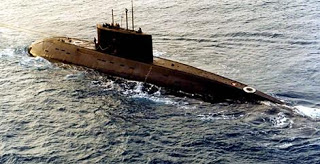
The Iranian Kilo Incident Sounds Like a Song

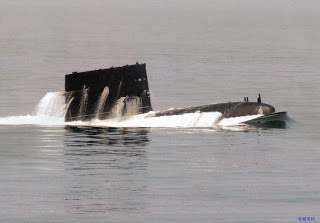
In early November the Daily Mail ran a story about a Chinese Song class submarine surfacing near the Kitty Hawk Carrier Strike Group. It caused a bit of a stir, even hit the Drudge Report for a few hours, only to be highlighted as the same story told in November... of 2006.

The surfacing of the Song class submarine so close to the US Navy was a major media event, so good in fact it was able to earn press regarding the power of the Chinese navy (in the eyes of the media anyway) for two Novembers in a row.

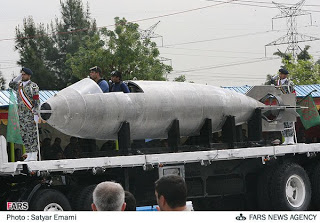
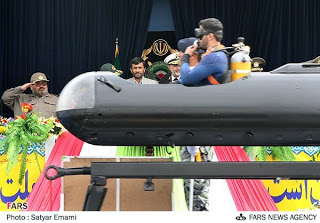
When observing the Iranians, they are very proud of their weapons, which is why we get silly pictures of divers standing on a submarine delivery vehicle riding down a parade route on the back of a truck in 100 degree summer heat. Those poor guys. The problem for Iran is they can't get any one to take the quality of their weapons seriously. The Shkval and the Sunburn, the two weapons supposedly the most capable in the Iranian arsenal, are vintage 1970s designs.

When the Lede reported the details of the latest incident involving the Iranian Kilo surfacing incident last week, it sounds to me like Iran was looking to get some media attention.

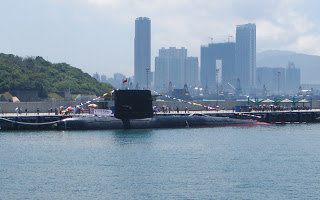
Not many weeks back, an Iranian Kilo-class submarine surfaced within one-half mile of the Vicksburg, the closest encounter of any kind anyone on board could recall with a foreign, potentially hostile hunter-killer submarine in the Persian Gulf.

Sounds spooky! Finally, the Iranian public relations department has found a way to make up for their proud leaders "GAY"-dir comments. OK, so maybe not, as the Lede goes on...

The Iranian submarine had been spotted leaving its home port, tracked through Iranian territorial seas and followed as it crossed into international waters. So its presence was not a surprise, according to officers and crew members on board that day. The submarine took no hostile action, they said, and the Iranian sailors behaved in a wholly professional manner. Even so, the decision to sail and surface so close to the Vicksburg remains a complete mystery — like much Iranian behavior remains to Americans.

Iranian sailors climbed atop the submarine’s tower-like sail. Vicksburg sailors came to the rails. The Iranians pulled out binoculars. So did the Americans. Iranian officers could be seen speaking into radios. Vicksburg officers were in touch with Fifth Fleet headquarters. Digital cameras on both sides captured the moment.


The key to a surprise is to make sure the other guy doesn't know your coming. The Navy, and in this case the New York Times, is sending a signal to Iran: We See Your Submarines. Why would we tip Iran that we can see their submarines? I honestly don't know, but it is starting to sound to me like SECDEF Gates and Admiral Fallon are getting tired of the Iranian propaganda and constant attempts to stir up trouble with their propaganda in the region.

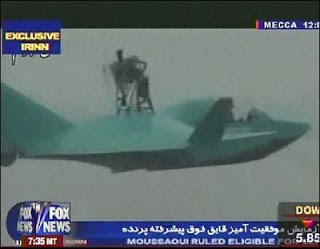
We don't believe Iran has any intention to listen to Gates and Fallon, it could be that Iran seriously believes their weapons are as amazing as their own propaganda advertises. You know, like when Iran claims they will sink the US Navy with their incredible, unstoppable, stealthy and superior flying boat.

The Lede and every other news source quotes Navy officers on the Vicksburg who question the motive of the Iranians. To me it seems pretty clear, they were hoping to get the same level of excitement from the US over this incident that the Chinese got for the Song class submarine. Maybe they can salvage the situation and email the photo's of the Vicksburg to DEBKA, that way someone will write a panic piece while the rest of us roll our eyes.

Monday, November 12, 2024

Song Class Submarine Resurfaces Again

The British newspaper Daily Mail has a story out about a Song class submarine surfacing near the USS Kitty Hawk Carrier Strike Group. Sound familiar? It should, without giving any dates or providing much at all in terms of details, the Daily Mail apparently attempts to resurface a story that is over a year old. With a dateline of November 10th, the headline reads "The uninvited guest: Chinese sub pops up in middle of U.S. Navy exercise, leaving military chiefs red-faced."

So is this a new event or a rehash of last years event? We will all eventually find out, but my guess this is an old story told a new way to generate discussion. It appears new, with the new dateline and all, new enough to generate a new discussion over at Hot Air who treats it as a new event, although they should have realized their screwup when Hot Air decided to link to a second story from last year and treat it as new information.

Assuming for a minute that this is the same Song class submarine incident from last year, I think there are a number of things worthy of discussion coming from today's Sunday story.

First, the timing of rehashing the Song class surfacing story is interesting. Gates just returned from China, and the overwhelming majority of opinions regarding the results of his visit outside this administration is one of failure. You cannot read anything in the discussions and find an example of tangible cooperation between the US and China in these talks, which means we either choose to believe that the Bush administration is really making gains and isn't telling us, or that it is what it looks like it is, a dog and pony PR show on the good feelings between the US and China on strategic issues.

The Daily Mail though is the far right news organization over in the UK, so why bring the story out now? Well, one reason might be to embarrass the Bush administration in its strange policy with China. There are a lot of people in strategic circles ready to start treating China like we did the Soviet Union, and ready to start doing so yesterday already. The maritime strategy gives a ton of rhetoric to irregular challenges facing the Navy, but brushes broadly with a summery of China's Navy, and provides no guidance at all. Could it be the Daily Mail article is a hit job on the current US strategy with China, and designed to send the subtle message of a dangerous PLAN back into public discourse? Maybe. I'd even say probably.

But the other aspect of the discussion with this article is discouraging, and potentially dangerous. Too many people came out with statements that implied one or both of two dangerous ideals. The infallibility of the US Navy due to superior technology, and the limited capability of the PLAN due to inferior technology. These tendencies to compare the capabilities of adversaries on the basis of technology is dangerous, and is contrary in my opinion to the theory of war itself, where strategy and tactics matter more than the tools, of which is only one small part of the foundation from which tactics and strategy is formed.

In WWII the US Navy operated diesel submarines in every part of the Pacific, but there is a growing expectation that the PLAN will operate submarines only within the confines of littoral water, and somehow wouldn't dare challenge the US Navy in blue water. In WWII it is noteworthy the German's had superior tanks, but somehow the Sherman's were deployed against them despite their clear inferiority. If technology alone is the sole basis for competitive balance, how did that damn Yankee General Patton ever win a battle? Probably the same way the US Navy won the battle of Midway in 1942, despite having overwhelmingly inferior numbers of ships and aircraft barely competitive to the Japanese Zero. In 1942 the battle of Midway was a route in favor of Japan just waiting to happen based solely on the naval technology available to each side. Ironically, it was a piece of intelligence technology, outside the naval technology discussion, that partially contributed to a different outcome completely.

I think it is becoming increasingly clear that the United States and its regional allies do not have good information on the capabilities of the PLAN submarine forces, and are struggling with even the basics of PLAN underwater strategy. We continue to see events that do not add up in our conventional wisdom that should illustrate by now, that conventional wisdom doesn't apply. For example, how many more PLAN SSBNs will the public be alerted to by the bloggers at FAS?

Another example, in the west we tend to focus on the various accidents of Chinese submarines, focusing on the failures rather than paying attention to the details. For example, that Forbes story talks about the fire incident happening "in international waters about halfway between Taiwan and Hainan." Uhm, that would be in the heart of shipping lanes in the South China Sea, or did you not consult the map and fail to realize that?

If you actually clicked those links and read them, you might walk away thinking "those silly Chinese, they can't keep their subs from smoking." However, when I read read that Forbes article I walked away thinking "the Chinese are exercising multiple conventional submarines in the heart of shipping routes in the South China Sea." China would love for us to stay focused on the fire, but smart observers noted the location of the smoke.

There is a major disconnect between the expectations of the PLAN and the capabilities of the PLAN, and I see the tendency to believe or propagate diminished PLAN capabilities solely on an expected level of technology as dangerous. To me this mindset contributes directly to the larger Chinese strategy of deception, and doesn't account for the other factors that are beginning to play directly to the PLAN submarine services advantage, specifically the art of the strategic defense and superiority of numbers. While we would be wise not to overstate the capabilities of the PLAN submarine force, we would also be wise not to understate it, or weigh heavily our estimations of capability on technological factors alone.

Updated: To illustrate my point, for those who got caught up in the technology aspect of the discussion, contrast that to how a professional approached the same story. Molten Eagle noticed the article as well, and if you notice he quoted his initial reaction last year to the original story. That reaction focuses in precisely to the conditions of the reported details, which makes my point.


"Amateurs talk technology, professionals talk conditions." Given proper planning to exploit the conditions of any situation the level of technology sophistication of an adversary can be negated tactically. It is true of any type of warfare; land, sea, and air.

Why is it beyond possible that the PLAN would be incapable of intercepting the Kitty Hawk in waters so near their own country? It seems to me that the opinion it couldn't happen would require more support than the opinion it could when you consider the conditions includes a nation operating close to home apparently prepared to intercept an unsuspecting target along a planned route of travel. Molten Eagle correctly challenges the conditions behind the reported details, which would also lend itself to a completely different series of events than the one outlined by the media.

Wednesday, September 19, 2024

The Basics of Naval Weapon Technology

When I engage in naval tactical discussions that include technology discussion, I usually start with a single question. Have you ever read Fleet Tactics and Coastal Combat by Wayne P. Hughes? In the industry, the answer is usually no, but when it is yes I usually find myself talking to a retired officer or someone who truly understands which technologies in naval warfare matter, and which are simply hype. The reason Captain Hughes book applies is simple, the fusion between tactics and technology Hughes lays out applies as well today as it does when the first edition was written, and the second edition is even better. Bottom line, the utilization of technology in naval tactics requires understanding the conditions, and without that type of objective context to the application of technology in tactics, a technology discussion alone is ultimately futile.

Lets discuss it anyway.

On Sunday DefenseReview.com ran an article called "U.S. Aircraft Carriers Vulnerable to Attack?: The Ticking Time Bomb" which basically claims carrier air power in the form of large carriers has been made by weapons like anti-ship missiles and the Shkval torpedo. The article propagates a number of myths common on the internet about naval weapon systems, and emphasizes the wrong technologies critical in naval tactical discussions.

When you talk about anti-ship missiles you are ultimately weighing factors in performance, specifically speed vs stealth plus range, guidance, and countermeasures. The debate some attempt to exercise is in determination of which weapons are better and why. What is ironic about the naval weapon technology debate is usually the metrics used by some in their proclamation of a weapon system being better is also the reason why it isn't. When you apply the wrong metrics, that can happen. Lets start by comparing supersonic vs subsonic missiles.

The advantage supersonic missiles have over subsonic missiles is speed. The greater the speed of the missile the less the engagement window exists to intercept the missile. The disadvantage of speed is that detection is made much easier, particularly via IR (although there are other methods). In other words, the advantage of supersonic missiles to reduce the engagement window ends up ultimately being negated because the missiles are easier to detect, thus easier to intercept.

The advantage subsonic missiles have over supersonic missiles is stealth. The greater the stealth of a missile the more difficult it is to detect and intercept. The disadvantage of subsonic missiles is that the engagement window is bigger due to its reduced speed. It is noteworthy that since 1982 that most subsonic anti-ship missiles that weren't detected at launch have effectively hit its target, and oh btw, most were not detected at launch. Unfortunately for supersonic missiles, modern detection systems are very apt in detecting the enormous signature generated when launching a supersonic weapon at sea.

Guidance is also critical. The best weapon systems utilize multiple options for guidance in a weapon system, whether it is IR, radar, GPS, Inertial, etc.., the more options for guidance the more effective the weapon system. There are various decoys and electronic warfare options for non kinetic defense against simplistic guidance systems, which is why it is becoming more common to see more complicated guidance capabilities on weapons.

Applying these basics, it becomes easy to debunk myths propagated in articles like the defense update article. For example, the SS-N-22 Sunburn (a.k.a. 3M-82 Moskit a.k.a. P270 Moskit) is the most overrated anti-ship missile you will ever read about. First, it is easily detected not only via IR but by its radar system. The missile has virtually no stealth at all. The missile only has radar guidance, making it easier to defeat without kinetic intercept, and finally the Sunburn has a very limited range and has no countermeasures. In other words, in the various technical categories that determine whether the weapon used to evaluate the capability of a weapon technology, the Sunburn ranks kindof low in each category but speed.

Compare the Sunburn to the latest Exocet missiles. The Exocet has inertial guidance that helps prevent jamming, the missile has protection from EW, it has more than twice the range of the Sunburn, and it has excellent stealth.

The VA-111 Shkval Supercavitating Rocket Torpedo can be judged by the same criteria. The super fast underwater weapon has terrible range, no guidance at all, no stealth at all, and no countermeasures at all. When ranking torpedo's, the Shkval belongs in the same category as the Mk 8 used in the Falklands by the Royal Navy.. better speed, same guidance, smaller warhead.

The Shkval is overrated, a use once weapon that does physical impact to a warship with a WWII era navy mine warhead. In other words, it is an effective weapon against smaller ships, the ships most likely to be able to avoid a hit from an unguided torpedo. It will take multiple hits to sink a larger vessel, and a larger vessel is likely to have escorts guaranteed to know the submarines position and kill it. Sorry, but if using a weapon gets you killed, the weapon might be overrated.

Future anti-ship missiles, and in fact future supercavitation weapon technologies, are attempting to find balance in all of the advantages without the disadvantages. Example, slower approach for stealth, inertial guidance in transit, EW protection, but will be fast (supercavitation or supersonic) in the terminal phase with multiple terminal guidance options.

Needless to say, I disagree with the defense update assessment that large carriers are obsolete solely because of technology advancements in anti-ship weapon technology. Technology has never been and still isn't the primary deciding factor in naval warfare, tactics is that factor.

I expect to see myths in naval weapons technology hit a fever pitch over the next few months as more and more people believe a war with Iran may become reality. The threat of the Sunburn or Shkval may frighten some as their characteristics are touted as overwhelming capabilities to which the US Navy has no counter, but those technologies don't rank in the top concerns I have regarding the threats facing the US Navy from Iran.

The disproportionate effect of mines (both dumb and smart) and submarines simply by their presence alone in naval warfare, combined with the relative simplicity to transport and deploy smaller weapons like the small and simple C-701 from truck sized mobile vehicles near the Iraqi Oil Terminals highlights how a focus on strengths and weaknesses in technology are irrelevant to the wise application of tactics to the battlefield.

Monday, September 17, 2024

Fallon Chimes In

I have been looking for this story as an answer to the curious reporting last week. Navy Times is running an article on Admiral Fallon's response to some recent questionable reporting, and he doesn't sound very happy.

Fallon was clearly irked by the stories about his supposed disagreements with Petraeus over the pace of that withdrawal and all-around disdain for the Army general published in outlets ranging from The Washington Post to various blogs. One story cited an unnamed senior official who said “bad relations” between Fallon and Petraeus was the “understatement of the century.” Another quoted Pentagon sources as saying Fallon openly derided Petraeus during their first meeting last March after Fallon took the CentCom reins.

The latter story particularly galled Fallon, who called it “scurrilous,” adding that the characterizations of a dysfunctional relationship with Petraeus are “just absurd.”

That Gareth Porter article pissed me off too, clearly a hit job by someone who I doubt has ever met the Admiral, much less researched his character in any way. I have reviewing this guys articles on Navy affairs and cannot find a single one that makes any sense at all, each of them with made up details that simply don't add up.

With sources that claim clairvoyance to thinking or have access to the minutes of discussions on other continents, call me a healthy skeptic.

While I see the hitjob against Fallon for what it is, the Navy Times article appears to reinforce my belief that Fallon has a different vision for the region than one of Bush. I found this comment telling:

Fallon, to whom Petraeus reports, does not deny that the talks leading up to Petraeus’s report and recommendations for future strategy included some lively arguments. “Everybody’s going to have a difference of opinion,” Fallon said. “We are where we want to be right now. How we got there is our business.”

Fallon became popular because of how he changed the tone between the US and China after that EP-3 incident in 2001. Few people outside the Navy remember that incident today, lost in the pre-9/11 world, but it is noteworthy that interaction between the US Navy and China derive directly from the fallout of that incident, and Fallon ran the show.

It is also noteworthy how Fallon ran the GWOT in the South Pacific, a theater in the larger war most Americans know virtually nothing about, but where the US and allies are kicking the snot out of the bad guys. By expanding influence in places like Singapore and leveraging soft power in the Philippines, the US has quietly concentrated pressure on extremest in the theater without generating much if any headlines, a model difficult to apply to the Middle East with troops engaged in mass on the ground.

Monday, September 10, 2024

The Dangers of Reading Pentagon "Tea Leaves"

Barnett R. Rubin of Informed Comment Global Affairs blog has been speculating that a war with Iran is imminent, and by that I mean tomorrow (Sept. 11th, 2007). In several separate blog entries discussing the issue, Rubin uses two methods of deduction for introducing his war reasoning. First, he is floating information provided by sources, and second he is deducing based on observations of military activity citing 3 carriers to the Gulf..., which 3 carriers I haven't any idea.

In my experience, these pieces of evidence represent the lower tier of sourcing methods in determining surprise military action. I understand the eagerness to float information by sources, I have done this as well, testing the waters of credibility is part of evaluating sources. I have learned over time that sourced information on military affairs is never really worth the effort though, something Rubin probably is learning, because when floating information credibility is inevitably assumed by the person discussing the information, not the person producing the information, no matter how much it is qualified. Apparently Rubin feels the potential of a US strike on Iran is worth any dent to his credibility, or perhaps he assumes his credibility is independent to his accuracy, but to assume either is to waste the responsibility of producing accurate information in the first place. It goes back to the boy who cried wolf problem.

Military deployments are equally dangerous 'tea leaves.' I enjoy following military deployments, it is one of the things I do on a regular basis on this blog, mostly in evaluation of my software in retrieving open source data, but also just as a curiosity. I also have the support of a number of knowledgeable people located in several countries who send me tips to news sources otherwise missed in the normal media cycle. As Francios pointed out as recently as this past Friday's Order of Battle, observations that lead to assumptions can be misleading. I observed the French intelligence ship FS Dupuy de Lome (A 759) crossing the Suez and made an assumption, and someone more familiar with the deployment of the ship pointed out that its noteworthiness is exactly, not noteworthy. In follow-on research, I found that the FS Dupuy de Lome (A 759) is actually returning to the region, not deploying, as it had come northbound on the Suez earlier this summer.

There is a lot of "hey" made about deployments, whether it is the relocation of air force bombers or the deployment of warships to the Persian Gulf. In reality, more sources than not get it wrong anyway, and there is questionable motive behind the reporting. As an example of military disinformation, everyone favorite inaccurate source Debka has this today.

Since the maneuver ended Friday, Sept. 7, the Nimitz has been on its way back to the Persian Gulf. The Truman group, made up of 12 warships and submarines, including a nuclear sub, with 7,600 sailors, air crew and marines aboard, has just completed a long series of training exercises and is preparing to set out for its new posting. It carries eight squadrons of fighters, bombers and spy planes.

The Truman force’s battle cry is: “Give ‘em hell”.

The combined naval strike groups include the Monterey-CG 61 guided missile cruiser, the USS Barry DDG 52 and USS Mason-DDG 87 guided missile destroyers, the USS Albuquerque-SSN 706 fast nuclear strike submarine and the combat logistical USNS Arctic T-AOE 8.

Never mind the Nimitz CSG has another 5-7 weeks left in its scheduled deployment, or that the USS Albuquerque (SSN 706) has been spotted off South America, or that the USS Monterey (CG 61) is in a maintenance period in Norfolk after returning home earlier this year from a 6 month tour with NATO, or that the USS Barry (DDG 52) has been published as deploying with the HMS Illustrious (R06) later this year, or that the USS Mason (DDG 87) just returned to Norfolk in late May after a seven and a half month deployment, these details and what they mean for accuracy makes no difference to Debka.

Using deployments as "Tea Leaves" is inaccurate at best, and subject to disinformation more than most other methods of evaluation. A quick google blog search reveals how eager some will run with disinformation, for what purpose is unclear.

Clearly I part ways with Rubin and do not believe the US is attacking Iran tomorrow, but there is something to be said that so many believe it is going to happen. In the end, I do believe tomorrow is about Iran, but not in the context he does, I think the one part of the Petraeus report that has people attacking the generals credibility is that he is going to reintroduce the problem of Iran in relation to Iraq, and the fact of the matter is, there is no easy political answer on how to deal with that. With a president who has no credibility on proportionate responses or limited engagements, both of which guided the military policy for the region for several decades, there really isn't much Bush or Congress can do unless they decide to go all in, the very scenario Rubin is worried about; or all out, the very scenario that has the hard right concerned. My hope is that Petraeus sees a middle ground.

Put me solidly with the group that doesn't buy bombs dropping on Iran tomorrow. Yes I feel the possibility of war with Iran coming, as does every member of any armed services reserve who hasn't been called up but has trained in the last 8 months, but it won't be tomorrow. If I am wrong, I'll gladly eat crow, and consider myself among those who fell for the deception.

Thursday, September 6, 2024

Hearing the Words Without Listening to the Message

I have authorized our military commanders in Iraq to confront Tehran's murderous activities.

- President George W. Bush, August 28th 2007

I like to think I don't miss much, but I missed the speech Bush gave last week where he laid out a general case regarding Iran's involvement in Iraq. I think I represent the mainstream when I say I still hear the president talking but I don't always listen to the message. I don't think I am alone, I have a feeling if the masses were listening, they would have spoken up by now, and there would be a bit more discussion regarding the Bush Policy for Iran regarding Iraq. Instead we talk about Senators being homosexual and an election 14 months out, clearly serious topics relevant to our daily lives today...or not.

It could be something else, it could be no one takes Bush seriously anymore. It could also be that conventional wisdom has us believing that Iraq has somehow become an anchor to US foreign policy. That may be true, but I'm not convinced, the only thing I can see that Iraq anchors is the US Army and the focus of US political rhetoric. If Bush is being serious, what then do we make of the people who are taking his words literally?

Exhibit A: We have a former CIA agent speaking off the record to Harper's magazine that War is imminent.

Exhibit B: Some DailyKos nut named Maccabee posts a dairy that he talked to a friend, who is a LSO on a carrier, which is about to sail into the Strait of Hormuz, that says the US is about to strike Iran. (sounds a lot like, "And this one time, at band camp...")

Exhibit C: Bob Baer, a former CIA Middle East operative, is writing a book about Iran. He tells The Weekend Australian his CIA friends are telling him to hurry his book to publication if he wants to be published before the war begins.

I love kooks, I had a neighbor who paid me to help convert his PC into a radio station, which I did, so he could broadcast out of his nuclear bomb shelter when the world blows up on Y2K. This was in 1998, after the cold war. He wasn't seeking shelter from Russians, he was expecting an alien invasion on Y2K, and he paid big money to be prepared.

I also understand that prediction has become a sport, and in the information age there will always be someone standing around saying "I told you so" because the internet will never run out of paranoid people predicting the future.

I guess the question I have though is despite the fact these are examples of kooks, are the kooks also the only ones listening to what Bush says, and taking him seriously anymore? Ok, so maybe "they" are listening, I'm just saying, Bush comes out and says he has "authorized our military commanders in Iraq to confront Tehran's murderous activities" and in general the only people who believe he is actually going to use the military to confront Iran are people the rest of us call kooks. If conventional wisdom labels them the kooks, what does that make the rest of us?

Clearly I don't believe the US is going to attack Iran, ...yet. First I would expect the troops to redeploy to the Iranian and Syrian border of Iraq before any war would happen, then I would expect rhetoric and threats from public US officials, and third I would expect outrage from various federal government agencies. In fact, the only prerequisite for attacking Iran that I would have listed 6 months ago that is actually occurring is the British withdrawal from Basra.

History of war in the region argues against war in October, November, or December. I doubt that those predicting war actually study war though, so expect plenty of predictions of impending strikes.

Sunday, July 1, 2024

The Art of Unreasonable Expectations

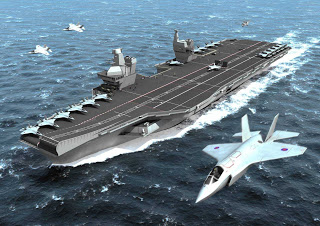
Being out of touch with the world for an entire week is difficult for an information junky like me. There are a number of topics to discuss, a number of interesting events that occurred, but in the end I can only cover so much from the time away. One of the more interesting articles I came across was the is the June 2007 issue of Defense Technology International that has a decent article on the British CVF.

However, one of the comments that struck me as somewhat odd, or overtly rediculous, was the expectation that a single CVF can provide 360 sorties per day, with each aircraft making around 10 sorties in a 24 hour period for 5 straight days. No matter how you cut it, this is wishful thinking of an incredibly rediculous kind.

Why is this rediculous? Because, in the real world those numbers don't reflect reality. RAND produced a sortie rate model several years ago that still holds true today. Their formula is easy to follow, and can be used to educate an aviation novice in military affairs 'how things really work.'

Sortie Rate = 24 hours / Flight Time +Turnaround Time + Maintenance Time


Last year, in an article highlighting the retirement of the F-14, and the differences between it and the F-18, Navy NewsStand reported on the maintenance hours of the F-18E/F Super Hornet to be somewhere between 5 and 10 hours. We will assume 5 hours for this exercise.

The RAND report covers the math regarding the Turnaround Time. The following table from the report shows the figures for USAF Turnaround Time for F-15s and F-16s shows 180 minutes, or roughly 3 hours for Turnaround Time, which doesn't include maintenance hours. While there is no good public data for the F-18, assuming anything more than a 33% improvement over these times is being completely unrealistic, but would be 2 hours Turnaround Time.


Flight Time is calculated by the distance the aircraft carrier is from the target. This is where Navy's tend to fudge the numbers some, in fact the US Navy likes to use the figure 250 nautical miles from target. I prefer the more realistic 500 nautical miles to target with an average flight speed of 500 knots, because many SH pilots have testified this figure to be more realistic. This means 1000 nautical miles round trip at an average of 500 knots, or roughly 1.68 hours. Given these numbers, we can now compute the sortie rate for the existing F-18E/F.

Sortie Rate = 24 hours / Flight Time +Turnaround Time + Maintenance Time
Sortie Rate = 24 hours / 1.68 hours +2 hours + 5 Hours
Sortie Rate = 24 hours / 8.68 hours
Sortie Rate = 2.76
46 F-18s x 2.76 = ~127 sorties per day


It has become vogue to claim that number of aimpoints (bombs) per aircraft means sorties, but it actually doesn't. It is absolutely true that each bomb can be independently targeted, but I think it is a bit dishonest to say that each bomb is a unique sortie. The F-18E/F would potentially be able to carry 6 aimpoints (bombs) in addition to other weapons per sortie, while the older F-18C/D can carry 4, so in this case each plane is able of a certain number of targets. Assuming that all 3 Navy squadrons (2 are SH squadrons) are 12 planes and the USMC squadron is 10 planes, the 46 planes would represent 232 aimpoints per sortie. This means a typical US Carrier with 4 F-18 strike squadrons is able to support 640 aimpoints per 24 hour period.

The article is assuming the Joint Strike Fighter V/STOL version, which is considerably more complicated than the simplistic F-18 design, will be able to achieve a sortie rate of 360 per day, or roughly 38% more efficient than the current US Navy carrier that has more planes of a less complicated design.

Believe what you want, but it is rediculous to assume a VSTOL Joint Strike Fighter is going to somehow achieve a 360 sortie rate per day capability for 5 straight days on the CVF. The numbers simply don't add up. Assuming the VSTOL Joint Strike Fighter is equal to the F-18E/F in sortie rate, or roughly 2.76, the CVF should average around 100 sorties a day, or roughly 400 aimpoints per day, which is still a substantial upgrade over existing carrier aviation capability for the Royal Navy, but not the unreasonable figures being promoted by some.

Friday, June 22, 2024

The Disinformation of Military Deployments

I work with a guy who is a staunch independent. He basically has two favorite sayings, "the kooks on my right" and "the kooks on the left." While both the right and the left can fill in the blanks regarding who is the kook, I'll stick with the kooks I see spreading disinformation on military deployments.

One such kook website, one that would qualify as "kooks on the right," would be DEBKA. For some reason people continue to treat what they say as news, as is, as opposed to evaluating what they say as news. Like most on the fringes, they believe in the "alarm" method of reporting, meaning if they aren't scaring you the story isn't written well enough.

This latest alarm follows the general mode of disinformation that can be expected of kooks. The Headline reads:

A third US carrier, the nuclear-powered USS Enterprise Strike Group is speeding towards the Persian Gulf

Actually, the USS Enterprise is in Norfolk as I post this blog, but details like that don't make headlines. The point of the article is the USS Enterprise is soon to deploy to the Middle East. That is about the only part of the story that is actually accurate. It turns out, military.com reported this back in May, but did so professionally as you would expect from a legitimate, non kook, media source on military affairs.

USS Enterprise, At Sea -- The nuclear-powered aircraft carrier USS Enterprise (CVN 65) (Big E), got underway May 22 following about one week in its homeport at Naval Station Norfolk.

During their in port period, Big E hosted a change of command ceremony for Commander, Fleet Forces Command, and held its own change of command ceremony for its new Commanding Officer, Capt. Ron Horton. For the next few weeks, Enterprise, along with embarked Carrier Air Wing (CVW) 1 will be conducting carrier qualifications, maintaining combat readiness for its upcoming surge deployment.

While DEBKA is busy raising the alarm, military.com is signaling that the USS Enterprise Carrier Strike Group (CSG) will be replacing the USS Stennis Carrier Strike Group (CSG) that was surged in January. Carrier Strike Groups typically deploy for about 6-8 months, the time period difference usually determined by the arrival of its relief and the distance from homeport. Considering the Stennis CSG deployed in January, it can be expected that the Enterprise would need to deploy either by the end of June or early in July to relieve the Stennis Strike Group so those sailors could return home. With the surge in Iraq expected to last until at least September when Congress intends to evaluate the progress, naturally the extra aircraft carrier surge would last until at least then.

The USS Enterprise Carrier Strike Group is part of a new US Navy strategy to deploy 4 destroyers instead of 2 in Carrier Strike Groups. This reverts back to how Carrier Battle Groups were deployed under cold war doctrine, meaning the Navy has learned a lesson somewhere that 1 cruiser and 2 destroyers simply wasn't enough to provide the services that were expected of Carrier Strike Groups under the Fleet Response Plan.

This should address the constant deployments of 'surge' surface combatant task forces that have occurred the last few years under the Fleet Response Plan to areas like the Middle East. The Enterprise Strike Group consists of:

USS Enterprise (CVN 65)
USS Gettysburg (CG 64)
USS Arleigh Burke (DDG 51)
USS Stout (DDG 55)
USS Forrest Sherman (DDG 98)
USS James E. Williams (DDG 95)
USNS Supply (T-AOE 6)
USS Philadelphia (SSN 690)

A few things jump to mind looking at this force. There are 512 VLS cells in this Strike Group, the most I can remember ever in a single Strike Group. The USS Forrest Sherman (DDG 98) and the USS James E. Williams (DDG 95) are two of the most modern warships in the US Navy. The USS James E Williams (DDG 95) illustrates my earlier point about surface ships having to surge when Carrier Strike Groups were only 1 Cruiser and 2 Destroyers, as its maiden deployment in May of last year was a surge deployment with the USS Trenton (formally LPD-17, which will be commissioned the INS Jalashwa today) and USS Hue City (CG 66). In fact, the James E Williams (DDG 95) actually deployed late, and crossed the Atlantic to the Middle East with the USS Enterprise (CVN 65).

Ignore the kooks on US Navy deployments, because it can be expected the kooks will go crazy when the Kearsarge Expeditionary Strike Group (ESG) deploys when it is scheduled to deploy in July, or the Truman Carrier Strike Group which is scheduled to deploy in the fall. Schedules don't matter to kooks though, they just want to raise the alarm by beating the drums of war.