
Showing posts with label Coast Guard. Show all posts

Saturday, August 14, 2024

Homeland Defense and the Maritime Domain

I will be attending Homeland Security 2020: The Future of Defending the Homeland conference at the Heritage Foundation on August 23rd - or at least I will be attending the first day which is specifically regarding maritime security. The description is as follows:
With ninety percent of the world’s trade transported by sea, a major terrorist attack focused on one or more U.S. ports would significantly impact the U.S. economy and our ability to project military power. While Congress has passed legislation to protect America’s ports, it’s important to evaluate its effectiveness, as well as that of intelligence measures taken since 9/11. Join us as our panelists examines what policies and capabilities the U.S. needs to develop in order to prevent or recover from possible attacks and better protect the homeland.

10:00 a.m.
Panel 1
Defending Domestic Waters: U.S. Maritime Security Policies

Dr. Steven Bucci
Associate Partner and Cyber Security Lead, Global Leadership Initiative at IBM Global Services, and former Deputy Assistant Secretary for Homeland Defense & Defense Support of Civil Authorities, U.S. Department of Defense

Michael Barrett
President of Diligent Innovations and former Director of Strategy, Homeland Security Council, The White House

Adam Salerno
Senior Manager, U.S. Chamber of Commerce

Hosted by Claude Berube
Visiting Fellow for Maritime Studies, The Heritage Foundation


11:00 a.m.
Panel 2
Programs, Platforms, and People: Navy and Coast Guard Capabilities for 2020

VADM Terry Cross, USCG (Ret)

CAPT Tom Bortmes, USN (Ret)
Port security is foremost in the mind of national leaders in Washington in regards to the maritime component of Homeland Security, and it should be. I gave serious thought to focusing on this specific issue and throwing all of my collected research into the topic and write several posts to generate as much focus as possible on the issue. The thing is, everyone else will be focused on this issue - so I'll be approaching the maritime component of homeland security from a completely different perspective. These are the three issues I'll be writing about leading up to and after the conference.

1) How seriously is the United States addressing the enormous challenges facing the Coast Guard today when they are currently going through budget cuts and equipment attrition at an accelerated rate. There are 250 cutters 65ft or more, and their average age is 41 years old! In response to the BP oil spill, no less than 3 aircraft aborted their tasking in the initial hours due to maintenance problems. Is it time to expand the Coast Guard? Is it time to move the Coast Guard out of DHS?

How do we rationalize the two hat service between DHS and DoD and expect high returns on investment when the service is being pulled too many different directions with its broad - and expanding - roles in missions on issues like port security, homeland defense, international maritime security training, environmental protection, maritime navigation and safety, marine resource protection, ice operations, drug interdiction, and migrant interdiction... to name a few. In a post 9/11 world, how has the material condition of the Coast Guard been allowed to deterrent so far when there has been so much rhetoric and tax money spent in the name of homeland security?

2) The emerging threats to the maritime domain in US territorial waters are impressive. It is no longer simply a matter of mini-submarine smuggling, but we now have evidence drug cartels have been building conventionally powered submarines of military design for operations off our coast lines. Is our nation adapting our maritime security capabilities for homeland defense at the same pace as criminal advesaries are adapting their capabilities? A submarine is a conventional military weapon system - and doesn't even address the irregular maritime warfare capabilities that might be deployed in our nations coastal regions.

3) Alaska is a state, although some Americans tend to forget about it. When looking at a globe of the earth, we typically see the world from the equator rather than from the viewpoint of the North Pole. Rarely is it highlighted how much territory in the Arctic Sea is part of our nations economic exclusion zone that extends 200 miles from the Alaskan northern shores. That enormous region of sea contains numerous natural resources that nations like Russia will exploit if allowed, and the potential impact on marine life and environment is just as significant to our economic interests as the loss of any energy resources.

As of 2010, the Coast Guard (thus the United States as a nation) has only 1 operational Ice Breaker - ONE. How do we enforce the nations Arctic Policy with a single operational Ice Breaker? Furthermore, how is it even possible Congress can't build more (and state of the art) Ice Breakers when US Shipbuilding is in dire need for new orders, when Arctic Sea issues are commonly discussed in Congressional hearings on Capitol Hill, and when virtually every Think Tank in Washington - including the Heritage Foundation and the Center for American Progress (which covers both sides of the political isle) - have reports in recommendation of building more Ice Breakers?

I expect to dive into all three of these issues on the blog beginning on August 23rd. Hopefully there are answers to some of the questions list here - among others - at the conference.

Tuesday, July 20, 2024

Random Musings on Surface Ship Manning

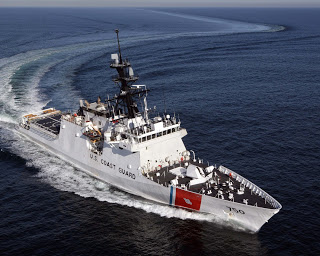
Surface ship manning has been somewhat of a hot-button issue lately. In the past decade, we've seen various manning experiments including the CPO as divos program, "optimally" manned DDGs, and the current rumint about a proposal to man USN amphibs with MSC personnel. It's also interesting to see the Coast Guard's view of manning. The National Security Cutter (NSC) is key to reconstituting the USCG's fleet and the third NSC, CGC STRATTON (WMSL 752), will be christened this Friday inPascagoula, MS. The 418' long NSC has 148 racks in 2-8 man staterooms for 127 or so core crew.

Today's (and tomorrow's) IW operations require ships to be adaptable and one of the best ways to achieve adaptability is by embarking different detachments for different missions. A by product of manning cuts on the DDGs and amphibious ships deploying without Marines in the past few years has been the flexibility to embark extra staffs, special ops forces, UAS detachments, etc. I think one of LCS's biggest designdrawbacks is not necessarily her small crew, but her inability to embark a significant number of additional personnel (outside the planned mission modules). JHSV should not have this problem and will be better suited for IW operations in many ways because of this design factor. Crew size certainly is a factor in mission effectiveness, not just in damage control, but measuring this impact is not an exact science.

Is there an apples to apples way to compare crew sizes on various surface combatants? Tonnage/Sailor is an imperfect ratio, but for the lack of anything better, here are some random comparisons: A WMSL is 4,300 tons with a crew size of 148 (including embarked air det) equaling 29 tons per Sailor. The NSC is designed for maritime homeland security, law enforcement and national defense missions. Contrast this ship with the similarly crewed (about 145) forthcoming DDG-1000 Zumwalt class, which is designed to perform the traditional DDG high end combatant missions of BMD, AAW, ASW, strike, NSFS, etc. At 15,000 tons, she rates at 103 tons per Sailor. An optimally manned Burke DDG (9200 tons/260 Sailors) is about 35 tons/Sailor. LCS 2 would be 37 tons/Sailor. And a WWII Fletcher Class destroyer would have a ratio of only 7 tons per Sailor. Some of the largest ships in the world -- VLCCs, run with only thirty or so crew compared to their USN multi-thousand crew CVN counter-parts, but of course the missions and propulsion of these vessels are extremely different.

Maybe "Sailors per mission" would be a better metric for comparing multi-mission combatant crewing. If it hasn't already been done, an enterprising NPS student could breakout the ROC/POEs for several ship types (including international) and do comparative study of crew sizes for his thesis.

The opinions and views expressed in this post are those of the author alone and are presented in his personal capacity. They do not necessarily represent the views of the U.S. Department of Defense or any of its agencies.

Monday, May 24, 2024

Farewell to Americas Admiral

I've been thinking about the phrase "the right man in the right place at the right time." It is overused jargon, and yet is a phrase that can accurately describe the factors that influence how opportunity bestows itself upon certain people. The thing about opportunity is that it never guarantees success or failure, rather represents the intersection of circumstances by which one may achieve great things - and in the case of our national leaders - opportunity for genuine impact often comes in the midst of tragedy.

On Tuesday Adm. Thad W. Allen will be relieved by Adm. Robert J. Papp, Jr. Adm. Thad W. Allen was the 23rd Commandant of the United States Coast Guard, but I think there is a good case to be made that Adm. Thad W. Allen has also been the most influential Admiral of the early 21st century in the United States. Having spoken to Admiral Allen, and followed him nearly daily over the last several years, I don't doubt that being the 23rd Commandant of the United States Coast Guard will always be considered his highest privilege and honor, but I would suggest he has been a great deal more than simply a service Commandant.

In September of 2001 when airplanes were crashing into buildings of national importance on the east coast, jurisdiction for all Coast Guard operations over that entire area falls under Commander, Atlantic Area and U.S. Maritime Defense Zone Atlantic. Thad Allen was that Commander.

In August 2005 when Hurricane Katrina caused devastation across the Gulf Coast, the Chief of Staff of the Coast Guard was appointed in charge of search-and-rescue and recovery efforts. Again, that person was Thad Allen, and when the Bush administration finally realized Michael Brown was incapable of leading overall relief efforts, Thad Allen was promoted to assume that responsibility.

When he became the 23rd Commandant of the United States Coast Guard in May of 2006, he inherited several major problems - including the troubled Deepwater program. In April of 2007 Commandant Thad Allen announced major reforms for Deepwater, and throughout 2007 the US Coast Guard made several additional reforms including an internal Command reorganization, hiring more experienced acquisition folks, and adopting several recommendations made by the GAO in regards to the program. It is noteworthy how Deepwater was the biggest challenge facing the US Coast Guard in May of 2006, and yet today we almost never hear about problems with Deepwater today - mostly because everyone (including lawmakers) appreciate the processes of the US Coast Guard established under Commandant Allen related to the Deepwater programs.

I know almost nothing about Adm. Robert J. Papp, Jr., but I do know he has enormous shoes to fill when taking over for a man like Thad Allen as Commandant of the United States Coast Guard. Information Dissemination is a running dialog of modern maritime commentary, but all of the authors here try to relate current events through the prism of history. I strongly believe history will look on the first decade of the 21st century and remember Thad Allen as the most influential Admiral of that first decade. In an era of environmental focus, technological innovation, strategic communications, climate change, sea based economic activity, more efficient government spending, and leadership during times of tragedy and disaster - Admiral Allen stands out as a rare figure in US government who always led from the front on these issues.

Politicians talk a lot - often blame others for failure and often take credit for successes they often have little direct influence over - but in reality any government success is only possible when leaders like Admiral Allen are willing to go to the scene of disaster or turmoil and produce positive accomplishments during the most difficult and challenging situations. Admiral Thad Allen's record is one of a leader doing exactly that during every difficult situation where the US Coast Guard was present over the first decade in the 21st century.

We honor and appreciate his service to our country. We wish the very best to you Admiral Thad Allen; you have represented America brilliantly in your career and we at ID salute you for it sir.

Wednesday, January 20, 2024

Coast Guard Praise

There is a great deal of praise for the US Coast Guard coming from...

The White House Blog. Well deserved in my opinion. ADM Thad Allen's blog has been updated with the full list of Coast Guard forces supporting operations in Haiti.

Regular updates from the Official Coast Guard Blog.

Finally, a photo gallery here.

Sunday, January 17, 2024

One of the Great Stories From Haiti

If you are trying to figure out what to read from Haiti that will add both value and impact to your day, you can't go wrong here. That might be the best blog post from an official government blog ever, so naturally it comes from the Coast Guard.

Friday, September 11, 2024

CNN and the Coast Guard

What did you learn today? I learned that Coast Guard training is more realistic than anything said on CNN.

Credit the Coast Guard PA folks. I got an email with a public statement regarding the training at 11:23am. The picture of CNN freaking out on Drudge shows the time 10:29am.

Then they had a press conference at noon? That is the kind of efficient response time the Department of Homeland Security is not very well known for.

This was the official Coast Guard statement I got in the email:
Coast Guard statement on media report of gunfire on the Potomac

WASHINGTON — The U.S. Coast Guard reported on Friday that reports in the media were based on overheard radio calls made over a training frequency.

We are still gathering information of how this training event might have been misconstrued as an actual incident. We will conduct a thorough review of this incident.

There were Coast Guard boats were operating in the vicinity of 14th Street and Memorial Bridges this morning. Whether or not these were the same boats using the marine radio frequency used for training purposes has not yet been confirmed.

The best way that we in the Coast Guard can remember Sept. 11 and our security obligations to the nation is to be always ready and this requires constant training and exercise. To ensure the appropriate readiness posture we conduct training scenarios across the nation on a daily basis.

How and when this exercised was conducted will be reviewed.
Gibbs was funny.

Saturday, July 18, 2024

CBO Studies Small Combatants

Eric Labs has a new report (PDF) on modernizing Small Combatants for the Coast Guard and Navy released this week. A lot of this is very interesting. This is from the executive summary.
Summary and Introduction
As articulated in their respective long-term shipbuilding plans, the Navy and the Coast Guard intend to spend more than $47 billion combined over the next 20 years to purchase a total of 83 small combatants. Of that number, the Navy plans to purchase 53 littoral combat ships (LCSs), in addition to the two that were purchased in 2005 and 2006. The LCSs will be built using two different hull designs—one, a semiplaning monohull; the other, an aluminum trimaran—although the exact mix of hulls has not yet been determined. The ships will carry one of three sets of equipment, or mission packages, depending on which mission they are expected to perform (antiship, antisubmarine, or countermine warfare).

The Coast Guard plans to buy five new high-endurance cutters, commonly referred to as national security cutters (NSCs), and 25 new medium-endurance cutters, often called offshore patrol cutters (OPCs). Three other NSCs ordered prior to 2009 have been built or are currently under construction. Although the Coast Guard plans to begin buying the offshore patrol cutter in 2015, it is not yet certain what the OPC will look like or if it will be confined to one class of ship. Together, the NSCs and OPCs, which are designed to operate 50 nautical miles beyond the U.S. coastline, are part of the resources and force structure that make up the Coast Guard’s “Deepwater
assets.”

As the designation “small combatant” implies, the Navy’s LCSs and the Coast Guard’s NSCs and OPCs are designed to be significantly shorter in length, lighter in weight, and shallower in draft than most Navy surface warships (carriers, amphibious ships, cruisers, and destroyers). For instance, the Navy’s LCSs have a full-load displacement—the weight of the ship plus its crew, weapons, fuel, and cargo—of about 3,300 tons. The national security cutter displaces about 4,300 tons of seawater, and the most recent notional design of the offshore patrol cutter would have the ship displace 3,700 tons. By contrast, the most modern Arleigh Burke class destroyers, the backbone of the Navy’s surface combatant force, displace about 9,500 tons; amphibious ships displace from 16,000 to 45,000 tons; and aircraft carriers displace about 100,000 tons.

Despite a superficial similarity in size, the small combatants being developed by the Navy and the Coast Guard have different characteristics and capabilities, which are designed to fulfill different missions. In general, the Coast Guard ships are meant to operate independently at sea for long periods of time and at some distance from the shore (that is, to have a large, unrefueled range of operation) and not to engage in major combat operations. The Navy’s LCSs, by contrast, are designed to have less range than Coast Guard cutters but to operate at much greater speeds and serve during wartime as part of a naval battle network in close-in littoral waters in other parts of the world. Those differences in mission requirements have led the two services to reject a common ship platform for their small combatant needs and to adhere to their previously articulated procurement plans.

In the early stages of implementing those plans, however, the Navy and the Coast Guard have encountered various challenges. Cost overruns and construction problems have plagued both versions of the Navy’s littoral combat ship—designated LCS-1 (the semiplaning monohull) and LCS-2 (the aluminum trimaran)—as well as the Coast Guard’s national security cutter. Because of the difficulties associated with constructing the NSC, development of the Coast Guard’s notional offshore patrol cutter has been delayed by five years. All three ship programs have experienced substantial cost growth above the original estimates the services provided to the Congress as well as delays in construction of more than a year for each ship.

As a result of those delays and cost overruns, some members of Congress and independent analysts have questioned whether the Navy and the Coast Guard need to purchase four different types of small combatants and whether—in spite of the services’ well-documented reservations about using similar hull designs—the same type of hull could be employed for certain missions. To explore that possibility, the Congressional Budget Office (CBO) examined three alternatives to the Navy’s and the Coast Guard’s current plans for acquiring littoral combat ships and deepwater cutters.
  • Option 1 explores the feasibility of having the Coast Guard buy a variant of the Navy’s LCS—specifically, the semiplaning monohull—to use as its offshore patrol cutter.
  • Option 2 examines the effects of reducing the number of LCSs the Navy would buy and substituting instead a naval version of the Coast Guard’s national security cutter. (The rationale for this option is that, according to some analysts, the NSC’s longer mission range and higher endurance might make it better suited than the LCS to act as a “patrol frigate,” which would allow the Navy to carry out certain activities—maritime security, engagement, and humanitarian operations— outlined in the sea services’ new maritime strategy.)
  • Option 3 examines the advantages and disadvantages of having the Coast Guard buy more national security cutters rather than incur the costs of designing and building a new ship to perform the missions of an offshore patrol cutter.
According to CBO’s estimates, all three alternatives and the services’ plans would have similar costs, regardless of whether they are calculated in terms of acquisition costs or total life-cycle costs (see Table 1). CBO’s analysis also indicates that the three alternative plans would not necessarily be more cost-effective or provide more capability than the services’ existing plans. Specifically, even if the options addressed individual problems that the Navy and Coast Guard might confront with their small combatants, it would be at the cost of creating new challenges.
The report turns out to be a very easy and interesting read with a lot of content worth discussing.

Sunday, July 12, 2024

Sunday, June 14, 2024

The Small Stuff: Under the Radar and Slipping Through the Cracks

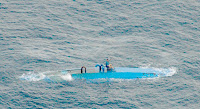
The Washington Post had an article on smuggling submersibles from South America back on June 6th. While the small boat pirate activity off Africa gets a lot of attention, this is another area of small vessel activity that signals how the US is poorly prepared to deal with small vessel activity.
The subs are powered by ordinary diesel engines and built of simple fiberglass in clandestine shipyards in the Colombian jungle. U.S. officials expect 70 or more to be launched this year with a potential cargo capacity of 380 tons of cocaine, worth billions of dollars in the United States.

"This is definitely the next generation of smuggling conveyance," said Joseph Ruddy, an assistant U.S. attorney in Tampa who prosecutes narco-mariners.
ad_icon

The submersibles are equipped with technologies that make them difficult to intercept, even though U.S. forces use state-of-the-art submarine warfare strategies against them. Authorities say most slip through their net.

"You try finding a floating log in the middle of the Pacific," one DEA agent said.
Two thoughts. First, there might be a place for a system like this for supporting Marine Corps operations ashore. Second, we need to find ways to be more successful against small platforms. I think it is interesting how small vessels force our Navy and Coast Guard to be purely reactive, because we are unable to consistently, reliably identify the small vessel threats effectively.

This is where the Navy needs to be able to set up Maritime Domain Awareness at sea in a specific area as a requirement. Basically, the ability to blockade blue water on demand over the length of 250nm in a way that absolutely nothing can get through without being seen, and searched if necessary.

H/T Mark Nolan

Wednesday, May 13, 2024

Observing Maritime Security Directive 104-6

The maritime security directive issued by the Coast Guard changes the rules of the road for US flagged ships traveling through the waters threatened by piracy. This is the official Coast Guard news release on Maritime Security Directive 104-6.
Maritime Security Directive 104-6 (rev. 2) issued by the Coast Guard under the Maritime Transportation Security Act of 2004 provides the maritime industry with specific, risk-based measures to take to deter, detect or disrupt piracy. Prior to entering high risk waters, U.S. flagged vessels should establish an anti-piracy plan that includes the hardening of rigging and operating vessels in a manner to prevent attacks and subsequent boarding. Ships shall also use established transit lanes, erratic ships maneuvering, increased speed and cooperation with military forces patrolling the area. During transits through high-risk areas, it is the ship’s responsibility to maintain a vigilant anti-piracy watch and ensure all shipboard anti-piracy precautions are in force.

Vessel security plans for U.S. flagged vessels that operate in high risk waters must have security protocols for terrorism, piracy, and armed robbery against ships that meet the performance standards in this directive by May 25. An annex to the directive provides further specific measures required for vessels transiting in the Horn of Africa and Gulf of Aden high risk waters. All vessel security plans must be approved by the U.S. Coast Guard.
Reuters is also reporting that the rules are detailed enough to have requirements for watch stations, although Yahoo reports this as posting guards.

This looks to me like one piece of a larger puzzle coming together. I look forward to seeing what the other pieces are.

Wednesday, May 6, 2024

Coast Guard remarks on piracy

RADM Salerno appeared before a Senate subcommittee yesterday to discuss piracy. He covered a lot of ground and a lot of what he said meshes well with the administration's approach to piracy. Out of the gate he stressed the breadth of the CG's international agreements and this is probably going to be their biggest contribution to the fight.
These agreements underpin a wide range of Coast Guard operations including counter-drug, migrant interdiction, fisheries enforcement, and Proliferation Security Initiative missions. The Coast Guard understands the domestic and international legal frameworks and the associated boarding and enforcement requirements necessary to ensure the successful negotiation and implementation of agreements to facilitate counter-piracy operations on the water and the delivery of legal consequences to the pirates ashore.
Since the administration favors the law-enforcement tack, these agreements can offer a starting point to begin accomplishing something in the legal realm with respect to piracy. After so many pirates have been released because of jurisdictional issues, it's important that we start building the multilateral agreements necessary to successfully prosecute them. This is an explicit benefit of the CG's dual role as military and law-enforcement.

While the Navy has the statutory authority to go after pirates and more than capable when it comes to assault, the CG teams detached to these ships in CTF 151 and elsewhere have the procedural experience when it comes to international crime that is going to be really important when these guys are tried in a Western democracy. Salerno rightly says a lot about the strength and importance of this particular partnership.

He also touched on something else that has been popping up in ADM Allen's remarks recently about the threat small vessels represent.
Small vessels are the vehicle of choice for pirates to conduct their attacks. These vessels are fast, readily available, relatively inexpensive, and blend in well with other small vessels commonly operating in the area.
Smaller vessels have been the vehicle for pretty much all maritime mayhem in recent memory including the bombing of the Cole, the Iranian Revolutionary Guard incident last year and you could even include the Chineese fishing boats recently. Small boats also represent the largest maritime threat on the domestic front too. When I heard Allen point this out for the first time I was dumbfounded how simple the connection was. Simple as it may be, there is no comprehensive solution to this threat here, in Somalia or anywhere and they know it.
As the piracy cases off Somalia have illustrated, there is a continuing need for maritime domain awareness - the ability to detect, classify,, and identify vessels at sea. We need greater awareness of maritime activities around the world, as well as along our coastlines, for both safety and security purposes.
There are some tools available that I'll discuss in a later post but as it stands now it's a vulnerability we have to live with for the foreseeable future. The law enforcement approach to piracy might be appropriate now but it won't do anything to remedy the larger threat in the long run. That's going to take a sizable coalition and they're smart to start floating this idea and get the discussion started even though they don't have the answer.

Tuesday, April 28, 2024

What to Watch For...

If you are not following the short video clips Commandant Thad Allen is uploading to the iCommandant blog, you are missing something interesting. Knowing the DoD, these videos are probably blocked to the folks reading this from your work location, so you may have to see it for yourself at home. This is a very clever idea. I got some detail from the Coast Guard regarding the technology at work here.
It is really low-tech effort with some good potential ROI. The videos are shot with a standard digital still camera with some basic video capability and then uploaded onto Flickr, which can then be blogged out through iCommandant which links to his Facebook.
This is a very clever way to leverage low tech stuff for strategic communications, and there are few limits to how useful this could be. The videos are short and sweet, leveraging simple technology for video-blogging that could realistically be done by any public affairs person on any ship in the fleet under virtually any circumstances, and the small size of the short & simple videos supports lower bandwidth requirements.

It reminds me of something VADM Harvey said the other day.
Just an example that woman from Scotland who sang [Susan Boyle]… I think the number of views of that 4-5 minute video is up to a fairly staggering number. Now clearly there is a fairly large human interest piece in that story, but I think of how, if we had on Facebook, the ability to respond rapidly to the events of Easter Sunday went down in terms of getting our hostage Captain Phelps back. I think that would have been seen by lots of people as an opportunity to talk about the Navy and why we have a role to play and what the role is and establish that broad level of awareness that I think is lacking in the nation for a large number of reasons.
VADM Harvey clearly understands that strategic communications is about capturing moments. It looks like the Coast Guard has found a clever way to do something exactly like that with a popular medium: video, and promote it not only through a blog, but also through a Facebook page. When I talk about leveraging social media for strategic communications, I try to emphasize consistency and congruency, because when implemented with consistency a social network can build expectations with the target audience and connect.

With something like this video-blogging concept, the Coast Guard connects directly to the target audience by bypassing the filters (opinion shaping) of the press. With a short video, one doesn't have to worry about which quote becomes the story, because the entire short video is available to all to be quoted by anyone.

This technology in the hands of some smart Coast Guard PA folks could be fascinating to observe when hurricane season comes. Add the two way content flow and ease of use (cell phone) potential of Twitter to the information flow possibilities available to the Coast Guard this upcoming hurricane season, and I'd suggest it is going to be very interesting to see how the new information tools the Coast Guard is leveraging influences the information flow in future hurricane emergencies. With a bit of planning ahead, the Coast Guard could potentially capture the moment that VADM Harvey is talking about.

Now you might be wondering how the Navy could use this type of technology. Easy. Interview folks on the USNS Comfort (T-AH 20) with a quick video 30 second clip every day and upload the videos to the Continuing Promise 2009 blog (and Facebook page).

But if they were really thinking, they would also do a video every day in Spanish and upload it to a Spanish language Continuing Promise 2009 blog targeting the media, naval enthusiasts, health experts and organizations, and every local charity, organization, or group that can be found online in the regions the ship is visiting. And when you get to those places, you interview the locals in the videos. With a bit of tactical success hitting the target audience of these regions, local politicians will request to be on the videos.

Tuesday, April 21, 2024

Coast Guard Talks Piracy

Commandant Thad Allen weighs in on piracy with an information rich post on his blog. Very informative. This stood out:
On the vulnerability front, working through the International Maritime Organization (IMO) and via the international Contact Group on Piracy off the Coast of Somalia, the U.S. has engaged with the shipping industry to develop self-awareness and self-protection measures that reduce their vulnerability to attack. These most recent attacks against U.S. ships have added to the already heightened sense of urgency, and have raised the possibility of armed security teams as a specific measure to be employed by merchant vessels to reduce their vulnerability to pirates. The Coast Guard, working closely with the maritime industry, will issue a new Maritime Security Directive to address additional security measures authorized and required by U.S. vessels operating in waters threatened by piracy. It is important to recognize that armed security is but one of many protection measures, including the application of non-lethal tactics. There are numerous examples of these measures succeeding in thwarting pirate attacks in the Gulf of Aden and Horn of Africa region.
I look forward to reading this new Maritime Security Directive. I do wonder though, is this a bad time to ask the question... where is the USCGC Boutwell (WHEC 719)?

Training someone in Yemen or Kenya how to police their sea lanes I hope.

Tuesday, April 7, 2024

Offshore Patrol Cutter Update - LCS Still in Play

I wanted to check out what this was about before posting on it specifically. I know this is over two weeks old, but it is important and I wanted to know more before discussing.
Under pressure to cut the cost of its Littoral Combat Ship program, the U.S. Navy is studying whether to lower the required speed and swap out fuel-hogging propulsion systems, said a former senior Navy analyst and another source informed about the effort.

The study, led by Naval Sea Systems Command, could lay the groundwork for a change in one of the key selling points of the new ships, which can reach speeds of over 45 knots, but whose costs have more than doubled since 2002, said the sources, who asked not to be named because of the sensitivity of the study.
Well, I had an opportunity to ask my favorite Admiral, which would be USCG Rear Adm. Gary T. Blore, for an update on the upcoming Offshore Patrol Cutter program. You see, the Coast Guard is under serious pressure to pick a LCS variant for that program, and RADM Blore adds some context (PDF) to the engine study.
Certainly, LCS is something that we would consider. I meet fairly regularly, as does my staff, with Naval Sea Systems Command. And, you know, I just spoke with Admiral Landay earlier this week over lunch and, you know, we talked about LCS. I think there's a study underway in the Navy, or about to be completed in the Navy, that would put a more fuel-efficient power plant on the same hull.

I think -- in relation to the previous question about international acquisition, I think the study was actually initiated to take a look at potential LCS sales internationally and whether some nations might be more attracted to a less expensive ship that maybe wasn't as fast, but was more fuel efficient. As it turns out, that's certainly something the Coast Guard would be very interested in, too.

So I haven't seen the study yet, but I understand, you know, they have -- you know, basically, they look at combinations of, like, diesel engines instead of the gas turbines, you know, shafts and traditional propellers along with jet drives, depending on which variant.

We'll be very interested in that when it comes out. But, no, we have not made any final decisions as far as the requirements for the offshore patrol cutter.
I think Ray Mabus should have Rear Adm. Gary T. Blore give a class to Navy Admirals in NAVSEA, starting with Landay on how to talk to the American people about acquisition and be loved for it. I love talking to RADM Blore, consider how things are so different between the Navy and Coast Guard.

On my right is the enormously powerful ruler of the worlds high seas, the US Navy, who doesn't talk about how they spend their gigantic acquisition budget and can't articulate how means match ends and ways, and says as little as possible executing strategic communications policy adapted from a transparency handbook written by a former Soviet Union political officer.

While on my left is the small budget Coast Guard whose leadership can't wait to tell anyone who will listen about everything they are doing with as much detail and transparency as possible.

Check out the bloggers roundtable (PDF) by USCG Rear Adm. Gary T. Blore. It is an interesting read, and covers some interesting things the Coast Guard is doing in regards to their own acqusition personnel issues, not to mention Coast Guard LCS mission modules, UAVs, Deepwater, and C4ISR projects the Coasties are discussing or developing.

You know why the current Coast Guard acqusition path sounds smart? Because they stand behind everything they are doing, discuss the challenges while highlighting the advantages of the choices ultimately decided. In the end, the Coast Guard may end up picking the Littoral Combat Ship for the Offshore Patrol Cutter program for very legitimate reasons, and my bet is if that was to happen, USCG Rear Adm. Gary T. Blore would be the first Admiral in any maritime service that makes that platform sound like a really good idea.

Sunday, April 5, 2024

Legacy of the 87

Two weeks ago the Coast Guard commissioned the last of the 87-foot Marine Protector patrol boats and by any measure this was a hugely successful product line. So I thought it would be appropriate to discuss the extremely important role this humble boat had on the state of today's Coast Guard and how it laid the foundation for successful modernization.

From the start the 87 was on-time, on-budget and, most importantly, operationally capable. Powered by two Mercedes MTU diesels, the 87s have a top speed of 25 knots. When this contract was awarded in 1996, only the 110-foot PBs were faster at 28 knots. These two classes went a long way towards ensuring the CG's habit of under-powering ended after years of being under-funded (I've heard quite a few sea stories about siphoning gas from the grey-hulls back in the "old guard.") In all seriousness, the struggle to eliminate the idea of "doing more with less" from the CG culture continues today. The procurement of the 87 was a glimpse of the future in this respect.

Among other innovations, the 87s were the first cutters to incorporate a stern-launch. This makes small boat evolutions safer than with traditional over-the-side launch and allows the RHI to be deployed in a higher sea-state. This, however, was not the main intent of the design team. With a crew of ten, someone is almost always sleeping. They hoped to reduce crew fatigue by reducing the number of people required to launch the boat down to 2. This thinking turned out to be a bit too forward as operators justifiably felt it was important to have all hands on deck in case of an MOB.

It's also important not overlook the fact that the 87 is crewed by just 10 or 11, and sometimes less. Yet these boats can perform almost every function a larger cutter can. They also had the capability for mixed berthing. Many more afloat billets were available to female coasties because of these coed boats.

One of the reasons the platform was so innovative was input from the fleet. A large group of operators, mostly from other PBs, were brought in to lend their experiences and shape the requirements for the procurement even before the contract was awarded and were an integral part of the project well through it's first sea-trials on choppy San Francisco Bay. A similar group was formed in the successful response boat-medium project.

Also, full size mock-ups were made to limit redesigns after construction had started. As a result, the spaces are intuitively laid out (they were able to coax a full 360-degree view from the bridge) and there were minimal mods once the welding had begun or after being put to sea.

Probably the largest part of the 87's success is because it was based on a proven platform. It was a Dutch design that had been adopted by the Brits and successfully used for fisheries in the English Channel. CG Acquisitions (CG-9) calls this a "parent class" design and it has become the standard for major procurements as already noted on ID.

This all bodes well for the fast response cutter going into production that just happens to be an established Dutch design and almost all of the successes of the 87 were incorporated. The parent-craft concept obviously works and probably made it easy for the GAO to uphold the decision to award the FRC contract to Bollinger (who also happened to build the 87s.)

Thankfully, RADM Blore (CG-9) is gung-ho when it comes to the parent-craft concept and has repeatedly stated his preference for an OPC parent-craft design. This project is particularly important due to the state of our large cutters (WMEC/WHEC) - more than half were built in the 60s and 70s, none built later than the 80s and we can only expect 8 or so NSCs.

Even though this situation is less than ideal, we'll be able to manage the problem with both the FRC and OPC likely to come online with minimal delay because they are being built on a foundation of success. Credit is due to CG leadership for recognizing the solution to their procurement problems was as simple as reusing designs and not falling prey to notions of sexy, first-in-class designs. Though maybe as much credit is due to the team that guided the 87 project.

Sunday, March 22, 2024

Approaching the waterline in Mexico

Many recent reports would lead you to believe that the Mexican government is about to collapse. Yes, the violence along the border has been staggering, but the idea that Felipe Calderon is on the verge of losing control couldn't be farther from the truth. In fact, the opposite is true. Calderon is squeezing the cartels to the point where they have begun fighting each other for increasingly limited turf and the government is feeling the backlash.

It's important to note that the violence does not represent the cartels' death throes, especially since corruption isn't going to disappear overnight in a country as poor as Mexico. The more apt comparison would be to a cornered animal.

There has been a surge of arms heading south across the border. Interception of heavy-caliber automatic weapons is becoming common. Even shipments of grenades and rocket launchers are popping up. With both sides pushing and neither willing to cede, bloodshed is only going to increase. As places like Juarez look more like Anbar than a depressed border town, the shadow of terrorism is already appearing. From The Hill:
Rep. Henry Cuellar (D-Texas), whose district borders Mexico, said that while the situation is bad, it could easily get worse.

“The goal of the cartels is to make money,” said Cuellar, who sits on the House Homeland Security committee. “If they can smuggle in drugs and human cargo, then certainly they can smuggle other things in, other devices to cause us harm.”
Before the cartels were being pinched, talk like this could be attributed to fear-mongering. Today it looks like a credible concern. All of this has implications for the maritime threat environment that is conspicuously missing from the current discussion.

With so much pressure on land routes, the arms, human and narco-traffickers are inevitably going to try and exploit sea routes on both coasts. These routes create tangled international considerations that are not present in the conflict as it stands now. Sea-based trafficking is traditionally the forte of the Columbian cartels. Who will control this space as traffic spills over? The Columbians could look to increase their margin and at the same time be less reliant on a perilous Mexican environment by smuggling the goods on their own. Conversely, Mexican cartels might not tolerate being pushed out of the cocaine game and assert themselves in a place and manner never necessary before.

Far from the margins is FARC, a dangerous Columbian revolutionary organization that has been around since the 60s. FARC has known ties to Hugo Chavez in Venezuela, the Castros in Cuba, Basque separatists in Spain as well as the Mexican cartels.

There’s no way to know how this will all play out or how many of these factors will come to bear. At a minimum, we can assume enforcement efforts on land will push the traffic into the water. Both the Navy and Coast Guard should be ready to deal with this surge alongside the Mexican navy. I’m positive plans are in the offing, but part of those plans should involve a large deterrent show-of-force similar to what took place during the Haitian rebellion in 2004.

The U.S. feared a mass exodus of migrants taking to the sea during the protests before Aristide was deposed. A slew of Coast Guard cutters were ordered there and formed a ring around Haiti’s half of Hispaniola. Well within sight of the coast, the presence deterred any attempt at mass migration.

If a similar tactic is taken in the Mexican border situation, the sooner it happens, the more effective it will be. The cartels are likely planning for an increase in maritime trafficking. It will take some time to build-out their fleet of vessels, more if they lean towards semi-submersibles, less if they opt for the traditional go-fast, cigarette boat type. The farther they go down either road, the more committed they’ll be to the maritime approach, and less likely to reconsider this option.

If the cutters had not arrived in Haiti until after an exodus had begun, it would have been an unmanageable situation with Haitians and yolas everywhere, many in distress. Stopping or aiding those already at sea would have limited their ability to slow the tide. In the same way, if the cartels pass the point of no return in preparing for increased waterborne trafficking the effectiveness of deterrence will be almost nil. At that point we’ll already be on our heels and responding to their moves.

If, on the other hand, we can muster a hefty show-of-force soon enough, we may be able to keep the war on these cartels contained within confines that we determine. It will also remain a trilateral engagement with the Mexicans, the cartels and us, avoiding the complications of interdiction at sea, like waiting days for SNOs or DOJ evidential requirements.

In our favor, the mechanisms for a formidable show-of-force are already in place. JIATF is a strong and diverse body. Diplomatic and naval arrangements with Mexico are very strong especially with the recently ratified Merida Initiative in place.

The time to engage is now before the floodgates are opened.

Interloper among you

Hi everyone. I'm the newest new contributor at ID. I'm really excited to be a part of the discussion that goes on at this site. Since I first stumbled upon ID I've been thoroughly impressed with the strategic focus of commentary here.

I join you as an interloper of sorts since I am a member of the Coast Guard, an E-5 public affairs specialist to be exact. Since, in some instances, I act as a spokesperson for the service I think it's necessary to explicitly state that my contributions here are my opinions and mine alone. If you have any questions about this you can read my profile blurb, the story I wrote here, read about the policy on Coastie bloggers, or you can just email me. I'm more than happy to have that discussion.

With that said, I love to write and I have plenty of opinions so I think ID is a good fit. I hope you find my topics interesting and if you want to know something about the Coast Guard just ask. If I don't know the answer I'll know how to get it.

One last item...if you have jokes about the superior service I chose to join, please feel free to let loose, pile on and get them out of your system.

Cheers!

Dan Bender, PPP (proud puddle pirate)

Tuesday, March 3, 2024

Talking About Ice

There are two very interesting conversations worth taking a look at related to the 'global warming debate' worth a read. The first is an analysis of “Warming of the Antarctic ice-sheetsurface since the 1957 International Geophysical Year”, Steig, E.J., D.P. Schneider, S.D. Rutherford, M.E. Mann, J.C. Comiso, and D.T. Shindell. Nature, January 2009, pp 459-462 from Fabius Maximus. As is highlighted, once again we have questionable information where many scientific observers in the media are finding consensus online while the scientific community is up in arms wondering why these articles get so much attention when the raw data is not released as per normal publishing standards required in the scientific community for virtually every other research topic.

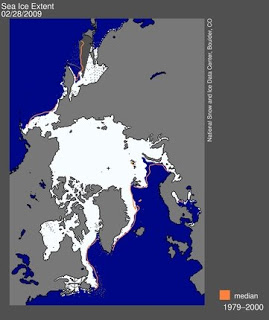
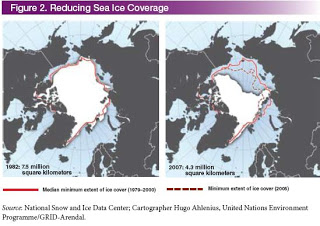
The second conversation worth a look is over at Watts Up With That where they are looking at ice flows of both the Arctic and Antarctic and attempting to make sense of the trends. The arctic ice is well within normal levels dating back to 1979 while the Antarctic ice continues expansion, when global warming models have long suggested this should be contracting.

Am I skeptic of global warming? Absolutely, if politicians weren't so blatantly exploiting climate change for a reason to raise taxes while allowing scientists to hide the raw data, maybe I'd be less skeptical. Global Warming is a consensus theory, not a fact, and as Fabius Maximus highlights there are serious agendas at play that somehow make Global Warming science immune to the scientific requirements and standards every other science is held to. That should concern people who are tired of politics tampering with science, and that includes the politics of religion and the politics of environmental agenda.

I also don't believe there is any doubt at all the planet is in the midst of a climate change cycle we have we do not understand very well. The big problem is that what is happening is both unique in that it is not normal but also does not match any of the models for global warming. That tends to suggest to me that something is actually happening with our climate, and I find it troubling governments don't seem to actually care that they don't know what it is.

That second part is key, because policy decisions are being discussed largely absent good information of knowing what exactly we should be planning for. In my opinion, Congress should substantially increase funding for the collection and review of climate data for the scientific community, and the data should be made public so we can move beyond consensus and into the realm of fact, where science should be.

And when Congress substantially increases research funding, I hope they also invest in icebreakers, because contrary to the global warming models, the amount of ice on the ocean surface is increasing globally off South America while the summer months in the Arctic are producing more drift ice that will create dangers should commercial maritime traffic expand use of the northwest passage.

Sunday, February 22, 2024

Thinking About Mission Modules

I've been reviewing the Military Times panoramic photography and my own photography thinking about mission modules on the LCS. In particular, I'm interested in mission modules other than the three the Navy is working on, indeed my considerations have been in regards to what a Coast Guard mission module is.

A Coast Guard mission module would give the Coast Guard a rapid deploy global capability to any LCS in the world, IF it can support the core requirements of 2 H-60s, 2 USVs, 1 Long Range Interceptor (LRI), and 1 Short Range Prosecutor (SRP). The requirements aren't space, there is plenty of space on the LCS for the gear. The challenge is overcoming the manpower issues.

For those that don't know, the LCS has the following modular capabilities:
Two sea type 1 stations: 12.2x3.5 m.
Two sea type 2 stations: 7.1x2.6 m.
Two aviation type 1 stations: 13.1x 3.4 m.
Three onboard weapon stations
One support Type 2: 3.05x2.44 m
Nine Support Type 1: ISO containers
One sensor station (classified)
Essentially the sea type 1 stations are 11m systems like the LRI while the sea type 2 stations are 7m systems like the SRP. The way I see it the Coast Guard system side module would be one sea Type 1 module (LRI), one sea Type 2 module (SRP), three aviation type type 1 stations (one would have to be stored below deck) supporting 2 H-60s and 3 Fire Scouts, and 2 ISO containers with 8 man berthing w/ toilet for the LEDET detachments.

40 core crew, 23 aviation crew, and 12 module crew is the core layout as I understand it. The 12 module crew would shift to aviation to meet the additional H-60 requirement, while the 2 eight man berthing units would supply 16 for the LRI and SRP. Anyone see any problems, or have any suggestions?

If you recall, I spoke to RADM Blore about the LCS being a consideration for the Offshore Patrol Cutter program. I wasn't very excited about it, but he is under pressure to look at it. Regardless of whether the OPC uses a LCS hull or not, the idea that the Coast Guard should have a mission module is still very appealing to me. Considering the space of the LCS and the requirements of the Coast Guard for 2 H-60s, 2 UAVs, a LRI, and a SRP for the NSC.., if there were better manpower capabilities on the LCS a CG mission module could actually deploy all of those CG assets plus USVs for port security etc... which comes to more than the National Security Cutter can actually deploy. Just saying...